


Athletics: Leaked blood test results claim one in three medallists have doped

August 2, 2015

Paris/France, Aug 2: Athletics faced a fresh doping scandal Saturday when leaked results from 12,000 blood tests taken from 5,000 competitors allegedly demonstrated instances of cheating and "a shameful betrayal" of clean athletes.
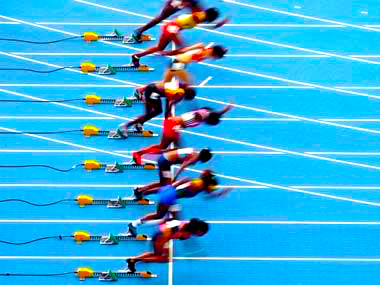
raceGerman broadcaster ARD as well as Britain's Sunday Times say they passed on their information to leading blood doping experts who concluded that track and field is in "the same diabolical position today that professional cycling was in 20 years ago".

The database, reportedly created by the International Association of Athletics Federations (IAAF), covers the period from 2001 to 2012, a statement from ARD said.

The findings were broadcast in a documentary screened in Germany on Saturday -- “Doping – Top Secret: The Shadowy World of Athletics.”

Australian doping experts Michael Ashenden and Robin Parisotto came to a series of conclusions:

- A total of 800 athletes in disciplines from 800m to the marathon registered values which, according to the definition of the biological passport of the World Anti-Doping Agency (WADA) are regarded as suspicious or even highly suspicious.

- In the analysis of the blood levels of the medal-winners at world championships and Olympics between 2001 and 2012, every third medal was won by athletes, for whom one or even both experts had identified suspicious blood values in the database.

- For every sixth medal winner at least one, they claimed, had doped in the course of his/her career.

“Often two out of the three medallists had probably engaged in blood doping during their career," Ashenden told the programme.

"In one event the entire podium was comprised of athletes, who in my opinion had most probably doped at some point in their career.”

Ashenden lashed out at the IAAF and their anti-doping policy.

“For the IAAF to have harvested millions of dollars from the broadcasting of athletics competitions...yet only devote a relative pittance of those funds towards anti-doping.

"...in my opinion (it's) a shameful betrayal of their primary duty to police their sport and to protect the clean athletes,” he said.

The values in the tests are not proof of cheating and the IAAF rejected criticism of its management.

"The IAAF has always been at the forefront in combating anti-doping, searching and implementing new analytical techniques and methodologies," said a statement released to the Sunday Times and carried by the BBC.

Since the introduction of the biological passport, the IAAF says it has "pursued more cases than all other anti-doping organisations together".

It added that it spent $2million a year on fighting doping.

The IAAF added in defence of its biological passport: "Any other approach, in particular, the use of data collected over a longer period for different purposes, with different objectives and with different methods of analysis, is nothing more than speculation."

Meanwhile, Russia and Kenya were subjected to new doping allegations in the documentary.

ARD, who last December aired similar accusations of doping and corruption in Russia, returned to the controversy just three weeks out from the world championships in Beijing.

"Despite assurances from the Russian authorities (in favour of a clean sport) doped competitors and their suppliers are always protected," the public broadcaster said in a statement.

The makers of the film claim to have evidence of human growth hormone being used to boost Russian runners.

They also say that a hidden camera recorded 800m athlete Anastasia Bazdireva as praising the benefits of drugs.

"With anabolics, I have stiff muscles. But I can run. It's hard but it's OK. You feel different with anabolics," she is recorded as claiming.

Journalists also returned to Kenya where they claim another hidden camera showed injections of "dangerous" doping products being administered.

The programme claimed that there is "massive corruption" within the Kenyan set-up and "a desire to cover-up doping...to the summit of the Kenyan athletics federation".

Kenya was rocked this year when marathon star Rita Jeptoo was banned for two years after being caught doping with the banned blood-boosting hormone EPO.

"Since 2006, I have not been forced to do a single blood test in Kenya," the 34-year-old is quoted as saying by ARD, adding that only urine tests were carried out.

Comments

Add new comment

  • Coastaldigest.com reserves the right to delete or block any comments.
  • Coastaldigset.com is not responsible for its readers’ comments.
  • Comments that are abusive, incendiary or irrelevant are strictly prohibited.
  • Please use a genuine email ID and provide your name to avoid reject.
Agencies
August 3,2020

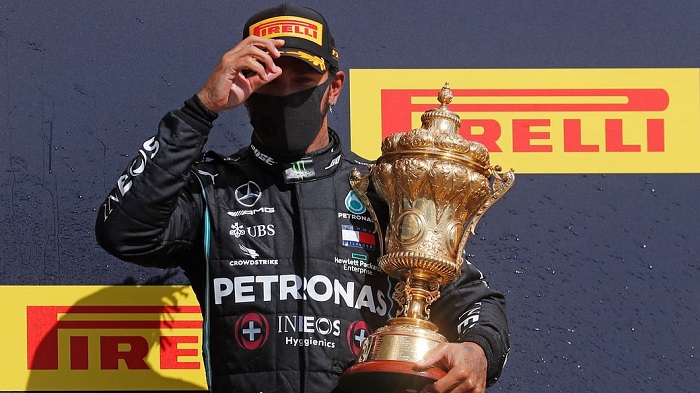
Silverstone, Aug 2: Mercedes driver Lewis Hamilton on Sunday won his seventh British Grand Prix title after a dramatic last-lap at the Silverstone Circuit.

Hamilton and teammate Valtteri Bottas were at the first and second spot respectively until tyre drama struck.

Second-placed man Bottas was the first to suffer as his tyre deflated on lap 50, resulting in 11th place finish. Hamilton also suffered a similar issue before the final few seconds of the race.

However, with Max Verstappen having opted to pit a few laps from the end to try and claim the fastest lap, Hamilton had enough time in hand to just cross the line first, five seconds ahead of Verstappen and the third-placed Ferrari of Charles Leclerc.

McLaren's Carlos Sainz had been set to finish fourth, but his own last lap tyre issue saw him eventually come home P13, allowing Renault's Daniel Ricciardo to claim fourth, following a late pass on the sister McLaren of Lando Norris.

Renault's Esteban Ocon finished sixth, having enjoyed a race-long battle with Lance Stroll's Racing Point, with Pierre Gasly having enjoyed a fine race to finish seventh for AlphaTauri.

Alex Albon finished eighth for Red Bull, having recovered from a lap 1 tussle with the Haas of Kevin Magnussen that saw him fall to last, while Lance Stroll and Sebastian Vettel rounded out the top 10, Vettel holding off a late charge form the recovering Mercedes of Bottas.

Comments

Add new comment

  • Coastaldigest.com reserves the right to delete or block any comments.
  • Coastaldigset.com is not responsible for its readers’ comments.
  • Comments that are abusive, incendiary or irrelevant are strictly prohibited.
  • Please use a genuine email ID and provide your name to avoid reject.
Agencies
January 11,2020

London, Jan 11: Former cricketer Sachin Tendulkar's famous lap around the Wankhede Stadium after the World Cup 2011 win has been nominated in Laureas's list for the most inspiring sporting event in the last twenty years.

The moment featuring Tendulkar has been described as "Carried on the shoulders by a nation".

On his sixth attempt at the World Cup and with India not having won the competition since 1983, Tendulkar finally became a part of the team that lifted the coveted trophy. Carried on the shoulders of the Indian team, he made a lap of honour, shedding tears of joy after the victory was sealed in his home city.

The 2011 World Cup was also the first time, in which a host nation ended up winning the trophy.

Apart from Tendulkar, England's Andrew Flintoff is the only other cricketer to feature in the list. In 2005, England managed to defeat Australia in an Ashes Test, but Flintoff chose to first shake hands with Brett Lee rather than celebrate with his side.

Matthias Steiner (weightlifting), Natalie du Toit (swimming), Sky Brown (skateboarding), Alistair and Jonathan Brownlee (triathlon), Xia Boyu (mountaineering) have been nominated in the list.

Female tennis stars also feature in the list for coming up with an equal play, equal pay campaign. After pressure from Venus Williams and others, Wimbledon announced that female tennis players would receive prize money equal to the men's.

German international footballer Miroslav Klose was playing for Lazio in Italy's Serie A in 2012 against Napoli when he rose for a ball in the early moments of the game.

The ball came spiraling off his hand and skirted into the back of the net and a goal was awarded. While most players would carry on as if nothing had happened, Klose was honest with the referee and admitted that he handled the ball.

As a result, he also finds a place on the list.

The Laureus Sporting Moment Award celebrates the moments where the sport has unified people in the most extraordinary way.

This campaign has shortlisted 20 sporting stories from the last 20 years that have left their mark on the world.

The winner will be decided on the basis of public voting. It has already started, and the final date to cast the vote is February 16.

Finally, the result will be declared on February 17.
With three knock-out rounds, the top-20 moments will be whittled down to ten then five, with the top-five moments going head-to-head.

Comments

Add new comment

  • Coastaldigest.com reserves the right to delete or block any comments.
  • Coastaldigset.com is not responsible for its readers’ comments.
  • Comments that are abusive, incendiary or irrelevant are strictly prohibited.
  • Please use a genuine email ID and provide your name to avoid reject.
News Network
July 12,2020

New Delhi, Jul 12: Former India batsman Sachin Tendulkar has urged the International Cricket Council (ICC) to do away with 'umpire's call' whenever a team opts for a review regarding a leg-before wicket (LBW) decision.

The Master Blaster has also said that a batsman should be given out if the ball is hitting the stumps.

Whether more than 50 per cent of the ball is hitting the stumps or not should not be matter, he further stated.

"What per cent of the ball hits the stumps doesn't matter, if DRS shows us that the ball is hitting the stumps, it should be given out, regardless of the on-field call," Tendulkar tweeted.

With this tweet, the former India batsman also shared a video, in which he has a discussion with Brian Lara regarding the working of DRS.
"One thing I don't agree with, with the ICC, is the DRS they have been using for quite some time. It is the LBW decision where more than 50 per cent of the ball must be hitting the stumps for the on-field decision to be overturned," Tendulkar said in the video.

"The only reason they (the batsman or the bowler) have gone upstairs is that they are unhappy with the on-field decision, so when the decision goes to the third umpire, let the technology take over, just like in tennis, it's either in or out, there's nothing in between," he added.

This call for doing away with umpire's call has been recommended by many former players.
Whenever a verdict pops up as 'umpire's call, the decision of the on-field umpire is not changed, but the teams do not lose their review as well.

ICC recently introduced some changes to the game of cricket, and they gave all teams liberty of extra review as non-neutral umpires will be employed in Test matches due to the coronavirus pandemic.

As a result, all teams will now have three reviews in every innings of a Test match. 

Comments

Add new comment

  • Coastaldigest.com reserves the right to delete or block any comments.
  • Coastaldigset.com is not responsible for its readers’ comments.
  • Comments that are abusive, incendiary or irrelevant are strictly prohibited.
  • Please use a genuine email ID and provide your name to avoid reject.