


Athletics: Leaked blood test results claim one in three medallists have doped

August 2, 2015

Paris/France, Aug 2: Athletics faced a fresh doping scandal Saturday when leaked results from 12,000 blood tests taken from 5,000 competitors allegedly demonstrated instances of cheating and "a shameful betrayal" of clean athletes.
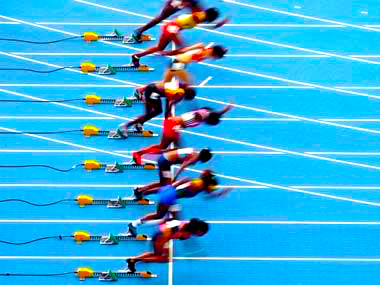
raceGerman broadcaster ARD as well as Britain's Sunday Times say they passed on their information to leading blood doping experts who concluded that track and field is in "the same diabolical position today that professional cycling was in 20 years ago".

The database, reportedly created by the International Association of Athletics Federations (IAAF), covers the period from 2001 to 2012, a statement from ARD said.

The findings were broadcast in a documentary screened in Germany on Saturday -- “Doping – Top Secret: The Shadowy World of Athletics.”

Australian doping experts Michael Ashenden and Robin Parisotto came to a series of conclusions:

- A total of 800 athletes in disciplines from 800m to the marathon registered values which, according to the definition of the biological passport of the World Anti-Doping Agency (WADA) are regarded as suspicious or even highly suspicious.

- In the analysis of the blood levels of the medal-winners at world championships and Olympics between 2001 and 2012, every third medal was won by athletes, for whom one or even both experts had identified suspicious blood values in the database.

- For every sixth medal winner at least one, they claimed, had doped in the course of his/her career.

“Often two out of the three medallists had probably engaged in blood doping during their career," Ashenden told the programme.

"In one event the entire podium was comprised of athletes, who in my opinion had most probably doped at some point in their career.”

Ashenden lashed out at the IAAF and their anti-doping policy.

“For the IAAF to have harvested millions of dollars from the broadcasting of athletics competitions...yet only devote a relative pittance of those funds towards anti-doping.

"...in my opinion (it's) a shameful betrayal of their primary duty to police their sport and to protect the clean athletes,” he said.

The values in the tests are not proof of cheating and the IAAF rejected criticism of its management.

"The IAAF has always been at the forefront in combating anti-doping, searching and implementing new analytical techniques and methodologies," said a statement released to the Sunday Times and carried by the BBC.

Since the introduction of the biological passport, the IAAF says it has "pursued more cases than all other anti-doping organisations together".

It added that it spent $2million a year on fighting doping.

The IAAF added in defence of its biological passport: "Any other approach, in particular, the use of data collected over a longer period for different purposes, with different objectives and with different methods of analysis, is nothing more than speculation."

Meanwhile, Russia and Kenya were subjected to new doping allegations in the documentary.

ARD, who last December aired similar accusations of doping and corruption in Russia, returned to the controversy just three weeks out from the world championships in Beijing.

"Despite assurances from the Russian authorities (in favour of a clean sport) doped competitors and their suppliers are always protected," the public broadcaster said in a statement.

The makers of the film claim to have evidence of human growth hormone being used to boost Russian runners.

They also say that a hidden camera recorded 800m athlete Anastasia Bazdireva as praising the benefits of drugs.

"With anabolics, I have stiff muscles. But I can run. It's hard but it's OK. You feel different with anabolics," she is recorded as claiming.

Journalists also returned to Kenya where they claim another hidden camera showed injections of "dangerous" doping products being administered.

The programme claimed that there is "massive corruption" within the Kenyan set-up and "a desire to cover-up doping...to the summit of the Kenyan athletics federation".

Kenya was rocked this year when marathon star Rita Jeptoo was banned for two years after being caught doping with the banned blood-boosting hormone EPO.

"Since 2006, I have not been forced to do a single blood test in Kenya," the 34-year-old is quoted as saying by ARD, adding that only urine tests were carried out.

Comments

Add new comment

  • Coastaldigest.com reserves the right to delete or block any comments.
  • Coastaldigset.com is not responsible for its readers’ comments.
  • Comments that are abusive, incendiary or irrelevant are strictly prohibited.
  • Please use a genuine email ID and provide your name to avoid reject.
Agencies
January 5,2020

Mumbai, Jan 5: India captain Virat Kohli has refrained from making any comments on the Citizenship Amendment Act (CAA), without gaining full knowledge on the sensitive subject.

The CAA will grant Indian nationality to people belonging to minority communities -- Hindus, Sikhs, Buddhists, Jains, Parsis and Christians -- in Afghanistan, Bangladesh and Pakistan after six years of residence in India instead of 12, even if they don't possess any proper document.

In 2016, Kohli had termed demonetisation as the "greatest move in history of Indian politics", which met with sharp criticism from a lot of quarters, with people questioning his knowledge on the subject.

With Guwahati witnessing massive protests against the CAA till some days back, Kohli was asked about it and the Indian skipper weighed his words carefully.

"On the issue, I do not want to be irresponsible and speak on something that has, you know, radical opinions both sides. I need to have total information, total knowledge of what it means and what is going on and then be responsible to give my opinion on it," Kohli said ahead of India's first T20 International against Sri Lanka.

The skipper made it clear that he will not like to get embroiled in a controversy by commenting on a subject that he is not well aware of.

"Because you can say one thing and then someone can say another thing. So, I would not like to get involved in something that I don't have total knowledge of and it's not going to be responsible on my part to comment on it." However Kohli on his part was happy with the security arrangements and felt that the city is "absolutely safe".

"The city is absolutely safe. We didn't see any problems on the roads," Kohli said, giving his thumbs-up for the match at the Barsapara Stadium.

The Assam Cricket Association is using this match as a "curtain-raiser" ahead of their maiden IPL match this season as Rajasthan Royals have adopted this venue.

There has been deployment of Rapid Action Force for the teams and ACA secretary Devajit Saikia has said the spectators will not even be allowed to bring along handkerchiefs and towels on the match-day as the traditional Assamese scarf was used for protests against CAA.

Comments

Add new comment

  • Coastaldigest.com reserves the right to delete or block any comments.
  • Coastaldigset.com is not responsible for its readers’ comments.
  • Comments that are abusive, incendiary or irrelevant are strictly prohibited.
  • Please use a genuine email ID and provide your name to avoid reject.
News Network
May 6,2020

May 6: They have similar impact on their teams but Virat Kohli is driven by sheer passion to subdue the rivals while Steve Smith just enjoys batting, says Australia opener David Warner.

India skipper Kohli and top Australian batsman Smith are arguably the top two cricketers of the current era. They achieve new milestones consistently, invoking debates, who is better between them.

"Virat's passion and drive to score runs is different to what Steve's would be," Warner said while speaking to Harsha Bhogle on 'Cricbuzz in Conversation'.

"Steve is going out there for a hit in the middle, that's how he sees things. He's hitting them out in the middle, he's having fun, he's enjoying himself, just does not want to get out."

Warner feels, while Kohli is batting he is aware that if he sticks around the middle his team will be on top of the proceedings.

"Virat obviously doesn't want to get out but he knows if he spends a certain amount of time out there, he's going to score plenty of runs at a rapid rate. He's going to get on top of you. That allows the guys coming in, especially in the Indian team you've got a lot of players who can be flamboyant as well."

The Australian opener added that both men are mentally strong and a good knock by them boosts the morale of the entire team.

"When it comes to cricket, they both have got the mental strength, the mental capacity to score runs. They both love spending time in the middle.

"They stabilise, they boost morale - if they score runs, everyone else's moral is up. If they are out cheaply you almost sense that on the field that everyone is (down on morale and thinking) 'now we all have to step up'. It's a very bizarre situation," he added.

Asked about the similarities between himself and Kohli, who are both live wires on the field, Warner said the passion to do better than the opponent keeps him going.

"I can't speak for Virat, obviously, but it's almost like we got this thing in us when we go (out to the middle) we need to prove people wrong, prove someone wrong."

"If you're in that contest, and if I'm going at him for example, you're thinking, 'Alright, I'm going to score more runs than him, I'm going to take a quick single on him'. You are trying to better that person in that game. That's where the passion comes from."

Warner also explained how he breaks down a match into smaller competitions.

"Obviously you want to win the game but you almost break it down to: If I can score more runs than Virat, or if Pujara scores more runs than Steve Smith, you have these little contests and that's how you try to narrow the game in the sense that if we do these little things, we can be ahead of the game or we can be behind the game.

"The passion is driven by...I know my sense - one, the will to win and two, wanting to do better than that person in the opposition," said Warner.

Comments

Add new comment

  • Coastaldigest.com reserves the right to delete or block any comments.
  • Coastaldigset.com is not responsible for its readers’ comments.
  • Comments that are abusive, incendiary or irrelevant are strictly prohibited.
  • Please use a genuine email ID and provide your name to avoid reject.
News Network
March 12,2020

New Delhi, Mar 12: No foreign player will be available for this year's IPL till April 15 due to visa restrictions imposed by the government to contain the novel coronavirus threat, a top BCCI source told PTI on Thursday, casting fresh doubts on the fate of the event.

"The foreign players who play in the IPL come under the Business Visa category. As per the government's directive, they can't come till April 15," a BCCI source told PTI on conditions of anonymity.

The government issued fresh advisory with a ban on all existing foreign visas, except a few categories like diplomatic and employment, till April 15 in the wake of new positive cases of novel coronavirus in the country.

India has reported 60 positive cases in the outbreak which has led to over 4,000 deaths globally.

The fate of the IPL itself will be decided on March 14 at the event's Governing Council meeting in Mumbai. "All decisions will be taken by the GC in Mumbai," the source said.

Having the IPL, starting March 29, played in empty stadiums is an option being explored.

Comments

Add new comment

  • Coastaldigest.com reserves the right to delete or block any comments.
  • Coastaldigset.com is not responsible for its readers’ comments.
  • Comments that are abusive, incendiary or irrelevant are strictly prohibited.
  • Please use a genuine email ID and provide your name to avoid reject.