


Athletics: Leaked blood test results claim one in three medallists have doped

August 2, 2015

Paris/France, Aug 2: Athletics faced a fresh doping scandal Saturday when leaked results from 12,000 blood tests taken from 5,000 competitors allegedly demonstrated instances of cheating and "a shameful betrayal" of clean athletes.
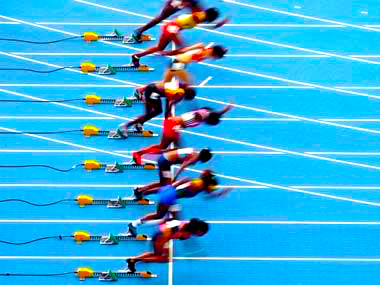
raceGerman broadcaster ARD as well as Britain's Sunday Times say they passed on their information to leading blood doping experts who concluded that track and field is in "the same diabolical position today that professional cycling was in 20 years ago".

The database, reportedly created by the International Association of Athletics Federations (IAAF), covers the period from 2001 to 2012, a statement from ARD said.

The findings were broadcast in a documentary screened in Germany on Saturday -- “Doping – Top Secret: The Shadowy World of Athletics.”

Australian doping experts Michael Ashenden and Robin Parisotto came to a series of conclusions:

- A total of 800 athletes in disciplines from 800m to the marathon registered values which, according to the definition of the biological passport of the World Anti-Doping Agency (WADA) are regarded as suspicious or even highly suspicious.

- In the analysis of the blood levels of the medal-winners at world championships and Olympics between 2001 and 2012, every third medal was won by athletes, for whom one or even both experts had identified suspicious blood values in the database.

- For every sixth medal winner at least one, they claimed, had doped in the course of his/her career.

“Often two out of the three medallists had probably engaged in blood doping during their career," Ashenden told the programme.

"In one event the entire podium was comprised of athletes, who in my opinion had most probably doped at some point in their career.”

Ashenden lashed out at the IAAF and their anti-doping policy.

“For the IAAF to have harvested millions of dollars from the broadcasting of athletics competitions...yet only devote a relative pittance of those funds towards anti-doping.

"...in my opinion (it's) a shameful betrayal of their primary duty to police their sport and to protect the clean athletes,” he said.

The values in the tests are not proof of cheating and the IAAF rejected criticism of its management.

"The IAAF has always been at the forefront in combating anti-doping, searching and implementing new analytical techniques and methodologies," said a statement released to the Sunday Times and carried by the BBC.

Since the introduction of the biological passport, the IAAF says it has "pursued more cases than all other anti-doping organisations together".

It added that it spent $2million a year on fighting doping.

The IAAF added in defence of its biological passport: "Any other approach, in particular, the use of data collected over a longer period for different purposes, with different objectives and with different methods of analysis, is nothing more than speculation."

Meanwhile, Russia and Kenya were subjected to new doping allegations in the documentary.

ARD, who last December aired similar accusations of doping and corruption in Russia, returned to the controversy just three weeks out from the world championships in Beijing.

"Despite assurances from the Russian authorities (in favour of a clean sport) doped competitors and their suppliers are always protected," the public broadcaster said in a statement.

The makers of the film claim to have evidence of human growth hormone being used to boost Russian runners.

They also say that a hidden camera recorded 800m athlete Anastasia Bazdireva as praising the benefits of drugs.

"With anabolics, I have stiff muscles. But I can run. It's hard but it's OK. You feel different with anabolics," she is recorded as claiming.

Journalists also returned to Kenya where they claim another hidden camera showed injections of "dangerous" doping products being administered.

The programme claimed that there is "massive corruption" within the Kenyan set-up and "a desire to cover-up doping...to the summit of the Kenyan athletics federation".

Kenya was rocked this year when marathon star Rita Jeptoo was banned for two years after being caught doping with the banned blood-boosting hormone EPO.

"Since 2006, I have not been forced to do a single blood test in Kenya," the 34-year-old is quoted as saying by ARD, adding that only urine tests were carried out.

Comments

Add new comment

  • Coastaldigest.com reserves the right to delete or block any comments.
  • Coastaldigset.com is not responsible for its readers’ comments.
  • Comments that are abusive, incendiary or irrelevant are strictly prohibited.
  • Please use a genuine email ID and provide your name to avoid reject.
News Network
February 18,2020

Berlin, Feb 18: Sachin Tendulkar being lifted on the shoulders of his teammates after their World Cup triumph at home in 2011 has been voted the Laureus best sporting moment in the last 20 years.

With the backing of Indian cricket fans, Tendulkar got the maximum number of votes to emerge winner on Monday.

Tendulkar, competing in his sixth and last World Cup, finally realised his long-term dream when skipper Mahendra Singh Dhoni smacked Sri Lankan pacer Nuwan Kulasekara out of the park for a winning six.

The charged-up Indian cricketers rushed to the ground and soon they lifted Tendulkar on their shoulders and made a lap of honour, a moment etched in the minds of the fans.

Former Australian skipper Steve Waugh handed the trophy to Tendulkar after tennis legend Boris Becker announced the winner at a glittering ceremony.

“It's incredible. The feeling of winning the world cup was beyond what words can express. How many times you get an event happening where there are no mixed opinions. Very rarely the entire country celebrates,” Tendulkar said after receiving the trophy.

“And this is a reminder of how powerful a sport is and what magic it does to our lives. Even now when I watch that it has stayed with me.”

Becker then asked Tendulkar to share the emotions he felt at that time and the Indian legend put in perspective how important it was for him to hold that trophy.

“My journey started in 1983 when I was 10 years old. India had won the World Cup. I did not understand the significance and just because everybody was celebrating, I also joined the party.

“But somewhere I knew something special has happened to the country and I wanted to experience it one day and that's how my journey began.”

“It was the proudest moment of my life, holding that trophy which I chased for 22 years but I never lost hope. I was merely lifting that trophy on behalf of my countrymen.”

The 46-year-old Tendulkar, the highest run-getter in the cricket world, said holding the Laureus trophy has also given him great honour.

He also shared the impact the revolutionary South African leader Nelson Mandela had on him. He met him when he was just 19 years old.

“His hardship did not affect his leadership. Out of many messages he left, the most important I felt was that sport has got the power to unite everyone.

"Today, sitting in this room with so many athletes, some of them did not have everything but they made the best of everything they had. I thank them for inspiring youngsters to pick a sport of their choice and chase their dreams. This trophy belongs to all of us, it's not just about me.”

In a tweet on Tuesday, Tendulkar dedicated the award to his country, teammates and fans.

"Thank you all for the overwhelming love and support! I dedicate this @LaureusSport award to India, all my teammates, fans and well wishers in India and across the world who have always supported Indian cricket," he tweeted.

Comments

Add new comment

  • Coastaldigest.com reserves the right to delete or block any comments.
  • Coastaldigset.com is not responsible for its readers’ comments.
  • Comments that are abusive, incendiary or irrelevant are strictly prohibited.
  • Please use a genuine email ID and provide your name to avoid reject.
News Network
June 18,2020

Jun 18: Sri Lanka "sold" the 2011 World Cup final to India, the country's former sports minister said on Thursday, reviving one of cricket's most explosive match-fixing controversies. Mahindananda Aluthgamage, who was sports minister at the time, is the second senior figure to allege the final was fixed, after 1996 World Cup-winning skipper Arjuna Ranatunga. "I tell you today that we sold the 2011 World Cup finals," Aluthgamage told Sirasa TV. "Even when I was sports minister I believed this."

Aluthgamage, sports minister from 2010 to 2015 and now state minister for renewable energy and power, said he "did not want to disclose" the plot at the time.

"In 2011, we were to win, but we sold the match. I feel I can talk about it now. I am not connecting players, but some sections were involved," he said.

Sri Lanka lost the match at Mumbai's Wankhede stadium by six wickets. Indian players have strongly denied any wrongdoing.

Ranatunga, who was at the stadium as a commentator, has previously called for an investigation into the defeat.

"When we lost, I was distressed and I had a doubt," he said in July 2017. "We must investigate what happened to Sri Lanka at the 2011 World Cup final."

"I cannot reveal everything now, but one day I will. There must be an inquiry," added Ranatunga, who said players could not hide the "dirt".

Sri Lanka batted first and scored 274-6 off 50 overs. They appeared in a commanding position when Indian superstar Sachin Tendulkar was out for 18.

But India turned the game dramatically, thanks partly to poor fielding and bowling by Sri Lanka, who were led by Kumar Sangakkara.

Sri Lankan cricket has regularly been involved in corruption controversies, including claims of match-fixing ahead of a 2018 Test against England.

Earlier this month, the Sri Lankan cricket board said the International Cricket Council was investigating three unnamed former players over alleged corruption.

Sri Lanka introduced tough penalties for match-fixing and tightened sports betting restrictions in November in a bid to stamp out graft.

Another former sports minister, Harin Fernando, has said Sri Lankan cricket was riddled with graft "from top to bottom", and that the ICC considered Sri Lanka one of the world's most corrupt nations.

Former Sri Lankan fast bowler Dilhara Lokuhettige was suspended in 2018 for corruption relating to a limited-overs league.

He was the third Sri Lankan charged under the ICC anti-corruption code, following former captain and ex-chief selector Sanath Jayasuriya, and former paceman Nuwan Zoysa.

Jayasuriya was found guilty of failing to cooperate with a match-fixing probe and banned for two years. Zoysa was suspended for match-fixing.

Comments

Add new comment

  • Coastaldigest.com reserves the right to delete or block any comments.
  • Coastaldigset.com is not responsible for its readers’ comments.
  • Comments that are abusive, incendiary or irrelevant are strictly prohibited.
  • Please use a genuine email ID and provide your name to avoid reject.
News Network
April 4,2020

New Delhi, April 4: India skipper Virat Kohli has said that the 2014 Test series against England was the lowest point of his career.

He made the revelation during a candid Instagram Live session with former England batsman Kevin Pietersen.

To date, the 2014 Test series in England remains one of the worst Test series for Kohli as he averaged just 13.40 from 10 ten innings with his highest score being 39.

"I felt like as a batsman, you know you are going to get out in the morning as soon as you wake up. That was the time I felt like that there is no chance I am getting runs. And still to get out of bed and just get dressed for the game and to go out there and go through that, knowing that you will fail, was something that ate me up," Kohli told Pietersen.

However, just four years later, Kohli made a triumphant return to England as he scored a century in the opening Test of the 2018 series and finished as the highest run-getter in the series.

Kohli told Pietersen that the performance in 2014 came because he was just thinking about his own batting.

"2014 series happened, for all the younger guys listening, because I was too focused on doing well from a personal point of view. I wanted to get runs. I could never think of what does the team want me to do in this situation," Kohli said.

"I just got too engulfed with England tour - if I perform here, Test cricket, in my mind I am going to feel established and all that crap on the outside, which is not important at all," he added.
During the chat, Kohli talked about his favourite format in cricket and he also revealed the main reason for turning into a vegan.

Comments

Add new comment

  • Coastaldigest.com reserves the right to delete or block any comments.
  • Coastaldigset.com is not responsible for its readers’ comments.
  • Comments that are abusive, incendiary or irrelevant are strictly prohibited.
  • Please use a genuine email ID and provide your name to avoid reject.