Australia Abolishes Visa Programme Used Largely By Indians

April 18, 2017

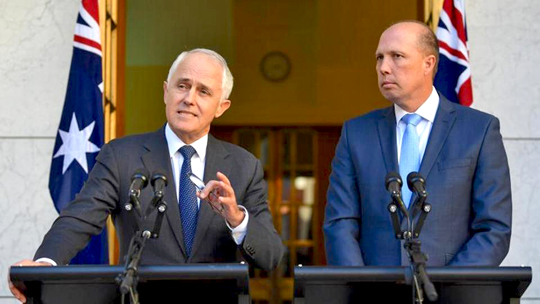
Melbourne, Apr 18: In an unexpected announcement, Australian Prime Minister Malcolm Turnbull today said the government will replace its popular 457 visa that brings temporary foreign workers to the country with a new version that will recruit only the "best and the brightest in the national interest". The move to abolish the visa, used by over 95,000 temporary foreign workers, a majority of them Indians, aims at tackling the growing unemployment in the country.

ausvisa

Mr Turnbull made it clear that the idea is to 'put Australians first' by giving them priority for jobs currently open to overseas workers. He said on Facebook, "Our reforms will have a simple focus: Australian jobs and Australian values."

The country will welcome only skilled workers and they can no longer allow 457 visas to be "passports to jobs that could and should go to Australians", he added.

The 457 visa was designed to fill Australia's skills shortage and allow holders to bring members of their family to Australia on 457 secondary visa. But the programme was allegedly being misused by employers to import inexpensive workers. "It's lost its credibility," Mr Turnbull said.

It's not that the government will discourage foreign workers completely, but the focus will be on "filling critical skill gaps and not bring in foreign workers because an employer finds it cheaper and easier to do so".

With the new temporary visa, the number of occupations on the list will also come down. The new visa will be available for two or four years, requiring visa holders to have two years' work experience, a criminal record check, better English-language proficiency and mandatory labour market testing in a majority of cases.

Those who are currently in Australia on a 457 visa will not be affected by the new arrangement.

Mr Turnbull's announcement comes days after he visited India where a range of issues, including national security, counter terrorism, education and energy, were discussed and six agreements were signed.

Comments

Add new comment

  • Coastaldigest.com reserves the right to delete or block any comments.
  • Coastaldigset.com is not responsible for its readers’ comments.
  • Comments that are abusive, incendiary or irrelevant are strictly prohibited.
  • Please use a genuine email ID and provide your name to avoid reject.
News Network
March 28,2020

Washington, Mar 28: A US-based lab has unveiled a portable test that can tell if someone has COVID-19 in as little as five minutes, it said in a statement Friday.

Abbot Laboratories said the US Food and Drug Administration (FDA) had given it emergency authorization to begin making the test available to healthcare providers as early as next week.

The test, which is the size of a small toaster and uses molecular technology, also shows negative results within 13 minutes, the company said in a press statement.

"The COVID-19 pandemic will be fought on multiple fronts, and a portable molecular test that offers results in minutes adds to the broad range of diagnostic solutions needed to combat this virus," said Abbot president and chief operating officer Robert Ford.

The test's small size means it can be deployed outside the "traditional four walls of a hospital in outbreak hotspots," Ford said, and Abbott is working with the FDA to send it to virus epicenters.

The test has not been cleared or approved by the FDA, and has only been authorized for emergency use by approved labs and healthcare providers, the company said.

Comments

Add new comment

  • Coastaldigest.com reserves the right to delete or block any comments.
  • Coastaldigset.com is not responsible for its readers’ comments.
  • Comments that are abusive, incendiary or irrelevant are strictly prohibited.
  • Please use a genuine email ID and provide your name to avoid reject.
News Network
March 28,2020

Berlin, Mar 28: The number of confirmed coronavirus infections worldwide topped 600,000 on Saturday as new cases stacked up quickly in Europe and the United States and officials dug in for a long fight against the pandemic.

The latest landmark came only two days after the world passed half a million infections, according to a tally by John Hopkins University, showing that much work remains to be done to slow the spread of the virus. It showed more than 602,000 cases and a total of over 27,000 deaths.

While the U.S. now leads the world in reported infections — with more than 104,000 cases — five countries exceed its roughly 1,700 deaths: Italy, Spain, China, Iran and France.

“We cannot completely prevent infections at this stage, but we can and must in the immediate future achieve fewer new infections per day, a slower spread,” German Chancellor Angela Merkel, who is in quarantine at home after her doctor tested positive for the virus, told her compatriots in an audio message. “That will decide whether our health system can stand up to the virus.”

The virus already has put health systems in Italy, Spain and France under extreme strain. Lockdowns of varying severity have been introduced across Europe. Merkel's chief of staff, Helge Braun, said that Germany — where authorities closed nonessential shops and banned gatherings of more than two in public — won't relax its restrictions before April 20.

As the epicenter has shifted westward, the situation has calmed in China, where some restrictions on people's lives have now been lifted. Six subway lines restored limited service in Wuhan, where the virus first emerged in December, after the city had its official coronavirus risk evaluation downgraded from high to medium on Friday. Five districts of the city of 11 million people had other restrictions on travel loosened after their risk factor was downgraded to low.

For most people, the coronavirus causes mild or moderate symptoms, such as fever and cough that clear up in two to three weeks. But for others, especially older adults and people with existing health problems, the virus can cause more severe illness, including pneumonia, and lead to death.

More than 130,000 people have recovered, according to Johns Hopkins' tally.

In one way or another, the effects of the COVID-19 outbreak have been felt by the powerful and the poor alike.

On Friday, British Prime Minister Boris Johnson became the first leader of a major country to test positive for the virus. He said he would continue to work from self-quarantine.

Countries are still scrambling bring home some citizens stranded abroad by border closures and a near-shutdown of flights. On Saturday, 174 foreign tourists and four Nepali nationals on the foothills of Mount Everest were flown out days after being stranded on the only airstrip serving the world's highest mountain.

In neighboring India, authorities sent a fleet of buses to the outskirts of the capital to meet an exodus of migrant workers desperately trying to reach their home villages during the world's largest lockdown.

Thousands of people, mostly young male day laborers but also families, had fled their New Delhi homes after Prime Minister Narendra Modi announced a 21-day lockdown that began on Wednesday and effectively put millions of Indians who live off daily earnings out of work.

In a possibly hopeful sign, the U.S. Food and Drug Administration cleared a new rapid test from Abbott Laboratories, which the company says can detect the coronavirus in about 5 minutes. Medical device maker Abbott announced the emergency clearance of its cartridge-based test Friday night, saying the test delivers a negative result in 13 minutes when the virus is not detected.

While New York remained the worst-hit city in the U.S., Americans braced for worsening conditions elsewhere, with worrisome infection numbers being reported in New Orleans, Chicago and Detroit.

New Orleans’ sprawling Ernest N. Morial Convention Center, along the Mississippi River, was being converted into a massive hospital as officials prepared for thousands more patients than they could accommodate.

In New York, where there are more than 44,000 cases statewide, the number of people hospitalized with COVID-19 passed 6,000 on Friday, double what it had been three days earlier.

Gov. Andrew Cuomo called for 4,000 more temporary beds across New York City, where the Jacob K. Javits Convention Center has already been converted into a hospital.

The struggle to defeat the virus will take “weeks and weeks and weeks,” Cuomo told members of the National Guard working at the Javits Center.

President Donald Trump invoked the Defense Production Act on Friday, ordering General Motors to begin manufacturing ventilators. Trump had previously rejected Cuomo's pleas for tens of thousands more of the machines and the governor's calls to implement the Korean War-era production law.

Trump signed a $2.2 trillion stimulus package, after the House approved the sweeping measure by voice vote. Lawmakers in both parties lined up behind the law to send checks to millions of Americans, boost unemployment benefits, help businesses and toss a life preserver to an overwhelmed health care system.

Dr. John Brooks of the U.S. Centers for Disease Control and Prevention warned Americans remained “in the acceleration phase” of the pandemic and that all corners of the country were at risk.

"There is no geographic part of the United States that is spared from this," he said.

Comments

Add new comment

  • Coastaldigest.com reserves the right to delete or block any comments.
  • Coastaldigset.com is not responsible for its readers’ comments.
  • Comments that are abusive, incendiary or irrelevant are strictly prohibited.
  • Please use a genuine email ID and provide your name to avoid reject.
News Network
February 16,2020

Munich, Feb 16: Iran's foreign minister said Saturday that US President Donald Trump is receiving bad advice if he believes an American "maximum pressure" campaign against his country will cause the government in Tehran to collapse.

Foreign Minister Mohammad Javad Zarif told a group of top defense officials and diplomats at the Munich Security Conference that the information provided to the president has dissuaded Trump from accepting offers from other leaders to mediate between Washington and Tehran.

"President Trump has been convinced that we are about to collapse so he doesn't want to talk to a collapsing regime," Zarif said.

To support his argument, the Iranian minister cited Trump's decision to pull out unilaterally in 2018 from Iran's nuclear deal with the US and other world powers. Trump said the landmark 2015 accord didn't address Iran's ballistic missile program or regional activities and needed to be renegotiated.

Since then, the Trump administration's re-imposition of US sanctions in a campaign of so-called "maximum pressure" have taken a severe toll on the Iranian economy and sent Iran's currency plunging.

"I believe President Trump, unfortunately, does not have good advisers," Zarif said. "He's been wanting for Iran to collapse since he withdrew from the nuclear deal." Zarif also said the killing of Iranian Gen. Qassem Soleimani in a US drone strike in Iraq on January 3 was a miscalculation by Washington that has galvanized support for Iran instead of increasing pressure on the regime.

The Iran nuclear deal, known as the Joint Comprehensive Plan of Action or JCPOA, promised Iran economic incentives in exchange for curbs on its nuclear program. It was intended to prevent Tehran from developing a nuclear bomb, which Iran insists it does not want to do.

Since the US withdrawal, the deal's other signatories - Germany, France, Britain, Russia and China - have unsuccessfully struggled to come up with ways to offset the effects of the new American sanctions.

Washington has pressured the other countries - so far without success - to abandon the deal entirely US Secretary of State Mike Pompeo said at the Munich Security Conference earlier Saturday that while there may be disagreements on what to do with the JCPOA, "when I talk to my counterparts here in Europe, everybody gets it."

"Everyone understands that these are folks who continue to build out their nuclear program," Pompeo said. "So there's a common understanding about the threat; we have tactical differences on how to proceed."

In recent months, Iran has steadily violated the limitations the deal placed on the amount of enriched uranium and heavy water it can stockpile, the number and type of centrifuges it can operate, and the purity of the uranium it enriches.

Iranian officials insist the moves are intended only to put pressure on the countries that remain part of the deal to provide economic help to Iran and that all the measures taken are fully reversible.

Zarif rejected Trump's suggestion of negotiating a new deal, saying the one negotiated during the Obama administration was the only vehicle for talks on Iran's nuclear program.

"There is no point in talking over something you already talked about. You don't buy a horse twice," he said.

"It's not about opening talks with the United States. It's about bringing the United States to the negotiating table that's already there," Zarif said.

Comments

Add new comment

  • Coastaldigest.com reserves the right to delete or block any comments.
  • Coastaldigset.com is not responsible for its readers’ comments.
  • Comments that are abusive, incendiary or irrelevant are strictly prohibited.
  • Please use a genuine email ID and provide your name to avoid reject.