



Babies start learning language in the womb: study

Agencies
July 18, 2017

Washington, Jul 18: Language learning begins in the womb, say scientists who have found that babies can distinguish between someone speaking to them in English and Japanese a month before they are born.womb
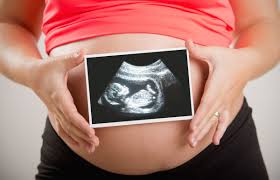
Previous studies have demonstrated this by measuring changes in babies' behaviour - for example, by measuring whether babies change the rate of sucking on a pacifier when the speech changes from one language to a different language with different rhythmic properties.

"This early discrimination led us to wonder when children's sensitivity to the rhythmic properties of language emerges, including whether it may in fact emerge before birth," said Utako Minai, associate professor at University of Kansas in the US.

"Foetuses can hear things, including speech, in the womb. It's muffled but the rhythm of the language should be preserved and available for the foetus to hear, even though the speech is muffled," he said.

Two dozen women, averaging roughly eight months pregnant, were examined using magnetocardiogram (MCG).

"It (MCG) fits over the maternal abdomen and detects tiny magnetic fields that surround electrical currents from the maternal and foetal bodies," said Kathleen Gustafson, research associate professor at University of Kansas.

That includes heartbeats, breathing and other body movements.

"The foetal brain is developing rapidly and forming networks. The foetus is exposed to maternal gut sounds, her heartbeats and voice, as well as external sounds," Gustafson said. "Without exposure to sound, the auditory cortex wouldn't get enough stimulation to develop properly. This study gives evidence that some of that development is linked to language," she added.

Researchers had a bilingual speaker make two recordings, one each in English and Japanese, to be played in succession to the foetus. English and Japanese are argued to be rhythmically distinctive.

English speech has a dynamic rhythmic structure resembling Morse code signals, while Japanese has a more regular-paced rhythmic structure.

The foetal heart rates changed when they heard the unfamiliar, rhythmically distinct language (Japanese) after having heard a passage of English speech, while their heart rates did not change when they were presented with a second passage of English instead of a passage in Japanese.

"These results suggest that language development may indeed start in utero. Foetuses are tuning their ears to the language they are going to acquire even before they are born, based on the speech signals available to them in utero," said Minai.

"Pre-natal sensitivity to the rhythmic properties of language may provide children with one of the very first building blocks in acquiring language," he said. The research was published in the journal NeuroReport.

Comments

Add new comment

  • Coastaldigest.com reserves the right to delete or block any comments.
  • Coastaldigset.com is not responsible for its readers’ comments.
  • Comments that are abusive, incendiary or irrelevant are strictly prohibited.
  • Please use a genuine email ID and provide your name to avoid reject.
Agencies
January 12,2020

Washington D.C., Jan 12: A recent study has claimed that people end up wasting almost an entire day when they take a vacation.

This can happen while standing in a queue or searching for places to visit, people do not keep a count of the time they have actually utilised during the trip. As a result, they end up doing much lesser activities than they originally had planned.

According to a recent report in Fox News, the study has also shared the fact that people try to justify time waste with planning and scheduling activities whereas the truth is that these things can be done well ahead to save time during the trip.

The average time waste according to the study commissioned by Sykes Holiday Cottages also said the people taking a seven days' trip waste a minimum of 17-and-a-half hours to figure out various factors.

But there are other causes involved as well. When one visits any crowded location, the real-time spent to enjoy the location is lesser than the time spent on reaching and trying to get involved. For instance, if one visits an amusement park, the activities take lesser time than the preparatory and other phases.

Comments

Add new comment

  • Coastaldigest.com reserves the right to delete or block any comments.
  • Coastaldigset.com is not responsible for its readers’ comments.
  • Comments that are abusive, incendiary or irrelevant are strictly prohibited.
  • Please use a genuine email ID and provide your name to avoid reject.
Agencies
January 20,2020

Washington D.C., Jan 20: An American bride asked for money from her invitees so that they can be on the 'exclusive guest list'.

Weddings can be surely expensive. But is it feasible for one to charge the guests to make up for the expenses?

According to Fox News, that is exactly what happened in a recent American wedding. A 19-year-old shared on Reddit that her cousin was getting married on Sunday and announced that she would charge 50 dollars to those who wanted to attend her wedding.

"She said that they can Venmo her money so there won't be no [sic] problems and everyone who paid will be added onto the 'exclusive guest list' which basically means you won't have to wait in line while other guests pay," wrote the user named DaintySheep.

While she refused to pay for entry into her cousin's wedding the bride-to-be contacted the elders in the family which ended up in an embarrassing situation.

"She wanted to get the money she spent on her special day back. I told her I wouldn't be able to come because this was outrageous and that I wish her well on her special day. She contacted my aunt and my aunt called me cheap and rude. My parents offered to pay for my entry, but I refused," continued the disheartened girl.

While in almost every nook and cranny of the world gifting the bride-groom with money is a tradition, asking for money from friends and family to replenish the money spent on a wedding is can be said to be a rare scenario.

Comments

Add new comment

  • Coastaldigest.com reserves the right to delete or block any comments.
  • Coastaldigset.com is not responsible for its readers’ comments.
  • Comments that are abusive, incendiary or irrelevant are strictly prohibited.
  • Please use a genuine email ID and provide your name to avoid reject.
Agencies
January 7,2020

Washington, Jan 7: Facebook will ban deepfake videos ahead of the US elections but the new policy will still allow heavily edited clips so long as they are parody or satire, the social media giant said Tuesday.

Deepfake videos are hyper-realistic doctored clips made using artificial intelligence or programs that have been designed to accurately fake real human movements.

In a blog published following a Washington Post report, Facebook said it would begin removing clips that were edited--beyond for clarity and quality--in ways that "aren't apparent to an average person" and could mislead people.

Clips would be removed if they were "the product of artificial intelligence or machine learning that merges, replaces or superimposes content onto a video, making it appear to be authentic," the statement from Facebook vice-president Monika Bickert said.

However, the statement added: "This policy does not extend to content that is parody or satire, or video that has been edited solely to omit or change the order of words."

US media noted the new guidelines would not cover videos such as the 2019 viral clip -- which was not a deepfake -- of House Speaker Nancy Pelosi that appeared to show her slurring her words.

Facebook also gave no indication on the number of people assigned to identify and take down the offending videos, but said videos failing to meet its usual guidelines would be removed, and those flagged clips would be reviewed by teams of third-party fact-checkers -- among them AFP.

The news agency has been paid by the social media giant to fact-check posts across 30 countries and 10 languages as part of a program starting in December 2016, and including more than 60 organisations.

Content labeled "false" is not always removed from newsfeeds but is downgraded so fewer people see it -- alongside a warning explaining why the post is misleading.

Comments

Add new comment

  • Coastaldigest.com reserves the right to delete or block any comments.
  • Coastaldigset.com is not responsible for its readers’ comments.
  • Comments that are abusive, incendiary or irrelevant are strictly prohibited.
  • Please use a genuine email ID and provide your name to avoid reject.