



Belgium Eliminates Team USA

July 2, 2014

USA Fall

Salvador/Brazil, Jul 2: It felt as if Tim Howard would never go down. As if the United States would never go down, standing there, taking shots like an undersized fighter clinging to a puncher's chance. Howard saved with his hands, his feet, his legs, his chest.

Trying to figure out where soccer fits into the fabric of America is a popular topic these days but, on Tuesday, sports fans across the country were inspired by the performance of a soccer goalkeeper. In a loss.

The ending was cruel, but then so is the game. The United States' captivating run in the World Cup ended here, on the coast of Brazil, as Belgium beat the Americans, 2-1 after extra time, to eliminate the U.S. A win would have sent the Americans to a mouth-watering quarterfinal against Lionel Messi and Argentina on Saturday; this loss, instead, sent them home.

Of course, they did not go quietly. Buoyed by the incredible showing from Howard, whose 16 saves were the most by a goalkeeper in a World Cup game since 1966, the U.S. scraped into extra time tied at 0-0 and then responded after giving up two goals in the first of the two 15-minute extra periods. Julian Green, a substitute making his first World Cup appearance, scored to set up a frantic finish.

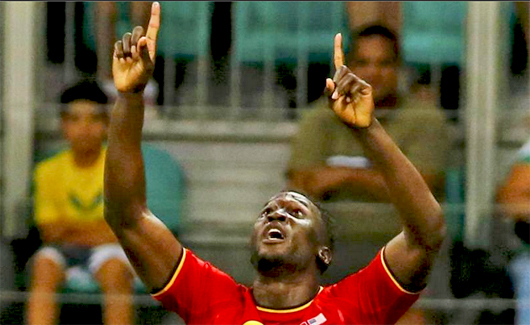
Ultimately, there was not enough from the Americans. Three draining group games in far-flung locations - including a trip to the Amazon - left the team gasping for air at the finish, and Romelu Lukaku's goal in the 105th minute proved to be the difference for Belgium.

At the final whistle, the fans here applauded, knowingly, surely mirroring the reactions of those watching on television back home. The ride had been incredible: Americans purchased more tickets to games here than fans from any country other than Brazil, and television ratings in the U.S. blasted through ceilings, surpassing those of the NBA finals or the World Series.

Watch parties, too, popped up in places far more varied than just craft breweries in New York, with fans gathering everywhere from Hermosa Beach in California to a library in Birmingham, Alabama, to the Tulsa Drillers minor league baseball stadium in Oklahoma. A gathering at Grant Park in Chicago on Tuesday was moved to nearby Soldier Field to accommodate a crowd reported to exceed 25,000.

There are many explanations for why the World Cup, finally, caught fire in the U.S. this year. Some have pointed to Brazil's time zone being favorable for U.S. viewers (especially as compared to South Africa four years ago). Others say soccer's spike is simply the result of increasing interest among Hispanics and Millennials - in other words, a steady rise in the number of soccer-loving children growing up to become consumer adults.

"These are all young people who grew up with the game, followed the sports, whether it be the English Premier League or Major League Soccer, and they don't need to be convinced that soccer is a sport that is worthy of their attention," said Don Garber, the commissioner of MLS. "The country has changed. This is a new America."

Statistics seem to support that claim. Roughly 14 percent of people between the ages of 12-24 said professional soccer was their favorite sport, second only to the NFL, according to Rich Luker, who runs a sports research firm. That leads to savvier and more-informed fans who are more likely to continue following the sport even after the pageantry of the World Cup is over.

"Fans are connecting the dots," said Jeff L'Hote, who runs a soccer-focused management consultancy. "One of the great things about the continued maturation of the sport is people know that Messi plays for Barcelona, not just Argentina."

Whatever the theory, the sheer entertainment value of this tournament has surely helped drive interest. Including Tuesday's games, 154 goals have already been scored, more than the total for the entire 2010 World Cup.

Also, for casual U.S. fans who find watching games end in ties about as appealing as doing their taxes, this tournament has been a revelation: there were only nine draws in the 48 group stage games, or four fewer than the average during the past four World Cups.

The grittiness of the U.S. team has been a draw, too. Drama, in one form or another, has followed the Americans ever since they opened a pre-tournament training camp in Northern California in early May.

First there was the question about whether leaving Landon Donovan off the roster was a bad mistake. Then came concerns about whether the Americans could win a must-have game against Ghana (yes, barely); whether they could get a decent result against Portugal (yes, agonizingly) and, finally, whether they could avoid a blowout against Germany (yes, mercifully).

Through it all, fans back in the United States gnawed through fingernails or, for those who followed the games via social media, clicked frantically as the Americans took each of their games into the final minutes with the result still in doubt.

It happened again here. Belgium, which won all three of its group games with late goals, was the aggressor from the start, neutralizing coach Jurgen Klinsmann's attempts to open up the U.S. attack with more players pushing forward.

Things got worse for the U.S. when Fabian Johnson, one of Klinsmann's most reliable players on the outside, pulled up with a hamstring injury and was taken off in the first half.

The Americans spent most of the rest of the game buckled in, holding off an onslaught from the Belgians, with Howard standing squarely in the middle. Making it to extra time felt like a small victory on its own, but then Lukaku's fresh legs led to Kevin De Bruyne lashing a shot past Howard from close range. Moments later, Lukaku claimed his own goal, too.

Green provided a flicker of hope and, with Howard making two more important saves to keep the game in range, the U.S. kept pushing.

Clint Dempsey missed a chance. Chris Wondolowski missed a chance. The Belgian goalkeeper, Thibaut Courtois, dived to push a shot away.

This time, the miracle never came.

At the final whistle, many of the U.S. players collapsed to the ground. Howard did not. He bent at the waist for just a moment, his hands on his knees, but then he stood up. Even then - in defeat, his tournament over - Howard refused to tumble.

Comments

Add new comment

  • Coastaldigest.com reserves the right to delete or block any comments.
  • Coastaldigset.com is not responsible for its readers’ comments.
  • Comments that are abusive, incendiary or irrelevant are strictly prohibited.
  • Please use a genuine email ID and provide your name to avoid reject.
Agencies
January 16,2020

New Delhi, Jan 16: Board of Control for Cricket in India (BCCI) on Thursday condoled the demise of India's super cricket fan, 87-year-old Charulata Patel.

"#TeamIndia's Superfan Charulata Patel Ji will always remain in our hearts and her passion for the game will keep motivating us. May her soul rest in peace," BCCI tweeted.

Patel had made herself a household name after turning up for India's matches during the 2019 World Cup.

She went on to storm social media after she was seen cheering for the Men in Blue during their World Cup clash against Bangladesh.

After the match, the entire Indian side went to meet Patel and both Rohit Sharma and Virat Kohli were seen meeting the octogenarian fan.

"I am a very religious person and have so much trust in God. So, when I pray, it comes true and I am saying that India is going to get the World Cup, definitely," Patel had told ANI during the World Cup.

The 87-year old had caught everyone's eyes when she was ardently cheering for the Indian team when they were batting.

Patel had also stated that she was there in the stadium when India lifted their first World Cup, back in 1983, under the leadership of former cricket Kapil Dev.

"I have been there. When they won the World Cup, I was so proud, I started dancing. And today also, I told my granddaughter that when India is going to defeat Bangladesh, I am going to dance," she had said.

"I have been watching cricket for decades. When I was in Africa, I used to watch it, then I came to this country in 1975. Here I had work because of which I did not get time to watch but I used to watch it on TV. But nowadays as I am not working, so I have the interest and I am very lucky that I get a chance to watch cricket," she added. 

Comments

Add new comment

  • Coastaldigest.com reserves the right to delete or block any comments.
  • Coastaldigset.com is not responsible for its readers’ comments.
  • Comments that are abusive, incendiary or irrelevant are strictly prohibited.
  • Please use a genuine email ID and provide your name to avoid reject.
News Network
June 15,2020

Melbourne, Jun 15: Star Indian all-rounder Ravindra Jadeja is the best fielder in the game right now, according to Australian batting star Steve Smith, who also rated KL Rahul as the most impressive among the younger crop.

Smith, who answered questions sent in by his fans on Instagram on Sunday, also said the Indian Premier League is his favourite tournament to play in.

Jadeja known for his quick and sharp fielding tactics has earned praise from several former players and respect from the current stars and Smith is no different.

Asked who the best fielder in the current lot of players Smith simply replied stating it was Jadeja.

When quizzed about which Indian player has impressed him the most, the Australian batting mainstay said: "KL Rahul. Very good player!"

Rahul, who has played 36 Tests, 32 ODIs and 42 T20Is for Indian, has become a regular member of the national team in white-ball cricket. Besides showcasing his skills with the willow, Rahul also bears the responsibility of being the wicketkeeper in the limited overs format.

Asked Mahnedra Singh Dhoni, Smith responded saying the former Indian skipper is a "Legend! Mr Cool". While he called the current captain Virat Kohli a "freak" when it comes to batting ability.

The Rajasthan Royals batsman, who rated his first innings his 144 at Birmingham in the first Ashes Test last year as his favourite Test knock till date, said the Indian Premier League (IPL) is his favourite tournament.

"Tough to beat the IPL. Playing with and against the best players from around the world."

India is scheduled to travel to Australian for a full series later the year and the 31-year-old said : "Can''t wait. Going to be awesome."

Asked about his opinion on India batting great Rahul Dravid, Smith said "what a lovely gentleman and seriously good player."

Comments

Add new comment

  • Coastaldigest.com reserves the right to delete or block any comments.
  • Coastaldigset.com is not responsible for its readers’ comments.
  • Comments that are abusive, incendiary or irrelevant are strictly prohibited.
  • Please use a genuine email ID and provide your name to avoid reject.
Agencies
April 2,2020

Lausanne, Apr 2: The postponement of the Tokyo Olympics and the shutdown of the sporting calendar because of the coronavirus pandemic are going to hit international sports federations hard financially.

Many sports that are part of the Games depend heavily on the payouts every four years from the International Olympic Committee (IOC).

"The situation is tense and very gloomy. An assessment will be made, but clearly some posts are under threat," said an official of a major international federation.

The 28 international federations (IF) of the sports that were due to be present at the Tokyo Olympics, would have received substantial sums from the IOC.

However, the postponement of the Games until 2021 could lead to a freeze of their payment.

"We have a lot of IF with substantial reserves, but others work on a different business model, they have income from major events which are suspended, which can be a problem for the cashflow if they don't have enough reserves," said Andrew Ryan, director general of the Association of International Olympic Summer Sports Federations (ASOIF), which is responsible for distributing this money.

The five additions to the Tokyo Games programme - karate, surfing, skateboarding, climbing and baseball/softball - are not eligible.

The Olympic payout totalled 520 million after the Rio Games, four years ago.

"The Olympic money could be less than for Rio 2016," Ryan warned before adding: "My advice is to budget the same as in Rio".

The federations receive money on a sliding scale determined by their audience and size.

The three largest (athletics, swimming and gymnastics) can expect approximately 40 million.

For the second tier, made up of cycling, basketball, volleyball, football and tennis, the sum is 25 million.

For group three, which contains eight sports, including boxing, rowing, judo and table tennis, it is 17 million.

The nine sports in the next level (including sailing, canoing and fencing) receive 12 million.

For the three in the last category (rugby, golf, modern pentathlon) the payout is 7 million.

For the largest associations, such as football's FIFA which has a 1.5 billion nest egg, or basketball body FIBA which has CHF 44.4 million (42 million euros) in reserves, IOC aid represents a small proportion of their income.

For others, it is vital.

"Some IF probably don't have the cashflow to survive one year," said Ryan.

For most federations, the postponement of the Olympic Games has a domino effect, forcing them to reschedule their own money-earning competitions.

"The revenues from these events will eventually come in," said Ryan. "But this impacts the cashflow." World Athletics has already postponed the 2021 World Championships in Eugene, Oregon to 2022.

The International Swimming Federation (FINA) will have to do the same for its World Championships scheduled for next summer in Fukuoka, Japan, when they would probably clash with the Tokyo Games.

"One edition of the World Championships means for us 10 million in revenues," said one sports federation official, speaking on condition of anonymity.

"If this income is postponed, totally or partially, for a year, we will face major problems, especially if the IOC money, originally expected in September, is not paid out."

The Singapore-based International Table Tennis Federation has already taken steps, with "the Executive Committee agreeing to reduce their expenses and senior staff offering to take a salary reduction," said marketing director Matt Pound, but, he added,"further cuts will take place if needed."

- 'Significant loss of revenue' -

The ITTF has suspended all its competitions until June and that is costly.

Kim Andersen, the Danish president of London-based World Sailing, said commercial revenues are not immune.

"The IOC will eventually pay out its aid, but what weighs most heavily is the uncertainty about whether our competitions will be held and whether our sponsors will be maintained," he said.

The IOC is not prepared to go into details of what it plans.

"It is not possible at this stage to assess the overall impact" of the postponement of the Tokyo Olympics, an official told AFP.

"It depends on a number of variables that are currently being studied." According to an official of one federation: "the IOC will discuss on a case-by-case basis, sport by sport".

Another option is for the federations to ask for a share of the public aid set up to deal with the coronavirus crisis, in Switzerland, where 22 ASOIF members are based and also in the United Kingdom, home of World Sailing.

"Can sports federations benefit from federal aid? The answer is yes, in principle," Philippe Leuba, State Councillor of the canton of Vaud, in charge of the economy and sport, told.

Comments

Add new comment

  • Coastaldigest.com reserves the right to delete or block any comments.
  • Coastaldigset.com is not responsible for its readers’ comments.
  • Comments that are abusive, incendiary or irrelevant are strictly prohibited.
  • Please use a genuine email ID and provide your name to avoid reject.