Bernie Sanders' J&K Talk "Influenced By Pak Campaign Manager": US Veteran

Agencies
September 2, 2019

Washington, Sept 2: US Senator and Democratic presidential contender Bernie Sanders has termed India's action in Kashmir as "unacceptable" to his cheering Muslim audience in Houston. But according to veteran US Army Colonel Lawrence Sellin, Sanders' statement was likely influenced by his Pakistani-American campaign manager and Muslim activist, Faiz Shakir.

Sanders told a gathering of Muslims that he was "deeply concerned" about the situation in Kashmir and asked the US government to "speak out boldly in support of a UN-backed peaceful resolution to resolve the issue.

Addressing the annual convention of the Islamic Society of North America in Houston on Saturday, the 77-year-old leader also sought an immediate end to the communications blockade in Kashmir.

"I am deeply concerned about the situation in Kashmir," Sanders said while addressing one of the largest Muslim gatherings in the country.

He also tweeted: "India's action [in Kashmir] is unacceptable and the communications blockade must be lifted immediately, and the US government must be speak out boldly in support of international humanitarian live and in support of a UN backed peaceful resolution" @BernieSanders #isnacona

Sellin, a veteran of the Afghanistan and Iraq war, tweeted that Sanders is totally ignorant about Kashmir and his statement was due to the prodding of Shakir.

"Bernie Sanders couldn't find Kashmir on a map if it was colored with a bright blue Crayon. That statement was likely influenced by his Pakistani campaign manager & Muslim activist, Faiz Shakir, who may be aggressively promoting pro-Pakistani positions," he posted.

A day ago, reacting to Imran Khan's opinion piece in the NYT, where he had threatened the world with the spectre of a nuclear war over Kashmir, Sellin had tweeted: "Lunatics as leaders with tens of thousands of home-grown terrorists & nuclear weapons. Precisely the reason Pakistan needs to be de-nuclearized & broken up into less dangerous pieces.

Imran Khan threatens nuclear war with "consequences for the whole world".

Comments

Add new comment

  • Coastaldigest.com reserves the right to delete or block any comments.
  • Coastaldigset.com is not responsible for its readers’ comments.
  • Comments that are abusive, incendiary or irrelevant are strictly prohibited.
  • Please use a genuine email ID and provide your name to avoid reject.
News Network
July 1,2020

As Peru begins to ease its strict coronavirus lockdown, the country's biggest LGBTQ nightclub opened its doors on Tuesday, but there will be no nighttime revellers; its dance floor will instead be filled with shelves stocked with groceries.

Instead of slinging cocktails at the bar or dancing on stage, ValeTodo Downtown's famed staff of drag queens will sell customers daily household products as the space reopens as a market while nightclubs are ordered to remain closed.

The Peruvian government will lift the lockdown in most regions of the country at the beginning of July but will keep borders closed, as well as nightclubs and bars.

The lockdown has been a struggle for the club's 120 employees like drag queen Belaluh McQueen. Her life completely changed when the government announced the quarantine. Her nights were spent at home, rather than performing as a dancer at the club in vivid-coloured costumes.

"I was very depressed because I have been doing this art for years, but you have to adapt to new challenges for the future," said McQueen, who is identified by her stage name.

Now McQueen is back to work as a grocery store employee, wearing a sequined suit, high heels and a mask. A DJ will play club music as patrons shop. "We have a new job opportunity," McQueen added.

Renamed as Downtown Market, the club, which has been a mainstay hallmark of the local LGBTQ community, ushered in its reopening with an inauguration ceremony.

"Before, I used to come here to dance and have a good time, but now we come to buy," said Alexandra Herrera, a regular attendee of the club. "The thing is to reinvent yourself."

The club's general manager, Claudia Achuy, said that the pandemic impacted the heart of Lima nightlife, but she chose to reopen as a market rather than risk cutting staff. "If we had just stayed as a nightclub we did not have a close horizon or a way of working," Achuy said.

Peru's confirmed coronavirus cases rose to 282,364 with 9,504 associated deaths on Monday, according to government data. It has the second-highest outbreak in Latin America after Brazil, according to a Reuters tally.

Comments

Add new comment

  • Coastaldigest.com reserves the right to delete or block any comments.
  • Coastaldigset.com is not responsible for its readers’ comments.
  • Comments that are abusive, incendiary or irrelevant are strictly prohibited.
  • Please use a genuine email ID and provide your name to avoid reject.
News Network
February 14,2020

London, Feb 14: Five years ago Britain’s new finance minister Rishi Sunak wasn’t even a member of parliament and now he is running the world's fifth largest economy.

The 39-year-old former Goldman Sachs banker was appointed in dramatic fashion on Thursday when incumbent Sajid Javid unexpectedly quit — in a row over advisers — during what Downing Street had cast as a routine ministerial reshuffle.

Sunak is married to the daughter of Infosys co-founder NR Narayana Murthy, and was hand-picked to take over an ultra-safe seat in northern England, previously represented by former Conservative Party leader William Hague. The Murthy family was not reachable for comment.

In July, when he was promoted chief secretary to the Treasury, Murthy had said: “Our advice to our children, including Rishi, has been to work hard, be honest, and do good for society…We wish him well.”

After Thursday’s announcement, Sunak said: “Delighted to be appointed... Lots to get on with.”

Tipped for Promotion

As Boris Johnson moves to increase control of the finance ministry, one of the youngest chancellors in history will face a prime minister who wants to increase government spending on everything from infrastructure and police to health and education.

Sunak, seen as a rising star in the ruling Conservative Party since he entered Parliament in 2015, had been tipped for promotion to a senior post in the ministerial rejig as Johnson put together his post-Brexit cabinet.

But, despite an already rapid ascent through the ranks of government, few expected the Oxford University Politics, Philosophy and Economics graduate to ascend to one of the highest offices in the land.

Sunak had been serving as Javid’s deputy in the finance ministry since Johnson promoted him upon taking office in July 2019. Prior to that he had served as a junior housing minister.

“From working in my mum’s tiny chemist shop to my experience building large businesses, I have seen first-hand how politicians should support free enterprise and innovation to ensure our future prosperity,” Sunak says on his website.

Smooth and loyal

Seen as a smooth media performer and ultra-loyal member of the Conservative Party, Sunak has been used by the government to present and defend their policies in television interviews — a sign of trust from Johnson, who has a fraught relationship with Britain’s media.

Sunak takes control at a critical juncture for Britain’s $2.7 trillion economy. He will have to steer the economy through the turbulence of leaving the European Union and the forging of new trade links that will define Britain’s new relationship with the world.

However, the power struggle that forced his predecessor Javid to quit hints at a more diminished role for what is the second most powerful position in the government — with Johnson’s office wanting to centralise control and minimise dissent.

Sunak is one of the three ministers of Indian origin in Johnson’s cabinet, the other two being Priti Patel and Alok Sharma. Patel remains the interior minister after the cabinet reshuffle while Sharma, a former minister for international development, was appointed the new minister for business. Sunak’s father was a doctor and his mother ran a chemist shop. Before entering politics he worked for Goldman Sachs and a hedge fund, then co-founded an investment firm. He also has an MBA from Stanford University.

Comments

Add new comment

  • Coastaldigest.com reserves the right to delete or block any comments.
  • Coastaldigset.com is not responsible for its readers’ comments.
  • Comments that are abusive, incendiary or irrelevant are strictly prohibited.
  • Please use a genuine email ID and provide your name to avoid reject.
News Network
July 27,2020

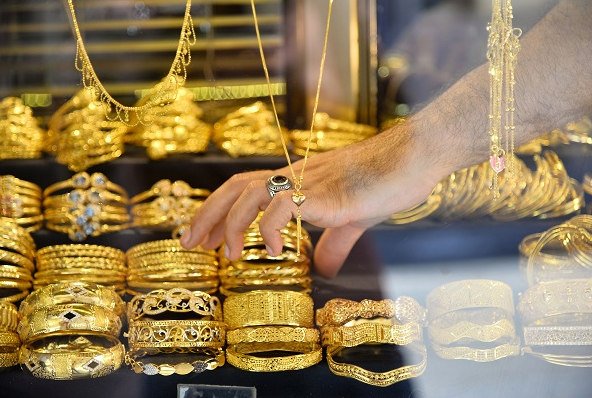
Tokyo, Jul 27: Gold hit an all-time high on Monday as tit-for-tat consulate closures in China and the United States rattled investors, boosting the allure of safe-haven assets, although sentiment was mixed with tech gains supporting some Asian stocks.

MSCI's ex-Japan Asia-Pacific index rose 1.3 percent as Taiwan's TSMC, Asia's third-largest company by market capitalisation, rose almost 10 percent.

The chipmaker's gains boosted other tech stocks in the region and came after rival Intel signalled it may give up manufacturing its own components due to delays in new 7-nanometer chip technology.

Also soothing sentiment, Chinese shares eked out gains after big falls late last week, with CSI300 index rising 0.5 percent.

S&P500 futures were last up 0.4 percent in choppy trade while Japan's Nikkei fell 0.5 percent, resuming trade after a long weekend and catching up with falls in global shares late last week.

Global shares had lost steam last week after Washington ordered China's consulate in Houston to close, prompting Beijing to react in kind by closing the US consulate in Chengdu.

US Secretary of State Mike Pompeo took fresh aim at China last week, saying Washington and its allies must use "more creative and assertive ways" to press the Chinese Communist Party to change its ways.

"US President (Donald) Trump used to say China's President Xi Jinping is a great leader. But now Pompeo's wording is becoming so aggressive that markets are starting to worry about further escalation," said Norihiro Fujito, chief investment strategist at Mitsubishi Securities.

Gold rose 1.0 percent to a record high of $1,920.9 per ounce, surpassing a peak touched in September 2011, as Sino-US tensions boosted the allure of safe-haven assets, especially those not tied to any specific country.

The yellow metal is also helped by aggressive monetary easing adopted by many central banks around the world since the pandemic plunged the global economy into a recession.

Some investors fret such an unprecedented level of money-printing could eventually lead to inflation.

MORE STIMULUS

Hopes of a quick US economic recovery are fading as coronavirus infections showed few signs of slowing.

That means the economy could capitulate without fresh support from the government, with some of earlier steps such as enhanced jobless benefits due to expire this month.

Investors hope US Congress will agree on a deal before its summer recess but there are some sticking points including the size of the stimulus and enhanced unemployment benefits.

US Treasury Secretary Steve Mnuchin said the package will contain extended unemployment benefits with 70 percent "wage replacement".

Democrats, who control the House of Representatives, want enhanced benefits of $600 per week to be extended and look to much bigger stimulus compared with the Republicans' $1 trillion plan.

Investors are looking to corporate earnings from around the world for hints on the pace of recovery in the global economy.

"It looks like rising coronavirus cases are starting to slow down recovery in many countries," said Masahiro Ichikawa, senior strategist at Sumitomo Mitsui DS Asset Management.

Concerns about the US economic outlook started to weigh on the dollar, reversing its inverse correlation with the economic well-being over the past few months.

The dollar index dropped 0.3 percent to its lowest level in nearly two years.

The euro gained 0.3 percent to $1.1693, hitting a 22-month high of $1.16590 as sentiment on the common currency improved after European leaders reached a deal on a recovery fund in a major step towards more fiscal co-operation.

Against the yen, the dollar slipped 0.5 percent to 105.605 yen, a four-month low while the British pound hit a 4 1/2-month high of $1.2832.

Oil prices dipped on worries about the worsening Sino-US relations.

Brent futures fell 0.46 percent to $43.14 per barrel while US crude futures lost 0.44 percent to $41.11.

Comments

Add new comment

  • Coastaldigest.com reserves the right to delete or block any comments.
  • Coastaldigset.com is not responsible for its readers’ comments.
  • Comments that are abusive, incendiary or irrelevant are strictly prohibited.
  • Please use a genuine email ID and provide your name to avoid reject.