



Bill tabled in US House of Rep to revoke Pak's non-NATO ally status

Agencies
June 23, 2017

Washington, Jun 23: A bipartisan bill seeking to revoke Pakistan's status as major non-NATO ally (MNNA) to the US has been introduced in the House of Representatives by two top lawmakers, saying the country failed to effectively fight terrorism.whithus
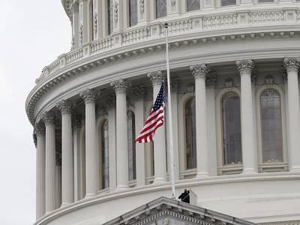
Introduced by Republican Congressman Ted Poe and Democratic lawmaker Rick Nolan, the legislation calls for revoking MNNA status of Pakistan, which was granted to it in 2004 by the then president, George Bush, in an effort to get the country to help the US fight al-Qaida and the Taliban.

"Pakistan must be held accountable for the American blood on its hands," said Poe, who is a member of the foreign affairs committee and serves as chairman of the subcommittee on terrorism, non-proliferation and trade.

"For years, Pakistan has acted as a Benedict Arnold ally of the United States. From harbouring Osama bin laden to backing the Taliban, Pakistan has stubbornly refused to go after, in any meaningful way, terrorists that actively seek to harm opposing ideologies," he said.

'Benedict Arnold' is a byword in the US for treason or betrayal. Benedict Arnold was a general during the American Revolutionary War who originally fought for the American Continental Army but defected to the British Army.

"We must make a clean break with Pakistan, but at the very least, we should stop providing them the eligibility to obtain our own sophisticated weaponry in an expedited process granting them a privileged status reserved for our closest allies," Poe said.

Under MNNA, a country is eligible for priority delivery of defence materials, an expedited arms sale process and a US loan guarantee programme, which backs up loans issued by private banks to finance arms exports.

It can also stockpile US military hardware, participate in defence research and development programmes and be sold more sophisticated weaponry.

Last August, the then secretary of defence, Ash Carter, withheld $300 million in military reimbursements because he could not certify that Pakistan was taking adequate action against the Haqqani network, as required by the National Defence Authorisation Act (NDAA).

"Time and time again, Pakistan has taken advantage of America's goodwill and demonstrated that they are no friend and ally of the United States," Nolan said.

"The fact is, the billions of dollars we have sent to Pakistan over the last 15 years has done nothing to effectively fight terrorism and make us safer. It is time to wake up to the fact that Pakistan has ties to the same terrorist organisations which they claim to be fighting," he said.

The legislation will protect American taxpayer dollars and make the US and the world safer, Nolan said.

Comments

Add new comment

  • Coastaldigest.com reserves the right to delete or block any comments.
  • Coastaldigset.com is not responsible for its readers’ comments.
  • Comments that are abusive, incendiary or irrelevant are strictly prohibited.
  • Please use a genuine email ID and provide your name to avoid reject.
News Network
March 24,2020

New Delhi, Mar 24: Reports of a person in China dying due to a virus called hantavirus have spread panic at a time when the world is battling the pandemic of novel coronavirus, which began in China.

The novel coronavirus has killed over 16,000 people around the world and the outbreak is yet to be brought under control.

This morning, hantavirus became one of the top trends on Twitter after the Chinese state media tweeted about one person in the country dying due the virus. However, it turns out, hantavirus is not a new virus and has been infecting humans for decades.

Global Times, a state-run English-language newspaper, wrote on Twitter on Tuesday, "A person from Yunnan Province died while on his way back to Shandong Province for work on a chartered bus on Monday. He was tested positive for hantavirus. Other 32 people on bus were tested."

Global Times's hantavirus report on Twitter has been shared over 6,000 times.

On Tuesday, hantavirus was one of the top trends on Twitter.

WHAT IS HANTAVIRUS?

Some people are calling it a new virus but so is not the case. United States's National Center for Biotechnology Information (NCBI) in a journal writes that currently, the hantavirus genus includes more than 21 species.

"Hantaviruses in the Americas are known as 'New World' hantaviruses and may cause hantavirus pulmonary syndrome [HPS]," CDC says. "Other hantaviruses, known as 'Old World' hantaviruses, are found mostly in Europe and Asia and may cause hemorrhagic fever with renal syndrome [HFRS]."

Any man, woman, or child who is around mice or rats that carry harmful hantaviruses can get HPS.

People get HPS when they breath in hantaviruses. This can happen when rodent urine and droppings that contain a hantavirus are stirred up into the air. People can also become infected when they touch mouse or rat urine, droppings, or nesting materials that contain the virus and then touch their eyes, nose, or mouth. They can also get HPS from a mouse or rat bite.

In the US, 10 confirmed cases of hantavirus infection in people who visited Yosemite National Park in California, US, in November 2012, were reported. Similarly, in 2017, CDC assisted health officials in investigating an outbreak of Seoul virus infection that infected 17 people in seven states.

WHAT ARE THE SYMPTOMS OF HANTAVIRUS?

If people get HPS, they will feel sick one to five weeks after they were around mice or rats that carried a hantavirus.

At first people with HPS will have:

Fever
Severe muscle aches
Fatigue

After a few days, they will have a hard time breathing. Sometimes people will have headaches, dizziness, chills, nausea, vomiting, diarrhoea, and stomach pain.

Usually, people do not have a runny nose, sore throat, or a rash.

Comments

Add new comment

  • Coastaldigest.com reserves the right to delete or block any comments.
  • Coastaldigset.com is not responsible for its readers’ comments.
  • Comments that are abusive, incendiary or irrelevant are strictly prohibited.
  • Please use a genuine email ID and provide your name to avoid reject.
News Network
May 27,2020

Washington, May 27: Most viruses and other germs do not spread easily on flights, the US Center for Disease Control and Prevention has said in its COVID-19 guidelines which do not recommend following social distancing between two passengers inside a plane or keeping the middle seat unoccupied.

As a result of coronavirus pandemic, air traffic inside the US has come to a near halt. Air traffic is said to be down to about 90 per cent. For all travellers coming from overseas, the Center for Disease Control and Prevention (CDC) has recommended 14 days quarantine.

"Most viruses and other germs do not spread easily on flights because of how air circulates and is filtered on aeroplanes," the CDC has said in its set of COVID-19 guidelines for air travellers.

However, it noted that the air travellers were not risk-free especially in the time of the coronavirus pandemic and recommended Americans to avoid travel as far as possible.

"Air travel requires spending time in security lines and airport terminals, which can bring you in close contact with other people and frequently touched surfaces," it said.

"Social distancing is difficult on crowded flights, and you may have to sit near others (within six feet), sometimes for hours. This may increase your risk for exposure to the virus that causes COVID-19," the CDC said.

But instead of recommended social distancing inside commercial planes, the CDC has advised a series of preventive and hygienic measures to be taken by the airlines pilot and crew to prevent the spread of coronavirus.

The US Department of Transportation and Federal Aviation Administration in its latest safety alerts for operators on May 11 said that air carriers and crews conducting flight operations having a nexus to the US, including both domestic and foreign air carriers, should follow CDC's occupational health and safety guidance.

The CDC issued its guidelines in first guidelines for the airlines and airline crew on March and again in May.

The CDC, which has issued an exhaustive social guideline measures in various sections, is silent on keeping the middle seat of a plane unoccupied so as to maintain the six feet distance between two passengers.

It calls for the plane crew to report to the CDC a traveller with specific COVID-19 symptoms like fever, persistent cough, difficulty in breathing and appearing unwell.

Asking the airlines and cabin crew to review infection control guidelines for cabin crew, the CDC recommends several measures for cabin crew to protect themselves and others, manage a sick traveller, clean contaminated areas, and take actions after a flight.

Prominent among them include washing hands often with soap and water for at least 20 seconds, particularly after assisting sick travellers or touching potentially contaminated body fluids or surfaces and use of alcohol-based hand sanitizer (containing at least 60 per cent alcohol) if soap and water are not available.

Airlines should consider providing alcohol-based hand sanitizer to cabin and flight crews for their personal use, it said.

The CDC guidelines do not recommend following social distancing inside a plane between two passengers or keeping the middle seat unoccupied. But it asks to minimise contact between passengers and cabin crew and the sick person.

"If possible, separate the sick person from others (by a distance of 2 meters or 6 feet, ideally) and designate one crew member to serve the sick person. Offer a facemask, if available and if the sick person can tolerate it. If a facemask is not available or cannot be tolerated, ask the sick person to cover their mouth and nose with tissues when coughing or sneezing," said the CDC guidelines.

If no symptomatic passengers were identified during or immediately after the flight, the CDC recommends airlines to follow routine operating procedures for cleaning aircraft, managing solid waste, and wearing PPE.

"If symptomatic passengers are identified during or immediately after the flight, routine cleaning procedures should be followed, and enhanced cleaning procedures should also be used," it said.

Clean porous (soft) surfaces (e.g, cloth seats, cloth seat belts) at the seat of the symptomatic passengers and within 6 feet of the symptomatic passengers in all directions, it added.

Comments

Add new comment

  • Coastaldigest.com reserves the right to delete or block any comments.
  • Coastaldigset.com is not responsible for its readers’ comments.
  • Comments that are abusive, incendiary or irrelevant are strictly prohibited.
  • Please use a genuine email ID and provide your name to avoid reject.
News Network
June 19,2020

London, Jun 19: Malala Yousafzai, the youngest Nobel Peace Prize winner who once took a bullet for campaigning for girls' education in Pakistan, was over the moon on Friday after completing her degree in Philosophy, Politics and Economics at Britain's prestigious Oxford University.

Malala, 22, who attended Oxford's Lady Margaret Hall college, took to Twitter to share two pictures that show her celebrating the milestone with her family.

"Hard to express my joy and gratitude right now as I completed my Philosophy, Politics and Economics degree at Oxford," she said in the tweet, accompanied by two pictures - one showing her sitting with her family in front of a cake that says: 'Happy Graduation Malala', and the other in which she is covered with cake smiling for the camera.

In the tweet, the famed human rights activist also revealed her plans for the immediate future - Netflix, reading and sleeping.

"I don't know what's ahead. For now, it will be Netflix, reading and sleep," she wrote.

Malala was shot in the head by the Taliban militants in December 2012 for campaigning for female education in the Swat Valley in northeastern Pakistan.

Severely wounded, she was airlifted from one military hospital in Pakistan to another and later flown to the UK for treatment.

After the attack, the Taliban released a statement saying that they would target Malala again if she survived.

At the age of 17, Malala became the youngest recipient of the Nobel Peace Prize for her education advocacy in 2014 when she shared the coveted honour with India's social activist Kailash Satyarthi.

Unable to return to Pakistan after her recovery, she moved to Britain, setting up the Malala Fund and supporting local education advocacy groups with a focus on Pakistan, Nigeria, Jordan, Syria and Kenya.

The Taliban, who are against girls' education, have destroyed many schools in Pakistan.

Comments

Add new comment

  • Coastaldigest.com reserves the right to delete or block any comments.
  • Coastaldigset.com is not responsible for its readers’ comments.
  • Comments that are abusive, incendiary or irrelevant are strictly prohibited.
  • Please use a genuine email ID and provide your name to avoid reject.