



Billionaires who turned to politics

November 10, 2016

Donald Trump has become America's first billionaire businessman to serve as president. But he is following in the footsteps of other moguls who have jumped into the political fray elsewhere in the world.

The track record for these businessmen-turned-political leaders is decidedly mixed. Some have translated their private sector acumen into success in government. Others had tenures marked by scandal, and even a military coup.

Americans have elected presidents with business experience before among them, George W. Bush, who ran an oil company, and Herbert Hoover, a mining executive. But all moved into politics before running for the nation's highest office. Mr. Trump is the first American president to never have held elective office, or other high-level government or military post.

A look at some of the billionaires who blazed a trail from business to politics-

SILVIO BERLUSCONI, ITALY

1

Mr. Trump has drawn more comparisons to the brash Berlusconi, a three-term Italian prime minister, than perhaps any other foreign leader.
Both are irreverent and controversial, and they like to flaunt their lavish lifestyles. Each started his career in real estate, but made his name in the media world- Berlusconi built a fortune buying up television stations and Trump became a fixture in the New York tabloids and reality TV.

For Mr. Trump, that's probably about where he'd like the comparisons to end.

Mr. Berlusconi was a fixture in Italian politics for two decades, but his time in office was frequently marred by scandal. He was convicted of multiple crimes, including tax fraud and paying for sex with an underage prostitute, though the latter charge was overturned by an appeals court.

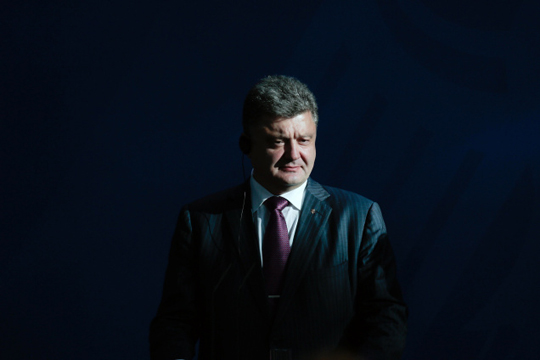
PETRO POROSHENKO, UKRAINE
2

Known as Ukraine's “Chocolate King,” Mr. Poroshenko made his fortune in the confectionary industry. Now he's a key Western partner in trying to resolve the heated dispute between Ukraine and Russia.

Mr. Poroshenko was elected president in 2014 following the public uprising that led to the ouster of Ukraine's pro-Russian leader. The billionaire businessman positioned himself as a friend of Europe and the United States, and indeed speaks and meets regularly with both President Barack Obama and Vice President Joe Biden.

But Mr. Poroshenko's tenure has coincided with more Russian meddling in Ukraine, particularly along the country's shared border. The U.S. has sent Ukraine tens of millions of dollars in non-lethal aid.

Mr. Poroshenko's transition from businessman to political leader also holds warning signs for Mr. Trump's financial future. The Ukrainian leader saw his net worth decline significantly after taking office.

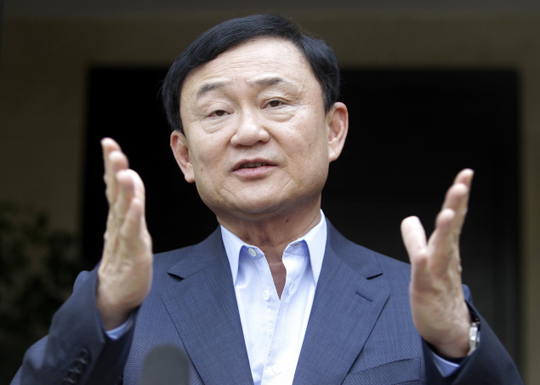
THAKSIN SHINAWATRA, THAILAND
3

A telecommunications billionaire, Mr. Thaksin was Thailand's prime minister until he was ousted in a military coup in 2006.

During his tenure, Mr. Thaksin drew support from poorer voters who backed his reduction in hospital feeds and other populist programs.

But Mr. Thaksin's wealth would contribute to his political downfall. He faced corruption allegations after his family sold a company for $1.9 billion in a way that enabled them to avoid paying taxes on the sale, sparking a year of political tumult in Thailand that ended in the coup.

Though he's been in exile for several years, Thaksin remains involved in Thai politics from affair. Earlier this year, he weighed in on American elections, saying there was “some similarity” between himself and Trump.

“The cultures are very similar, the culture of being a businessman,” Thaksin told the Financial Times. “And then when successful businessmen come to politics, they give fresh air to political campaigns.”

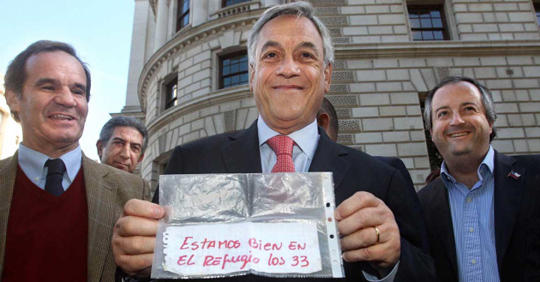
SEBASTIAN PINERA, CHILE
4

Mr. Pinera's financial empire touched numerous parts of Chilean society. He held stakes in the country's largest airline, a television station and the popular football team Colo-Colo.

Turning to politics, Pinera campaigned on his private sector experience and became the first conservative to lead Chile since military rule ended in 1990. But his presidency launched to an inauspicious start a major earthquake disrupted his 2010 inauguration.

Chile experienced solid economic growth during Pinera's four—year term, but the president himself was deeply unpopular. Chile's constitution prohibits presidents from serving two consecutive terms. Pinera is eligible to run again in 2018.

Pinera hasn't been shy about weighing in on the U.S. election, levying sharp criticism of Trump. During an appearance in New York last fall, Pinera said the Republican would be a divisive leader and said his election would be a “tragedy.”

Comments

Add new comment

  • Coastaldigest.com reserves the right to delete or block any comments.
  • Coastaldigset.com is not responsible for its readers’ comments.
  • Comments that are abusive, incendiary or irrelevant are strictly prohibited.
  • Please use a genuine email ID and provide your name to avoid reject.
Agencies
March 18,2020

Thiruvananthapuram, Mar 18: To raise awareness about protective measures against coronavirus, Kerala Police released a dance video on the State Police Media Centre's Facebook page promoting the washing of hands, here on Tuesday.

In the video, the police officers were seen dancing to the tunes of Kalakkatha from the Malayalam action-drama thriller Ayyappanum Koshiyum while demonstrating the right technique for washing hands.

The video gained over 27,000 likes and over 2,400 comments and more than 33,000 netizens shared the video.

The video has received a positive response with users congratulating Kerala Police for the initiative.

"Congrats Kerala police media for this kind of initiative," one user commented on Facebook. Another user thanked the police in the comments section saying, "Super super thanks to KL (Kerala) police."

The number of people who have tested positive for the coronavirus in Kerala is 25.

The total number of confirmed COVID-19 cases in India has reached 147, including 122 Indians and 25 foreign nationals, said the Ministry of Health and Family Welfare earlier today.

Globally, the virus has infected more than 184,000 people and killed more than 7500, as per the data available on the World Health Organisation website.

Comments

Add new comment

  • Coastaldigest.com reserves the right to delete or block any comments.
  • Coastaldigset.com is not responsible for its readers’ comments.
  • Comments that are abusive, incendiary or irrelevant are strictly prohibited.
  • Please use a genuine email ID and provide your name to avoid reject.
Agencies
July 25,2020

In a study conducted in 117 countries, researchers have found that the world is experiencing the most dramatic reduction in the seismic noise (the hum of vibrations in the planet's crust) in recorded history due to global COVID-19 lockdowns.

Measured by instruments called seismometers, seismic noise is caused by vibrations within the Earth, which travel like waves and the waves can be triggered by earthquakes, volcanoes, and bombs - but also by daily human activity like travel and industry.

This quiet period was likely caused by the total global effect of social distancing measures, closure of services and industry, and drops in tourism and travel, the study published in the journal Science, reported.

The new research, led by the Royal Observatory of Belgium and five other institutions around the world including Imperial College London (ICL), showed that the dampening of 'seismic noise' caused by humans was more pronounced in more densely populated areas.

"Our study uniquely highlights just how much human activities impact the solid Earth, and could let us see more clearly than ever what differentiates human and natural noise," said study co-author Stephen Hicks from ICL in the UK.

For the findings, the research team looked at seismic data from a global network of 268 seismic stations in 117 countries and found significant noise reductions compared to before any lockdown at 185 of those stations.

Researchers tracked the 'wave' of quietening between March and May as worldwide lockdown measures took hold.

The largest drops in vibrations were seen in the most densely populated areas, like Singapore and New York City, but drops were also seen in remote areas like Germany's the Black Forest and Rundu in Namibia.

Citizen-owned seismometers, which tend to measure more localised noise, noted large drops around universities and schools around Cornwall, UK and Boston, US - a drop in noise 20 per cent larger than seen during school holidays.

The findings showed that countries like Barbados, where lockdown coincided with the tourist season, saw a 50 per cent decrease in noise.

"The changes have also given us the opportunity to listen in to the Earth's natural vibrations without the distortions of human input," the study authors wrote.

Earlier in April, a study published in the journal Nature, reported at least a 30 per cent reduction in that amount of ambient human noise since lockdown began in Belgium.

Comments

Add new comment

  • Coastaldigest.com reserves the right to delete or block any comments.
  • Coastaldigset.com is not responsible for its readers’ comments.
  • Comments that are abusive, incendiary or irrelevant are strictly prohibited.
  • Please use a genuine email ID and provide your name to avoid reject.
Agencies
February 17,2020

Google on Monday announced it is gradually winding down its free public Wi-Fi Station programme currently available at over 400 railway stations in India, and will work with the Indian Railways and Railtel Corporation to help them with existing sites so they can remain useful resources for people.

Google launched its Station initiative in India in 2015 to bring fast, free public Wi-Fi to over 400 of the busiest railway stations in the country by mid-2020.

"We crossed that number by June 2018 and implemented Station in thousands of other locations around the country in partnership with telecommunications companies, ISPs and local authorities," Caesar Sengupta, Vice President, Payments and Next Billion Users, Google, said in a statement.

"Over time, partners in other countries asked for Station too and we responded accordingly. We're grateful for these partnerships, especially with the Indian Railways and the Government of India, that helped us serve millions of users over the last few years," he added.

According to Google, the decision to shut Station has been taken keeping the affordable mobile data plans and mobile connectivity in mind that is improving globally including in India.

"India, specifically now has among the cheapest mobile data per GB in the world, with mobile data prices having reduced by 95 per cent in the last 5 years, as per TRAI in 2019," said Sengupta.

The Indian users consume close to 10GB of data, each month, on average, according to reports.

"Our commitment to supporting the next billion users remains stronger than ever, from continuing our efforts to make the internet work for more people and building more relevant and helpful apps and services," Sengupta noted.

Global networking giant Cisco last year teamed up with Google to roll out free, high-speed public Wi-Fi access globally, starting with India.

The first pilot under the partnership was rolled out at 35 locations in Bengaluru.

Sengupta said that in addition to the changed context, the challenge of varying technical requirements and infrastructure among our partners across countries has also made it difficult for Station to scale and be sustainable, especially for our partners.

"And when we evaluate where we can truly make an impact in the future, we see greater need and bigger opportunities in building products and features tailored to work better for the next billion user markets," he said.

Comments

Add new comment

  • Coastaldigest.com reserves the right to delete or block any comments.
  • Coastaldigset.com is not responsible for its readers’ comments.
  • Comments that are abusive, incendiary or irrelevant are strictly prohibited.
  • Please use a genuine email ID and provide your name to avoid reject.