'BJP is single largest party...': Fadnavis after Shiv Sena's 50:50 demand

Agencies
October 27, 2019

Mumbai: While the ally Shiv Sena is demanding equal share in power, Maharashtra Chief Minister Devendra Fadnavis on Saturday stressed that the BJP was the single largest party, and said the "BJP-led alliance" will provide a stable government. The process of government formation will start after Diwali, Fadnavis said, addressing party workers at a Diwali gathering here.

With the BJP's tally reduced to 105, much below the halfway mark of 144 in the Assembly, the Shiv Sena, which has won 56 seats in the October 21 elections, has demanded "written assurance" that the BJP will honour "fifty-fifty" power sharing deal.

"The mandate is a clear majority for BJP, Shiv Sena, (and other allies) RPI, RSP, Shiv Sangram. The mandate will be respected. No one should have any doubt," Fadnavis said at the event. "The BJP is the single-largest party as per the mandate. We will elect legislature party leader after Diwali and swearing-in of the new government will take place soon afterwards," he said, adding that the "BJP-led alliance will provide a strong and stable government".

The chief minister also said that the BJP's "strike rate" was better than in 2014. "We contested 260 seats in 2014 and won 47 per cent seats and 28 percent votes. In 2019, we contested 150 seats. We won 70 per cent of seats and 26 per cent votes," he said.

This was the "highest strike rate by any political party", he said. Even in Mumbai, the BJP's strike rate was the highest, he stressed.

Comments

Add new comment

  • Coastaldigest.com reserves the right to delete or block any comments.
  • Coastaldigset.com is not responsible for its readers’ comments.
  • Comments that are abusive, incendiary or irrelevant are strictly prohibited.
  • Please use a genuine email ID and provide your name to avoid reject.
News Network
July 27,2020

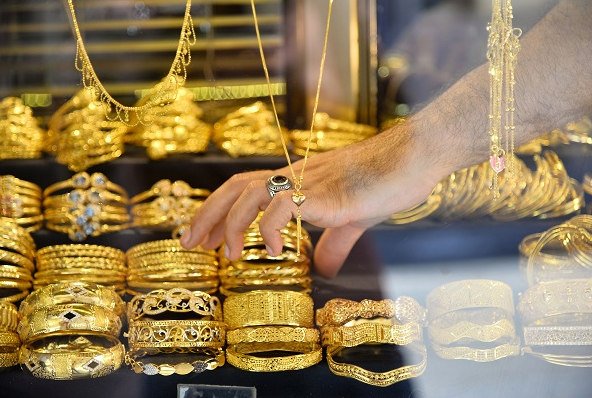
Tokyo, Jul 27: Gold hit an all-time high on Monday as tit-for-tat consulate closures in China and the United States rattled investors, boosting the allure of safe-haven assets, although sentiment was mixed with tech gains supporting some Asian stocks.

MSCI's ex-Japan Asia-Pacific index rose 1.3 percent as Taiwan's TSMC, Asia's third-largest company by market capitalisation, rose almost 10 percent.

The chipmaker's gains boosted other tech stocks in the region and came after rival Intel signalled it may give up manufacturing its own components due to delays in new 7-nanometer chip technology.

Also soothing sentiment, Chinese shares eked out gains after big falls late last week, with CSI300 index rising 0.5 percent.

S&P500 futures were last up 0.4 percent in choppy trade while Japan's Nikkei fell 0.5 percent, resuming trade after a long weekend and catching up with falls in global shares late last week.

Global shares had lost steam last week after Washington ordered China's consulate in Houston to close, prompting Beijing to react in kind by closing the US consulate in Chengdu.

US Secretary of State Mike Pompeo took fresh aim at China last week, saying Washington and its allies must use "more creative and assertive ways" to press the Chinese Communist Party to change its ways.

"US President (Donald) Trump used to say China's President Xi Jinping is a great leader. But now Pompeo's wording is becoming so aggressive that markets are starting to worry about further escalation," said Norihiro Fujito, chief investment strategist at Mitsubishi Securities.

Gold rose 1.0 percent to a record high of $1,920.9 per ounce, surpassing a peak touched in September 2011, as Sino-US tensions boosted the allure of safe-haven assets, especially those not tied to any specific country.

The yellow metal is also helped by aggressive monetary easing adopted by many central banks around the world since the pandemic plunged the global economy into a recession.

Some investors fret such an unprecedented level of money-printing could eventually lead to inflation.

MORE STIMULUS

Hopes of a quick US economic recovery are fading as coronavirus infections showed few signs of slowing.

That means the economy could capitulate without fresh support from the government, with some of earlier steps such as enhanced jobless benefits due to expire this month.

Investors hope US Congress will agree on a deal before its summer recess but there are some sticking points including the size of the stimulus and enhanced unemployment benefits.

US Treasury Secretary Steve Mnuchin said the package will contain extended unemployment benefits with 70 percent "wage replacement".

Democrats, who control the House of Representatives, want enhanced benefits of $600 per week to be extended and look to much bigger stimulus compared with the Republicans' $1 trillion plan.

Investors are looking to corporate earnings from around the world for hints on the pace of recovery in the global economy.

"It looks like rising coronavirus cases are starting to slow down recovery in many countries," said Masahiro Ichikawa, senior strategist at Sumitomo Mitsui DS Asset Management.

Concerns about the US economic outlook started to weigh on the dollar, reversing its inverse correlation with the economic well-being over the past few months.

The dollar index dropped 0.3 percent to its lowest level in nearly two years.

The euro gained 0.3 percent to $1.1693, hitting a 22-month high of $1.16590 as sentiment on the common currency improved after European leaders reached a deal on a recovery fund in a major step towards more fiscal co-operation.

Against the yen, the dollar slipped 0.5 percent to 105.605 yen, a four-month low while the British pound hit a 4 1/2-month high of $1.2832.

Oil prices dipped on worries about the worsening Sino-US relations.

Brent futures fell 0.46 percent to $43.14 per barrel while US crude futures lost 0.44 percent to $41.11.


Comments

Add new comment

  • Coastaldigest.com reserves the right to delete or block any comments.
  • Coastaldigset.com is not responsible for its readers’ comments.
  • Comments that are abusive, incendiary or irrelevant are strictly prohibited.
  • Please use a genuine email ID and provide your name to avoid reject.
News Network
January 10,2020

New Delhi, Jan 10: An IPS officer's thumb was bitten by a woman protester when he was pushing back agitators, who were trying to march towards the Rashtrapati Bhawan here on Thursday, police sources said.

The protesters had gathered after a call was given by JNU Students' Union president Aishe Ghosh to march towards President's House to demand the removal of University's Vice Chancellor, M Jagadesh Kumar.

Ingit Pratap Singh, a 2011 batch officer, who is currently posted as the additional deputy commissioner of the southwest district, was injured in the attack.

According to sources, Singh was trying to pull a male protester when the woman, in a bid to shield her friend, bit Singh's left thumb.

Comments

Add new comment

  • Coastaldigest.com reserves the right to delete or block any comments.
  • Coastaldigset.com is not responsible for its readers’ comments.
  • Comments that are abusive, incendiary or irrelevant are strictly prohibited.
  • Please use a genuine email ID and provide your name to avoid reject.
Agencies
March 9,2020

Mumbai, Mar 9: The mayhem in domestic stock markets deepened with the BSE Sensex falling over 2,400 points and the Nifty50 trading below 10,400 points.

The plunge in the domestic indices was in line with the global markets on persistent fears of economic impact of the coronavirus epidemic.

Stocks of Reliance Industries registered the biggest fall in over 10 years as it fell to Rs 1,094.95 per share. At 1.34 p.m., it was trading at Rs 1,100, lower by Rs 170.05 or 13.39 per cent from its previous close. The stock fell most since October 2008.

The benchmark index of BSE Sensex was trading at 35,232.67 points, lower by 2,343.95 points or 6.24% from the previous close of 37,576.62 points. 

It had opened at the intra-day high of 36,950.20 and has so far touched a low of 35,109.18.

The Nifty50 on the National Stock Exchange was trading at 10,314.25 points, lower by 675.20 points or 6.14% from the previous close. 

It was a sell-off across sectors, led by financial, metal, energy and IT stocks - which weighed on the markets.

Further, crude oil prices also slumped around 30% on Monday as Organization of Petroleum Exporting Countries (OEPC) failed to agree on an output cut deal, eventually causing Saudi Arabia to cut its prices as it is likely to increase its production. Saudi Arabia's stance has already raised concerns of an all-out price war.

Brent crude futures are currently trading around $34 per barrel.

On Saturday, Saudi Arabia announced massive discounts to its official selling prices for April, and the nation is reportedly preparing to increase its production above the 10 million barrel per day mark, according to reports.

As per analysts, the oil market witnessed the worst price fall on Monday since the 1991 Gulf War.

Comments

Add new comment

  • Coastaldigest.com reserves the right to delete or block any comments.
  • Coastaldigset.com is not responsible for its readers’ comments.
  • Comments that are abusive, incendiary or irrelevant are strictly prohibited.
  • Please use a genuine email ID and provide your name to avoid reject.

