BRICS Summit kicks off; Xi, Modi display bonhomie

Agencies
September 4, 2017

Xiamen, (China), Sept 4: The BRICS Summit began here today with a group photograph of leaders of the five countries and was preceded by a warm handshake between Prime Minister Narendra Modi and Chinese President Xi Jinping, who received the leaders of Brazil, Russia and South Africa ahead of the restricted meeting of the grouping.

Modi was the third leader to reach the convention centre, venue of the 9th BRICS Summit in this port city of China and was followed by Russian President Vladimir Putin. Modi is also scheduled to hold a bilateral meeting with Xi tomorrow.

The Summit will be the first gathering when the leaders of Brazil, Russia, India, China and South Africa will meet after New Delhi and Beijing decided on "expeditious disengagement" of their border troops in the disputed Dokalam area on August 28 after over a two month standoff between them.

Apart from the restricted, the leaders will participate in the plenary during which they will explore ways to enhance cooperation within the members of the grouping in key areas.

They will also deliberate on international issues of significance, including global economy and challenges.

The Summit will end with the adoption of a Xiamen declaration, which will capture the essence of the deliberations and future road map.


Comments

Add new comment

  • Coastaldigest.com reserves the right to delete or block any comments.
  • Coastaldigset.com is not responsible for its readers’ comments.
  • Comments that are abusive, incendiary or irrelevant are strictly prohibited.
  • Please use a genuine email ID and provide your name to avoid reject.
coastaldigest.com news network
August 8,2020

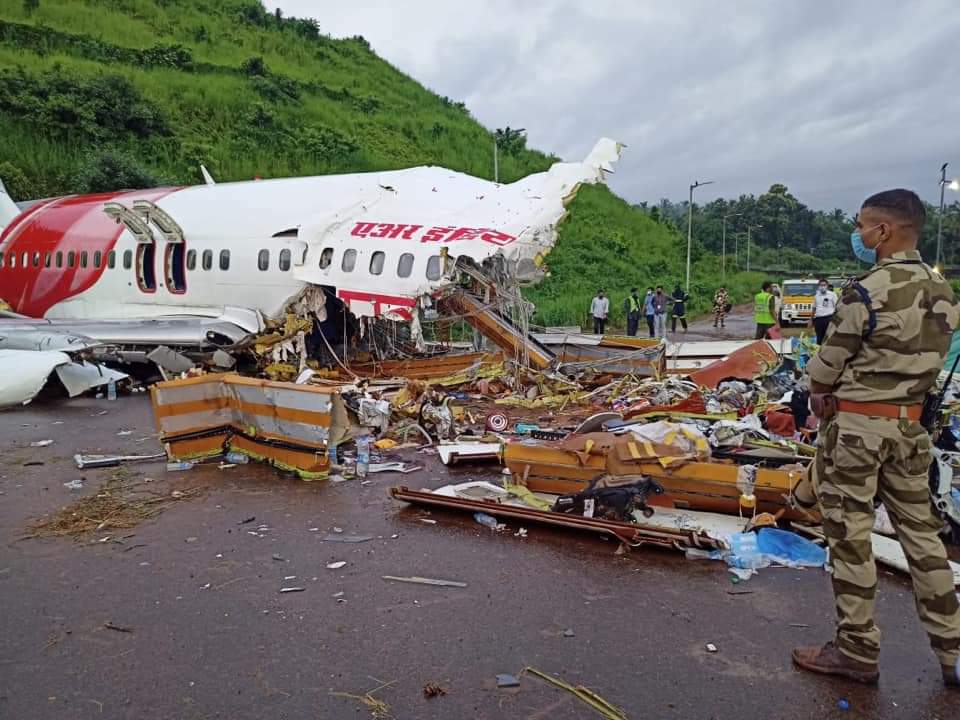
Kozhikode, Aug 8: A tailwind or crosswind could be the reason for the Air India Express flight mishap at Kozhikode international airport in Kerala, according to some aviation experts. 

Team of DGCA and AIE already reached the spot. With the death of the captain and co-pilot in the mishap, the investigation would be focusing mainly on the voice recorders and other technical aspects.

It is learnt that the ill-fated aircraft, IX 1344 with 190 onboard including crew, was initially planning to land on runway-28 of the airport. But later the pilot opted runway-10 which is toward the other direction. Pilots would be taking the decisions on the basis of inputs from ATC.

The questions now doing the rounds are what made the pilot opt runway-10 and whether the tabletop runway lacked adequate safety parameters.

An aviation expert, who didn't want to be quoted, said that Capt Deepak Sathe, who was commandeering the aircraft, was a well-experienced pilot and was also familiar with the terrains. Hence the chances of any error from his part was very unlikely. Hence a fair in-depth probe was required to find the exact cause.

Though the Kozhikode airport has an Instrument Landing System, it was of category-I for which pilot's visibility is very crucial toward a touchdown. Since it is a tabletop airport and rough weather prevailing in the region, the chances of tailwind was also high, said sources.

There had been safety concerns about the airport over quite some time. In 2011 aviation safety consultant captain Mohan Ranganathan reportedly gave a report citing the safety issues, especially the buffer zones at the end of the runway.

However, an AAI officer said that rectification steps were already done by last year by widening the Runway End Safety Area (RESA) from 90 metre to 240 metre. However, the length of the runway had to be reduced to 2,700 metre from 2,850. The AAI was also constantly pressing for increasing the runway length to 3,150 metres. But that was getting delayed due to land acquisition issues pending with the state government.

stm88 info live rtp slot

slot auto scatter hitam

Comments

Add new comment

  • Coastaldigest.com reserves the right to delete or block any comments.
  • Coastaldigset.com is not responsible for its readers’ comments.
  • Comments that are abusive, incendiary or irrelevant are strictly prohibited.
  • Please use a genuine email ID and provide your name to avoid reject.
Agencies
January 11,2020

New Delhi, Jan 11: Senior Congress leader P Chidambaram on Friday said that he has never seen innocents like the Indian people, who believe the claims made by the government on the implementation of its programmes. The former Union Minister, addressing a literary event, said, "I have never seen innocents like the Indian people. If something appears on print (and named two newspapers also), we believe it. We believe anything."

Claims like all villages having been electrified in the country and toilets built for 99 per cent of families in India were being believed, he said.

Similar was the case of the Ayushman Bharat scheme, (Pradhan Mantri Jan Arogya Yojana or PM-JAY is a flagship health care scheme of the Centre), he alleged.

Stating that his Delhi-based driver's father had to get a surgery done under the scheme, he said, however, it could not be performed.

"I asked him (car driver) if he had the Ayushman card and he showed a card and I told him to take it (to hospital). In hospital after hospital, they said they were not aware of anything like that (Ayushman scheme). But we believe that the Ayushman scheme has come to the whole of India," he said.

Further, he said "we believe that for any disease, treatment will be done (indicating the Ayushman scheme) without shelling out money. We are being innocents."

Many news items and data were contrary to the truth, he added.

Comments

Add new comment

  • Coastaldigest.com reserves the right to delete or block any comments.
  • Coastaldigset.com is not responsible for its readers’ comments.
  • Comments that are abusive, incendiary or irrelevant are strictly prohibited.
  • Please use a genuine email ID and provide your name to avoid reject.
News Network
July 1,2020

Jul 1: Hong Kong police moved swiftly on Wednesday against protesters gearing up for the first rally since the introduction of sweeping security legislation, making their first arrest under it and warning of punishment for pro-independence material.

Beijing on Tuesday unveiled the details of the much-anticipated law after weeks of uncertainty, pushing China's freest city and one of the world's most glittering financial hubs onto a more authoritarian path.

As hundreds of protesters gathered downtown for an annual rally marking the 23rd anniversary of the former British colony's handover to China, riot police used pepper spray to arrest at least two people, while one metro station closed.

Police, who earlier banned the rally, cited the law for the first time in confronting protesters and they also made their first arrest under it - a man holding a flag advocating independence.

"You are displaying flags or banners/chanting slogans/or conducting yourselves with an intent such as secession or subversion, which may constitute offences under the ... national security law," police said in a message displayed on a purple banner.

The law will punish crimes of secession, subversion, terrorism and collusion with foreign forces with up to life in prison, heralding a more authoritarian era for the Asian financial hub.

China's parliament adopted it in response to months of pro-democracy protests last year triggered by fears that Beijing was stifling the city's freedoms, guaranteed by a "one country, two systems" formula agreed when it returned to Chinese rule.

Authorities in Beijing and Hong Kong have repeatedly said the legislation is aimed at a few "troublemakers" and will not affect rights and freedoms, nor investor interests.

But critics fear it will crush the freedoms that are seen as key to Hong Kong's success as a financial centre.

"With the release of the full detail of the law, it should be clear to those in any doubt that this is not the Hong Kong they grew up in," said Hasnain Malik, head of equity research, Tellimer in Dubai.

"The difference is that U.S. and China relations are far worse and this could be used as a pretext to impede the role of Hong Kong as a finance hub."

In Beijing, Zhang Xiaoming, executive deputy director of Beijing's Hong Kong and Macau Affairs Office, told reporters suspects arrested by Beijing's new security office in Hong Kong could be tried on the mainland.

He said the mainland's national security office abided by Chinese law and that Hong Kong's legal system could not be expected to implement the laws of the mainland. Article 55 of the law states that Beijing's national security office in Hong Kong could exercise jurisdiction over "complex" or "serious" cases.

Mainland security agencies will also be based in Hong Kong officially for the first time, with powers that go beyond city laws.

"The law is a birthday gift to (Hong Kong) and will show its precious value in the future," Zhang said, adding the law would not be applied retroactively.

On July 1 last year, hundreds of protesters stormed and vandalised the city's legislature to protest against a now-scrapped bill that would have allowed extraditions to mainland China.

Those protests evolved into calls for greater democracy, paralysing parts of the city and paving the way for Beijing's imposition of the law this week.

'INEVITABLE'

Speaking at a flag-raising ceremony to mark the handover anniversary, the city's Beijing-backed leader, Carrie Lam, said the law was the most important development since the city's return to Chinese rule.

"It is also an inevitable and prompt decision to restore stability," Lam said at the same harbour-front venue where 23 years ago the last colonial governor, Chris Patten, a staunch critic of the security law, tearfully handed back Hong Kong to Chinese rule.

Some pro-Beijing officials and political commentators say the law is aimed at sealing Hong Kong's "second return" to the motherland after the first failed to bring residents to heel.

Luo Huining, the head of Beijing's top representative office in Hong Kong, said at the ceremony the law was a "common aspiration" of Hong Kong citizens.

Critics denounced the lack of transparency surrounding the details of the legislation until it was unveiled. It came into force at 11 p.m. (1500 GMT) on Tuesday.

Some pro-democracy activists gave up membership of their groups just before the law came into force, though calling for the campaign for democracy to go on offshore.

"I saw this morning there are celebrations for Hong Kong's handover, but to me it is a funeral, a funeral for 'one country two systems'," said democracy lawmaker Kwok Ka-ki.


Comments

Add new comment

  • Coastaldigest.com reserves the right to delete or block any comments.
  • Coastaldigset.com is not responsible for its readers’ comments.
  • Comments that are abusive, incendiary or irrelevant are strictly prohibited.
  • Please use a genuine email ID and provide your name to avoid reject.