


Busted Pak firm ‘sold 1,198 fake degrees to Saudis’

June 25, 2015

Riyadh, Jun 25: A Pakistani firm under investigation for fraud allegedly sold 1,198 fake degrees to Saudis between 2011 and 2015, a local publication reported on Wednesday.
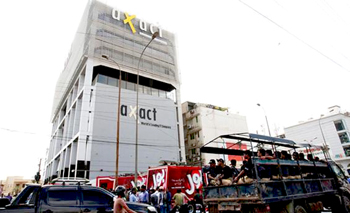
fake degreesPakistani authorities have already arrested the owner of Axact Company, Shoaib Ahmed Shaikh, in Karachi for allegedly selling thousands of fake degrees to customers worldwide during this period.

Saudis received 1,198 fake degrees from nonexistent universities, for between SR50,000 and SR100,000, the report stated. Axact allegedly forged the certificates, with several consulates and government offices in certain countries around the world attesting these documents.

Jasim Al-Khaldi, Saudi chargé de a’ffairs in Islamabad, said the embassy and cultural mission were following up on the investigations. He said the Saudi government wants to know the names of citizens who obtained degrees from the company, and those of Pakistanis working in the Kingdom using these bogus qualifications.

Khayyam Akbar, Pakistani chargé de a’ffairs in the Kingdom, said his government would provide the Saudi government with the names of its citizens with fake degrees as soon as investigations are completed.

The multimillion-dollar fake degree scandal was first scooped by Arab News in 2009. Pakistan’s top investigative agencies launched a probe after the New York Times ran a report in May this year detailing what Arab News had already revealed.

Arab News had followed up on a report that a certain Rochville University had awarded a master’s in business administration to a bulldog named Chester.

The application had been made by the dog’s owner, Vicky Phillips, founder of GetEducated.com, in an attempt to expose the fake university. Rochville’s physical location was a mystery and Arab News learned from a courier company official in Dubai that the degree originated from Axact’s office in Karachi.

When the story was published in Arab News, it received a legal threat from Axact’s lawyers, and the article had to be removed from the Internet. There was, however, no retraction in the print edition and Arab News stood by the story.

Comments

Add new comment

  • Coastaldigest.com reserves the right to delete or block any comments.
  • Coastaldigset.com is not responsible for its readers’ comments.
  • Comments that are abusive, incendiary or irrelevant are strictly prohibited.
  • Please use a genuine email ID and provide your name to avoid reject.
News Network
May 7,2020

Dubai, May 7: Saudi Arabia will emerge as the victor of the oil price war that sent global crude markets into a spin last month, according to two experts in the energy industry.

Jason Bordoff, professor and founding director of the Center for Global Energy policy at New York’s Columbia University, said: “While 2020 will be remembered as a year of carnage for oil nations, at least one will most likely emerge from the pandemic stronger, both economically and geopolitically: Saudi Arabia.”

Writing in the American publication Foreign Policy, Bordoff said that the Kingdom’s finances can weather the storm from lower oil prices as a result of the drastically reduced demand for oil in economies under pandemic lockdowns, and that it will end up with higher oil revenues and a bigger share of the global market once it stabilizes.

Bordoff’s view was reinforced by Sir Mark Moody-Stuart, former chairman of Royal Dutch Shell and one of the longest-standing directors of Saudi Aramco. In an interview with the Gulf Intelligence energy consultancy, he said that low-cost oil producers such as Saudi Arabia would emerge from the pandemic with increased market share.

“Oil is the only commodity where the lowest-cost producers have contained their production and allowed high-cost producers to benefit. When demand recovers this year or next, we will emerge from it with the lowest-cost producers having increased their market share,” Moody-Stuart said.

Bordfoff said that it would take years for the high-cost American shale industry to recover to pre-pandemic levels of output. “Depending on how long oil demand remains depressed, US oil production is projected to decline from its pre-coronavirus peak of around 13 million barrels per day.

“Shale's heady growth in recent years (with production growing by about 1 million to 1.5 million barrels per day each year) also reflected irrational exuberance in financial markets. Many US companies struggling with uneconomical production only managed to stay afloat with infusions of cheap debt. One quarter of US shale oil production may have been uneconomic even before prices crashed,” he said.

Moody-Stuart said that recent statements about cuts to the Saudi Arabian budget as a result of falling oil revenues were “an important step to wean the population of the Kingdom off an entitlement feeling. It means that everybody is joining in it.”

The former Shell boss said that other big oil companies would follow Shell’s recent decision to cut its dividend for the first time in more than 70 years. But he added that Aramco would stick by its commitment to pay $75 billion of dividends this year.

“When a company looks at its forecasts it looks ahead for one year, so for this year it (the dividend) is fine,” he said.

Bordoff added that Saudi Arabia’s action in cutting oil production in response to the pandemic would improve its global position.

“Saudi Arabia has improved its standing in Washington. Following intense pressure from the White House and powerful senators, the Kingdom’s willingness to oblige by cutting production will reverse some of the damage done when it was blamed for the oil crash after it surged production in March,” he said.

“Only a few weeks ago, the outlook for Saudi Arabia seemed bleak. But looking out a few years, it’s difficult to see the Kingdom in anything other than a strengthened position,” Bordoff said.

Comments

Add new comment

  • Coastaldigest.com reserves the right to delete or block any comments.
  • Coastaldigset.com is not responsible for its readers’ comments.
  • Comments that are abusive, incendiary or irrelevant are strictly prohibited.
  • Please use a genuine email ID and provide your name to avoid reject.
Agencies
June 5,2020

Expatriate workers who fail to abide by the coronavirus protocols in Kingdom of Saudi Arabia may face deportation, according to media reports.

“Individuals who fail to abide by preventive measures, including wearing medical or cloth face masks, failing to observe social distancing and refusing to have their temperatures taken, will be fined SR1,000. The fine will be doubled if the violation is repeated. Residents will be deported after paying the fines,” Okaz newspaper said.

Authorities called on people to report offenders by dialling the toll free number 999, except for the holy city of Makka, where the toll free number is 911.

As per the newly-revised Saudi protocols, social gatherings such as mourning or celebration events that take place inside homes, rest houses or farms, are allowed, but attendants should not exceed 50 persons.

The private sector is also required to adhere to precautionary measures: providing their staff with disinfectants and sanitisers, taking the temperatures of both staff and customers at the entrances of shopping malls.

Other measures include sterilising shopping trolleys and baskets after each use, sanitising facilities and surfaces, closing children’s play areas and fitting rooms in shopping malls and ready-wear outlets.

Authorities highlighted the need for all individuals and entities to abide by health safety rules, social-distancing protocol and the new guidelines set for social gatherings.

Comments

Add new comment

  • Coastaldigest.com reserves the right to delete or block any comments.
  • Coastaldigset.com is not responsible for its readers’ comments.
  • Comments that are abusive, incendiary or irrelevant are strictly prohibited.
  • Please use a genuine email ID and provide your name to avoid reject.
Agencies
May 18,2020

Jeddah, May 18: Saudi Arabia’s Grand Mufti and head of the Council of Senior Scholars and the Department of Scientific Research and Ifta Sheikh Abdul Aziz Al Asheikh ruled that it is permissible to perform Eid Al-Fitr prayer at home under exceptional circumstances similar to the current pandemic situation. The prayer consists of two rakats with reciting more numbers of takbeer and without a sermon.

Speaking to Okaz/Saudi Gazette, he said that Zakat Al-Fitr could be distributed through charitable societies if they are reliable ones, with the condition that it should be distributed before the day of Eid. The Grand Mufti urged parents to bring joy and happiness to their children and their families by spending more on them.

Meanwhile, Sheikh Abdul Salam Abdullah Al-Sulaiman, member of the Council of Senior Scholars and the Standing Committee of Fatwa, said that Eid prayer could be performed individually or in congregation.

Speaking to Okaz/Saudi Gazette, he said that the worshiper will recite takbeer to start salat and then follow it with six more takbeer in the first rakat before reciting Fatiha loudly and then it is ideal to recite Surah Al-Qaf.

In the second rakat, there will be five takbeer after the takbeer at the start of the rakat before starting to recite Surah Fatiha and then Surah Al-Qamar, following the example of the Prophet (peace be upon him). It is also ideal to recite Surah Al-A’la and Al-Ghashiya instead of Al-Qaf and Al-Qamar in each rakat respectively.

Sheikh Al-Sulaiman also cited the example of Anas Bin Malik, a prominent companion of the Prophet (pbuh). When Anas (May Allah be pleased with him), was at his home in Zawiya, a place near Basra, he did not find any Eid congregation prayer and therefore he performed prayer along with his family members and his aide Abdullah Bin Abi Otba.

The scholar said that the time for Eid prayer begins after sunrise and the best time is after the sun rises by the height of one or two spears as agreed by most scholars. This means 15 or 30 minutes after sunrise and its time continues until the end of the time of the Duha prayer; that is before the Zuhr prayer begins.

The prayer is forbidden at the moment when the sun rises, and the majority of jurists, including the schools of thought of Shafi, Maliki, and Hanbali opposed prayer at sunrise and favored to perform the prayer only after the sun rises by the height of one or two spears in the sky.

Regarding the recitation of takbeer on the occasion of Eid Al-Fitr, Sheikh Al-Suleiman said that it should begin during the night of the Eid and continue until the beginning of the Eid prayer.

Comments

Add new comment

  • Coastaldigest.com reserves the right to delete or block any comments.
  • Coastaldigset.com is not responsible for its readers’ comments.
  • Comments that are abusive, incendiary or irrelevant are strictly prohibited.
  • Please use a genuine email ID and provide your name to avoid reject.