


'Calls to boycott Chinese goods in India won't have political effect

October 20, 2016

Beijing, Oct 20: A campaign to boycott Chinese goods in India due to differences over India's bid for NSG membership and UN ban on JeM chief Masood Azhar will not have much "political effect" and will fail to "fundamentally change the bilateral trade ties, state-run Chinese media said today.china-products
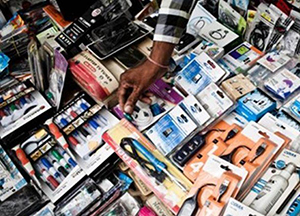
Quoting Indian media reports, an article in the state-run Global Times said that "some politicians and citizens in India have recently launched campaigns to boycott Chinese products".

"They blame China for India's failure to enter the Nuclear Suppliers Group (NSG), and for Beijing blocking India's UN bid on sanctioning a commander in Lashkar-e-Taiba, a Pakistan-based military group.

"Beijing and New Delhi are currently negotiating about these two issues and it is believed that mutual understanding will be reached eventually," said the article written by Liu Xiaoxue, an associate research fellow at the Institute of Asia-Pacific Studies at the Chinese Academy of Social Sciences said.

India is seeking a UN ban on Azhar, chief of Pakistan-based Jaish-e-Muhammad (JeM) which has been blamed for the January 2 Pathankot attack.

Scuttling India's move, China has recently put a second technical hold on Azhar's UN ban issue.

Underlining that Sino-Indian relationship has always been "haunted" by border disputes and China's ties with Pakistan, the article, said, "However, the two sides have long realised that setting aside divergences is beneficial for both sides' overall development than being hostile to each other."

"...A boycott of Chinese goods will not only result in little of the political effect that people who initiated the movement would like to see, but will also fail to fundamentally change India's current trade ties with China. In the end, it will be nothing more than a tiny incident," it said.

Referring to improvement in India-China political ties since the visit of former prime minister Rajiv Gandhi in 1988, the daily said economic and trade ties have also been boosted following which China has become India's largest trading partner since 2013.

"Of course, apart from political issues, some economic factors have also disrupted Sino-Indian trade development. Unresolved problems between the two nations sometimes influence their political mutual trust and have led to the non-tariff barriers in India against Chinese capital and products, such as security checks in major projects in the fields of defence, telecommunications, Internet and transportation," it said.

On the growing trade deficit, the daily said, "Economically, India has unbalanced trade ties with China. The increasing trade deficit with China has been irritating New Delhi. India's trade deficit with China jumped to USD 51.45 billion in 2015."

"As a country with a long-term account deficit which faces balance of payments problems, India is always vigilant against trade deficits. Chinese products can hence be easily turned into the target of India's anti-dumping sanctions," it said.

"After Indian Prime Minister Narendra Modi started promoting the slogan 'Make in India', some of the country's media and citizens have tended to hype up the substantial quantities of made-in-China balloons, coloured lanterns and ribbons that always appear in the nation's Hindu spring festival by asking, 'should our valuable foreign currency be wasted on these products?' or 'Are Indian manufacturing industries too backward to produce those goods?" it said.

"However, for consumers, attractive goods with a reasonable price are naturally their first option. Moreover, the merchandise, which is mentioned by Indian media all the time, is only a small part of Chinese exports to India," the daily said.

"Being a major exporter of high-tech goods, today's China mainly exports high-tech products to India, including electrical equipment, telecommunications equipment, train locomotives, computers and telephones. These are all necessary for India's economic development and its people's everyday lives," it said.

"Will Indian people answer the call of boycott? How long can the campaign last? What specific influence will it have on Sino-Indian trade relations? Even the Indian media pushing for a ban does not have the answers," the daily said.

"It is believed that after this round of patriotic passion, businessmen and consumers in India will make a rational choice," it said.

Comments

Add new comment

  • Coastaldigest.com reserves the right to delete or block any comments.
  • Coastaldigset.com is not responsible for its readers’ comments.
  • Comments that are abusive, incendiary or irrelevant are strictly prohibited.
  • Please use a genuine email ID and provide your name to avoid reject.
News Network
June 13,2020

Shanghai, Jun 13: Authorities in Beijing have temporarily shut a major wholesale agricultural market following a rise in locally transmitted novel coronavirus infections in China's capital city over the past two days.

The closure of the Xinfadi wholesale market at 3 a.m. local time on Saturday (1900 GMT on Friday), came after two men working at a meat research centre who had recently visited the market were reported on Friday as having been infected by the novel coronavirus. It was not immediately clear how the men had been infected.

Concern is growing of a second wave of the new virus, even in many countries that seemed to have curbed its spread. It was first reported at a seafood market in Wuhan, the capital of central China's Hubei province, in December.

Beijing authorities had earlier halted beef and mutton trading at the Xinfadi market, alongside closures at other wholesale markets around the city.

Reflecting concerns over the risk of further spread of the virus, major supermarkets in Beijing removed salmon from their shelves overnight after the virus causing COVID-19 was discovered on chopping boards used for imported salmon at the market, the state-owned Beijing Youth Daily reported.

Beijing authorities said more than 10,000 people at the market will take nucleic acid tests to detect coronavirus infections. The city government also said it had dropped plans to reopen schools on Monday for students in grades one through three because of the new cases.

Health authorities visited the home of a Reuters reporter in Beijing's Dongcheng district on Saturday to ask whether she had visited the Xinfadi market, which is 15 km (9 miles) away. They said the visit was part of patrols Dongcheng was conducting.

Listen to the latest songs, only on JioSaavn.com

China reported 11 new COVID-19 cases and seven asymptomatic cases for Friday, the national health authority said on Saturday. And all six locally transmitted cases were confirmed in Beijing.

Comments

Add new comment

  • Coastaldigest.com reserves the right to delete or block any comments.
  • Coastaldigset.com is not responsible for its readers’ comments.
  • Comments that are abusive, incendiary or irrelevant are strictly prohibited.
  • Please use a genuine email ID and provide your name to avoid reject.
News Network
April 28,2020

Washington, Apr 28: After nearly three weeks in an intensive care unit in Los Angeles, doctors treating 41-year-old Broadway actor Nick Cordero for COVID-19 were forced to amputate his right leg.

The flow of blood had been impeded by a blood clot: yet another dangerous complication of the disease that has been bubbling up in frontline reports from China, Europe and the United States.

To be sure, so-called "thrombotic events" occur for a variety of reasons among intensive care patients, but the rates among COVID-19 patients are far higher than would be otherwise expected.

"I have had 40-year-olds in my ICU who have clots in their fingers that look like they'll lose the finger, but there's no other reason to lose the finger than the virus," Shari Brosnahan, a critical care doctor at NYU Langone said.

One of these patients is suffering from a lack of blood flow to both feet and both hands, and she predicts an amputation may be necessary, or the blood vessels may get so damaged that an extremity could drop off by itself.

Blood clots aren't just dangerous for our limbs, but can make their way to the lungs, heart or brain, where they may cause lethal pulmonary embolisms, heart attacks, and strokes.

A recent paper from the Netherlands in the journal Thrombosis Research found that 31 percent of 184 patients suffered thrombotic complications, a figure that the researchers called "remarkably high" -- even if extreme consequences like amputation are rare.

Behnood Bikdeli, a doctor at New York-Presbyterian Hospital, assembled an international consortium of experts to study the issue. Their findings were published in the Journal of The American College of Cardiology.

The experts found the risks were so great that COVID-19 patients "may need to receive blood thinners, preventively, prophylactically," even before imaging tests are ordered, said Bikdeli.

What exactly is causing it? The reasons aren't fully understood, but he offered several possible explanations.

People with severe forms of COVID-19 often have underlying medical conditions like heart or lung disease -- which are themselves linked to higher rates of clotting.

Next, being in intensive care makes a person likelier to develop a clot because they are staying still for so long. That's why for example people are encouraged to stretch and move around on long haul flights.

It's also now clear the COVID-19 illness is associated with an abnormal immune reaction called "cytokine storm" -- and some research has indicated this too is linked to higher rates of clotting.

There could also be something about the virus itself that is causing coagulation, which has some precedent in other viral illnesses.

A paper in the journal The Lancet last week showed that the virus can infect the inner cell layer of organs and of blood vessels, called the endothelium. This, in theory, could interfere with the clotting process.

According to Brosnahan, while thinners like Heparin are effective in some patients, they don't work for all patients because the clots are at times too small.

"There are too many microclots," she said. "We're not sure exactly where they are."

Autopsies have in fact shown some people's lungs filled with hundreds of microclots.

The arrival of a new mystery however helps solve a slightly older one.

Cecilia Mirant-Borde, an intensive care doctor at a military veterans hospital in Manhattan, told AFP that lungs filled with microclots helped explain why ventilators work poorly for patients with low blood oxygen.

Earlier in the pandemic doctors were treating these patients according to protocols developed for acute respiratory distress syndrome, sometimes known as "wet lung."

But in some cases, "it's not because the lungs are occupied with water" -- rather, it's that the microclotting is blocking circulation and blood is leaving the lungs with less oxygen than it should.

It has just been a little under five months since the virus emerged in Wuhan, China, and researchers are learning more about its impact every day.

"While we react surprised, we shouldn't be as surprised as we were. Viruses tend to do weird things," said Brosnahan.

While the dizzying array of complications may seem daunting, "it's possible there'll be one or a couple of unifying mechanisms that describe how this damage happens," she said.

"It's possible it's all the same thing, and that there'll be the same solution."

Comments

Add new comment

  • Coastaldigest.com reserves the right to delete or block any comments.
  • Coastaldigset.com is not responsible for its readers’ comments.
  • Comments that are abusive, incendiary or irrelevant are strictly prohibited.
  • Please use a genuine email ID and provide your name to avoid reject.
News Network
January 25,2020

Beijing, Jan 25: The death toll due to the novel coronavirus (2019-nCoV) outbreak in China has soared to 41, while the number of infected persons were 1,287, the National Health Commission said on Saturday.

The Commission said that 444 fresh cases were reported since Friday, with 237 patients in serious conditions, while 38 had been cured and discharged from hospitals, reports Efe news.

Health authorities have carried out check-ups on 15,197 people who have come into close contact with the infected persons. Nearly 14,000 of them continue to be monitored for symptoms.

The others cases outside of China were reported in France (two), Australia (one), Thailand (four including two cured), Japan (two including one cured), South Korea (two), the US (two), Vietnam (two), Singapore (three), Nepal (one), Hong Kong (five), Macao (two) and Taiwan (three).

The symptoms of the new coronavirus, provisionally designated by the World Health Organization as 2019-nCoV, are similar to those of cold but may be accompanied by fever and fatigue, dry cough and dyspnea (shortness of breath).

The WHO has so far to declared the outbreak as an international health emergency.

Strict measures were being carried out in China, which include complete suspension of transport in around a dozen cities in Hubei province and also cancelling Chinese New Year celebrations.

Traditional events at Lama Temple and Ditan Park in Beijing were cancelled due to the risk of spreading the virus, authorities reported Friday, while the famous Forbidden City has also been closed indefinitely.

Wuhan, the capital of Hubei, where the virus was first reported, has been on lockdown since Thursday to prevent further spread of the virus and the city's authorities have begun to build a "special hospital" with 1,000 beds for infected patients.

"Construction of the special hospital with a capacity of 1,000 beds for patients with #nCoV2019 has begun in Wuhan," official China Daily said on Twitter.

The hospital in Wuhan will be based on the model of a similar facility that was built in just seven days in Beijing to deal with SARS in 2003.

Comments

Add new comment

  • Coastaldigest.com reserves the right to delete or block any comments.
  • Coastaldigset.com is not responsible for its readers’ comments.
  • Comments that are abusive, incendiary or irrelevant are strictly prohibited.
  • Please use a genuine email ID and provide your name to avoid reject.