


'Calls to boycott Chinese goods in India won't have political effect

October 20, 2016

Beijing, Oct 20: A campaign to boycott Chinese goods in India due to differences over India's bid for NSG membership and UN ban on JeM chief Masood Azhar will not have much "political effect" and will fail to "fundamentally change the bilateral trade ties, state-run Chinese media said today.china-products
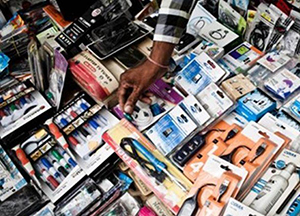
Quoting Indian media reports, an article in the state-run Global Times said that "some politicians and citizens in India have recently launched campaigns to boycott Chinese products".

"They blame China for India's failure to enter the Nuclear Suppliers Group (NSG), and for Beijing blocking India's UN bid on sanctioning a commander in Lashkar-e-Taiba, a Pakistan-based military group.

"Beijing and New Delhi are currently negotiating about these two issues and it is believed that mutual understanding will be reached eventually," said the article written by Liu Xiaoxue, an associate research fellow at the Institute of Asia-Pacific Studies at the Chinese Academy of Social Sciences said.

India is seeking a UN ban on Azhar, chief of Pakistan-based Jaish-e-Muhammad (JeM) which has been blamed for the January 2 Pathankot attack.

Scuttling India's move, China has recently put a second technical hold on Azhar's UN ban issue.

Underlining that Sino-Indian relationship has always been "haunted" by border disputes and China's ties with Pakistan, the article, said, "However, the two sides have long realised that setting aside divergences is beneficial for both sides' overall development than being hostile to each other."

"...A boycott of Chinese goods will not only result in little of the political effect that people who initiated the movement would like to see, but will also fail to fundamentally change India's current trade ties with China. In the end, it will be nothing more than a tiny incident," it said.

Referring to improvement in India-China political ties since the visit of former prime minister Rajiv Gandhi in 1988, the daily said economic and trade ties have also been boosted following which China has become India's largest trading partner since 2013.

"Of course, apart from political issues, some economic factors have also disrupted Sino-Indian trade development. Unresolved problems between the two nations sometimes influence their political mutual trust and have led to the non-tariff barriers in India against Chinese capital and products, such as security checks in major projects in the fields of defence, telecommunications, Internet and transportation," it said.

On the growing trade deficit, the daily said, "Economically, India has unbalanced trade ties with China. The increasing trade deficit with China has been irritating New Delhi. India's trade deficit with China jumped to USD 51.45 billion in 2015."

"As a country with a long-term account deficit which faces balance of payments problems, India is always vigilant against trade deficits. Chinese products can hence be easily turned into the target of India's anti-dumping sanctions," it said.

"After Indian Prime Minister Narendra Modi started promoting the slogan 'Make in India', some of the country's media and citizens have tended to hype up the substantial quantities of made-in-China balloons, coloured lanterns and ribbons that always appear in the nation's Hindu spring festival by asking, 'should our valuable foreign currency be wasted on these products?' or 'Are Indian manufacturing industries too backward to produce those goods?" it said.

"However, for consumers, attractive goods with a reasonable price are naturally their first option. Moreover, the merchandise, which is mentioned by Indian media all the time, is only a small part of Chinese exports to India," the daily said.

"Being a major exporter of high-tech goods, today's China mainly exports high-tech products to India, including electrical equipment, telecommunications equipment, train locomotives, computers and telephones. These are all necessary for India's economic development and its people's everyday lives," it said.

"Will Indian people answer the call of boycott? How long can the campaign last? What specific influence will it have on Sino-Indian trade relations? Even the Indian media pushing for a ban does not have the answers," the daily said.

"It is believed that after this round of patriotic passion, businessmen and consumers in India will make a rational choice," it said.

Comments

Add new comment

  • Coastaldigest.com reserves the right to delete or block any comments.
  • Coastaldigset.com is not responsible for its readers’ comments.
  • Comments that are abusive, incendiary or irrelevant are strictly prohibited.
  • Please use a genuine email ID and provide your name to avoid reject.
News Network
April 6,2020

New Delhi, April 6: The United States has donated $2.9 million assistance package for India to help the Narendra Modi government brace itself against the coronavirus as countries across the world are coming together to combat the outbreak.

On March 28, the US government, via US Agency for International Development, announced $2.9 million to support India in its response to COVID-19.

"It builds on a foundation of over $1.4 billion in health assistance and nearly $3 billion in total assistance that the US provided to India over the last 20 years," the US Embassy in India said in a statement.

"These new funds will support two organisations, including $2.4 million for USAID's health strengthening project, implemented by Jhpiego, an international non-profit health organisation affiliated with Johns Hopkins University and $500,000 for the World Health Organization (WHO)," the statement said.

The funds will also help India combat the spread of COVID-19, provide care for the affected and support local communities with the tools needed to contain the disease, it added.

Moreover, being a global leader in health and humanitarian response to COVID-19, the US has provided approximately $18.3 million assistance package to ASEAN member countries to fight the contagion.

The funds will be used to prepare laboratories for large-scale testing for the lethal virus, infection prevention and control, enable risk communication, implement public-health emergency plans for border points of entry, activate case-finding and event-based surveillance for influenza-like illnesses, train and equip rapid-responders in investigation and contact-tracing and update training materials for health workers.

Comments

Add new comment

  • Coastaldigest.com reserves the right to delete or block any comments.
  • Coastaldigset.com is not responsible for its readers’ comments.
  • Comments that are abusive, incendiary or irrelevant are strictly prohibited.
  • Please use a genuine email ID and provide your name to avoid reject.
Agencies
July 28,2020

Kuala Lumpur, Jul 28: Malaysia's ex-leader Najib Razak was found guilty Tuesday in his first trial over the multi-billion-dollar 1MDB scandal, two years after the fraud contributed to the downfall of his long-ruling government.

The former prime minister could now face decades in jail after being convicted on all charges in the case related to the looting of sovereign wealth fund 1Malaysia Development Berhad.

Billions of dollars were stolen from the investment vehicle and spent on everything from high-end real estate to pricey art, while investment bank Goldman Sachs also became embroiled in the scandal.

Anger at the looting played a large part in the shock loss of Najib's long-ruling coalition in elections in 2018, and he was arrested and hit with dozens of charges following his defeat.

The verdict was a test of Malaysia's rule of law. It comes about five months after Najib's scandal-plagued party returned to power as part of a coalition, development observers had feared could affect the outcome of the case.

About 16 months after it began, the Kuala Lumpur High Court delivered the verdict in Najib's first trial, which centred on the transfer of 42 million ringgit ($9.9 million) from a former 1MDB unit, SRC International, into his accounts.

Najib had vehemently denied wrongdoing.

But Judge Mohamad Nazlan Mohamad Ghazali took apart all the arguments put forward by his defence, and found him guilty on the seven charges he faced.

"In conclusion, after considering all the evidence in this trial, I find the prosecution has successfully proven the case," the judge told the court.

The charges were one of abuse of power, three of criminal breach of trust and three of money-laundering.

The counts of abuse of power and criminal breach of trust are punishable by up to 20 years in jail each, while the money-laundering charges are punishable by up to 15 years each.

Sentencing was not handed down straight away. The 67-year-old will likely appeal and he may not be sent to jail immediately. If his conviction is upheld, he will also be barred from political office for several years.

Najib had insisted he was ignorant of the transactions.

The defence team portrayed Najib as a victim and instead sought to paint financier Low Taek Jho, a key figure in the scandal who has been charged in the US and Malaysia, as the mastermind.

Low, whose whereabouts are unknown, maintains his innocence.

Prosecutors insisted Najib was in control of the 1MDB unit, SRC International.

The return of Najib's party to power as part of a coalition in March followed the collapse of Mahathir Mohamad's reformist administration.

Since then, 1MDB-linked charges were unexpectedly dropped against the ex-leader's stepson Riza Aziz, a producer of Hollywood movie "The Wolf of Wall Street", in exchange for him agreeing to return assets to Malaysia.

Prosecutors also dropped dozens of charges against Najib ally Musa Aman, the former leader of Sabah state.

The amounts involved in Najib's first case are small compared to those in his second and most significant trial, which centres on allegations he illicitly obtained more than $500 million.

Malaysia had charged Goldman Sachs and some current and former staff, claiming large amounts were stolen when the bank arranged bond issues for 1MDB.

But the two sides agreed to a $3.9 billion settlement last week in exchange for charges being dropped.

Comments

Add new comment

  • Coastaldigest.com reserves the right to delete or block any comments.
  • Coastaldigset.com is not responsible for its readers’ comments.
  • Comments that are abusive, incendiary or irrelevant are strictly prohibited.
  • Please use a genuine email ID and provide your name to avoid reject.
Agencies
June 28,2020

Paris, Jun 28: More than 10 million cases of the new coronavirus have been officially declared around the world, half of them in Europe and the United States, according to an AFP tally on Sunday based on official sources.

At least 10,003,942 infections, including 498,779 deaths, have been registered globally.

Europe remains the hardest hit continent with 2,637,546 cases including 195,975 fatalities, while the United States has 2,510,323 infections including 125,539 deaths.

The rate of infections worldwide continues to rise, with one million new cases recorded in just six days.

The tallies, using data collected by AFP from national authorities and information from the World Health Organization (WHO), probably reflect only a fraction of the actual number of infections.

Many countries are testing only symptomatic or the most serious cases and some do not have the capacity to carry out widescale testing.

Comments

Add new comment

  • Coastaldigest.com reserves the right to delete or block any comments.
  • Coastaldigset.com is not responsible for its readers’ comments.
  • Comments that are abusive, incendiary or irrelevant are strictly prohibited.
  • Please use a genuine email ID and provide your name to avoid reject.