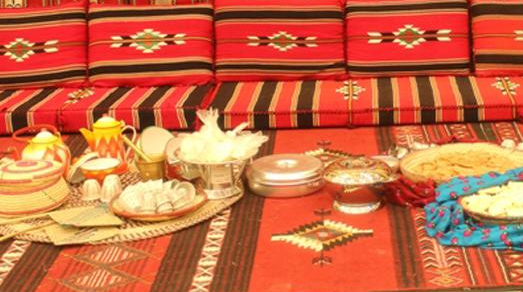
Can you stomach this? Saudi Arabia tops food wasters list

February 15, 2014

Saudi_Arabia

Riyadh, Feb 15: Oliver Twist asked for more and did not get any soup. For most of the GCC states, it is a question of taking far too much and not eating it.

According to the Rome-based Food and Agricultural Organization (FAO), a third of the food produced globally is wasted and this costs the global economy $750 billion annually, a figure higher than the GDP of several developed countries.

The GCC region has the dubious distinction of being a frontliner in this waste parade, both on the domestic and the commercial front. The exponential increase in the number of food outlets, restaurants and cafes has generated a further spike in wastage.

The call for a waste management strategy has been made at several conferences but very little has been done to implement the recommended controls. On the contrary, the neglect is reflected in the fact that the UAE and Saudi Arabia have the highest per person per day garbage disposal in terms of weight, often five times that of other countries.

A little over 40 million residents in the GCC generate 26 million tons of uneaten food or roughly 667 kg per person annually which hits an average of 1.5 kg per day for each individual with the UAE tipping the 2 kg mark. Of this total, 17 million tons are contributed by Saudi Arabia.

With acute water shortage directly linked to food production and a tangible fear that taps will run dramatically dry by 2050 in the region, the need of the hour is to activate stringent measures, and to do that now.

The most logical and instant contribution to reduction is to cook less. But for multiple cultural and social reasons that does not occur.

The UN report underscores frightening implications if attitudes do not change and disposal systems are not upgraded. It says rotting food creates greenhouse gases and the wide range of food packaging materials compromises the recycling of the wasted food into organic energy, since much of it is nonbiodegradable.

Comments

Add new comment

  • Coastaldigest.com reserves the right to delete or block any comments.
  • Coastaldigset.com is not responsible for its readers’ comments.
  • Comments that are abusive, incendiary or irrelevant are strictly prohibited.
  • Please use a genuine email ID and provide your name to avoid reject.
News Network
June 12,2020

Beirut, Jun 12: Angry Lebanese protesters blocked roads across the country with burning tyres, debris and their vehicles, incensed over the local currency's depreciation by more than 25 percent in just two days.

The demonstrations from northern Akkar and Tripoli to central Zouk, the eastern Bekaa Valley, Beirut and southern Tyre and Nabatieh on Thursday were some of the most widespread in months of upheaval over a calamitous economic and financial crisis.

Protesters set ablaze a branch of the Central Bank, vandalised several private banks and clashed with security forces in several areas. At least 41 people were injured in Tripoli alone, according to the Lebanese Red Cross.

"I'm really pissed off, that's all. If politicians think they can burn our hearts like this the fire is going to reach them too," unemployed computer engineer Ali Qassem, 26, told Al Jazeera after pouring fuel onto smouldering tyres on a main Beirut thoroughfare.

Tens of thousands of Lebanese have lost jobs in the past six months and hundreds of businesses have shuttered as a dollar shortage led the Lebanese pound to slide from 1,500 to $1 last summer - where it was pegged for 23 years - to roughly 4,000 for each US dollar last month.

But the slide turned into a freefall between Wednesday and Thursday when the pound plummeted to roughly 5,000 to $1 on black markets, which have become a main source of hard currency. There was widespread speculation the rate hit 6,000 or even 7,000 pounds to the dollar, though most markets stopped trading.

Protesters began amassing on streets across the country before sunset and increased into the thousands across the country as the night fell.

Prime Minister Hassan Diab cancelled all meetings scheduled for Friday to hold an emergency cabinet session at 9:30am and another at 3pm at the presidential palace to be headed by President Michel Aoun.

The pound's collapse is the perhaps the biggest challenge yet for Diab's young cabinet, which gained confidence in February after former prime minister Saad Hariri's government was toppled by an unprecedented October uprising that had the country's economic crisis at its core.

Economy Minister Raoul Nehme told Al Jazeera that there was "disinformation" being circulated about the exchange rate on social media and said he was investigating possible currency manipulation.

"I don't understand how the exchange rate increased by so much in two days," he said.

Many protesters have pitted blame on Central Bank governor Riad Salameh, nominally in charge of  keeping the currency stable. But they have also called on the government to resign.

"If people want reform between dawn and dusk, that's not going to work, and if someone thinks they can do a better job then please come forward," Nehme said.

"But what we can't have is a power vacuum - then the exchange rate won't be 5000, it'll be a catastrophe."

'Everyone paying the price'

When protesters set a large fire in Beirut's Riad al-Solh Square, which lies at the foot of a grand Ottoman-era building that serves as the seat of government, firefighters did not intervene to extinguish it.

It later became clear why: Civil Defence told local news channel LBCI they had run out of diesel to fuel their firetrucks.

Basic imports such as fuel have been hit hard by the currency crisis, making already-weak state services increasingly feeble.

A half-dozen or so police officers with Lebanon's Internal Security Forces observed the scene unfolding in front of them in the square.

"Why do you destroy shops and things and attack us security forces - do you think we're happy? Go and f****** break that wall or go to the politicians' houses," one police officer told Al Jazeera, referring to a large concrete barrier separating protesters from the seat of government.

"In the end we are with you and we want the country to change. Don't you dare think we're happy. My salary is now worth $130," the officer said.

The currency's spectacular fall seems to have pushed many Lebanese to put common interests above their differences.

Large convoys of men on motorbikes from Shia-majority areas of southern Beirut joined the demonstrations on Thursday, though they have clashed with protesters many times before - including at a protest on Saturday.

Some chanted sectarian insults, leading to brief clashes in areas that were formerly front lines during the country's devastating 15-year civil war.

Instead, the motorbike-riding demonstrators on Thursday chanted: "Shia, Sunni, F*ck sectarianism."

"We are Shia, and Sunnis and Christian are our brothers," Hisham Houri, 39, told Al Jazeera, perched on a moped with his fiancee behind him just a few metres from a pile of burning tyres.

The blaze sent thick black smoke into the sky towards an iconic blue-domed mosque and church in downtown Beirut.

"Politicians play on these sectarian issues and sometimes succeed, but in the end, they'll fail because all the people have been hurt," he said. "The dollar isn't just worth 6,000 for Shias or for Sunnis, everyone is paying that price."


Comments

Add new comment

  • Coastaldigest.com reserves the right to delete or block any comments.
  • Coastaldigset.com is not responsible for its readers’ comments.
  • Comments that are abusive, incendiary or irrelevant are strictly prohibited.
  • Please use a genuine email ID and provide your name to avoid reject.
Agencies
July 5,2020

Iraq’s deputy parliament speaker Hassan Karim al-Kaabi on Saturday described the move as provocative and in violation of international law.

Kaabi also called on the Iraqi government to take swift measures to halt such actions.

The Embassy’s move to fire in a residential area in the heart of Baghdad is an unacceptable act and another challenge for the Arab country, adding to the mass of its provocations and illegal actions in Iraq, he noted.

According to Iraqi media, the US tested a patriot missile system inside Baghdad’s heavily fortified Green Zone.

Anti-US sentiments have been running high in Iraq since Washington assassinated top Iranian commander Qassem Soleimani and the second-in-command of the Iraqi popular mobilization units, Abu Mahdi al-Muhandis, in January.

Following the attack, Iraqi lawmakers unanimously approved a bill on January 5, demanding the withdrawal of all foreign troops.

Baghdad and Washington are currently in talks over the withdrawal of American troops. Iraqi resistance groups have vowed to take up arms against US forces if Washington fails to comply with the parliamentary order.

Comments

Add new comment

  • Coastaldigest.com reserves the right to delete or block any comments.
  • Coastaldigset.com is not responsible for its readers’ comments.
  • Comments that are abusive, incendiary or irrelevant are strictly prohibited.
  • Please use a genuine email ID and provide your name to avoid reject.
Agencies
June 18,2020

New Delhi, Jun 18: Reliance Industries Ltd on Thursday said it has sold a 2.32 per cent stake in its digital unit to Saudi Arabia's Public Investment Fund (PIF) for Rs 11,367 crore, taking the cumulative fund raising to about Rs 1.16 lakh crore in two months.

Starting with Facebook Inc on April 22, Reliance has sold almost 25 per cent of equity in Jio Platforms - the maximum reports suggest the company intends to dilute to financial investors.

The investment by Saudi sovereign wealth fund is "at an equity value of Rs 4.91 lakh crore and an enterprise value of Rs 5.16 lakh crore", the company said in a statement.

With this investment, Jio Platforms has raised Rs 115,693.95 crore from some of the leading global investment powerhouses at a time when the world is deeply impacted by the coronavirus pandemic, resulting in a recession kind of environment for the global economy.

"With the addition of PIF's investment, Jio Platforms has established partnerships with a marquee set of global financial investors, who will contribute to establishing the Digital Society vision for India," the statement said.

Jio Platforms houses India's biggest telecom firm by subscribers, Reliance Jio. With more than 388 million users, Jio has forced out several rivals and driven consolidation in the sector since entering the market in 2016 with free voice services and cut-price data.

Over the past two months, billionaire Mukesh Ambani's oil-to-telecom conglomerate has announced the sale of about $14 billion of assets, completed a Rs 53,124 crore rights issue and slowed the run rate of new investment by a quarter.

These will help Reliance meet its target of paying off Rs 1.61 lakh crore of net debt by the end of the year.
This is PIF's largest investment into the Indian economy to date.

Ambani, chairman and managing director of Reliance Industries, said, "We at Reliance have enjoyed a long and fruitful relationship with the Kingdom of Saudi Arabia for many decades. From oil economy, this relationship is now moving to strengthen India's New oil (data-driven) economy, as is evident from PIF's investment into Jio Platforms."

Yasir Al-Rumayyan, governor of PIF, commented: "We are delighted to be investing in an innovative business which is at the forefront of the transformation of the technology sector in India. We believe that the potential of the Indian digital economy is very exciting and that Jio Platforms provides us with an excellent opportunity to gain access to that growth."

"This investment will also enable us to generate significant long-term commercial returns for the benefit of Saudi Arabia's economy and our country's citizens, in line with our mandate to safeguard and grow the national wealth of the Kingdom," he said.

The transaction is subject to Indian regulatory and other customary approvals.

Morgan Stanley acted as financial advisor to Reliance Industries and AZB & Partners and Davis Polk & Wardwell acted as legal counsels.

Prior to this deal, Reliance had sold 22.38 per cent of Jio Platforms to investors including Facebook Inc, securing Rs 104,326.95 crore in eight weeks.

Facebook kicked off the party, investing Rs 43,573.62 crore for a 9.99 per cent stake on April 22. This was closely followed by a further Rs 60,753.33 crore in investment.

Silver Lake - the world's largest tech investor - bought a 1.15 per cent stake in Jio Platforms for Rs 5,665.75 crore on May 4. It invested another Rs 4,546.80 crore for additional 0.93 per cent stake on June 5, taking its total holding to 2.08 per cent
Private equity KKR and Vista Equity Partners have taken 2.32 per cent stake each for Rs 11,367 crore apiece. KKR invested in Jio Platforms on May 22 while Vista invested on May 8.

Abu Dhabi sovereign wealth fund Mubadala Investment Co picked up 1.85 per cent in Jio Platforms for Rs 9,093.60 crore on June 5. Abu Dhabi Investment Authority on June 7 invested Rs 5,683.50 crore for a 1.16 per cent stake in Jio Platforms.

On May 17, global equity firm General Atlantic picked up 1.34 per cent stake in Jio Platforms for Rs 6,598.38 crore.

Global investment firm TPG on June 13 picked up 0.93 per cent for Rs 4,546.80 crore while L Catterton bought 0.39 per cent for Rs 1,894.50 crore.

Comments

Add new comment

  • Coastaldigest.com reserves the right to delete or block any comments.
  • Coastaldigset.com is not responsible for its readers’ comments.
  • Comments that are abusive, incendiary or irrelevant are strictly prohibited.
  • Please use a genuine email ID and provide your name to avoid reject.