


CCTVs mandatory for commercial and religious places in Karnataka

TNN
June 22, 2017

Bengaluru, Jun 22: Installation of closed circuit television cameras (CCTVs) will soon be made mandatory in all commercial establishments and religious places that have a footfall of 500 persons per day.cctv
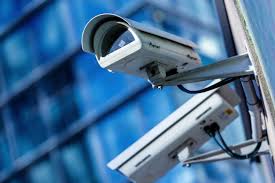
This rule will be applicable in Bengaluru and other municipal corporations across the state.

A bill to this effect, titled "The Karnataka Public Safety (Measures) Enforcement Bill-2017", was passed in the legislative assembly on Wednesday.

Outlining the government's intention, law minister T B Jayachandra said the bill has been mooted to augment public surveillance and to aid the police in curbing crimes, preventing acts of terrorism and other illegal activities.

The bill makes it mandatory for all establishments -- which also includes educational institutes, hospitals, sports complexes, industries, railway stations, bus stations and places of organized congregations -- to install CCTVs at their own cost and to make available video recordings of up to 30 days to the designated police authorities as when required during investigation of specific crimes.

According to the bill, establishments are required to file periodical returns every three months to the jurisdictional police inspector stating that public safety measures, including CCTVs, have been provided and properly maintained.

Those failing to file periodical returns are liable to pay a fine of Rs 2,000 for the first time and Rs 4,000 the second time. The jurisdictional police inspector has been empowered to inspect the establishments to ascertain compliance. Those who refuse to share the CCTV footage will be penalized Rs 5,000.

Comments

Ahmed K.C.
 - 
Thursday, 22 Jun 2017

Very good move by the state government. At least some truth will prevail.

Add new comment

  • Coastaldigest.com reserves the right to delete or block any comments.
  • Coastaldigset.com is not responsible for its readers’ comments.
  • Comments that are abusive, incendiary or irrelevant are strictly prohibited.
  • Please use a genuine email ID and provide your name to avoid reject.
News Network
May 29,2020

Bengaluru, May 29: Seven out of ten (72 per cent) workers in Karnataka reported having lost their employment during the COVID-19-induced lockdown, according to findings of a survey by Azim Premji University, in collaboration with ten civil society organisations.

The university said in a statement it conducted "a detailed" phone survey of 5,000 workers across 12 states in the country, to gauge the impact of the COVID-19 lockdown on employment, livelihoods, and access to government relief schemes.

The survey covered self-employed, casual, and regular wage and salaried workers and it released the findings for Karnataka on Thursday.

Seventy-six per cent of urban workers and 66 per cent of rural workers lost their employment, the survey findings said.

For non-agricultural self-employed workers and wage workers, who were still employed, average weekly earnings fell by two-third.

More than four in ten salaried workers (44 per cent) saw either a reduction in their salary or received no salary during the lockdown.

Six out of ten households reported that they did not have enough money to buy even a weeks worth of essential items, according to the survey.

Eight out ten households reported a reduction in food intake, while less than three in ten vulnerable households (27 per cent) in urban Karnataka received any form of cash transfer from the government, it said.

In summary, the disruption in the Karnatakas economy and labour markets is enormous. Livelihoods have been devastated at unprecedented levels during the lockdown.

The recovery from this could be slow and very painful, the statement said.

As a response to the findings of this survey, the team which has conducted the survey suggested a universalisation of the PDS to expand its reach and implementation of expanded rations for at least the next six months.

It suggested cash transfers equal to at least Rs.7000 per month for two months, and proactive steps like expansion of MGNREGA, introduction of urban employment guarantee, and investment in universal basic services, among others.

Comments

Add new comment

  • Coastaldigest.com reserves the right to delete or block any comments.
  • Coastaldigset.com is not responsible for its readers’ comments.
  • Comments that are abusive, incendiary or irrelevant are strictly prohibited.
  • Please use a genuine email ID and provide your name to avoid reject.
News Network
June 10,2020

Bengaluru, June 10: The Department of Primary and Secondary Education of Government of Karnataka today ordered a ban on online classes for children from KG to class 5.

The decision was taken following a report based on the report submitted by director NIMHANS, recommending online classes only above the age of 6 years and also following the complaints from several parents about online classes conducted by private schools even for kindergarten kids.

Briefing the media soon after the meeting with department officials, S Suresh Kumar, primary and secondary education minister said, "We have taken two major decisions today. The online classes for LKG, UKG and primary classes should be stopped immediately."

Even collecting fees in the name of online classes should be stopped, said the minister. "We have already issued a circular about it insisting that schools not collect fees in the name of online classes and also requesting schools not to increase fees for the 2020-21 academic year considering financial constraints of several people due to the COVID-19 pandemic," said the minister.

The department, however, also discussed how to engage children during this period as there was no clarity over the reopening of schools for the 2020-21 academic year. "We have constituted a committee to prepare guidelines on how to engage students and increase their knowledge. The committee is headed by Prof. MK Sridhar," he said.

Before taking this decision, the department had three rounds of discussions with various experts, including Prof. MK Sridhar, Prof. VP Niranjanaradhya, Dr John Vijay Sagar and other departments, including the home and health departments.

Comments

Add new comment

  • Coastaldigest.com reserves the right to delete or block any comments.
  • Coastaldigset.com is not responsible for its readers’ comments.
  • Comments that are abusive, incendiary or irrelevant are strictly prohibited.
  • Please use a genuine email ID and provide your name to avoid reject.
Agencies
February 7,2020

Thiruvananthapuram, Feb 7: Making a scathing attack on the Central government, Kerala Finance Minister Thomas Issac on Friday said the BJP-led NDA government was "strangulating" the southern state by denying funds.

Presenting the 2020-21 budget of the Pinarayi Vijayan led-LDF government, he alleged the centre has been "helping" corporates rather that the common man.

"The Centre has been strangulating Kerala by denying funds for the state and has been moving on a self-destructive path by corporate-friendly policies and privatisation. The GST implementation has not been beneficial for the state," he said.

"The government proposes 2.5 lakh water connections in the upcoming financial year. We will also construct one lakh houses under Life Mission," the finance minister said.

The budget has allocated Rs 90 crore for Pravasi Welfare Fund and the government proposes power projects with a capacity of 500 MW.

"The government proposes Kochi development plan with a fund of Rs 6,000 crore. The city will get an unified travel card and Metro project will be extended," Issac said.

The state government has increased all welfare pension funds by Rs 100, allotted Rs 40 crore to paddy farmers and Rs 10 crore for startups in the state.

The local self-governments have been allotted Rs five crore for waste management, Rs 20 crore has been set apart for 1,000 food stalls under hunger-free Kerala, where meals will be made available at Rs 25. 

Comments

Add new comment

  • Coastaldigest.com reserves the right to delete or block any comments.
  • Coastaldigset.com is not responsible for its readers’ comments.
  • Comments that are abusive, incendiary or irrelevant are strictly prohibited.
  • Please use a genuine email ID and provide your name to avoid reject.