


Centre looking at Gorkhaland model for Telangana?

[email protected] (J. Balaji, The Hindu)
January 22, 2013

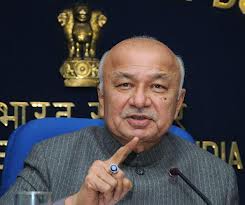
shindeNew Delhi, Jan 22: Fearful that the splitting of Andhra Pradesh could create a cascading effect on other states, the UPA-II government is considering the creation of a Telangana Territorial Administration on the lines of Gorkhaland.

Informed sources pointed out that if that was the case, the Centre had to further amend Article 371 (D), which has already provided a special status for 10 backward districts of the Telangana region, and this could be done with the approval of two-thirds of Parliament strength.

The Centre may announce its decision on Telangana earlier than the January 28 deadline set by Union Home Minister Sushilkumar Shinde as he is scheduled to leave on a tour of Bangladesh on January 27. Without saying yes or no for Telangana, a middle path, such as the Gorkhaland model, might help the Centre as well as the Andhra Pradesh government buy peace in both the Telangana and Seemandhra regions of the State, and the Union government could qualify the decision stating that it would be on an experimental basis, the sources added.

Like Gorkhaland, the Telangana Territorial Administration, which could be formed without bifurcating Andhra Pradesh, might be an autonomous body with more financial and administrative powers and will be administered by an elected chief executive and members of the council.

By considering the Gorkhaland model for Andhra Pradesh, the Centre may unwittingly be able to douse the Gorkhaland demand. The Gorkhaland Territorial Administration in West Bengal has already warned the Centre of renewing its stir for a separate State. And the Centre believes that a separate state for Telangana may only add strength to the Gorkhaland agitation.

It may be recalled that the committee set up by the Centre to examine the demand for Telangana, headed by the former Supreme Court judge, Justice B.N. Srikrishna, had in its recommendations suggested that its sixth option “stands out as the best way forward” keeping the national perspective in mind.

The sixth option talks about keeping the State (Andhra Pradesh) united by simultaneously providing certain definite constitutional/statutory measures for the socio-economic development and political empowerment of the Telangana region — creation of a statutorily-empowered Telangana Regional Council.

“The united Andhra option is being suggested for continuing the development momentum of the three regions and keeping in mind the national perspective. With firm political and administrative management it should be possible to convey conviction to the people that this option would be in the best interest of all and would provide satisfaction to the maximum number of the people in the State.”

“It would also take care of the uncertainty over the future of Hyderabad as a bustling, educational, industrial and IT hub/destination. For management of water and irrigation resources on an equitable basis, a technical body, i.e., Water Management Board and an Irrigation Project Development Corporation in expanded role have been recommended. The above course of action should meet all the issues raised by Telangana people satisfactorily,” the Committee said in its report.

Of the 294 Assembly segments in Andhra Pradesh, 119 are located in the 10 districts of the Telangana region. Of the 42 Lok Sabha seats in the State, 17 are in the T-region.

Meanwhile, talking to The Hindu, Overseas Affairs Minister Vayalar Ravi, additional in charge of the Congress in Andhra Pradesh, said nothing on the separate State issue had been decided so far. “I told this clearly to a delegation of Congress Ministers, MPs and MLAs from the Seemandhra region when they met me demanding continuation of a united Andhra Pradesh. Similarly I am willing to meet the group from the Telangana regions too on Tuesday,” he said.

Seemandhra leaders led by Minister Shailajanath also called on senior Congress leader Digvijay Singh and Home Minister Sushil Kumar Shinde asking them not to divide A.P. at any cost.

Comments

Add new comment

  • Coastaldigest.com reserves the right to delete or block any comments.
  • Coastaldigset.com is not responsible for its readers’ comments.
  • Comments that are abusive, incendiary or irrelevant are strictly prohibited.
  • Please use a genuine email ID and provide your name to avoid reject.
News Network
July 9,2020

U.S. electric vehicle maker Tesla Inc is "very close" to achieving level 5 autonomous driving technology, Chief Executive Elon Musk said on Thursday, referring to the capability to navigate roads without any driver input.

"I'm extremely confident that level 5 or essentially complete autonomy will happen and I think will happen very quickly," Musk said in remarks made via a video message at the opening of Shanghai's annual World Artificial Intelligence Conference (WAIC).

"I remain confident that we will have the basic functionality for level 5 autonomy complete this year."

Automakers and tech companies including Alphabet Inc Waymo and Uber Technologies are investing billions in the autonomous driving industry.

However industry insiders have said it would take time for the technology to get ready and public to trust autonomous vehicles fully.

The California-based automaker currently builds cars with an Autopilot driver-assistance system.

Tesla is also developing new heat-projection or cooling systems to enable more advanced computers in cars, Musk said.

Industry data showed Tesla sold nearly 15,000 China-made Model 3 sedans last month.

Tesla has become the highest-valued automaker as its shares surged to record highs and its market capitalisation overtook that of former front-runner Toyota Motors Corp.

Comments

Add new comment

  • Coastaldigest.com reserves the right to delete or block any comments.
  • Coastaldigset.com is not responsible for its readers’ comments.
  • Comments that are abusive, incendiary or irrelevant are strictly prohibited.
  • Please use a genuine email ID and provide your name to avoid reject.
Agencies
March 13,2020

Amid the rapid spread of the novel coronavirus (COVID-19), which has infected 73 people in India and killed more than 4,500 individuals globally, doctors have advised that in addition to regularly washing hands, one should also disinfect their smartphone every 90 minutes with alcohol-based hand sanitizer.

Ravi Shekhar Jha, Head of Department at Fortis Escorts Hospital in Faridabad said the best method to disinfect your smartphone is to use regular doctor spirit or the alcohol-based hand sanitizer at least every 90 minutes.

"Avoid touching your eyes, mouth, or nose. The best option is to use a phone cover or a Bluetooth device and try to touch your phone as less as possible. We would also recommend cleaning your phone at least twice a day," Jha told IANS.

According to research, published in 2018 by Insurance2Go, a gadget insurance provider, revealed that smartphone screens have three times more germs than a toilet seat.

One in 20 smartphone users was found to clean their phones less than every six months, said the study.

"In the time of fear of coronavirus, smartphones should also be disinfected with alcohol-based sanitizer rub. Pour few drops of sanitizer on a tiny clean cotton pad and rub it safely on your entire phone," said Jyoti Mutta, Senior Consultant, Microbiology, Sri Balaji Action Medical Institute in New Delhi.

"You can repeat this process every evening coming back home after an entire day out at work and once in the morning before going out," Mutta added.

"Maintain basic cleanliness, and try to avoid using other's phones especially if suffering from respiratory illness or flu-like symptoms as there is no other way to disinfect these regular gadgets," she stressed.

Another study from the University of Surrey in the UK, also found that the home button on your smartphone may be harbouring millions of bacteria - some even harmful.

The World Health Organisation (WHO) declared the novel coronavirus as a global pandemic on Wednesday. The death toll of COVID-19 has crossed the 4,500 marks and confirmed cases globally have touched one lakh as per the reports.

According to Suranjeet Chatterjee, Senior Consultant in Internal Medicine Department of Indraprastha Apollo Hospitals in New Delhi, "We should frequently wash our hands, cover our coughs and it is important to adapt to other good hygiene habits that are most important in such a situation."

"Coronavirus and other germs can live on surfaces like glass, metal or plastics and phones are bacteria-ridden. It is necessary that we sanitize our hands frequently and make sure that our hands are clean all the time," Chatterjee told IANS.

"The emphasis should be laid on sanitising our hands rather than sanitizing the phone - once in a while the phone can be sanitized under the guidance of the makers of the phone," Chatterjee stressed.

According to the global health agency, the most effective way to protect yourself against coronavirus is by frequently cleaning of your hands with alcohol-based hand rub or washing them with soap and water.

The WHO's report showed the virus infects people of all ages, among which older people and those with underlying medical conditions are at a higher risk of getting infected.

People should eat only well-cooked food, avoid spitting in public, and avoid close contact, the WHO said, adding that it is important for people to seek medical care at the earliest if they become sick.

Comments

Add new comment

  • Coastaldigest.com reserves the right to delete or block any comments.
  • Coastaldigset.com is not responsible for its readers’ comments.
  • Comments that are abusive, incendiary or irrelevant are strictly prohibited.
  • Please use a genuine email ID and provide your name to avoid reject.
Agencies
February 5,2020

San Francisco, Feb 5: After a German artist, Simon Weckert, demonstrated how he "hacked" Google Maps with 99 smartphones and a wagon to create "virtual traffic jams" on the streets of Berlin, Google responded to the incident saying it "appreciates" creative use of maps.

Admitting that it has not quite cracked travelling by wagon, the tech giant also hinted that it might use cases like this to improve how its maps work.

"We appreciate seeing creative uses of Google Maps like this as it helps us make maps work better over time," 9to5Google quoted a Google spokesperson as saying.

In a YouTube video, Weckert showed that he put 99 smartphones with Google Maps onto a small wagon cart and then wheeled that cart around various streets in Berlin, including outside the Google office, Android Authority reported on Monday.

The smartphones "apparently fooled Google Maps" into thinking that there was a high concentration of users on those streets.

Because the second-hand phones were in a cart, Maps was further tricked into believing that the traffic was slow-moving.

As a result, the navigation app started showing virtual traffic jams by turning green streets to red in the online navigational tool, showcasing how digital technology can have a real impact on the real world.

"Traffic data in Google Maps is refreshed continuously thanks to information from a variety of sources, including aggregated anonymised data from people who have location services turned on and contributions from the Google Maps community," the Google spokesperson said.

"We've launched the ability to distinguish between cars and motorcycles in several countries including India, Indonesia and Egypt, though we haven't quite cracked travelling by wagon," the statement added. After a German artist, Simon Weckert, demonstrated how he "hacked" Google Maps with 99 smartphones and a wagon to create "virtual traffic jams" on the streets of Berlin, Google responded to the incident saying it "appreciates" creative use of maps.

Admitting that it has not quite cracked travelling by wagon, the tech giant also hinted that it might use cases like this to improve how its maps work.

"We appreciate seeing creative uses of Google Maps like this as it helps us make maps work better over time," 9to5Google quoted a Google spokesperson as saying.

In a YouTube video, Weckert showed that he put 99 smartphones with Google Maps onto a small wagon cart and then wheeled that cart around various streets in Berlin, including outside the Google office, Android Authority reported on Monday.

The smartphones "apparently fooled Google Maps" into thinking that there was a high concentration of users on those streets.

Because the second-hand phones were in a cart, Maps was further tricked into believing that the traffic was slow-moving.

As a result, the navigation app started showing virtual traffic jams by turning green streets to red in the online navigational tool, showcasing how digital technology can have a real impact on the real world.

"Traffic data in Google Maps is refreshed continuously thanks to information from a variety of sources, including aggregated anonymised data from people who have location services turned on and contributions from the Google Maps community," the Google spokesperson said.

"We've launched the ability to distinguish between cars and motorcycles in several countries including India, Indonesia and Egypt, though we haven't quite cracked travelling by wagon," the statement added.

Comments

Add new comment

  • Coastaldigest.com reserves the right to delete or block any comments.
  • Coastaldigset.com is not responsible for its readers’ comments.
  • Comments that are abusive, incendiary or irrelevant are strictly prohibited.
  • Please use a genuine email ID and provide your name to avoid reject.