



China wins supercomputer crown for eighth time

November 16, 2016

Beijing, Nov 16: For the eight consecutive year, China has retained the top spot in the list of the world's fastest supercomputers for its 'Sunway TaihuLight' which can perform 93 million billion calculations per second, media report said today.
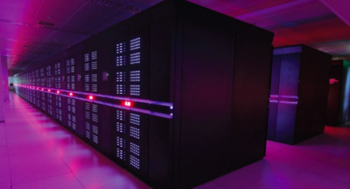
chinaTaihuLight, the massive supercomputer, built entirely using processors designed and made in China has been crowned as the world's fastest, state-run Xinhua news agency quoted the latest edition of the semiannual Top500 list of supercomputers released on Monday.

TaihuLight made its appearance in June, replacing the former champion, Tianhe-2, also a Chinese system but built based on Intel chips. TaihuLight is capable of performing 93 million billion calculations per second (petaflop/s).

That is almost three times as fast as Tianhe-2, which had claimed No 1 spot in the Top500 list for the past three years.

That means a Chinese supercomputer has topped the rankings for eight times in a row, indicating the rise of China in the high performance computing (HPC) field, the report said.

In the previous list released in June, China overtook the US in the number of total supercomputers installed. That was the first time that the US has not dominated this category since the list was started 23 years ago.

This time, the number of systems installed in China increased to 171 from 168 on the last list.

"The 48th edition of the Top500 list saw China and the US pacing each other for supercomputing supremacy," Top500 editors said in a statement released at an HPC conference in Salt Lake City.

In addition, China and the US are "neck-and-neck in the performance category" with the latter holding 33.9 per cent of the overall installed performance while the former is second with 33.3 per cent of the overall installed performance, said the statement.

In the latest rankings, Titan and Sequoia, two systems from the US, remained No 3 and No 4 positions. The Cori supercomputer, a new system installed at the US Lawrence Berkeley National Laboratory, slipped into the fifth slot with a performance of 14.0 petaflop/s, the report said.

When it comes to companies making these systems, the America-based Hewlett-Packard Enterprise has the lead with 112 supercomputers, which is followed by China's Lenovo with 92 systems.

There are three other Chinese companies in the vendor list: Sugon (No 4 with 47 systems), Inspur (No 8 with 18 systems) and Huawei (No 9 with 16 systems). The Top500 list is considered one of the most authoritative rankings of the world's supercomputers.

Comments

Add new comment

  • Coastaldigest.com reserves the right to delete or block any comments.
  • Coastaldigset.com is not responsible for its readers’ comments.
  • Comments that are abusive, incendiary or irrelevant are strictly prohibited.
  • Please use a genuine email ID and provide your name to avoid reject.
News Network
June 18,2020

Beijing, Jun 18:  Besides washing hands and wearing masks, it is also important to close the toilet lid before flushing to contain the spread of COVID-19, as per a new study.

According to a new study cited by The Washington Post, scientists who simulated toilet water and airflows, have found that flushing a toilet can generate a plume of virus-containing aerosol particles that is widespread and can linger in the air long enough to be inhaled by others. The novel coronavirus has been found in the faeces of COVID-19 patients, but it remains unknown whether such clouds could contain enough virus to infect a person.

"Flushing will lift the virus up from the toilet bowl," co-author Ji-Xiang Wang, who researches fluids at Yangzhou University in Yangzhou, China, said in an email. Wang stressed that bathroom users "need to close the lid first and then trigger the flushing process" and wash hands properly if the closure is not possible. As one flushes the toilet with the lids open, bits of faecal matter swish around so violently that they can be propelled into the air, become aerosolised and then settle on the surroundings.

Experts call it the "toilet plume".Age-old studies have been made to understand the potential for airborne transmission of infectious disease via sewage, and the toilet plume's role. Scientists who have seeded toilet bowls with bacteria and viruses have found contamination of seats, flush handles, bathroom floors and nearby surfaces. This is one reason we are told to wash our hands after visiting the toilet. Public bathrooms are well known to contribute to the spread of viruses that transmit via ingestion, such as the noroviruses that haunt cruise ships. However, their role in the transmission of respiratory viruses has not been established, said Charles P Gerba, a microbiologist at the University of Arizona."The risk is not zero, but how great a risk it is, we do not know. The big unknown is how much virus is infectious in the toilet when you flush it ... and how much virus does it take to cause an infection," said Gerba, who has studied the intersection of toilets and infectious disease for 45 years.

A study published in March in the journal Gastroenterology found significant amounts of coronavirus in the stool of patients and determined that viral RNA lasted in faeces even after the virus cleared from the patients` respiratory tracts. While another study in the journal Lancet found coronavirus in faeces up to a month after the illness had passed.

Scientists around the world are now studying sewage to track the spread of the virus. According to the researchers, the presence of the virus in excrement and the gastrointestinal tract raises the prospect of transmission via toilets, because many COVID-19 patients experience diarrhoea or vomiting.

A study of air samples in two hospitals in Wuhan, China found that although coronavirus aerosols in isolation wards and ventilated patient rooms were very low, "it was higher in the toilet areas used by the patients".The Centers for Disease Control and Prevention (CDC) says it remains "unclear whether the virus found in faeces may be capable of causing COVID-19," and "there has not been any confirmed report of the virus spreading from faeces to a person".For now, the CDC characterises the risk as low based on observations from previous outbreaks of other coronaviruses such as severe acute respiratory syndrome (SARS) and the Middle East respiratory syndrome (MERS). Wang decided to use computer models to simulate toilet plumes while isolating at home, as per Chinese government orders and thinking about how a fluids researcher "could contribute to the global fight against the virus".

Published in the journal Physics of Fluids, the study found that flushing of both single-inlet toilets, which push water into the bowl from one port, and annular-inlet toilets, which pour water into the bowl from the rim's surrounding edge with even greater energy, results in "massive upward transport of virus".

Particles can reach heights of more than three feet and float in the air for more than a minute, it found. The paper recommends not just lid-closing and hand-washing, it urges manufacturers to produce toilets that close and self-clean automatically. It also suggests that toilet-users should wipe down the seat. Gerba, however, said seats should not be a major concern.

Research has found that public and household toilet seats are typically the cleanest surfaces in restrooms, he said, probably because so many people already wipe them off before using them. Also, he said of SARS-CoV-2, the virus that causes COVID-19, "I don't think it's butt-borne, so I don`t think you have to worry."Gerba, who has been studying coronavirus transmission for two decades to investigate the role of a toilet flushing in a SARS outbreak stresses "flush and run" when using a public toilet without a lid. Gerba also said that people should wash hands well post-flushing and use hand sanitiser after leaving the restroom. "Choose well-ventilated bathrooms if possible and do not hang around the restroom in any case," added Gerba.

Comments

Add new comment

  • Coastaldigest.com reserves the right to delete or block any comments.
  • Coastaldigset.com is not responsible for its readers’ comments.
  • Comments that are abusive, incendiary or irrelevant are strictly prohibited.
  • Please use a genuine email ID and provide your name to avoid reject.
Agencies
May 17,2020

As millions of people get hooked to online dating platforms, their proliferation has led to online romance scams becoming a modern form of fraud that have spread in several societies along with the development of social media like Facebook Dating, warn researchers.

For example, extra-marital dating app Gleeden has crossed 10 lakh users in India in COVID-19 times while dating apps like Tinder and Bumble have gained immense popularity.

According to researchers from University of Siena and Scotte University Hospital led by Dr Andrea Pozza, via a fictitious Internet profile, the scammer develops a romantic relationship with the victim for 6-8 months, building a deep emotional bond to extort economic resources in a manipulative dynamic.

"There are two notable features: on the one hand, the double trauma of losing money and a relationship, on the other, the victim's shame upon discovery of the scam, an aspect that might lead to underestimation of the number of cases," the authors wrote in a paper published in the journal Clinical Practice & Epidemiology in Mental Health.

Around 1,400 dating sites/chats have been created over the last decade in North America alone. In the UK, 23 per cent of Internet users have met someone online with whom they had a romantic relationship for a certain period and even 6 per cent of married couples met through the web.

"The online dating industry has given rise to new forms of pathologies and crime, said the authors.

The results showed that 63 per cent of social media users and 3 per cent of the general population reported having been a victim at least once.

Women, middle-aged people, and individuals with higher tendencies to anxiety, romantic idealization of affective relations, impulsiveness and susceptibility to relational addiction are at higher risk of being victims of the scam.

Online romance scams are, in other words, relationships constructed through websites for the purpose of deceiving unsuspecting victims in order to extort money from them.

The scammer always acts empathetically and attempts to create the impression in the victim that the two are perfectly synced in their shared view of life.

"The declarations of the scammer become increasingly affectionate and according to some authors, a declaration of love is made within two weeks from initial contact," the study elaborated.

After this hookup phase, the scammer starts talking about the possibility of actually meeting up, which will be postponed several times due to apparently urgent problems or desperate situations such as accidents, deaths, surgeries or sudden hospitalizations for which the unwitting victim will be manipulated into sending money to cover the momentary emergency.

Using the strategy of "testing-the-water", the scammer asks the victim for small gifts, usually to ensure the continuance of the relationship, such as a webcam, which, if successful, leads to increasingly expensive gifts up to large sums of money.

When the money arrives from the victim, the scammer proposes a new encounter.

The request for money can also be made to cover the travel costs involved in the illusory meeting. In this phase, the victim may start having second thoughts or showing doubt about the intentions of the partner and gradually decide to break off the relationship.

"In other cases, the fraudulent relationship continues or even reinforces itself as the victim, under the influence of ambivalent emotions of ardor and fear of abandonment and deception, denies or rationalizes doubts to manage their feelings," said the study.

In some cases, the scammer may ask the victim to send intimate body photos that will be used as a sort of implicit blackmail to further bind the victim to the scammer.

Once the scam is discovered, the emotional reaction of the victim may go through various phases: feelings of shock, anger or shame, the perception of having been emotionally violated (a kind of emotional rape), loss of trust in people, a sensation of disgust towards oneself or the perpetrator of the crime and a feeling of mourning.

"Understanding the psychological characteristics of victims and scammers will allow at-risk personality profiles to be identified and prevention strategies to be developed," the authors suggested.

Comments

Add new comment

  • Coastaldigest.com reserves the right to delete or block any comments.
  • Coastaldigset.com is not responsible for its readers’ comments.
  • Comments that are abusive, incendiary or irrelevant are strictly prohibited.
  • Please use a genuine email ID and provide your name to avoid reject.
Agencies
June 8,2020

Washington DC, Jun 8: Astronomers acting on a hunch have likely resolved a mystery about young, still-forming stars and regions rich in organic molecules closely surrounding some of them.

They used the National Science Foundation's Karl G Jansky Very Large Array (VLA) to reveal one such region that previously had eluded detection and that revelation answered a longstanding question.

The regions around the young protostars contain complex organic molecules which can further combine into prebiotic molecules that are the first steps on the road to life.

The regions, dubbed "hot corinos" by astronomers, are typically about the size of our solar system and are much warmer than their surroundings, though still quite cold by terrestrial standards.

The first hot corino was discovered in 2003 and only about a dozen have been found so far. Most of these are in binary systems, with two protostars forming simultaneously.

Astronomers have been puzzled by the fact that, in some of these binary systems, they found evidence for a hot corino around one of the protostars but not the other.

"Since the two stars are forming from the same molecular cloud and at the same time, it seemed strange that one would be surrounded by a dense region of complex organic molecules and the other wouldn't," said Cecilia Ceccarelli, of the Institute for Planetary Sciences and Astrophysics at the University of Grenoble (IPAG) in France.

The complex organic molecules were found by detecting specific radio frequencies, called spectral lines, emitted by the molecules. Those characteristic radio frequencies serve as "fingerprints" to identify the chemicals.

The astronomers noted that all the chemicals found in hot corinos had been found by detecting these "fingerprints" at radio frequencies corresponding to wavelengths of only a few millimetres.

"We know that dust blocks those wavelengths, so we decided to look for evidence of these chemicals at longer wavelengths that can easily pass through dust," said Claire Chandler of the National Radio Astronomy Observatory, and principal investigator on the project.

"It struck us that dust might be what was preventing us from detecting the molecules in one of the twin protostars," added Chandler.

The astronomers used the VLA to observe a pair of protostars called IRAS 4A, in a star-forming region about 1,000 light-years from Earth. They observed the pair at wavelengths of centimetres.

At those wavelengths, they sought radio emissions from methanol, CH3OH (wood alcohol, not for drinking). This was a pair in which one protostar clearly had a hot corino and the other did not, as seen using the much shorter wavelengths.

The result confirmed their hunch. "With the VLA, both protostars showed strong evidence of methanol surrounding them. This means that both protostars have hot corinos. The reason we did not see the one at shorter wavelengths was because of dust," said Marta de Simone, a graduate student at IPAG who led the data analysis for this object.

The astronomers cautioned that while both hot corinos now are known to contain methanol, there still may be some chemical differences between them. That, they said, can be settled by looking for other molecules at wavelengths not obscured by dust.

"This result tells us that using centimetre radio wavelengths is necessary to properly study hot corinos," Claudio Codella of Arcetri Astrophysical Observatory in Florence, Italy, said.

"In the future, planned new telescopes such as the next-generation VLA and SKA, will be very important to understanding these objects," added Codella.

Comments

Add new comment

  • Coastaldigest.com reserves the right to delete or block any comments.
  • Coastaldigset.com is not responsible for its readers’ comments.
  • Comments that are abusive, incendiary or irrelevant are strictly prohibited.
  • Please use a genuine email ID and provide your name to avoid reject.