Chocolate can lower risks of heart flutter, says study

May 24, 2017

May 24: Chocoholics take note: new research shows that eating chocolates can lower risks of developing irregular heartbeats, a condition that affects over 33 million people worldwide. Previous research has linked eating chocolates, especially dark chocolate, to improvements in heart health.Chocolate

Scientists, including those from Harvard TH Chan School of Public Health in the US, wanted to see if it may be linked to lower rate of atrial fibrillation, also known as heart flutter. It is not clear exactly what causes the condition, and there is currently no cure or contenders for its prevention.

The associations seemed to be strongest for 1 weekly serving for women and between 2 and 6 weekly servings for men, according to the research published in the journal Heart.Researchers collected data from 55,502 (26,400 men and 29,100 women) participants, aged between 50 and 64.

Participants provided information on their usual weekly chocolate consumption, with one serving classified as 30 grammes.Information on heart disease risk factors, diet, and lifestyle was obtained when the participants were recruited to the study.Their health was then tracked using episodes of hospital treatment and deaths.

During the monitoring period, which averaged 13.5 years, 3,346 new cases of atrial fibrillation were diagnosed. After accounting for other factors related to heart disease, the newly diagnosed atrial fibrillation rate was 10% lower for 1-3 servings of chocolate a month than it was for less than 1 serving a month. This difference was also apparent at other levels of consumption: 17% lower for one weekly serving; 20% lower for 2-6 weekly servings; and 14% lower for one or more daily servings.

When the data were analysed by sex, the incidence of atrial fibrillation was lower among women than among men irrespective of intake, but the associations between higher chocolate intake and lower risk of heart flutter remained even after accounting for potentially influential factors.

The strongest association for women seemed to be 1 weekly serving of chocolate (21% lower risk), while for men, it was 2 to 6 weekly servings (23% lower risk).

Comments

Add new comment

  • Coastaldigest.com reserves the right to delete or block any comments.
  • Coastaldigset.com is not responsible for its readers’ comments.
  • Comments that are abusive, incendiary or irrelevant are strictly prohibited.
  • Please use a genuine email ID and provide your name to avoid reject.
Agencies
May 19,2020

New York, May 19: Cigarette smoke spurs the lungs to make more of the receptor protein which the novel coronavirus uses to enter human cells, according to a study which suggests that quitting smoking might reduce the risk of a severe coronavirus infection.

The findings, published in the journal Developmental Cell, may explain why smokers appear to be particularly vulnerable to severe COVID-19 disease.

"Our results provide a clue as to why smokers who develop COVID-19 tend to have poor clinical outcomes," said study senior author Jason Sheltzer, a cancer geneticist at Cold Spring Harbor Laboratory in the US.

"We found that smoking caused a significant increase in the expression of ACE2, the protein that SARS-CoV-2 uses to enter human cells," Sheltzer said.

According to the scientists, quitting smoking might reduce the risk of a severe coronavirus infection.

They said most individuals infected with the virus suffer only mild illness, if they experience any at all.

However, some require intensive care when the sometimes-fatal virus attacks, the researchers said.

In particular, they said three groups have been significantly more likely than others to develop severe illness -- men, the elderly, and smokers.

Turning to previously published data for possible explanations for these disparities, the scientists assessed if vulnerable groups share some key features related to the human proteins that the coronavirus relies on for infection.

First, they said, they focused on comparing gene activity in the lungs across different ages, between the sexes, and between smokers and nonsmokers.

The scientists said both mice that had been exposed to smoke in a laboratory, and humans who were current smokers had significant upregulation of ACE2.

According to Sheltzer, smokers produced 30-55 per cent more ACE2 than their non-smoking counterparts.

While the researchers found no evidence that age or sex impacts ACE2 levels in the lungs, they said the influence of smoke exposure was surprisingly strong.

However, they said, the change seemed to be temporary.

According to the data, the level of the receptors ACE2 in the lungs of people who had quit smoking was similar to that of non-smokers.

The study noted that the most prolific producers of ACE2 in the airways are mucus-producing cells called goblet cells.

Smoking is known to increase the prevalence of such cells, the scientists said.

"Goblet cells produce mucous to protect the respiratory tract from inhaled irritants. Thus, the increased expression of ACE2 in smokers' lungs could be a byproduct of smoking-induced secretory cell hyperplasia," Sheltzer explained.

However, Sheltzer said other studies on the effects of cigarette smoke have shown mixed results.

"Cigarette smoke contains hundreds of different chemicals. It's possible that certain ingredients like nicotine have a different effect than whole smoke does," he said.

The researchers cautioned that the actual ACE2 protein may be regulated in ways not addressed in the current study.

"One could imagine that having more cells that express ACE2 could make it easier for SARS-CoV-2 to spread in someone's lungs, but there is still a lot more we need to explore," Sheltzer said.

Comments

Add new comment

  • Coastaldigest.com reserves the right to delete or block any comments.
  • Coastaldigset.com is not responsible for its readers’ comments.
  • Comments that are abusive, incendiary or irrelevant are strictly prohibited.
  • Please use a genuine email ID and provide your name to avoid reject.
Agencies
May 17,2020

Geneva, May 17: Spraying disinfectant on the streets, as practised in some countries, does not eliminate the new coronavirus and even poses a health risk, the World Health Organization (WHO) warned on Saturday.

In a document on cleaning and disinfecting surfaces as part of the response to the virus, the WHO says spraying can be ineffective. "Spraying or fumigation of outdoor spaces, such as streets or marketplaces, is... not recommended to kill the Covid-19 virus or other pathogens because disinfectant is inactivated by dirt and debris," explains the WHO.

"Even in the absence of organic matter, chemical spraying is unlikely to adequately cover all surfaces for the duration of the required contact time needed to inactivate pathogens." The WHO said that streets and pavements are not considered as "reservoirs of infection" of Covid-19, adding that spraying disinfectants, even outside, can be "dangerous for human health".

The document also stresses that spraying individuals with disinfectants is "not recommended under any circumstances".

"This could be physically and psychologically harmful and would not reduce an infected person's ability to spread the virus through droplets or contact," said the document.

Spraying chlorine or other toxic chemicals on people can cause eye and skin irritation, bronchospasm and gastrointestinal effects, it adds.

The organisation is also warning against the systematic spraying and fumigating of disinfectants on to surfaces in indoor spaces, citing a study that has shown it to be ineffective outside direct spraying areas.

"If disinfectants are to be applied, this should be done with a cloth or wipe that has been soaked in disinfectant," it says.

The SARS-CoV-2 virus, the cause of the pandemic that has killed more than 300,000 people worldwide since its appearance in late December in China, can attach itself to surfaces and objects.

However, no precise information is currently available for the period during which the viruses remain infectious on the various surfaces.

Studies have shown that the virus can stay on several types of surfaces for several days. However, these maximum durations are only theoretical because they are recorded under laboratory conditions and should be "interpreted with caution" in the real-world environment.

Comments

Add new comment

  • Coastaldigest.com reserves the right to delete or block any comments.
  • Coastaldigset.com is not responsible for its readers’ comments.
  • Comments that are abusive, incendiary or irrelevant are strictly prohibited.
  • Please use a genuine email ID and provide your name to avoid reject.
Dr G K Sudhakar Reddy
August 4,2020

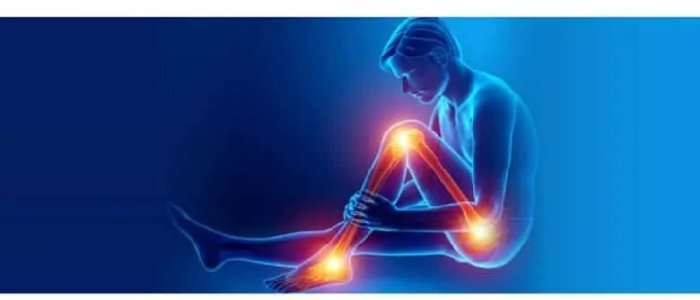
Being overweight or obese is now recognised as a serious cause of ill health and disability. There is a significant positive association between orthopaedic disorders and the level of obesity causing pain, deformity and difficulty in walking.

Excess body weight accumulation increases pressure on joints, particularly the hips, knees and ankles.

Here are a few type of  arthritis:

Osteoarthritis

It is a condition of damage/ wear and tear of the joint lining or cartilage. Obesity triggers this by loading excessive weight on the weight bearing joints like the knee and the hip. 

Knee Osteoarthritis

This is the most common arthritis especially in the Indian subcontinent.

While walking, an individual exerts 3 to 6 times pressure that of the body weight on the weight-bearing knee joint, which means in an obese with excess body weight, larger forces are exerted, which lead to higher risk of deterioration of cartilage.

In addition, there are excessive fat tissues that produce hormones and other factors that affect the joint cartilage metabolism and cause inflammation of the joints giving rise to joint pathology.  Leptin is one of the hormones causing knee osteoarthritis. 

Hip osteoarthritis

The force exerted across the hip is 3 times that of body weight. Hip osteoarthritis is caused by factors such as joint injury, increasing age and being overweight.    

Hand osteoarthritis

The observation that obese individual has a higher risk in having hand osteoarthritis has led to a hypothesis that the metabolic effect produced by fat tissue is the underlying factor. 

Osteoporosis

It is a progressive bone condition of decrease in bone mass and density (Bone Mineral Density or BMD) which can lead to an increased risk of fracture. Recent research suggests that obesity may accelerate bone loss. It is the amount of muscle mass which is seen in an active person, which accounts for bone strengthening effects and not due to the fat seen in a heavy person.

Low back pain

Low back pain from degenerative disc disease of the lumbar spine is one of the most disabling conditions in the community and overweight and obesity have the strongest association with seeking care for low back pain.

Managing Hip and Knee Osteoarthritis

Life style changes

If one is overweight, try to lose weight by doing more physical activity and eating a healthier diet. Regular exercise keeps you active and mobile and builds up muscle, thereby strengthening the joints and can improve symptoms. 

Pain Killers

Painkillers help with pain and stiffness for short term. They don’t affect the arthritis itself and won’t repair the damage to your joint. Creams and gels can be applied directly onto painful joints.

Nutritional Supplements

Glucosamine and chondroitin are nutritional supplements. Animal studies have found that glucosamine can both delay the breakdown of and repair damaged cartilage. However, there is insufficient evidence to support the use of glucosamine in humans and one can expect only a mild-to-moderate reduction in pain

Joint injections

If pain from osteoarthritis is severe joint steroid injections are injected into the joints that can reduces swelling and pain. The injections can start working within a day or so and may improve pain for several weeks or months. 

Hyaluronic acid injections, which help to lubricate your knee joint also give short term relief. In early stages. Stem cell treatment or cartilage regeneration procedures are being tried in young people with small defects, however it is still experimental and lacks long term evidence.

Surgery

May be recommended if you have severe pain or mobility problems.

Arthroscopy

If one has frequent painful locking/stiffening episodes especially in the knee joint, an operation to wash out loose fragments of bone and other tissue as joint can be performed by a minimally invasive key hole procedure called Arthroscopy.

Arthrodesis

If hip or knee replacement is not suitable, especially in young people who do heavy manual work, one can consider an operation known as an arthrodesis, which fuses your joint in a permanent position. This means that your joint will be stronger and much less painful, although you will no longer be able to move it.

Osteotomy

In young, active people in whom a knee joint replacement would fail due to excessive use one can consider an operation called an osteotomy. This involves adding or removing a small section of bone either above or below your knee joint.  This helps realign your knee so your weight is no longer focused on the damaged part of your knee. An osteotomy can relieve your symptoms of osteoarthritis, although you may still need knee replacement surgery eventually as you grow old

Joint replacement surgery

Joint replacement therapy is most commonly carried out to replace hip and knee joints. It involves replacing a damaged, worn or diseased joint with an artificial joint made of special plastics and metal.

For most people, a replacement hip or knee will last for at least 20 years, especially if it is cared for properly and not put under too much strain.

Dr G K Sudhakar Reddy is a Sr Consultant Orthopaedic Surgeon at Citizens Speciality Hospitals, Hyderabad


Comments

Add new comment

  • Coastaldigest.com reserves the right to delete or block any comments.
  • Coastaldigset.com is not responsible for its readers’ comments.
  • Comments that are abusive, incendiary or irrelevant are strictly prohibited.
  • Please use a genuine email ID and provide your name to avoid reject.