



Clashes across Syria ahead of Annan’s UN briefing

April 2, 2012

sirya


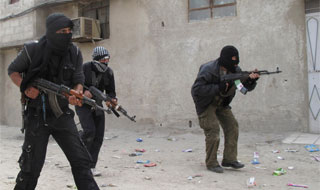
Beirut, April 2: Syrian government troops clashed with rebel forces across the country Monday as international envoy Kofi Annan prepared to brief the U.N. Security Council on the progress of his mission to ease the nation’s crisis.

A new flurry of high-level diplomacy has failed to stop the violence in a year-old conflict that the U.N. says has killed more than 9,000 people.

On Monday, more than 70 countries, including the United States, pledged to send millions of dollars and communications equipment to opposition groups inside Syria, signaling a growing belief that diplomacy and sanctions alone will not end the repression and push Syrian President Bashar Assad from power.

Participants at an international diplomatic conference in Istanbul on Sunday said Saudi Arabia and other Gulf countries are creating a fund to pay Syrian rebels fighters known as the Free Syrian Army and soldiers who defect from the regime. One delegate described the fund as a “pot of gold” to undermine Assad’s army.

Participants confirmed the Gulf plan on condition of anonymity because details were still being worked out. One said the fund would involve several million dollars a month. It is said to be earmarked for salaries, but it was not clear whether there would be any effort to prevent the money from being used to buy arms, an issue that could prompt stronger accusations of military meddling.

Anti-regime activists inside Syria welcomed the news, while worrying that the aid would be too little, too late.

“This is what we have been asking for, but if they had decided to do this months ago, we could have avoided a large number of martyrs,” said Fadi al-Yassin from the northern province of Idlib. “We know that there is no way to topple the regime without force.”

As the joint U.N.-Arab League envoy, Annan has been pushing a six-point plan to end the country’s crisis that includes an immediate daily two-hour halt to fighting so aid can reach suffering civilians. It also calls for an overall cease-fire so all parties can discuss a political solution.

Annan is scheduled to brief the U.N. Security Council in New York on his progress Monday.

The Syrian government has said it accepts his plan while rejecting some of the steps it requires, like withdrawing its troops from towns and cities. Its attacks on opposition areas have continued unabated.

The opposition has also rejected dialogue with the regime, saying it has killed too many people to be part of a solution to the crisis.

While international condemnation of Assad’s crackdown has grown, Russia and China have stood by Assad, twice protecting his regime from censure by the U.N. Security Council. Neither country accepted invitations to Sunday’s conference, dubbed “Friends of the Syrian People.”

On Monday, Russian Foreign Ministry spokeswoman Maria Zakharova criticized the meeting for not including the Syrian government and “many influential groups of Syrian opposition.”

In a statement, she said Annan’s plan — which does not call specifically for Assad to leave office — is the best way to settle the conflict and criticized the moves to help rebel forces.

“The statements and assurances about direct military and logistical support of the military opposition that have been made in Istanbul undoubtedly contradict the task of peaceful settlement of the Syrian conflict,” she said.

Syria also blasted the conference, saying in an editorial in the state-run al-Baath newspaper that the conference sought to “blow up and derail” Annan’s mission.

Violence continued in Syria Monday.

The Britain-based Syrian Observatory for Human Rights said three civilians, five rebels and one government soldier were killed in clashes in the northern Idlib province.

In the northern city of Aleppo, explosives stashed in a kiosk blew up, killing one person, the group said, while rebels in the south killed two soldiers at a checkpoint.

Government forces stormed the southern town of Dael, raiding activist homes and setting some on fire, the Observatory said. Another group, the Local Coordination Committees, said more than 20 homes had been damaged.

Residents could not be reached for comment and activists’ claims could not be independently verified. The Syrian government rarely comments on specific incidents and bars most media from working inside the country.

Syria’s uprising began in March 2011 as part of the Arab Spring with peaceful protests calling for political reforms. Assad’s regime sent tanks, snipers and thugs to try to quash the revolt, and many in the opposition have taken up arms to defend themselves and attack government troops.

Comments

Add new comment

  • Coastaldigest.com reserves the right to delete or block any comments.
  • Coastaldigset.com is not responsible for its readers’ comments.
  • Comments that are abusive, incendiary or irrelevant are strictly prohibited.
  • Please use a genuine email ID and provide your name to avoid reject.
Agencies
July 31,2020

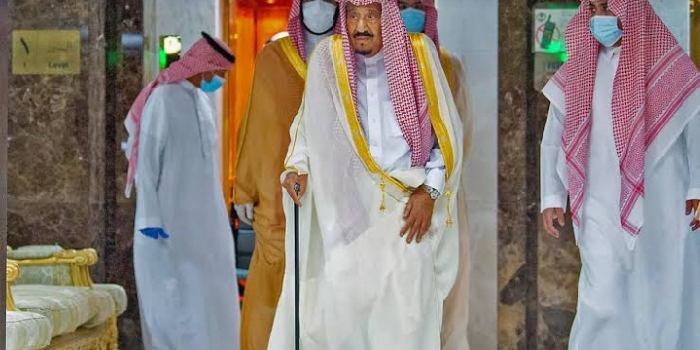
Makkah, Jul 31: Organising this year's scaled-down hajj required "double efforts" by Saudi authorities amid the coronavirus pandemic, King Salman said Friday after being discharged from hospital following gall bladder surgery.

Only up to 10,000 people already residing in the kingdom are participating in this year's pilgrimage, compared with 2019's gathering of some 2.5 million from around the world.

"Holding the ritual in the shadow of this pandemic... required reducing the numbers of pilgrims, but it obliged various official agencies to put in double efforts," 84-year-old King Salman said in a speech read out on state television by acting media minister Majid Al-Qasabi.

"The hajj this year was restricted to a very limited number of people from multiple nationalities, ensuring the ritual was completed despite the difficult circumstances," he said.

The speech came on the occasion of Eid al-Adha, the Muslim festival of sacrifice, a day after the king left hospital following a 10-day stay for surgery to remove his gall bladder.

The hajj, which began on Wednesday, is one of the five pillars of Islam and a must for able-bodied Muslims at least once in their lifetime.

Authorities implemented the "highest health precautions" during the rituals, the king said.

Pilgrims, who were all tested for the virus, are required to wear masks and observe social distancing.

For Friday's "stoning of the devil", the last major ritual of the hajj, Saudi authorities offered the pilgrims pebbles that were sanitised to protect against the pandemic.

In a sign that its strict measures were working, the health ministry reported no coronavirus cases in the holy sites on Wednesday or Thursday.

Comments

Add new comment

  • Coastaldigest.com reserves the right to delete or block any comments.
  • Coastaldigset.com is not responsible for its readers’ comments.
  • Comments that are abusive, incendiary or irrelevant are strictly prohibited.
  • Please use a genuine email ID and provide your name to avoid reject.
News Network
April 24,2020

Apr 24: Dubai's Supreme Committee of Crisis and Disaster Management has announced partial easing of restrictions on public movement in the emirate starting from Friday amid the COVID-19 outbreak.

The announcement is in line with the decisions of the Ministry of Health and Prevention and the National Emergency Crisis and Disaster Management Authority (NCEMA), a statement released late on Thursday said.

The move, which coincides with the start of the fasting month of Ramzan, will allow increased freedom of movement while ensuring the continuation of strict precautionary and preventive measures, the statement said.

The Committee has also outlined a new set of guidelines on movement and a list of exempted commercial activities and vital sectors, it added.

The decision to reduce restrictions on movement in Dubai follows a careful assessment of the current situation and analysis of reports from various authorities working to combat the pandemic, the committee said.

Underlining the emirate’s success in countering the spread of the virus, it said that stringent measures undertaken over the last three weeks have significantly helped to mitigate the crisis.

It further stressed that despite the partial easing of restrictions on movement, people will not be allowed to hold public or private gatherings and those who breach the guidelines will face legal action.

The need to ensure the safety and wellbeing of the community cannot be underestimated, the Committee stressed.

"Despite the difficult circumstances the world is facing today, the UAE has set an example for dealing with the crisis. This was also made possible through the commitment of all individuals and institutions both in the private and public sector,” the committee said in the statement.

“All measures undertaken by the country have been driven by the objective of safeguarding everyone’s safety and wellbeing,” it added.

Public transport (bus and metro), restaurants and cafes (except for buffet and shisha), retail sector (malls, high-street outlets and souqs), wholesale sector and maintenance shops will be allowed to operate under certain conditions, it said.

Shopping malls, markets and commercial outlets will be open daily from 12 pm to 10 pm. Restaurants and shops are allowed to operate at a maximum of 30 per cent capacity at shopping malls, it said.

Malls and retail outlets are not allowed to hold entertainment events to avoid congestion and crowding, it added.

Restaurants and cafés too have been allowed to operate but are not permitted to serve shisha and buffet. Dine-in customers are allowed but should occupy only a maximum of 30 per cent of the outlet’s capacity and only single-use cutlery can be used at restaurants and cafes, it said.

However, family entertainment facilities, cinemas, changing rooms and prayer rooms will not be allowed to operate. Hotels will be allowed to operate without opening pools, gyms, sauna and massage parlours.

A maximum of 30 per cent of the workforce of all organisations will be allowed to work from their offices while the rest will be required to work from home.

As part of the first phase of easing of restrictions, the stringent curbs on public movement will now be limited to the period between 10 pm to 6 am. During this period, the public will be allowed to leave their homes only for medical emergencies.

Individuals will be able to leave their homes between 6 am and 10 pm without a permit.

The public will be required to strictly follow precautionary measures which include maintaining physical distance from others as per guidelines and wearing a face mask. Those who do not wear a mask will be subject to a fine of AED 1,000.

Members of the public have also been allowed to exercise outside their homes provided they do not leave their area of residence. They can undertake activities such as walking, running or cycling for 1-2 hours each time. Only a maximum of three people can exercise at the same time.

Permission has also been granted to allow visit first and second degree relatives as long as gatherings are restricted to not more than five people. However, visiting high-risk individuals (individuals above 60 years and those with underlying medical conditions) should be avoided.

Comments

Add new comment

  • Coastaldigest.com reserves the right to delete or block any comments.
  • Coastaldigset.com is not responsible for its readers’ comments.
  • Comments that are abusive, incendiary or irrelevant are strictly prohibited.
  • Please use a genuine email ID and provide your name to avoid reject.
Arab News
March 9,2020

Dubai, Mar 9: The eyes of the world will be on the oil markets when the big trading hubs in Europe and North America open following the end of the deal between Saudi Arabia and Russia that has helped to sustain crude at relatively high levels for the past three years.

There were big falls on Friday when ministers from the Organization of the Petroleum Exporting Countries (OPEC) failed to get a deal with non-OPEC members — the so-called OPEC+ — to extend output agreements. Brent oil was down nearly 10 percent at $45.27 going into the western weekend.

Saudi Aramco took immediate action to cut prices after the OPEC+ collapse, offering big discounts for crude deliveries from next month, when the current output restrictions end.

According to a notification sent to customers by Saudi Aramco, seen by Arab News, the Kingdom’s oil giant will cut between $4 and $8 per barrel, with the biggest discounts being offered to buyers in northwest Europe and the US.

Roger Diwan, an oil analyst at consultancy IHS Market, said: “We are likely to see the lowest oil prices of the past 20 years in the next quarter.”

West Texas Intermediate, the US oil benchmark, fell to $28.27 in November 2001.

The move raises the possibility of a “crude war” between the three biggest oil blocs — the US, Russia and the Arabian Gulf. Some analysts believe the American shale industry is more vulnerable to low prices than either the Russians or the Saudis.

Robin Mills, head of the Qamar consultancy, told Arab News: “I don’t think this was premeditated but Saudi Arabia has clearly swung quickly into action to put the Russians under pressure. But the Russians, with low debt and a flexible exchange rate, can cope with a few months of low prices.”

The boom in US shale has made the country the biggest oil producer in the world, but with high financing costs. Lower global prices would put a lot of shale companies out of business.

On the other hand, American motorists, and President Donald Trump, would be pleased to see lower fuel prices in an election year.

In Moscow, one prominent financier with ties to the Kingdom played down the long-term significance of the Vienna fallout.

Kirill Dmitriev, chief executive of the Russian Direct Investment Fund, told Arab News: “Saudi Arabia is our strategic partner, and cooperation between our two countries will continue in all areas. We will also continue to work within the framework of the Russia-Saudi Economic Council.”

One Russian official, who asked not to be named, added: “There is a good relationship between Alexander Novak, Russian energy minister, and his Saudi counterpart Prince Abdul Aziz bin Salman, and I am sure they will continue talking to each other less formally.”

Comments

Add new comment

  • Coastaldigest.com reserves the right to delete or block any comments.
  • Coastaldigset.com is not responsible for its readers’ comments.
  • Comments that are abusive, incendiary or irrelevant are strictly prohibited.
  • Please use a genuine email ID and provide your name to avoid reject.