GVNS: Giving students that extra edge over others

[email protected] (CD Network, Photos by Ahmed Anwar )
January 10, 2013
gvns1
With competition comes the necessity to have an ‘edge’ over others. Green Valley National School and PU College, Shiroor, has in a short span climbed its way up to becoming one of the best schools in the state with not just top class infrastructure but high quality education too.

The school is an ICSE school, a model which in itself is a determining factor in students having that extra ‘egde’. The ICSE model has a well established exam pattern which existed in pre-independence era i.e. the British times. The Anglo-Indian Board later transformed into the ICSE Board and hence the essence of British quality of education remained. Since the school has students from Goa, Dharwad, Bijapur, Karwar, Mangalore, Puttur, Madikeri, Chikmagalur, Mysore and the like, shows that it has already gone a step ahead in its attempt to becoming one of the best residential schools in the state offering quality education.
gvns2

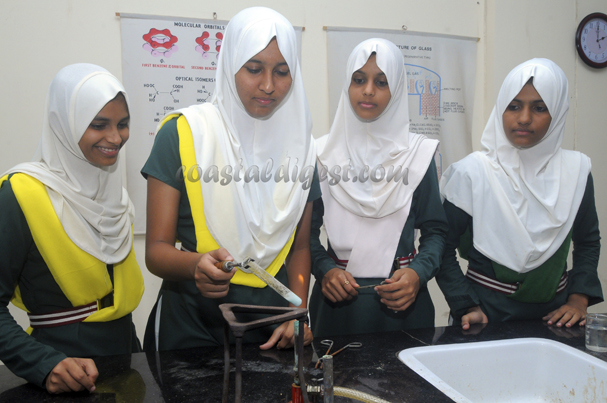
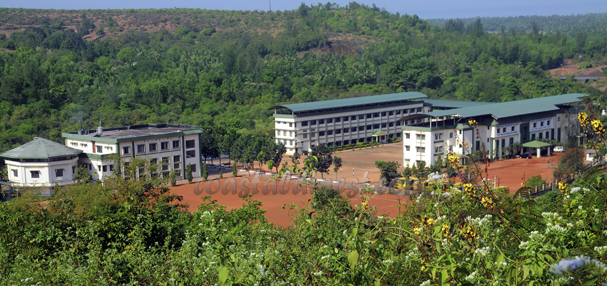
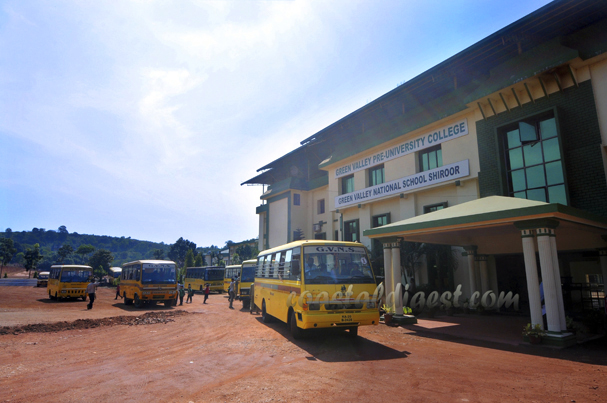
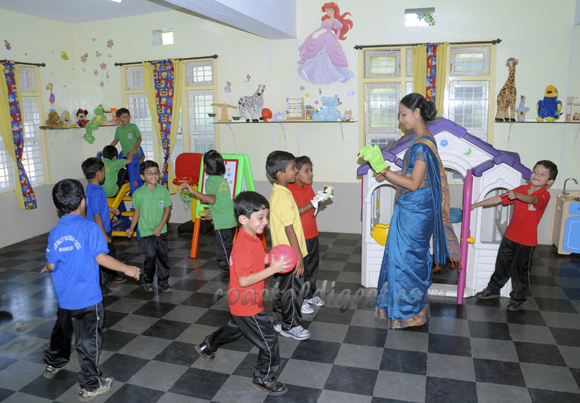
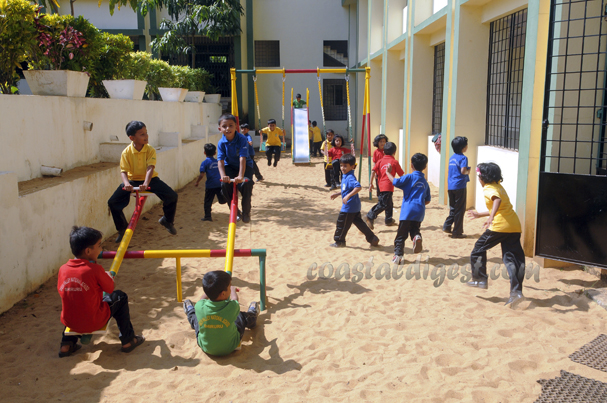
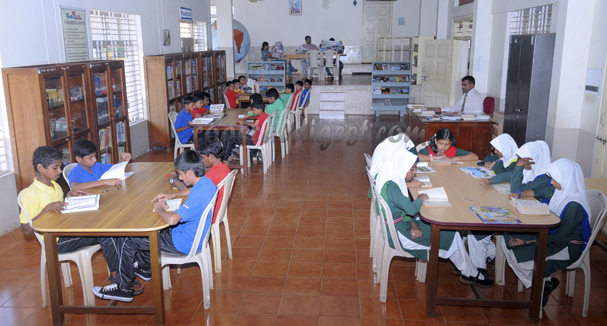
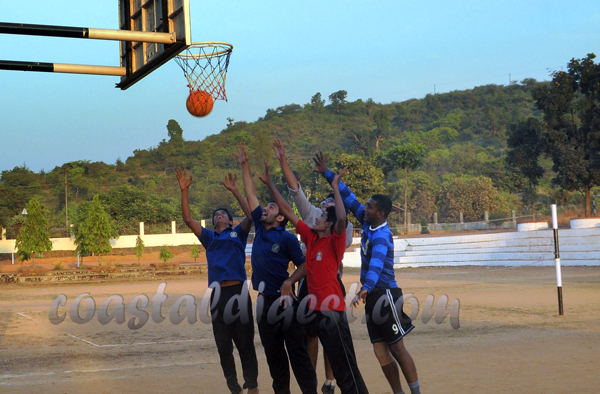
The school possesses an enviable infrastructure with exclusive blocks for PU, primary and high school sections. All of these have smart class facility, theatre systems, interactive boards, modern and updated labs for both ICSE and PU Board syllabuses. There is at the disposal of the students a large library with over 1000 books and which is being upgraded besides a vast playground and sports facilities having indoor and outdoor courts in line with international specifications. The school also possesses a KG activity centre with all the latest Montessori teaching equipments which are rare and expensive, a rarity in Karnataka.

Veterans in-charge

John Mathew, Principal

Green Valley is currently being marshaled along by its veteran Principal John Mathew. Before joining Green Valley National School, Shiroor, Mr. Mathew, was the Principal of Villa International High School, the Republic of Maldives following GCE London Advanced Level Examinations. He has served the Ministry of Education, the Republic of Maldives as a Senior Principal for 13 years in schools affiliated to University of London and Cambridge University for O’ Level and A’ Level Examinations. He was the former Principal of Majeediyya School, the oldest and most reputed school in the Republic of Maldives under the Ministry of Education, founder Principal of Cambridge School, Mangalore, the Principal of MES Central School, Kirpal Sagar International Academy and was an active associate with Ivy League Schools Ltd., Hyderabad, spanning an educational career that extends 26 years of which 22 years as Principal. He is much respected and credited in the Maldives as the first Indian Principal and for having produced some of the best National and International Results and is well familiar with ICSE, CBSE, GCE/IGCSE and International Baccalaureate Syllabus Management and an expert in pioneering schools. He is a gold medalist and holds his Master’s in English Language and Literature, M.Ed. in Education and an Executive MBA in Human Resource Management. He has also completed an Advanced Educational Management Training at Salzburg University, Austria and was trained at John F. Kennedy School, Berlin under the WUM International Exchange Programme and an active member of several international professional bodies associated with School Education and a Deputy Commissioner with Bharath Scouts and Guides.
gvns3

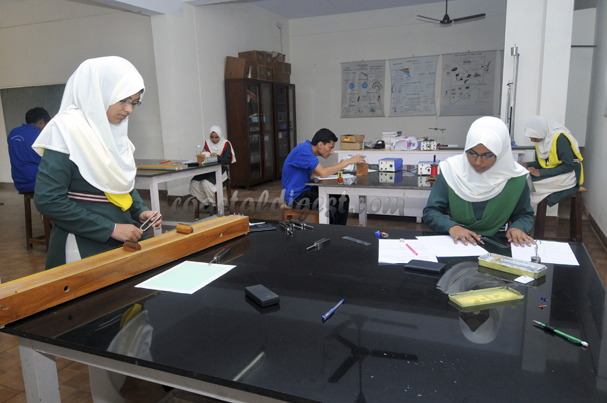
Experiential Learning

The purpose of having all these facilities is to provide a ‘child-centered’ education. The approach is an ‘activity centered’ approach where emphasis is given on learning through experiences. Says Mr. Mathew, the Principal:

“We make children engage in activities and the onus is always on experiential learning. Things which are learnt through experiences stay in memory longer than those which are just mug up from books. If one is to ask you what you had for breakfast a week ago, you are not likely to remember but if you are asked about the items which were served in dinner during your last birthday party, you are likely to remember because that event is full of experiences. We try to do something similar with learning and create situations and scenarios along with the various infrastructural facilities that we have, to enable children learn through experiences”.

The process begins right from the early stages in the school, from the KG and primary levels. “That is the age when there is a greater sense of curiosity and enquiry among children. We provide them experiential learning where they learn more than what normally other kids don’t. For instance, you don’t have to teach the word ‘smooth’ to a child when it can learn the word by feeling the smoothness of texture of an object. Learning happens automatically’, says Mr. Mathew.
gvns4

More than just books

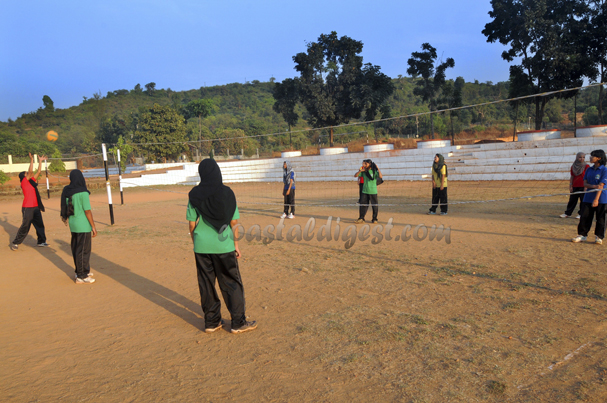
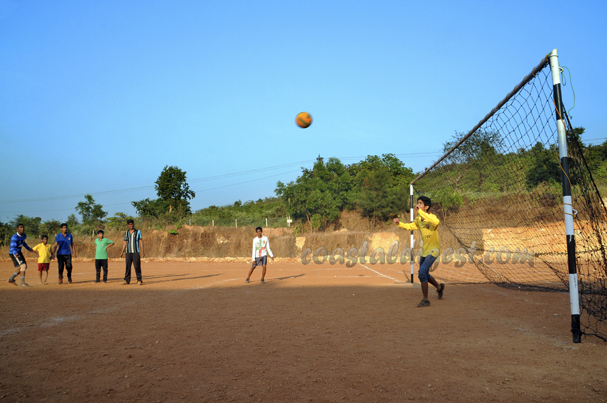
Students in Green Valley are exposed to a plethora of co-curricular and extracurricular activities. “Activities are prescribed by the ICSE syllabus as part of internal assessments in the form of projects and assignments. But we go beyond those and provide children with a number of other activities be it cultural, oratory, language clubs and other areas such as sports”, says Mr. Mathew.
gvns5

gvns

Home away from home

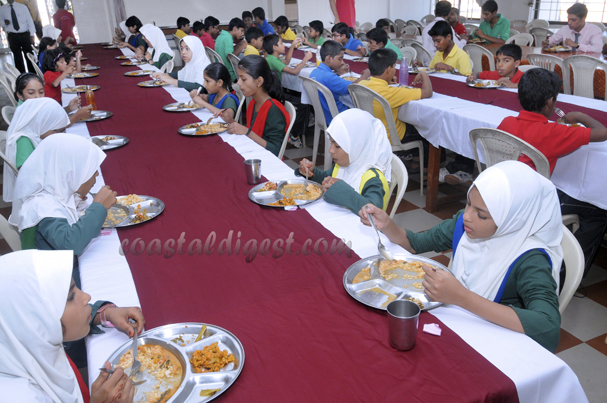
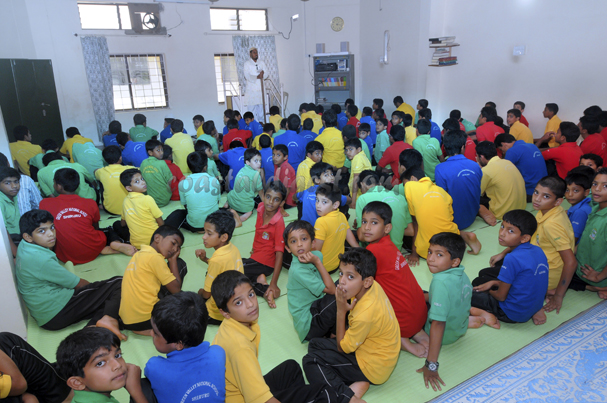
At Green Valley, there are exceptional residential facilities for both school as well as PU students. “The approach of the wardens is also child-centered at our residential facility and there is no room for rigidness. It is an environment which helps children become more responsible. We are lenient with matters of religious practices too and students can perform their prayers and religious practices while they are here. An added advantage of being a residential student at Green Valley is that he/she is under the watchful eyes of the school authorities 24x7 and the school influence on him/her doesn’t end with the completion of school hours. The studies of children in their residential facilities are monitored. The 24/7 stay in a residential school contributes to the holistic development of the child. The situation is more favourable for students having parents who do not find time to address their wards’ studies and other issues because of their work and even students having parents working in Gulf countries. Besides, programmes and activities are held for them. They are given time for leisure, TV watching, play and reading”, says Mr. Mathew.
gvns6

gvns7

Location an advantage

People have a misconception that Green Valley has lost out by being situated in a not so popular place like Shiroor. “The remoteness of the place is actually an advantage. Children are not distracted and get attracted towards the temptations of the 21st century or so to say the glittery world outside. It is a safe place and a safe environment. The school is located at an area which is free from vibrance, noise and pollution. The place is quiet and ideal for a residential school. It is, on the other hand not that remote either. The place is easy to access with railway stations close by (Byndoor, Shiroor, Bhatkal and Kundapur) and is well connected in the sense that it is not too far away from Mangalore and Udupi. Even in terms of air travel, the place is rather closely accessible from both the Goa as well as Mangalore Airports from either ends”, says Mr. Mathew.
gvns8

Mixing of cultures

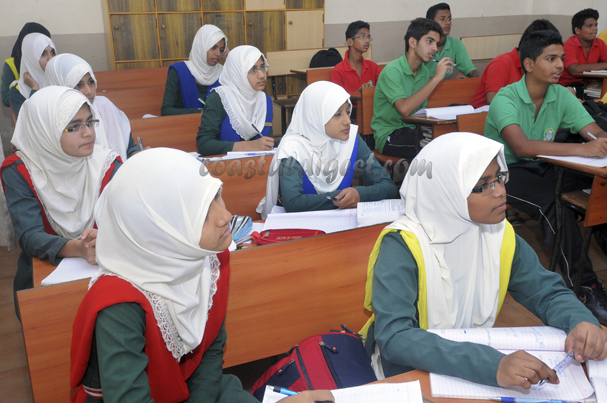
The school being a National school and a residential school at that, there is ample scope for building a student’s broad minded approach. “The students in the future will go into a global world which will demand them to mix with a cross section of the society. The school serves as a model for students where they are exposed to these different cultures as there are fellow students coming from different backgrounds and different cultures studying and living under the same roof. There is a lot of give and take and students learn to respect not just individuals but cultural ethos and institutions as well. Having said that, we ensure that ample opportunity is given to students to maintain their roots and core values.
gvns11

Making children be better gentlemen, ladies in future

The effort at GVNS is always to create good citizens out of its students. “The quality of our education will reflect in their attitude, the way they interact with people and the society at large after they pass out. It has happened to a great extent and we want to continue focusing on that. Success is a continuous process unlike switching light on and off. We have seen changes come about in children. They feel they are being taken care of here. Every child matters in the school. The school is not meant just for the 10th std or II PU students where results are always in focus. We see ourselves as helpers of learning. We do not undermine the ability of the child and confine them to our level. We want to grow them beyond what we are and what we have achieved. We are aware that if children’s energy is curtailed, when they do obtain freedom sometime later in their life, chances are that they might go astray in trying to divert that energy somewhere else. At the same time, we respect the demand of the society that there has to be ethical and value oriented education”, says the Principal.
gvns10

Lesser burden on children

A common complaint made today is that children are overburdened with study materials and activities which are beyond their capacity. But at GVNS, the attempt is always to keep the burden on the child minimal.

“The increased burden is a situation created by publishers of the books. Basically, irrespective of the state board, ICSE or CBSE, we are supposed to follow NCERT guidelines in matters of deciding syllabus for children. For CBSE and ICSE, there are no mandatorily prescribed books up to 8th std. Each school is open to choose the books it wants. Some schools in their ignorance opt for bulkier books getting carried away with their presentation etc thereby burdening the child. We at GVNS have lesson plans and schemes of work. We review our syllabi with our teachers every year and collaborate with other good institutions which use different types of books and whenever we find that there is overfeeding of study material, we minimize it”, reveals Mr. Mathew.
gvns12

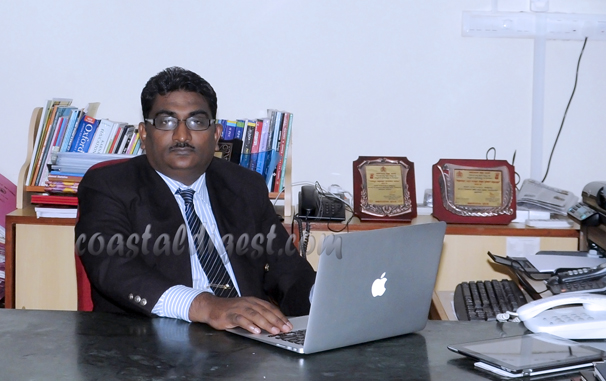
Wilhelmina Mathew, Chief Coordinator and Head of the Department of English

Ms Mathew, an exceptional teacher and administrator par excellence is the Chief Coordinator and Head of the Department of English at Green Valley National School, Shiroor. She is of British Origin and has 23 years of teaching and administrative experience right from Pre-Primary to College level. She worked as a Lecturer of English and Co-ordinator at Secondary and Senior Secondary Schools in India and abroad handling GCE O’ Level and O’ Level Examinations for University of London and Cambridge Examinations. Her recent assignment was as Lecturer of English and Co-ordinator in the Faculty of Education at Villa College, the Republic of Maldives. She is also a trainer and examiner for Trinity College, London Examinations in India. She has also been trained in Montessori Method at Woodlands School and holds her Master’s Degree and B.Ed. from prestigious institutes. She coordinates the English Programmes at Green Valley National School, Shiroor.

Sophisticated programmes to enhance quality of English among students

Ever since taking charge, Ms. Mathew has been working on a slew of projects to enhance the quality of spoken and written English among students.

“We have incorporated a BBC (British Broadcasting Corporation) programme called ‘Muzzy’ where children are exposed to learning fluent English. There are day to day activities wherein they learn better pronunciations. There is a dedicated session for English for 45 minutes every day right from LKG to Grade 6. The idea is to have a strong English foundation when children are small so that they don’t face problems later, which is something I have noticed in a lot of children here in Karnataka. We have story telling activities, role play enactments, and a lot of listening wherein children pick up the language. We use the ‘Cambridge Reading Tree’ and the ‘Oxford Reading Tree’ which are audio visual programmes and after watching those, children have showed improvement in picking up the language. For children in senior classes, we show video documentaries from the BBC and CNN and filmed day to day activities through which children are exposed widely to what is happening around the world. Apart from that, we have essay writing skills, picture composition and picture essays to widen their imagination and other competitions”, explains Ms. Mathew.
gvns13

‘Word a day’

Children at GVNS have the ‘Word a day’ programme wherein everyday a student has to bring one new word to the class. “This way, we develop their English and strengthen their vocanulary”, Ms. Mathew says.

That apart, Ms. Mathew has other similar programmes up her sleeve like book reading where students are asked to read a book every month at the end of which a review is held. “The students have to speak about the characters, which ones they liked, which ones they disliked, their opinions on the book etc. In the process, they pick up new words from the chapters. We have to reach out to children beyond text books. We teach them songs because singing is a way of picking up the language well. We have karaoke sessions wherein words appear on the screen as the rhythm is played and this programme is held for students up to class 5. We discourage them from speaking in their mother tongue as they can do it at home anyway but not on school campus as this is the place they need to work on bettering their English”, Ms. Mathew reveals.

GVNS will be the best residential school in the state: Syed Abdul Khader (Bashu), Trustee, GVNS

A tiny project which took birth in Shiroor, Green Valley National School and PU College is now standing tall as a prominent education institution of the region. To provide holistic education to boys and girls alike is the objective of Green Valley. The institution has already crossed enviable milestones in a span of eleven years thanks to the efforts and cooperation of the management, teaching staff, students and parents.

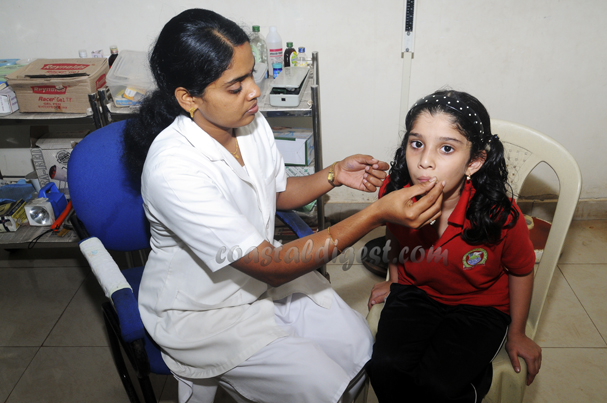
A number of student-friendly facilities are at students’ disposal. Spacious and ventilated classrooms, separate sophisticated hostels for boys and girls, residential facilities for teachers and staff, vast playground, audio visual rooms, an updated computer centre, large library, modern labs and smart class facilities are available at Green Valley.

In addition to the experienced teaching staff, the school is fortunate to have a dynamic new Principal in John Mathew and Chief Coordinator in Wilhelmina Mathew. Their expertise and experience in the field of teaching will certainly prove beneficial for the students. Green Valley is marching forward by winning hearts its students through its student friendly teaching staff and use of latest technology.

That the school has excellent residential and hostel facilities for students, this is a golden opportunity for NRIs who want their children to obtain quality ICSE education in their homeland.

Students of the school as well as PU sections are scaling greater heights and achieving milestones every year. Green Valley will leave no stone unturned in raising the bar and enhancing this quality. The school does not compromise on quality and is well on its way to becoming the best residential school in the state.
gvns14

gvns15

Comments

Add new comment

  • Coastaldigest.com reserves the right to delete or block any comments.
  • Coastaldigset.com is not responsible for its readers’ comments.
  • Comments that are abusive, incendiary or irrelevant are strictly prohibited.
  • Please use a genuine email ID and provide your name to avoid reject.
Ram Puniyani
July 20,2020

As Covid 19 has created havoc all rounds, the rulers of certain countries are using it to further intensify their set agendas. The democratic freedoms are being curtailed in certain forms, the reaction to which has come in America in the form of a campaign, which is opposing “stifling” cultural climate that is imposing “ideological conformity” and weakening “norms of open debate and toleration of differences”. In India similar intimidations have been intensified. In addition the occasion has been used by the sectarian forces first to link the spread of Corona to Muslim community and now in the name of reducing the burden of curriculum certain chapters on core concepts related to Indian nationalism are being deleted from the text books.

It has been reported that chapters on federalism, citizenship, nationalism, secularism, Human Rights, Legal Aid and Local Self Government and the like are being dropped. Education has been an important area for communal forces and they constantly keep saying that leftists have dominated the curriculum content, it suffers from the impact of Macaulay, Marx and Mohammad and so needs to be Indianized. The first such attempt was done when BJP came to power in 1998 as NDA and had Murli Manohar Joshi as the MHRD minister. He brought the changes which were termed as ‘saffronization of education’. Their focus is more on social science. Some of the highlights of this were introduction of subjects like Astrology and Paurohitya, and chapters defending caste system, nationalism of the type of Hitler was praised.

With defeat of NDA in 2004, the UPA did try to rectify some of these distortions. Again after 2014 the RSS affiliates working in the area of education have been active, interacting with MHRD officials to impress upon them the need to change the curriculum matching with their Hindu nationalist agenda. Its ‘Shiksha Sanskriti Utthan Nyas’ has been asking for removal of English, Urdu words in the texts. It has asked for removal of thoughts of Rabindranath Tagore on Nationalism, extracts of autobiography of M F Husain, references to benevolence of Muslim rulers, references to BJP being Hindu party, apology of Dr. Manmohan Singh for anti Sikh pogrom of 1984, the reference to killings of Gujarat carnage in 2002 among others. This they call as Bhartiykaran of syllabus.

As RSS is a multithreaded hydra one of its pracharak Dinanath Batra has set up ‘Shiksha Bachao Abhiyan Samiti’ which has been pressurizing various publishers to drop the books which are not conforming to their ideology. One recalls their pressuring withdrawal of Wendy Doniger’s ‘The Hindus’, as it does present the ancient India through the concerns of dalits and women. Mr. Batra has already come out with a set of nine books for school curriculum, giving the RSS view of the past and RSS understanding of social sciences. These have already been translated into Gujarati and thousands of the sets of these books are being used in Gujarat Schools.

The present step of deleting parts of curriculum which gives the basics of Indian Nationalism, secularism and human rights is a further step in the same direction. These are the topics which have made the Hindu nationalists uncomfortable during last few years. They have been defaming secularism. They removed it from the preamble of Indian constitution, when they put out an ad on the eve of Republic day in 2015. From last few decades since the Ram Temple movement was brought up, simultaneously the secular ethos of India’s freedom movement and secular values of Indian constitution have been constantly criticized. Many an RSS ideologues and BJP leaders have been asking for change of Indian Constitution for this very reason.

Secularism is part of the concept of Indian nationalism. In the name of religious nationalism, sectarian divisive nationalism they have been attacking various student leaders in particular. When we study Nationalism, the very genesis of Indian nationalism tells us the plurality of our freedom movement with its anti colonial roots. The struggle was for Indian nationalism and so the Muslims and Hindu communalists kept aloof from this great struggle against colonial masters, it was this struggle which built the Indian nation with all its diversity.

Similarly as we have equal rights as citizens the chapters on citizenship are being dropped. Federalism has been the core part of India’s administrative and political structure. As the dictatorial tendencies are becoming stronger, federalism is bound to suffer and that explains the dropping of this subject. Democracy is decentralization of power. Power reaching the lowermost part of the system, the villages and average citizens. This got reflected in Local self Government. The power is distributed among villages, cities, state and center. By removing chapters on federalism and local self government, the indications of the ideology of ruling party are on display.

While we are not dealing with all the portents of the planned omissions, one more aspect that related to dropping of chapter on Human rights needs our attention. The concept of Human rights and dignity are interlinked. This concept of Human rights also has international ramifications. India is signatory to many an UN covenants related to Human rights. The indications are clear that now rights will be for the few elite and ‘duties’ for the large deprived sections will be put on the forefront.

In a way this incidental ‘Corona gifted opportunity’ to the ruling Government is being fully used to enhance the agenda of ruling party in the arena of Educational Curriculum. The part of curriculum with which the ruling party is uncomfortable is being removed. This act of omission does supplement their other acts of commission in changing the shape of educational curriculum, which are reflected in RSS affiliates’ suggestions to MHRD regarding Bhartiyakaran of contents of syllabus. As per this the things like regarding the great epics like Ramayana and Mahabharata as History, the things like India having all the stem cell technology, plastic surgery, aviation science etc. will have a place in the changes planned by communal forces!

Comments

Add new comment

  • Coastaldigest.com reserves the right to delete or block any comments.
  • Coastaldigset.com is not responsible for its readers’ comments.
  • Comments that are abusive, incendiary or irrelevant are strictly prohibited.
  • Please use a genuine email ID and provide your name to avoid reject.
Ram Puniyani
January 14,2020

In the beginning of January 2020 two very disturbing events were reported from Pakistan. One was the attack on Nankana Sahib, the holy shrine where Sant Guru Nanak was born. While one report said that the place has been desecrated, the other stated that it was a fight between two Muslim groups. Prime Minister of Pakistan Imran Khan condemned the incident and the main accused Imran Chisti was arrested. The matter related to abduction and conversion of a Sikh girl Jagjit Kaur, daughter of Pathi (One who reads Holy Guru Granth Sahib in Gurudwara) of the Gurudwara. In another incident one Sikh youth Ravinder Singh, who was out on shopping for his marriage, was shot dead in Peshawar.

While these condemnable attacks took place on the Sikh minority in Pakistan, BJP was quick enough to jump to state that it is events like this which justify the Citizenship Amendment Act (CAA). Incidentally CAA is the Act which is discriminatory and relates to citizenship with Religion, which is not as per the norms of Indian constitution. There are constant debates and propaganda that population of Hindus has come down drastically in Pakistan and Bangla Desh. Amit Shah, the Home minister stated that in Pakistan the population of Hindus has come down from 23% at the time of partition to 3.7% at present. And in Bangla Desh it has come down from 22% to present 8%.

While not denying the fact that the religious minorities are getting a rough deal in both these countries, the figures which are presented are totally off the mark. These figures don’t take into consideration the painful migrations, which took place at the time of partition and formation of Bangla Desh later. Pakistan census figures tell a different tale. Their first census was held in 1951. As per this census the overall percentage of Non Muslim in Pakistan (East and West together) was 14.2%, of this in West Pakistan (Now Pakistan) it was 3.44 and in Eat Pakistan it was 23.2. In the census held in Pakistan 1998 it became 3.72%. As far as Bangla Desh is concerned the share of Non Muslims has gone down from 23.2 (1951) to 9.6% in 2011.

The largest minority of Pakistan is Ahmadis, (https://minorityrights.org/country/pakistan/) who are close to 4 Million and are not recognised as Muslims in Pakistan. In Bangla Desh the major migrations of Hindus from Bangla Desh took place in the backdrop of Pakistan army’s atrocities in the then East Pakistan.

As far as UN data on refugees in India it went up by 17% between 2016-2019 and largest numbers were from Tibet and Sri Lanka.  (https://www.un.org/en/development/desa/population/migration/publication…)

The state of minorities is in a way the index of strength of democracy. Most South Asian Countries have not been able to sustain democratic values properly. In Pakistan, the Republic began with Jinnah’s classic speech where secularism was to be central credo of Pakistan. This 11th August speech was in a way what the state policy should be, as per which people of all faiths are free to practice their religion. Soon enough the logic of ‘Two Nation theory” and formation of Pakistan, a separate state for Muslim took over. Army stepped in and dictatorship was to reign there intermittently. Democratic elements were suppressed and the worst came when Zia Ul Haq Islamized the state in collusion with Maulanas. The army was already a strong presence in Pakistan. The popular formulation for Pakistan was that it is ruled by three A’s, Army, America and Allah (Mullah).

Bangla Desh had a different trajectory. Its very formation was a nail in the coffin of ‘two nation theory’; that religion can be the basis of a state. Bangla Desh did begin as a secular republic but communal forces and secular forces kept struggling for their dominance and in 1988 it also became Islamic republic. At another level Myanmar, in the grip of military dictatorship, with democratic elements trying to retain their presence is also seeing a hard battle. Democracy or not, the army and Sanghas (Buddhist Sang has) are strong, in Myanmar as well. The most visible result is persecution of Rohingya Muslims.

Similar phenomenon is dominating in Sri Lanka also where Budhhist Sanghas and army have strong say in the political affairs, irrespective of which Government is ruling. Muslim and Christian minorities are a big victim there, while Tamils (Hindus, Christians etc.) suffered the biggest damage as ethnic and religious minorities. India had the best prospect of democracy, pluralism and secularism flourishing here. The secular constitution, the outcome of India’s freedom struggle, the leadership of Gandhi and Nehru did ensure the rooting of democracy and secularism in a strong way.

India so far had best democratic credentials amongst all the south Asian countries. Despite that though the population of minorities rose mainly due to poverty and illiteracy, their overall marginalisation was order of the day, it went on worsening with the rise of communal forces, with communal forces resorting to identity issues, and indulging in propaganda against minorities.

While other South Asian countries should had followed India to focus more on infrastructure and political culture of liberalism, today India is following the footsteps of Pakistan. The retrograde march of India is most visible in the issues which have dominated the political space during last few years. Issues like Ram Temple, Ghar Wapasi, Love Jihad, Beef-Cow are now finding their peak in CAA.

India’s reversal towards a polity with religion’s identity dominating the political scene was nicely presented by the late Pakistani poetess Fahmida Riaz in her poem, Tum bhi Hum Jaise Nikle (You also turned out to be like us). While trying to resist communal forces has been an arduous task, it is becoming more difficult by the day. This phenomenon has been variously called, Fundamentalism, Communalism or religious nationalism among others. Surely it has nothing to do with the religion as practiced by the great Saint and Sufi traditions of India; it resorts mainly to political mobilization by using religion as a tool.

Comments

Ashi
 - 
Tuesday, 14 Jan 2020

If Malaysia implement similar NRC/CAA, India and China are the loser.

Add new comment

  • Coastaldigest.com reserves the right to delete or block any comments.
  • Coastaldigset.com is not responsible for its readers’ comments.
  • Comments that are abusive, incendiary or irrelevant are strictly prohibited.
  • Please use a genuine email ID and provide your name to avoid reject.
Ram Puniyani
March 14,2020

In the wake of Citizenship Amendment Act (CAA) UN High Commissioner, Michele Bachelet, has filed an intervention in the Supreme Court petition challenging the constitutionality of the Citizenship Amendment Act, as she is critical of CAA. Responding to her, India’s Foreign Minister S. Jai Shanker strongly rebutted her criticism, saying that the body (UNHCR) has been wrong and is blind to the problem of cross border terrorism. The issue on hand is the possibility of scores of people, mainly Muslims, being declared as stateless. The problem at hand is the massive exercise of going through the responses/documents from over 120 crore of Indian population and screening documents, which as seen in Assam, yield result which are far from truthful or necessary.

The issue of CAA has been extensively debated and despite heavy critique of the same by large number of groups and despite the biggest mass opposition ever to any move in Independent India, the Government is determined on going ahead with an exercise which is reminiscent of the dreaded regimes which are sectarian and heartless to its citizens, which have indulged in extinction of large mass of people on grounds of citizenship, race etc. The Foreign minister’s assertion is that it is a matter internal to India, where India’s sovereignty is all that matters! As far as sovereignty is concerned we should be clear that in current times any sovereign power has to consider the need to uphold the citizenship as per the principle of non-discrimination which is stipulated in Art.26 of the International Covenant on Civil and Political (ICCPR) rights.

Can such policies, which affect large number of people and are likely to affect their citizenship be purely regarded as ‘internal’? With the World turning into a global village, some global norms have been formulated during last few decades. The norms relate to Human rights and migrations have been codified. India is also signatory to many such covenants in including ICCPR, which deals with the norms for dealing with refugees from other countries. One is not talking of Chicago speech of Swami Vivekanand, which said that India’s greatness has been in giving shelter to people from different parts of the World; one is also not talking of the Tattariaya Upanishad’s ‘Atithi Devovhav’ or ‘Vasudhaiva Kutumbkam’ from Mahaupanishad today.

What are being talked about are the values and opinions of organizations which want to ensure to preserve of Human rights of all people Worldwide. In this matter India is calling United Nations body as ‘foreign party’; having no locus standi in the case as it pertains to India’s sovereignty. The truth is that since various countries are signatories to UN covenants, UN bodies have been monitoring the moves of different states and intervening at legal level as Amicus (Friend of the Court) to the courts in different countries and different global bodies. Just to mention some of these, UN and High Commissioner for Human Rights has often submitted amicus briefs in different judicial platforms. Some examples are their intervention in US Supreme Court, European Court of Human Rights, International Criminal Court, and the Inter-American Court of Human Rights. These are meant to help the Courts in areas where UN bodies have expertise.

 Expertise on this has been jointly formulated by various nations. These interventions also remind the nations as to what global norms have been evolved and what are the obligations of individual states to the values which have evolved over a period of time. Arvind Narrain draws our attention to the fact that, “commission has intervened in the European Court of Human Rights in cases involving Spain and Italy to underscore the principle of non-refoulement, which bars compulsory expulsion of illegal migrants… Similarly, the UN has intervened in the International Criminal Court in a case against the Central African Republic to explicate on the international jurisprudence on rape as a war crime.”

From time to time organizations like Amnesty International and Human Rights Watch have been monitoring the status of Human rights of different countries. This puts those countries in uncomfortable situation and is not welcome by those establishments. How should this contradiction between ‘internal matter’, ‘sovereignty’ and the norms for Human rights be resolved? This is a tough question at the time when the freedom indices and democratic ethos are sliding downwards all over the world. In India too has slid down on the scale of these norms.

In India we can look at the intervention of UN body from the angle of equality and non discrimination. Democratic spirit should encourage us to have a rethink on the matters which have been decided by the state. In the face of the greatest mass movement of Shaheen bagh, the state does need to look inwards and give a thought to international morality, the spirit of global family to state the least.

The popular perception is that when Christians were being persecuted in Kandhmal the global Christian community’s voice was not strong enough. Currently in the face of Delhi carnage many a Muslim majority countries have spoken. While Mr. Modi claims that his good relations with Muslim countries are a matter of heartburn to the parties like Congress, he needs to relook at his self gloating. Currently Iran, Malaysia, Indonesia and many Muslim majority countries have spoken against what Modi regime is unleashing in India. Bangladesh, our neighbor, has also seen various protests against the plight of Muslims in India. More than the ‘internal matter’ etc. what needs to be thought out is the moral aspect of the whole issue. We pride ourselves in treading the path of morality. What does that say in present context when while large section of local media is servile to the state, section of global media has strongly brought forward what is happening to minorities in India.   

The hope is that Indian Government wakes up to its International obligations, to the worsening of India’s image in the World due to CAA and the horrific violence witnessed in Delhi.

Comments

Add new comment

  • Coastaldigest.com reserves the right to delete or block any comments.
  • Coastaldigset.com is not responsible for its readers’ comments.
  • Comments that are abusive, incendiary or irrelevant are strictly prohibited.
  • Please use a genuine email ID and provide your name to avoid reject.