



Combating coronavirus: Healthy behaviour, strong immune system helped patients recover in UAE

News Network
April 16, 2020

Dubai, Apr 16: Most of the patients who have fully recovered from Covid-19 in the UAE followed healthy behaviours that helped strengthen their immune systems, said Dr Farida Al Hosani, Official Spokesperson for the UAE Health Sector.

Dr Al Hosani made the remarks during the UAE Government's regular briefing on the latest developments related to the spread of coronavirus in the country, which was held on Wednesday in Abu Dhabi.

During the briefing, Dr Al Hosani spoke about the precautionary measures that aimed to prevent the spread of the virus.

Ammar Al Muaini, Official Spokesperson of the National Programme for Happiness and Quality of Life, also explained the outcomes of the National Mental Health Programme.

During the briefing, Dr Al Hosani affirmed that recorded cases in the country, especially recoveries, were related to key factors and reasons.

"In most cases of recoveries, we noticed that they have followed several daily health behaviours, such as doing exercise, eating a healthy diet, strengthening the immune system, and maintaining an ideal weight, as well as abstaining from bad habits, such as smoking and unhealthy eating. The psychological aspect is also important, and it is necessary to support the mental health of individuals, along with their physical health," she said.

"These practices, which we always emphasise and promote, will help raise a person's immunity and resistance to diseases, in addition to medicines, and can speed up the process of recovering from disease," she added.

Dr Al Hosani also talked about the importance of not being complacent if one's temperature rises. "We highlight the importance of periodic temperature checks for family members at home. This step is one of the health measures that we are encouraging.

"Everyone who has a high temperature must contact the nearest health centre or hospital or go to a drive-through testing centre because personal health is linked to the health of those around us and we are responsible for it. There is no room for hesitation in protecting our families," she stressed.

Dr Al Hosani highlighted the importance of covering the nose and mouth, whether by wearing surgical, paper or cloth masks, or any other covering or clothing.

"This procedure is important for everyone leaving home to avoiding the transmission of any infection and preserving the safety of everyone, along with leaving a safe physical distance between people in public places, markets and workplaces, and following the precautions," she explained.

Regarding high temperatures and their relationship to the coronavirus, Dr. Al Hosani said: "All studies that attempt to understand the relationship between the virus and climate have not been able to confirm that higher temperatures will help kill the virus. We are continuing to monitor the results of these studies."

Al Muaini explained the details and developments of the national campaign, titled, 'Don't Worry,' which aims to support the mental health of community members.

"The UAE Government, represented by the National Programme for Happiness and Quality of Life, has launched, under the current circumstances, the national campaign, titled, 'Don't Worry,' that aims to provide psychological support to members of society facing the repercussions of the novel coronavirus, in line with relevant national efforts," Al Muaini said.

"The campaign reflects the directives of His Highness Sheikh Mohammed bin Rashid Al Maktoum, Vice President and Prime Minister of the UAE and Ruler of Dubai, and His Highness Sheikh Mohamed bin Zayed Al Nahyan, Crown Prince of Abu Dhabi and Deputy Supreme Commander of the UAE Armed Forces, affirming that quality of life is a high priority, and health is the most important pillar of quality of human and society," Al Muaini added.

Al Muaini stated that the phrase, 'Don't Worry,' is profound in its meaning, according to His Highness Sheikh Mohamed bin Zayed, and reassures everyone that everything will be fine. "Today, the concept of health is not limited to physical health, but it also includes mental health. During this period, and due to the social, professional, and educational changes that directly affect our lives, we need to support and enhance our mental health to overcome these challenges," he  added.

Al Muaini said that over 50 specialists, psychologists and social workers are voluntarily participating in the national campaign to serve the country, which includes three main components focusing on providing psychological support to all members of society, especially as this type of support is one of the necessary community needs during the current circumstances.

The first component, 'Let's Support Together,' aims to answer enquiries regarding psychological challenges, provide educational advice, and support individuals in facing challenges, through daily live broadcasts on the social media networks of the National Programme for Happiness and Quality of Life, @HappyUAE. Two events are broadcast every day, with the first being at 17:30 in English and the second at 20:30 in Arabic to benefit all segments of society.

Al Muaini explained that the number of live broadcasts on the programme's social media accounts has reached 30 and covers various topics, including psychological care for senior citizens, psychological care for children, psychological support for working mothers, and how to address anxiety and psychological concerns.

According to scientific studies, fear and anxiety are among the strongest influences that weaken human immunity, and, therefore, it is necessary to learn about how to deal with them. The duration of each broadcast is one hour, attracting some 250,000 views each.

Al Muaini explained that the second component of the campaign is the hosting of closed virtual sessions, entitled, 'Let's Talk Together,' which aim to provide psychosocial support to specific groups of society, to enable them to talk to each other in a safe environment to discuss the psychological challenges they are facing.

The programme has organised over eight closed psychological support sessions to maintain the privacy of participants, under the supervision of certified physicians and psychologists. Some 300 people have participated and some sessions were held for those under quarantine, including working mothers, school and university students, and doctors working in the first line of defence.

Some 300,000 people watched "Let's Reassure Each Other" programme Al Muaini noted that the third component of the campaign, titled, "Let's Reassure Each Other," focuses on raising awareness of the importance of psychological resilience and promoting its importance to society. The programme has so far posted more than 21 video clips containing messages of support and reassurance to the community.

The number of people who watched the programme reached some 300,000 viewers.

Al Muaini stressed that the campaign is an effective interactive platform available on a daily basis, to provide psychological support to all segments of society at a time when people require reassurance and psychological support to overcome the current crisis. The campaign hosted doctors working in the first line of defence and their enquiries were answered directly. A group of people under quarantine was also involved in the closed support sessions, which were also popular with participating doctors.

Comments

Add new comment

  • Coastaldigest.com reserves the right to delete or block any comments.
  • Coastaldigset.com is not responsible for its readers’ comments.
  • Comments that are abusive, incendiary or irrelevant are strictly prohibited.
  • Please use a genuine email ID and provide your name to avoid reject.
Agencies
April 27,2020

Riyadh, Apr 27: A Saudi Arabia-led coalition said on Monday that all parties need to return to the status that existed before the Southern Transitional Council (STC) in Yemen declared an emergency in Aden, according to a statement published by Spa.

The Coalition to Restore Legitimacy in Yemen, led by Saudi Arabia and the UAE, stresses the need to restore conditions to their previous state following the announcement of a state of emergency by the Southern Transitional Council and the consequential development of affairs in the interim capital (Aden) and some Southern governorates in the Republic of Yemen.

The Coalition urges for an immediate end to any steps contrary to the Riyadh Agreement, and work rapidly toward its implementation, citing the wide support for the agreement by the international community and the United Nations.

The Coalition has and will continue to undertake practical and systematic steps to implement the Riyadh Agreement between the parties to unite Yemeni ranks, restore state institutions and combat the scourge of terrorism. The responsibility rests with the signatories to the Agreement to undertake national steps toward implementing its provisions, which were signed and agreed upon with a time matrix for implementation. The Coalition demands an end to any escalation and calls for return to the Agreement by the participating parties, stressing the immediate need for implementation without delay, and the need to prioritise the Yemeni peoples' interests above all else, as well as working to achieve the stated goals of restoring the state, ending the coup and combatting terrorist organizations.

The Coalition reaffirms its ongoing support to the legitimate Yemeni government, and its support for implementing the Riyadh Agreement, which entails forming a competent government that operate from the interim capital Aden to tackle economic and developmental challenges, in light of natural disasters such as floods, fears of the coronavirus (Covid-19) pandemic outbreak, and work to provide services to the brotherly people of Yemen.

Comments

Add new comment

  • Coastaldigest.com reserves the right to delete or block any comments.
  • Coastaldigset.com is not responsible for its readers’ comments.
  • Comments that are abusive, incendiary or irrelevant are strictly prohibited.
  • Please use a genuine email ID and provide your name to avoid reject.
Agencies
August 2,2020

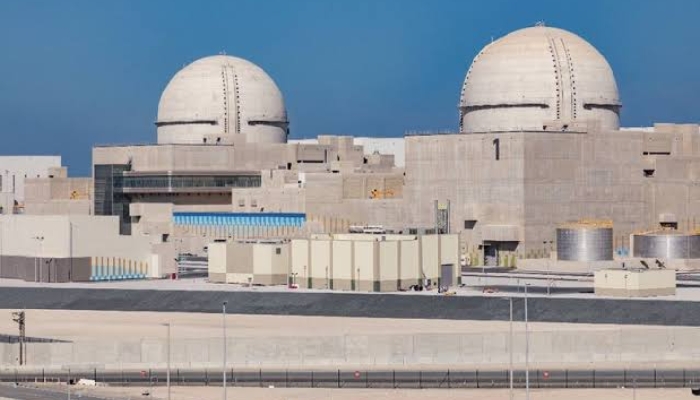
Dubai, Aug 2: The United Arab Emirates (UAE) announced on Saturday that it has started operations in the first of four reactors at the Barakah nuclear power station - the first nuclear power plant in the Arab world.

Emirates Nuclear Energy Corporation (ENEC), which is building and operating the plant with Korea Electric Power Corporation (KEPCO) said in a press release that its subsidiary Nawah Energy Company "has successfully started up Unit 1 of the Barakah Nuclear Energy Plant, located in the Al Dhafrah Region of Abu Dhabi".

That signals that Unit 1, which had fuel rods loaded in March, has achieved "criticality" - a sustained fission chain reaction.

"The start-up of Unit 1 marks the first time that the reactor safely produces heat, which is used to create steam, turning a turbine to generate electricity," said ENEC.

Barakah, which was originally scheduled to open in 2017, has been dogged by delays and is billions of dollars over budget. It has also raised myriad concerns among nuclear energy veterans who are concerned about the potential risks Barakah could visit upon the Arabian Peninsula, from an environmental catastrophe to a nuclear arms race.

Paul Dorfman, an honorary senior research fellow at the Energy Institute, University College London and founder and chair of the Nuclear Consulting Group, has criticised the Barakah reactors' "cheap and cheerful" design that he says cuts corners on safety.

Dorfman authored a report (PDF) last year detailing key safety features Barakah's reactors lack, such as a "core catcher" to literally stop the core of a reactor from breaching the containment building in the event of a meltdown. The reactors are also missing so-called Generation III Defence-In-Depth reinforcements to the containment building to shield against a radiological release resulting from a missile or fighter jet attack.

Both of these engineering features are standard on new reactors built in Europe, says Dorfman.

There have been at least 13 aerial attacks on nuclear facilities in the Middle East - more than any other region on earth.

The vulnerability of critical infrastructure in the Arabian Peninsula was further laid bare last year after Saudi Arabia's oil facilities at Abqaiq and Khurais were attacked by 18 drones and seven cruise missiles - an assault that temporarily knocked out more than half of the kingdom's oil production.

On Saturday, Dorfman reiterated his concern that there is no regional protocol in place to determine liability should an accident or incident at Barakah result in radioactive contamination spreading from the UAE to its neighbours. 

"Given Barakah has started up, because of all the well-rehearsed nuclear safety and security problems, it may be critically important that the Gulf states collectively evolve a Nuclear Accident Liability Convention, so that if anything does go wrong, victim states may have some sort of redress," Dorfman told Al Jazeera. 

The UAE has substantial oil and gas reserves, but it has made huge investments in developing alternative energy sources, including nuclear and solar.

Experts though have questioned why the UAE - which is bathed in sunlight and wind - has pushed ahead with nuclear energy - a far more expensive and riskier option than renewable energy sources.

When the UAE first announced Barakah in 2009, nuclear power was cheaper than solar and wind. But by 2012 - when the Emirates started breaking ground to build the reactors - solar and wind costs had plummeted dramatically.

Between 2009 and 2019, utility-scale average solar photovoltaic costs fell 89 percent and wind fell 43 percent, while nuclear jumped 26 percent, according to an analysis by the financial advisory and asset manager Lazard.

There are also concerns about the potential for Barakah to foment nuclear proliferation in the Middle East - a region rife with geopolitical fault lines and well-documented history of nuclear secrecy.

The UAE has sought to distance itself from the region's bad behaviour by agreeing not to enrich its own uranium or reprocess spent fuel. It has also signed up to the United Nation's nuclear watchdog's Additional Protocol, significantly enhancing inspection capabilities, and secured a 123 Agreement with the United States that allows bilateral civilian nuclear cooperation.

Comments

Add new comment

  • Coastaldigest.com reserves the right to delete or block any comments.
  • Coastaldigset.com is not responsible for its readers’ comments.
  • Comments that are abusive, incendiary or irrelevant are strictly prohibited.
  • Please use a genuine email ID and provide your name to avoid reject.
News Network
July 20,2020

Abu Dhabi, Jul 20: The United Arab Emirates launched its first-ever interplanetary Hope Probe mission to Mars from Japan's Tanegashima Space Centre at 01:58 a.m. (local time) on Monday.

"United Arab Emirates (UAE) launches its first mission to Mars, the 'Hope Mars Mission' from Japan's Tanegashima Space Center," UAE Space Agency said on its Twitter page.

The spacecraft is expected to reach Mars orbit in about 200 days from now and then begin its mission to study the Red Planet's atmosphere, WAM news agency reported.

Once it enters Mars' orbit in the first quarter of 2021, the Hope probe will mark the UAE's 50th anniversary.

The probe will travel 493 million kilometres into space in a journey that will take seven months, and will orbit the Red Planet for one full Martian year of 687 days to provide the first truly global picture of the Martian atmosphere.

The Hope probe will be the first to study the Martian climate throughout daily and seasonal cycles. It will observe the weather phenomena on Mars such as the massive famous dust storms that have been known to engulf the Red Planet, as compared to the short and localised dust storms on Earth.

It will also examine the interaction between the upper and lower layers of the Martian atmosphere and causes of the Red Planet's surface corrosion, as well as study why Mars is losing its upper atmosphere.

Exploring connections between today's Martian weather and the ancient climate of the Red Planet will give deeper insights into the past and future of Earth as well as the potential of life on Mars and other distant planets.

The Hope Mars Mission is considered as the biggest strategic and scientific national initiative announced by UAE's President His Highness Sheikh Khalifa bin Zayed Al Nahyan and His Highness Sheikh Mohammed bin Rashid Al Maktoum in 2014. The UAE will be the first Arab nation to embark on a space mission to the Red Planet in a journey that contributes to the international science community as a service to human knowledge.

The interplanetary mission is the first by any West Asian, Arab or Muslim majority country.

Comments

Add new comment

  • Coastaldigest.com reserves the right to delete or block any comments.
  • Coastaldigset.com is not responsible for its readers’ comments.
  • Comments that are abusive, incendiary or irrelevant are strictly prohibited.
  • Please use a genuine email ID and provide your name to avoid reject.