



Of Cows, Men and Murder

May 7, 2017

The reprehensible acts by cow vigilantes seem to be going on unhindered. Some incidents have happened right in front of the police, who have turned a blind eye.
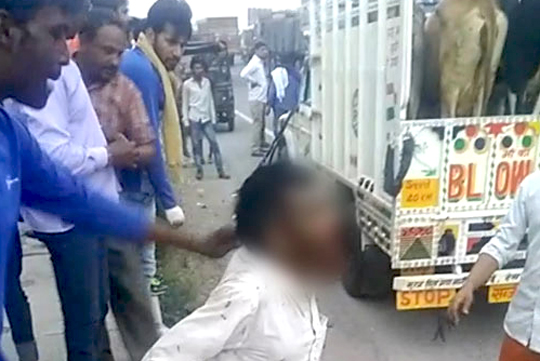
vigilantes

Despite the Centre issuing an advisory last year on the action to be taken by the state governments over such incidents, not much has changed on the ground. This has only emboldened self-styled cow protectors to have a free run.

A big concern is that most of the attacks have taken place in the BJP-ruled states, and as the saffron juggernaut rolls on election after election, the future could be unpredictable.

Uttar Pradesh

Noida, May 5, 2017

Two contact workers, assumed to be Muslims, thrashed for “cow smuggling”

Dadri, September 28, 2015 (The trigger)

* Mohd Akhlaq (52), son Danish dragged out of their house, beaten with bricks for storing and eating beef

* Akhlaq dies, Danish suffers severe injuries

* Chief Minister Yogi Adityanath bans cow slaughter after taking over in March

* Orders sealing of illegal slaughterhouses, triggering protests

Jammu & Kashmir

Udhampur, Oct 9, 2015

* Truck attacked with petrol bombs after rumours of it carrying dead cows

* Driver succumbs to injuries 10 days later

* Seven held for murder

Reasi, April 20, 2017

* Nomadic family with livestock intercepted

* Family, including nine-year-old girl, beaten with iron rods

* Four arrested and charged with attempt to murder

Cow slaughter or possession of its meat in J&K is criminal offence carrying jail term of not less than 10 years (now also in Gujarat)

Haryana

* Beef is banned, 10-year punishment for cow slaughter

* “Beef biryani policing” -- police squads check random eateries for selling beef

Faridabad, June 10, 2016

* Gau Rakshak Dal members stop beef transporters

* Force them to eat cow dung

Rajasthan

Alwar, April 1, 2017

* 50-year-old dairy farmer Pehlu Khan dies after vigilantes beat him up for transpoting cows; four others injured

* 7 arrested, but none who were named in FIR

* Vipin Yadav, an accused, was compared to Bhagat Singh by cow vigilante Sadhvi Kamal

Has a dedicated Cow Welfare Department, but 2,000 cows died in state-owned shelters due to negligence

Delhi

Kalkaji, April 22, 2017

* Three youths beaten up by around 25 men, said to be members of People for Animal, for transporting buffaloes

* Youth were en route to municipal slaughter house

* Cops arrested the youth first, attackers later

Kerala House, Oct 26, 2015

* Delhi Police raid Kerala House after complaints that beef was being served

* Hindu Sena claims it received a tip off

* The menu, it claims, has all items in English, except one which is in Malayalam

Gujarat

Una, July 11, 2016

* Four Dalit youths stripped, tied to an SUV and beaten up for skinning dead cow

* But CID report says cows were killed by lions

* Video of incident posted on social media with warning

Punjab

* Case filed on August 6, 2014, against Gau Raksha Dal after a video showing members brutally thrashing “cow smugglers”, went viral

*Dal chief Satish Kumar arrested from Vrindavan on Aug 22, 2016, after being booked on charges of sodomy, rioting and extortion

Telangana

* Struggle against Al kabir and Allanna mechanical slaughter houses of Medak district (earlier undivided AP) has been going on for long

* 'Gau Rakshaks' keep vigil on trucks that carry bovines and raid them

* Such raids result in communal tension, particularly during Bakrid

Andhra Pradesh

East Godavari, Aug 10, 2016

* Two Dalits who were skinning a dead cow were brutally beaten by locals

* Farmers who were searching for their missing cows mistook the duo as cow thieves, tied them to a tree and thrashed them

* 7 arrests were made in the case

Maharashtra

Senior BJP MLA Mangalprabhat Lodha seeks capital punishment for slaughtering cows and bulls

Jharkhand

Latehar, March 18, 2016

* Two Muslim men found hanging from a tree

* Mazlum Ansari (32) was a cattle trader; Imteyaz Khan (13) was the son of a cattle trader

Karnataka

Chikkamagalur, July 17, 2016

Seven Bajrang Dal members attack a Dalit family on suspicion of cattle theft and cow slaughter

Madhya Pradesh

Mandsaur, July 26, 2016

* Two Muslim women carrying buffalo meat slapped, kicked and abused by women members of Hindu Dal on suspicion that it was beef

* Police accused of making half-hearted attempts to intervene

Kerala

Surprisingly, for April 12 Malappuram Lok Sabha bypoll, BJP candidate N Sreeprakash promised “clean slaughterhouses for good beef”

Ernakulam, April 19, 2017

Eight RSS activists were arrested in connection with an attack on a house where a calf was slaughtered for Easter

Assam

Nangaon, May 1, 2017:

Two men lynched for “trying to steal cows” in a village, 130 km from Guwahati

Manipur

Imphal East, Nov 3, 2015

Headmaster of govt madrasa killed for “stealing cows” from his neighbouring village

What the Constitution says...

Article 48 (Directive Principles)

Organisation of agriculture and animal husbandry: The state shall endeavour to organise agriculture and animal husbandry on modern and scientific lines and shall, in particular, take steps for preserving and improving the breeds, and prohibiting the slaughter, of cows and calves and other milch and draught cattle.

Govt advisory of August 9, 2016

* States are enjoined upon and expected to ensure that any person who takes law into his/her own hands is dealt with promptly, and punished as per law

* There should be no tolerance at all for such persons and full majesty of law must come to bear on them, without exception

Comments

Add new comment

  • Coastaldigest.com reserves the right to delete or block any comments.
  • Coastaldigset.com is not responsible for its readers’ comments.
  • Comments that are abusive, incendiary or irrelevant are strictly prohibited.
  • Please use a genuine email ID and provide your name to avoid reject.
Agencies
June 9,2020

Soon, you may be able to withdraw cash from an ATM without touching any part of the machine. AGS Transact Technologies, a provider of cash and digital payment solutions and automation technology, on Monday said it has successfully developed and tested a touchless ATM solution in light of the COVID-19 pandemic.

The ‘contactless' solution, currently under demo at interested banks, enables a customer to perform all the steps required to withdraw cash from an ATM using the mobile app itself. 

The customer simply has to scan the QR code displayed on the ATM screen and follow the directions on their respective bank's mobile application. 

This includes entering the amount and mPIN required to dispense the cash from the ATM machine. 

According to the company, the QR code feature makes cash withdrawals quicker and more secure, and negates the chances of compromising the ATM Pin or card skimming.

"The new Touchless ATM solution is an extension of the flagship QR Cash solution which ensures safety of the users and will provide a seamless cash withdrawal experience with enhanced security," said Ravi B. Goyal, Chairman and MD, AGS Transact Technologies Ltd.

With minimum investment, the banks can enable this solution for their ATM networks by upgrading the existing software.

AGSTTL has so far installed, maintained and managed a network of over 72,000 ATMs across the country and also provides customised solutions to leading banks. 

The company earlier introduced UPI-QR based Cash withdrawal solution in partnership with Bank of India. 

This is how the solution works.

Open the Bank mobile application on your smartphone and select QR Cash Withdrawal. Enter the amount you wish to withdraw on the mobile app and scan the QR code on the ATM screen.

Next, confirm the amount by clicking on ‘proceed' in the app and enter the mPin to authenticate the transaction. Now collect the cash and receipt and you are done.

"The seamless, cardless and touchless withdrawal method is designed to provide easy transaction flow, without the need to touch the ATM screen or enter the pin," said Mahesh Patel, President and Group Chief Technology Officer, AGS Transact Technologies.

Comments

Add new comment

  • Coastaldigest.com reserves the right to delete or block any comments.
  • Coastaldigset.com is not responsible for its readers’ comments.
  • Comments that are abusive, incendiary or irrelevant are strictly prohibited.
  • Please use a genuine email ID and provide your name to avoid reject.
Agencies
June 19,2020

Denser places, assumed by many to be more conducive to the spread of the coronavirus that causes COVID-19, are not linked to higher infection rates, say researchers.

The study, led by Johns Hopkins University, published in the Journal of the American Planning Association, also found that dense areas were associated with lower COVID-19 death rates.

"These findings suggest that urban planners should continue to practice and advocate for compact places rather than sprawling ones, due to the myriad well-established benefits of the former, including health benefits," says study lead author Shima Hamidi from Johns Hopkins Bloomberg School of Public Health in the US.

For their analysis, the researchers examined SARS-CoV-2 infection rates and COVID-19 death rates in 913 metropolitan counties in the US.

When other factors such as race and education were taken into account, the authors found that county density was not significantly associated with county infection rate.

The findings also showed that denser counties, as compared to more sprawling ones, tended to have lower death rates--possibly because they enjoyed a higher level of development including better health care systems.

On the other hand, the research found that higher coronavirus infection and COVID-19 mortality rates in counties are more related to the larger context of metropolitan size in which counties are located.

Large metropolitan areas with a higher number of counties tightly linked together through economic, social, and commuting relationships are the most vulnerable to the pandemic outbreaks.

According to the researchers, recent polls suggest that many US citizens now consider an exodus from big cities likely, possibly due to the belief that more density equals more infection risk.

Some government officials have posited that urban density is linked to the transmissibility of the virus.

"The fact that density is unrelated to confirmed virus infection rates and inversely related to confirmed COVID-19 death rates is important, unexpected, and profound," said Hamidi.

"It counters a narrative that, absent data and analysis, would challenge the foundation of modern cities and could lead to a population shift from urban centres to suburban and exurban areas," Hamidi added.

The analysis found that after controlling for factors such as metropolitan size, education, race, and age, doubling the activity density was associated with an 11.3 per cent lower death rate.

The authors said that this is possibly due to faster and more widespread adoption of social distancing practices and better quality of health care in areas of denser population.

The researchers concluded that a higher county population, a higher proportion of people age 60 and up, a lower proportion of college-educated people, and a higher proportion of African Americans were all associated with a greater infection rate and mortality rate.

Comments

Add new comment

  • Coastaldigest.com reserves the right to delete or block any comments.
  • Coastaldigset.com is not responsible for its readers’ comments.
  • Comments that are abusive, incendiary or irrelevant are strictly prohibited.
  • Please use a genuine email ID and provide your name to avoid reject.
Agencies
February 27,2020

Feb 27: With the window to submit comments on India's proposed personal data protection law closing on Tuesday, a period of anxious wait for final version of the Bill started for social media firms.

This comes even as global Internet companies have called on the government for improved transparency related to intermediary Guidelines (Amendment) Rules and allay fears about the prospect of increased surveillance and prompting a fragmentation of the Internet in India that would harm users.

As per the proposed amendments, an intermediary having over 50 lakh users in the country will have to be incorporated in India with a permanent registered office and address.

When required by lawful order, the intermediary shall, within 72 hours of communication, provide such information or assistance as asked for by any government agency or assistance concerning security of the state or cybersecurity.

This means that the government could pull down information provided by platforms such as Wikipedia, potentially hampering its functioning in India.

In the open letter to IT Minister Ravi Shankar Prasad, leading browser and software development platform like Mozilla, Microsoft-owned GitHub and Cloudflare earlier called for improved transparency by allowing the public an opportunity to see a final version of these amendments prior to their enactment.

According to a Business Insider report, Indian users may lose access to Wikipedia if the new intermediary rules for internet and social media companies are approved.

Since the rules would require the website to take down content deemed illegal by the government, it would require Wikipedia to show different content for different countries.

Anusha Alikhan, senior communications director for Wikimedia told Business Insider that the platform is built though languages and not geographies. Therefore, removing content from one country, while it is still visible to other country users may not work for the company’s model.

India is one of Wikipedia’s largest markets. Over 771 million Indian users accessed the site in just November 2019.

Also read: Explained: What is the Personal Data Protection Bill and why you should care

The Personal Data Protection Bill, 2019, which was introduced in Lok Sabha in the winter session last year, was referred to a Joint Parliamentary Committee (JPC) of both the Houses.

The government last month decided to seek views and suggestions on the Bill from individuals and associations and bodies concerned and the last date for submitting the comments was on Tuesday.

Prasad, while introducing the Personal Data Protection Bill, 2019, in the Lok Sabha on December 11, announced that the draft Bill empowers the government to ask companies including Facebook, Google and others for anonymised personal data and non-personal data.

There was a buzz when the Bill's latest version was introduced in the Lok Sabha, especially the provision seeking to allow the use of personal and non-personal data of users in some cases, especially when national security is involved.

Several legal experts red-flagged the issue and said the provision will give the government unaccounted access to personal data of users in the country.

In their submission to the JPC, several organisations also flagged that the power to collect non-personal and anonymised data by the government without notice and consent should not form part of the Bill because of issues regarding effective anonymisation and potential abuse.

"Clauses 35 and 36 of the Bill provide unbridled access to personal data to the Central Government by giving it powers to exempt its agencies from the application of the Bill on the basis of various broad worded grounds," SFLC.in, a New Delhi-based not-for-profit legal services organisation, commented.

The Software Alliance, also known as BSA, a trade group which includes tech giants such as Microsoft, IBM and Adobe, among others said that the current version of the privacy bill pose substantial challenges, including the sweeping new powers for the government to acquire non-personal data, restrictions on data transfers, and local storage requirements.

"We urge the Joint Parliamentary Committee, as it considers revisions to the Bill, to eliminate provisions concerning non-personal data from the Personal Data Protection Bill and to remove the data localisation requirements and restrictions on international data flows," said Venkatesh Krishnamoorthy, Country Manager-India, BSA.

The Personal Data Protection (PDP) Bill, 2019 draws its origins from the Justice B.N. Srikrishna Committee on data privacy, which produced a draft of legislation that was made public in 2018 ("the Srikrishna Bill").

The mandatory requirement for storing a mirror copy of all personal data in India as per Section 40 of the Srikrishna Bill has been done away with in the PDP Bill, 2019, meaning that companies like Facebook and Twitter would be able to store data of Indian users abroad if they so wish.

But the bill prohibits processing of sensitive personal data and critical personal data outside India.

What is more, what constitutes critical data has not been clearly defined.

As per the proposals, social media companies will have to modify their application as they are required to have a system in place by which a user can verify themselves.

So legal experts believe that some system to upload identification documents should be there and something like the Twitter blue tick mark should be there to identify verified accounts.

"The 2019 Bill introduces a new category of data fiduciaries called social media intermediaries ('SMIs'). SMIs are a subcategory of significant data fiduciaries ('SDFs') and will be notified by the Central government after due consultation with the DPA, or the Data Protection Authority. Clause 26(4) of the Bill defines SMIs as intermediaries who primarily or solely enable online interaction between two or more users," SFLC.in said.

"On a plain reading of the definition, online platforms like Facebook, Twitter, YouTube, TikTok, ShareChat and WhatsApp are likely to be notified as SMIs under the Bill," it added.

Comments

Add new comment

  • Coastaldigest.com reserves the right to delete or block any comments.
  • Coastaldigset.com is not responsible for its readers’ comments.
  • Comments that are abusive, incendiary or irrelevant are strictly prohibited.
  • Please use a genuine email ID and provide your name to avoid reject.