Cracker injuries darkenfestival of lights'; many hospitalised in Karnataka

[email protected] (CD Network)
October 31, 2016

Bengaluru, Oct 31: Despite awareness drives regarding precautions to be taken while bursting crackers, the eye hospitals in major cities of Karnataka witnessed a steady stream of patients, mostly minors, with some sustaining serious injuries.

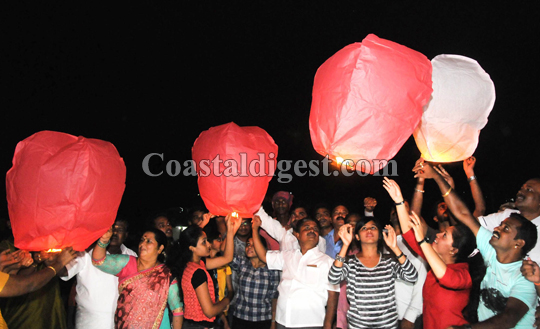
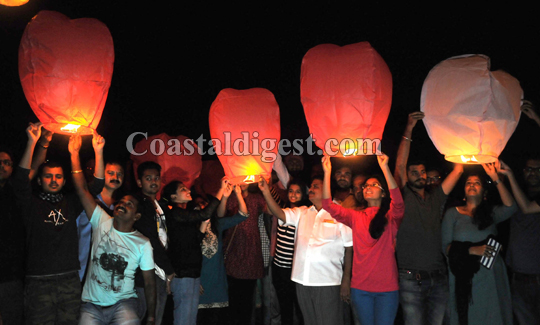
diwali 6

For the family of ten-year-old Varun from Chikkaballapur Chintamani, this Diwali turned out to be a nightmare. Varun was rushed to Minto hospital on Sunday afternoon, after he sustained injuries on both eyes.

He got injured while bursting crackers outside his house, after cracker particles entered both the eyes. According to Minto hospital authorities his condition was serious and has been hospitalised.

A ten-year-old girl Dharini too was admitted at Minto Hospital for a major eye injury. For 39-year-old Kavitha, her decision to take a stroll near her house in Kallahalli proved costly, as she was admitted to Minto hospital with a major eye injury.

There were at least 28 cases of firecracker-related injuries, ranging from minor burns to potentially permanent eye injuries, during Diwali celebrations in Bengaluru city alone.

Minto Eye Hospital saw four cracker-related injuries; three of those were children, one as young as 3. All were minor cases, with patients receiving out-patient care.

Twenty persons were treated for minor burns at Narayana Nethralaya in Ra jajinagar. Two kids were brought to MC Modi Charitable Eye Hospital in Mahalakshmipuram. Samprathi Eye Hospital and Squint Centre treated a five-year-old boy who injured his eyelid.

A majority of those injured were bystanders, indicating that firecrackers were burst on the streets, and not in demarcated safe areas.

Humans were not the only ones affected by crackers. Animals too suffered burns and hearing loss, stray dogs in particular. The Happy Paws Foundation rescued six crows from across the city, who had been burnt by crackers. While five are out of danger, one is critical. The foundation will travel around the city, locating and treating injured animals.


diwali 1

diwali 2

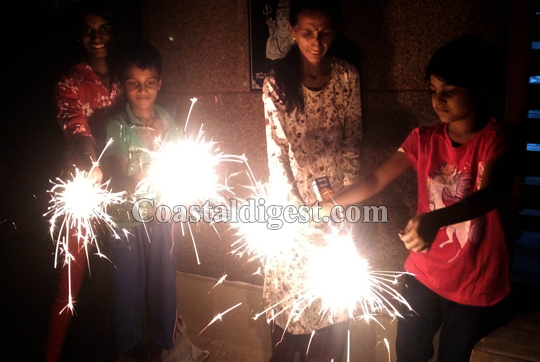
diwali 3

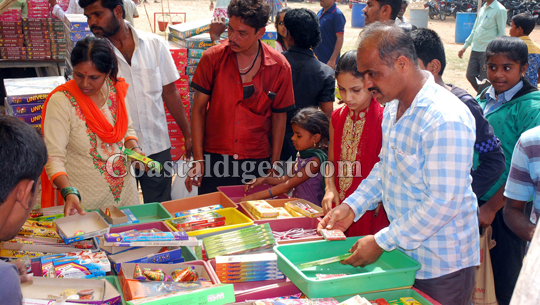
diwali 4

diwali 5

diwali 7

diwali 8

diwali 9

diwali 10

Comments

PK
 - 
Tuesday, 1 Nov 2016

Wen diwali comes we should expect some losses of money and life... thats for sure... Wasting money and life.

When people are far from God.. they tend believe in every superstitious rituals..

Skazi
 - 
Monday, 31 Oct 2016

All those, who play with the fire crackers and cause pollution deserve punishment.

Add new comment

  • Coastaldigest.com reserves the right to delete or block any comments.
  • Coastaldigset.com is not responsible for its readers’ comments.
  • Comments that are abusive, incendiary or irrelevant are strictly prohibited.
  • Please use a genuine email ID and provide your name to avoid reject.
Media Release
April 16,2020

Dammam: President of Indian Social Forum, Eastern Province Mr.Wasim Rabbani urged immediate intervention of Indian government to help Non Residential Indians who are in trouble due to corona pandemic in Saudi Arabia.

He said in a press rease that expatriate Indians are in concern  as number of corona infected people and  deaths are increasing in danger level.

Hea said, "the Saudi health minister's statement a few days ago indicates that the situation in Saudi needs to be taken more seriously with precautionary methods. There are concerns among expatriates because the number of people infected with the coronavirus and the number of deaths reported in various provinces are increasing at an alarming rate."

"Saudi Government and Health Ministry are taking excellent precautionary measures, however, in the coming days expect to see the number of cases to increase in Saudi Arabia. The Indian government needs to take diplomatic and immediate intervention to ensure the treatment of Indian expatriates considering the number of effected people increasing", He said.

He also urged that the Embassy and the Government of India should ensure qaurantiane faculty for Indian expatriates and arrange special low cost flights to bring back expatriates who would like to return home country.

" Government of India and Indian embassy need to intervene immediately to ensure that the quarantine system is in place for Indian expatriates as the facilities in the rooms where the residents are staying together are very limited. There should also be a mechanism to organize low-cost flight services for expatriates who are ready to go home. The government system should also be able to accommodate the expatriates in special quarantine areas in hometown as soon they arrive in India", he urged.

Comments

Add new comment

  • Coastaldigest.com reserves the right to delete or block any comments.
  • Coastaldigset.com is not responsible for its readers’ comments.
  • Comments that are abusive, incendiary or irrelevant are strictly prohibited.
  • Please use a genuine email ID and provide your name to avoid reject.
News Network
August 4,2020

Bengaluru, Aug 4 : Without mentioning any party leader's name, Karnataka Congress President DK Shivakumar on Monday appealed to Congress workers not to make any "defamatory statement" against any political leader on social media platforms.

Taking to Twitter, Shivakumar wrote, "I appeal to Congress workers not to make defamatory statements against any political leader, on matters of health and other issues on social media platforms. It is not in our culture to wish bad for others. Congress is a party that exemplifies brotherhood and humanity."

His statement comes days after Rajya Sabha MP and AICC in-charge for Gujarat, Rajiv Satav comment where he suggested that introspection in the party should begin from the time of the United Progressive Alliance -II government.

Later, Satav took to Twitter to clarify his remarks at Thursday's meeting of the party's Upper House MPs. Satav, through a series of tweets on Saturday, said he was not comfortable discussing what goes on inside party meetings in forums outside.

Comments

Add new comment

  • Coastaldigest.com reserves the right to delete or block any comments.
  • Coastaldigset.com is not responsible for its readers’ comments.
  • Comments that are abusive, incendiary or irrelevant are strictly prohibited.
  • Please use a genuine email ID and provide your name to avoid reject.
Agencies
May 8,2020

Washington D.C., May 8: The prime time for brain development in a child's life is the first year, where the infant spends most of the time asleep. It is the time when neural connections form and sensory memories are encoded.

However, when sleep is disrupted, as occurs more often among children with autism, brain development may be affected, too.

New research led by the University of Washington finds that sleep problems in a baby's first 12 months may not only precede an autism diagnosis but also may be associated with altered growth trajectory in a key part of the brain, the hippocampus.

The study, which was published in the American Journal of Psychiatry, researchers report that in a sample of more than 400 taken of 6- to 12-month-old infants, those who were later diagnosed with autism were more likely to have had difficulty falling asleep.

It also states that this sleep difficulty was associated with altered growth trajectories in the hippocampus.

"The hippocampus is critical for learning and memory, and changes in the size of the hippocampus have been associated with poor sleep in adults and older children.

As many as 80 per cent of the children with autism spectrum disorder have sleep problems," said Annette Estes, director of the UW Autism Center and senior author of the study.

"In our clinical experience, parents have a lot of concerns about their children's sleep, and in our work on early autism intervention, we observed that sleep problems were holding children and families back," added Estes, who is also a UW professor of speech and hearing sciences.

"It could be that altered sleep is part-and-parcel of autism for some children. One clue is that behavioural interventions to improve sleep don't work for all children with autism, even when their parents are doing everything just right. This suggests that there may be a biological component to sleep problems for some children with autism," said Estes.

To consider links among sleep, brain development, and autism, researchers at the IBIS Network looked at MRI scans of 432 infants, surveyed parents about sleep patterns, and measured cognitive functioning using a standardized assessment.

At the outset of the study, infants were classified according to their risk for developing autism: Those who were at higher risk of developing autism -- about two-thirds of the study sample -- had an older sibling who had already been diagnosed.

Infant siblings of children with autism have a 20 per cent chance of developing autism spectrum disorder -- a much higher risk than children in the general population.

In the current study, 127 of the 432 infants were identified as "low risk" at the time the MRI scans were taken because they had no family history of autism.

They later evaluated all the participants at 24 months of age to determine whether they had developed autism. Of the roughly 300 children originally considered "high familial risk," 71 were diagnosed with autism spectrum disorder at that age.

Problems with sleep were more common among the infants later diagnosed with an autism spectrum disorder, as were larger hippocampi. No other subcortical brain structures were affected, including the amygdala, which is responsible for certain emotions and aspects of memory, or the thalamus, a signal transmitter from the spinal cord to the cerebral cortex.

The authors note that while parents reported more sleep difficulties among infants who developed autism compared to those who did not, the differences were very subtle and only observed when looking at group averages across hundreds of infants.

Sleep patterns in the first years of life change rapidly as infants transition from sleeping around the clock to a more adult-like sleep/wake cycle. Until further research is completed, Estes said, it is not possible to interpret challenges with sleep as an early sign of increased risk for autism.

Comments

Add new comment

  • Coastaldigest.com reserves the right to delete or block any comments.
  • Coastaldigset.com is not responsible for its readers’ comments.
  • Comments that are abusive, incendiary or irrelevant are strictly prohibited.
  • Please use a genuine email ID and provide your name to avoid reject.