CTET will be contacted in 20 languages: HRD Javadekar

Agencies
June 19, 2018

New Delhi, Jun 19: Union HRD Minister Prakash Javadekar has directed CBSE to continue conducting the Central Teacher Eligibility Test (CTET) in the 20 Indian languages as earlier.

The directive by Javadekar came following criticism of CBSE's decision to remove 17 languages including Tamil, Malayalam, Telugu, Kannada, Gujarati and Bengali from the list of options for CTET.

"CTET examination will be conducted in all Indian languages as was being conducted earlier. I have already directed @cbseindia29 to conduct examination in all the 20 languages as was being done earlier," Javadekar tweeted.

"CTET examination will be held in English, Hindi, Assamese, Bangla, Garo, Gujarati, Kanada, Khasi, Malyalam, Manipuri, Marathi, Mizo, Nepali, Oriya, Punjabi, Sanskrit, Tamil, Telugu,Tibetan & Urdu @cbseindia29," he added.

DMK leader Kanimozhi today took to twitter to express her anger at the CBSE's earlier decision to drop languages which she said will come as a blow to speakers of several regional languages.

The decision to drop Tamil and 16 other regional languages from Central Teacher Eligibility Test is highly condemnable and strikes at the root of federalism. Students of CBSE whose mother tongue is Tamil will be put to a great disadvantage without teachers.

"Students are forced to study Hindi and Sanskrit instead of their mother tongue. This will lead to another language struggle through out the country. This is another of BJPs efforts to make a Hindi-Hindu Hindustan, said Kanimozhi.

Comments

Add new comment

  • Coastaldigest.com reserves the right to delete or block any comments.
  • Coastaldigset.com is not responsible for its readers’ comments.
  • Comments that are abusive, incendiary or irrelevant are strictly prohibited.
  • Please use a genuine email ID and provide your name to avoid reject.
News Network
January 10,2020

Mumbai, Jan 10: India’s oil demand growth is set to overtake China by mid-2020s, priming the country for more refinery investment but making it more vulnerable to supply disruption in the Middle East, the International Energy Agency (IEA) said on Friday.

India’s oil demand is expected to reach 6 million barrels per day (bpd) by 2024 from 4.4 million bpd in 2017, but its domestic production is expected to rise only marginally, making the country more reliant on crude imports and more vulnerable to supply disruption in the Middle East, the agency said.

China’s demand growth is likely to be slightly lower than that of India by the mid-2020s, as per IEA’s China estimates given in November, but the gap would slowly become bigger thereafter.

“Indian economy is and will become even more exposed to risks of supply disruptions, geopolitical uncertainties and the volatility of oil prices,” the IEA said in a report on India’s energy policies.

Brent crude prices topped USD 70 a barrel on rising geopolitical tensions in the Middle East, putting pressure on emerging markets such as India. Like the rest of Asia, India is highly dependent on Middle East oil supplies with Iraq being its largest crude supplier.

India, which ranks No 3 in terms of global oil consumption after China and the United States, ships in over 80 per cent of its oil needs, of which 65 per cent is from the Middle East through the Strait of Hormuz, the IEA said.

The IEA, which coordinates release of strategic petroleum reserves (SPR) among developed countries in times of emergency, said it is important for India to expand its reserves.

REFINERY INVESTMENTS

India is the world’s fourth largest oil refiner and a net exporter of refined fuel, mainly gasoline and diesel.

India has drawn plans to lift its refining capacity to about 8 million bpd by 2025 from the current about 5 million bpd.

The IEA, however, forecasts India’s refining capacity to rise to 5.7 million bpd by 2024.

This would make “India a very attractive market for refinery investment,” IEA said.

Drawn to India’s higher fuel demand potential, global oil majors like Saudi Aramco, BP, Abu Dhabi National Oil Co and Total are looking at investing in India’s oil sector.

Saudi Aramco and ADNOC aim to own a 50 per cent stake in a planned 1.2-million bpd refinery in western Maharashtra state, for which land is yet to be acquired.

Comments

Add new comment

  • Coastaldigest.com reserves the right to delete or block any comments.
  • Coastaldigset.com is not responsible for its readers’ comments.
  • Comments that are abusive, incendiary or irrelevant are strictly prohibited.
  • Please use a genuine email ID and provide your name to avoid reject.
coastaldigest.com news network
August 8,2020

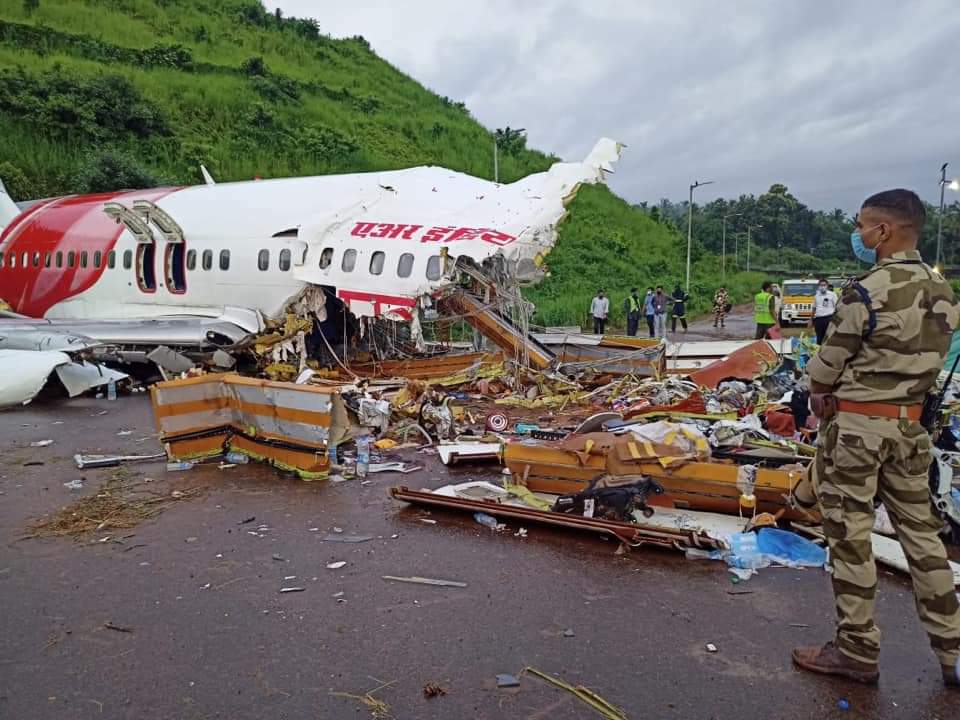
Kozhikode, Aug 8: A tailwind or crosswind could be the reason for the Air India Express flight mishap at Kozhikode international airport in Kerala, according to some aviation experts. 

Team of DGCA and AIE already reached the spot. With the death of the captain and co-pilot in the mishap, the investigation would be focusing mainly on the voice recorders and other technical aspects.

It is learnt that the ill-fated aircraft, IX 1344 with 190 onboard including crew, was initially planning to land on runway-28 of the airport. But later the pilot opted runway-10 which is toward the other direction. Pilots would be taking the decisions on the basis of inputs from ATC.

The questions now doing the rounds are what made the pilot opt runway-10 and whether the tabletop runway lacked adequate safety parameters.

An aviation expert, who didn't want to be quoted, said that Capt Deepak Sathe, who was commandeering the aircraft, was a well-experienced pilot and was also familiar with the terrains. Hence the chances of any error from his part was very unlikely. Hence a fair in-depth probe was required to find the exact cause.

Though the Kozhikode airport has an Instrument Landing System, it was of category-I for which pilot's visibility is very crucial toward a touchdown. Since it is a tabletop airport and rough weather prevailing in the region, the chances of tailwind was also high, said sources.

There had been safety concerns about the airport over quite some time. In 2011 aviation safety consultant captain Mohan Ranganathan reportedly gave a report citing the safety issues, especially the buffer zones at the end of the runway.

However, an AAI officer said that rectification steps were already done by last year by widening the Runway End Safety Area (RESA) from 90 metre to 240 metre. However, the length of the runway had to be reduced to 2,700 metre from 2,850. The AAI was also constantly pressing for increasing the runway length to 3,150 metres. But that was getting delayed due to land acquisition issues pending with the state government.

stm88 info live rtp slot

slot auto scatter hitam

Comments

Add new comment

  • Coastaldigest.com reserves the right to delete or block any comments.
  • Coastaldigset.com is not responsible for its readers’ comments.
  • Comments that are abusive, incendiary or irrelevant are strictly prohibited.
  • Please use a genuine email ID and provide your name to avoid reject.
News Network
January 17,2020

Mumbai, Jan 17: A 68-year-old convict of the 1993 Mumbai serial blasts case, Jalees Ansari, went missing on Thursday morning while being on parole, officials said.

Ansari, a resident of Mominpura in Agripada here who is serving a life term, is suspected to be involved in many bomb blast cases across the country, an official said.

He was on parole for 21 days from the Ajmer Central Prison, Rajasthan, and was expected to surrender before prison authorities on Friday, he said.

During the parole period, he was ordered to visit the Agripada Police Station everyday between 10.30 am and 12 pm to mark his attendance, he said.

However, Ansari did not visit the police station on Thursday during the designated time, the official said.

In the afternoon, his 35-year-old son Jaid Ansari approached the police station with a complaint about his “missing” father, he said.

According to the complaint, Jalees Ansari woke up in the early hoursand told family members he is going to offer namaz, but did not return home.

On his complaint, the Agripada Police registered a missing case, he said.

The Crime Branch of the Mumbai Police and the Maharashtra ATS have launched a massive manhunt to trace him, he said.

Jalees, who is known as Doctor Bomb, was allegedly connected with terror outfits like SIMI and Indian Mujahidin and taught terror groups how to make bombs, he said.

He was also questioned by the NIA in 2011 in connection with the 2008 bomb blast in Mumbai, he said.

Comments

Add new comment

  • Coastaldigest.com reserves the right to delete or block any comments.
  • Coastaldigset.com is not responsible for its readers’ comments.
  • Comments that are abusive, incendiary or irrelevant are strictly prohibited.
  • Please use a genuine email ID and provide your name to avoid reject.