


Cyclone Mora in Bangladesh: 2.5 million risk falling in way of severe cyclonic storm

May 30, 2017

Dhaka, May 30: Cyclone Mora made landfall in Bangladesh on Tuesday damaging several houses and packing winds of up to 117 kilometres per hour after authorities evacuated hundreds of thousands of people from the coastal areas.cyclone
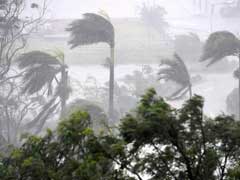
In a special bulletin, Bangladesh Meteorological Department said the severe cyclonic storm Mora moved northwards over North Bay and started crossing the Cox's Bazar-Chittagong coast at 6 am (local time).

It is likely to move in a northerly direction further, the bulletin said.

Under its influence, gusty or squally wind with rain or thunder showers were continuing over North Bay, and the coastal districts and maritime ports of Bangladesh, The Daily Star reported.

Maximum sustained wind speed within 64 km of the cyclone centre was about 89 kmph rising to 117 kmph in gusts or squalls, the report said.

As many as 3,00,000 people had been taken to shelters in more than ten districts most vulnerable to the cyclone, Additional Secretary Golam Mostafa, a spokesman for the disaster management ministry's control room, was quoted as saying by BD News.

"The people were moved out to at least 400 cyclone shelters or safer places like schools and government offices in the coastal areas," a disaster management ministry spokesman said.

At least 2.5 million people in ten districts risk falling in the way of the severe cyclonic storm.

The districts at risk were Cox's Bazar, Chittagong, Noakhali, Lakshmipur, Feni, Chandpur, Barguna, Patuakhali, Bhola, Barisal and Pirojpur.

Under the influence of the cyclonic storm, the low-lying areas of the coastal districts and their offshore islands were likely to be inundated by storm surge of 4-5 feet height above the normal astronomical tide, the Met office said.

All fishing boats and trawlers over North Bay and deep sea have been advised to remain in shelter till further notice.

The Met office had issued the highest level of warning signal in a scale of 10 for two maritime ports after Mora developed into a severe cyclonic storm.

Habibur Rahman, a member of Saint Martin's Island Union Parishad, told Bangla daily Prothom Alo that several houses were damaged in Saint Martin's Island in the morning.

Bangladesh is often hit by bad storms between April and December that cause deaths and widespread destruction.

Cyclone Roanu hit the southern coast of Bangladesh in 2016, leaving 20 people dead and forcing half a million to flee their homes.

The cyclone formed after heavy rains in Sri Lanka caused floods and landslides, killing 180 people.

Comments

Add new comment

  • Coastaldigest.com reserves the right to delete or block any comments.
  • Coastaldigset.com is not responsible for its readers’ comments.
  • Comments that are abusive, incendiary or irrelevant are strictly prohibited.
  • Please use a genuine email ID and provide your name to avoid reject.
Agencies
July 1,2020

The ILO has warned that if another Covid-19 wave hits in the second half of 2020, there would be global working-hour loss of 11.9 percent - equivalent to the loss of 340 million full-time jobs.

According to the 5th edition of International Labour Organisation (ILO) Monitor: Covid-19 and the world of work, the recovery in the global labour market for the rest of the year will be uncertain and incomplete.

The report said that there was a 14 percent drop in global working hours during the second quarter of 2020, equivalent to the loss of 400 million full-time jobs.

The number of working hours lost across the world in the first half of 2020 was significantly worse than previously estimated. The highly uncertain recovery in the second half of the year will not be enough to go back to pre-pandemic levels even in the best scenario, the agency warned.

The baseline model – which assumes a rebound in economic activity in line with existing forecasts, the lifting of workplace restrictions and a recovery in consumption and investment – projects a decrease in working hours of 4.9 percent (equivalent to 140 million full-time jobs) compared to last quarter of 2019.

It says that in the pessimistic scenario, the situation in the second half of 2020 would remain almost as challenging as in the second quarter.

“Even if one assumes better-tailored policy responses – thanks to the lessons learned throughout the first half of the year – there would still be a global working-hour loss of 11.9 per cent at the end of 2020, or 340 million full-time jobs, relative to the fourth quarter of 2019,” it said.

The pessimistic scenario assumes a second pandemic wave and the return of restrictions that would significantly slow recovery. The optimistic scenario assumes that workers’ activities resume quickly, significantly boosting aggregate demand and job creation. With this exceptionally fast recovery, the global loss of working hours would fall to 1.2 per cent (34 million full-time jobs).

The agency said that under the three possible scenarios for recovery in the next six months, “none” sees the global job situation in better shape than it was before lockdown measures began.

“This is why we talk of an uncertain but incomplete recovery even in the best of scenarios for the second half of this year. So there is not going to be a simple or quick recovery,” ILO Director-General Guy Ryder said.

The new figures reflect the worsening situation in many regions over the past weeks, especially in developing economies. Regionally, working time losses for the second quarter were: Americas (18.3 percent), Europe and Central Asia (13.9 percent), Asia and the Pacific (13.5 percent), Arab States (13.2 percent), and Africa (12.1 percent).

The vast majority of the world’s workers (93 per cent) continue to live in countries with some sort of workplace closures, with the Americas experiencing the greatest restrictions.

During the first quarter of the year, an estimated 5.4 percent of global working hours (equivalent to 155 million full-time jobs) were lost relative to the fourth quarter of 2019. Working- hour losses for the second quarter of 2020 relative to the last quarter of 2019 are estimated to reach 14 per cent worldwide (equivalent to 400 million full-time jobs), with the largest reduction (18.3 per cent) occurring in the Americas.

The ILO Monitor also found that women workers have been disproportionately affected by the pandemic, creating a risk that some of the modest progress on gender equality made in recent decades will be lost, and that work-related gender inequality will be exacerbated.

The severe impact of Covid-19 on women workers relates to their over-representation in some of the economic sectors worst affected by the crisis, such as accommodation, food, sales and manufacturing.

Globally, almost 510 million or 40 percent of all employed women work in the four most affected sectors, compared to 36.6 percent of men, it said.

The report said that women also dominate in the domestic work and health and social care work sectors, where they are at greater risk of losing their income and of infection and transmission and are also less likely to have social protection.

The pre-pandemic unequal distribution of unpaid care work has also worsened during the crisis, exacerbated by the closure of schools and care services.

Even as countries have adopted policy measures with unprecedented speed and scope, the ILO Monitor highlights some key challenges ahead, including finding the right balance and sequencing of health, economic and social and policy interventions to produce optimal sustainable labour market outcomes; implementing and sustaining policy interventions at the necessary scale when resources are likely to be increasingly constrained and protecting and promoting the conditions of vulnerable, disadvantaged and hard-hit groups to make labour markets fairer and more equitable.

“The decisions we adopt now will echo in the years to come and beyond 2030. Although countries are at different stages of the pandemic and a lot has been done, we need to redouble our efforts if we want to come out of this crisis in a better shape than when it started,” Ryder said. 

Comments

Add new comment

  • Coastaldigest.com reserves the right to delete or block any comments.
  • Coastaldigset.com is not responsible for its readers’ comments.
  • Comments that are abusive, incendiary or irrelevant are strictly prohibited.
  • Please use a genuine email ID and provide your name to avoid reject.
Agencies
January 11,2020

New York, Jan 11: The United Nations Security Council (UNSC) on Friday renewed a six-year-long cross-border humanitarian aid deliveries mechanism into Syria.

According to Sputnik, the Security Council voted in favour of a resolution on Friday that allows cross border deliveries to be conducted via Turkey, preserving two checkpoints and excluding the Al-Yarubiyah border crossing with Iraq and the Al-Ramtha crossing with Jordan, until July 10, 2020.

Russia proposed to amend the adopted resolution by replacing a part of the draft which stipulates that humanitarian assistance into Syria should be delivered based on the principles of humanity, neutrality, impartiality and independence by the phrase that such aid should be provided "in accordance with the guiding principles of humanitarian emergency assistance, as contained in UNGA resolution 46/182."

The agreement was reached after Belgium and Germany decided to amend the original version of their joint resolution, which proposed keeping three points for cross-border deliveries into the Arab republic.

In December last year, the United Nations had said that over 235,000 people fled the Idlib region in the last two weeks after Russia and Syria launched airstrikes in a bid to take over the last major opposition bastion.

Russia backed Syria government launched a fresh assault to capture the province.

Syrian Bashar al-Assad regime, backed by Iran, has reportedly promised to take back the rebel-controlled area and broke a ceasefire that was announced in August.

They have since December 19 seized dozens of towns and villages from armed fighters amid clashes that have killed hundreds on both sides.

Comments

Add new comment

  • Coastaldigest.com reserves the right to delete or block any comments.
  • Coastaldigset.com is not responsible for its readers’ comments.
  • Comments that are abusive, incendiary or irrelevant are strictly prohibited.
  • Please use a genuine email ID and provide your name to avoid reject.
Agencies
March 14,2020

Nairobi, Mar 14: Kenya and Ethiopia on Friday announced their first confirmed cases of coronavirus, as East Africa, which has so far been unscathed by the global pandemic, scaled up emergency measures to contain its spread.

In Kenya, a 27-year-old Kenyan woman tested positive for the virus on Thursday in Nairobi, a week after returning from the United States via London.

She was in a stable condition and recovering, Health Minister Mutahi Kagwe told reporters.

"We wish to assure all Kenyans that the government will use all the resources available to fight coronavirus," he said, as the government rolled out a raft of new containment measures.

The government had traced all the contacts of the patient since she arrived back in Kenya on March 5, he said.

"At the moment, there is absolutely no need for panic and worry," he said.

Kenya, with a population of 50 million people, saw a spree of panic buying among the middle-class in Nairobi supermarkets, in the wake of the announcement.

Meanwhile Ethiopia, Africa's second most populous nation with over 100 million people, said a 48-year-old Japanese man who had arrived in the country on March 4 from Burkina Faso was confirmed to have contracted the virus.

"He is undergoing medical follow-up and is in a stable condition. Those who have been in contact with this person are being traced and quarantined," the health ministry said in a statement.

Burkina Faso only confirmed its first case on Tuesday -- a couple returning from France -- and the Japanese patient had been in that country since February 24.

Ethiopian Health Minister Lia Tadesse said three other patients were in isolation.

Ethiopia becomes the 15 country in Africa with a confirmed case of the virus that has swept the globe, infecting more than 130,000 people and killing nearly 5,000 since it first emerged in China.

But to date the continent has been spared the worst of the pandemic.

Only five people have succumbed to coronavirus so far -- all in north Africa -- with the sub-Saharan region recording no deaths and very low numbers of confirmed cases.

But countries in East Africa -- which until the positive case in Kenya, had only recorded negative test results -- have been taking precautions.

Some flights have been restricted, with Kenya Airways suspending its route to Rome, and charter flights from Italy to the Kenyan coast on hold.

It has also suspended international conferences, a top earner in Nairobi, a hub for such events in the region, and non-essential travel abroad for politicians.

The government announced more expansive restrictions on Friday, including a temporary ban on major public gatherings, prison visits and activities between schools.

Other countries in the region have been rolling out their own measures.

In Rwanda, which shares a border with the Democratic Republic of Congo, which has confirmed cases, washing basins with soap and sanitiser have been placed on streets for commuters to use before boarding buses.

Authorities in Kigali, the capital, have also banned concerts, rallies and trade fairs -- although like in Kenya and Uganda, church services have been proceeding and bars, restaurants and entertainment precincts remain open.

Neighbouring Burundi, meanwhile, has quarantined 34 people in a hotel in Bujumbura as a precaution.

Uganda has ordered that visitors from a number of affected countries self quarantine for 14 days, or consider simply not visiting at all.

South Sudan's health ministry said meanwhile that it was "temporarily suspending direct flights between South Sudan and all affected countries".

Kagwe, the Kenyan health minister, also addressed a rumour circulating on social media that people with black skin cannot contract the virus.

"I would like to disabuse that notion. The lady (confirmed with coronavirus in Kenya) is an African, like you and I," he said.

Comments

Add new comment

  • Coastaldigest.com reserves the right to delete or block any comments.
  • Coastaldigset.com is not responsible for its readers’ comments.
  • Comments that are abusive, incendiary or irrelevant are strictly prohibited.
  • Please use a genuine email ID and provide your name to avoid reject.