Dalai visit caused serious damage to ties: China to India

April 6, 2017

Beijing, Apr 6: China warned on Wednesday that it will take “necessary measures” to defend its territorial sovereignty and interests after India “obstinately” allowed the Dalai Lama to visit the “disputed” parts of Arunachal Pradesh causing “serious damage” to bilateral ties.

DalaiChina also lodged a protest with India's Ambassador in Beijing Vijay Gokhale over the Dalai Lama's visit.

“India in disregard to China's concerns obstinately arranged the Dalai Lama's visit to the disputed part of the eastern part of China-India border, causing serious damage to China's interests and China-India relations,” Chinese Foreign Ministry spokesperson Hua Chunying told reporters.

China firmly opposes this move, she asserted.“China's stand on the eastern part of the borders is consistent and clear. India is keenly aware of the role played by the 14th Dalai Lama,” she said.

“Arranging his visit to those sensitive and disputed areas not only runs counter to the Indian side's commitment to the issues related to Tibet but also escalates disputes over the border area,” she added.

Hua stated that it goes against the momentum of the sound growth of bilateral relations and will not benefit India in any way.

“The visit will for sure trigger China's dissatisfaction. This will not bring any benefit to India,” she said.

China will firmly take necessary measures to defend its territorial sovereignty and legitimate rights and interests, Hua asserted.

Asked what measures China would take, Hua did not elaborate. “I don't have much to add. I want to add the issues concerning Tibet have a bearing on China's core interests. India in disregard of China's concerns obstinately arranged the visit,” she said.

“We demand the Indian side immediately stop its actions using the Dalai Lama to undermine China's interests and not hype up sensitive issues between the two countries, not artificially damage the foundation of the talks between the two countries on the border issues and bilateral legislations and take concrete actions to safeguard the China-India relations,” she said.

The 81-year-old Tibetan spiritual leader reached Bomdila in West Kameng district on Tuesday, starting his nine-day visit to Arunachal Pradesh.

“We hope we can work together to maintain growth of India-China relations. We know India and China are two close neighbours and countries in Asia. Cooperation between us will serve interests of the region,” Hua said.

“We hope to maintain good momentum of growth but this move runs counter to this wish. So we hope India stops doing things that undermine our interests,” she said.

Comments

Add new comment

  • Coastaldigest.com reserves the right to delete or block any comments.
  • Coastaldigset.com is not responsible for its readers’ comments.
  • Comments that are abusive, incendiary or irrelevant are strictly prohibited.
  • Please use a genuine email ID and provide your name to avoid reject.
News Network
July 27,2020

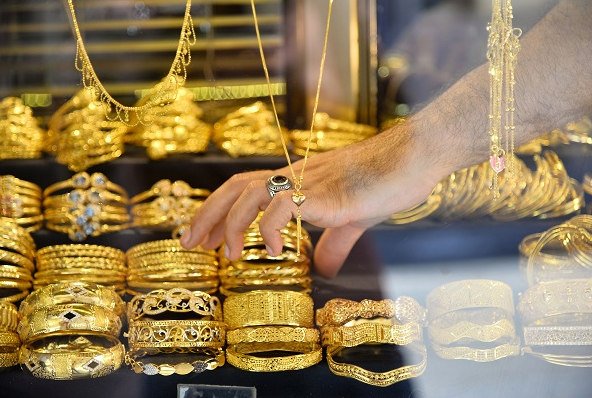
Tokyo, Jul 27: Gold hit an all-time high on Monday as tit-for-tat consulate closures in China and the United States rattled investors, boosting the allure of safe-haven assets, although sentiment was mixed with tech gains supporting some Asian stocks.

MSCI's ex-Japan Asia-Pacific index rose 1.3 percent as Taiwan's TSMC, Asia's third-largest company by market capitalisation, rose almost 10 percent.

The chipmaker's gains boosted other tech stocks in the region and came after rival Intel signalled it may give up manufacturing its own components due to delays in new 7-nanometer chip technology.

Also soothing sentiment, Chinese shares eked out gains after big falls late last week, with CSI300 index rising 0.5 percent.

S&P500 futures were last up 0.4 percent in choppy trade while Japan's Nikkei fell 0.5 percent, resuming trade after a long weekend and catching up with falls in global shares late last week.

Global shares had lost steam last week after Washington ordered China's consulate in Houston to close, prompting Beijing to react in kind by closing the US consulate in Chengdu.

US Secretary of State Mike Pompeo took fresh aim at China last week, saying Washington and its allies must use "more creative and assertive ways" to press the Chinese Communist Party to change its ways.

"US President (Donald) Trump used to say China's President Xi Jinping is a great leader. But now Pompeo's wording is becoming so aggressive that markets are starting to worry about further escalation," said Norihiro Fujito, chief investment strategist at Mitsubishi Securities.

Gold rose 1.0 percent to a record high of $1,920.9 per ounce, surpassing a peak touched in September 2011, as Sino-US tensions boosted the allure of safe-haven assets, especially those not tied to any specific country.

The yellow metal is also helped by aggressive monetary easing adopted by many central banks around the world since the pandemic plunged the global economy into a recession.

Some investors fret such an unprecedented level of money-printing could eventually lead to inflation.

MORE STIMULUS

Hopes of a quick US economic recovery are fading as coronavirus infections showed few signs of slowing.

That means the economy could capitulate without fresh support from the government, with some of earlier steps such as enhanced jobless benefits due to expire this month.

Investors hope US Congress will agree on a deal before its summer recess but there are some sticking points including the size of the stimulus and enhanced unemployment benefits.

US Treasury Secretary Steve Mnuchin said the package will contain extended unemployment benefits with 70 percent "wage replacement".

Democrats, who control the House of Representatives, want enhanced benefits of $600 per week to be extended and look to much bigger stimulus compared with the Republicans' $1 trillion plan.

Investors are looking to corporate earnings from around the world for hints on the pace of recovery in the global economy.

"It looks like rising coronavirus cases are starting to slow down recovery in many countries," said Masahiro Ichikawa, senior strategist at Sumitomo Mitsui DS Asset Management.

Concerns about the US economic outlook started to weigh on the dollar, reversing its inverse correlation with the economic well-being over the past few months.

The dollar index dropped 0.3 percent to its lowest level in nearly two years.

The euro gained 0.3 percent to $1.1693, hitting a 22-month high of $1.16590 as sentiment on the common currency improved after European leaders reached a deal on a recovery fund in a major step towards more fiscal co-operation.

Against the yen, the dollar slipped 0.5 percent to 105.605 yen, a four-month low while the British pound hit a 4 1/2-month high of $1.2832.

Oil prices dipped on worries about the worsening Sino-US relations.

Brent futures fell 0.46 percent to $43.14 per barrel while US crude futures lost 0.44 percent to $41.11.

Comments

Add new comment

  • Coastaldigest.com reserves the right to delete or block any comments.
  • Coastaldigset.com is not responsible for its readers’ comments.
  • Comments that are abusive, incendiary or irrelevant are strictly prohibited.
  • Please use a genuine email ID and provide your name to avoid reject.
Agencies
July 1,2020

The ILO has warned that if another Covid-19 wave hits in the second half of 2020, there would be global working-hour loss of 11.9 percent - equivalent to the loss of 340 million full-time jobs.

According to the 5th edition of International Labour Organisation (ILO) Monitor: Covid-19 and the world of work, the recovery in the global labour market for the rest of the year will be uncertain and incomplete.

The report said that there was a 14 percent drop in global working hours during the second quarter of 2020, equivalent to the loss of 400 million full-time jobs.

The number of working hours lost across the world in the first half of 2020 was significantly worse than previously estimated. The highly uncertain recovery in the second half of the year will not be enough to go back to pre-pandemic levels even in the best scenario, the agency warned.

The baseline model – which assumes a rebound in economic activity in line with existing forecasts, the lifting of workplace restrictions and a recovery in consumption and investment – projects a decrease in working hours of 4.9 percent (equivalent to 140 million full-time jobs) compared to last quarter of 2019.

It says that in the pessimistic scenario, the situation in the second half of 2020 would remain almost as challenging as in the second quarter.

“Even if one assumes better-tailored policy responses – thanks to the lessons learned throughout the first half of the year – there would still be a global working-hour loss of 11.9 per cent at the end of 2020, or 340 million full-time jobs, relative to the fourth quarter of 2019,” it said.

The pessimistic scenario assumes a second pandemic wave and the return of restrictions that would significantly slow recovery. The optimistic scenario assumes that workers’ activities resume quickly, significantly boosting aggregate demand and job creation. With this exceptionally fast recovery, the global loss of working hours would fall to 1.2 per cent (34 million full-time jobs).

The agency said that under the three possible scenarios for recovery in the next six months, “none” sees the global job situation in better shape than it was before lockdown measures began.

“This is why we talk of an uncertain but incomplete recovery even in the best of scenarios for the second half of this year. So there is not going to be a simple or quick recovery,” ILO Director-General Guy Ryder said.

The new figures reflect the worsening situation in many regions over the past weeks, especially in developing economies. Regionally, working time losses for the second quarter were: Americas (18.3 percent), Europe and Central Asia (13.9 percent), Asia and the Pacific (13.5 percent), Arab States (13.2 percent), and Africa (12.1 percent).

The vast majority of the world’s workers (93 per cent) continue to live in countries with some sort of workplace closures, with the Americas experiencing the greatest restrictions.

During the first quarter of the year, an estimated 5.4 percent of global working hours (equivalent to 155 million full-time jobs) were lost relative to the fourth quarter of 2019. Working- hour losses for the second quarter of 2020 relative to the last quarter of 2019 are estimated to reach 14 per cent worldwide (equivalent to 400 million full-time jobs), with the largest reduction (18.3 per cent) occurring in the Americas.

The ILO Monitor also found that women workers have been disproportionately affected by the pandemic, creating a risk that some of the modest progress on gender equality made in recent decades will be lost, and that work-related gender inequality will be exacerbated.

The severe impact of Covid-19 on women workers relates to their over-representation in some of the economic sectors worst affected by the crisis, such as accommodation, food, sales and manufacturing.

Globally, almost 510 million or 40 percent of all employed women work in the four most affected sectors, compared to 36.6 percent of men, it said.

The report said that women also dominate in the domestic work and health and social care work sectors, where they are at greater risk of losing their income and of infection and transmission and are also less likely to have social protection.

The pre-pandemic unequal distribution of unpaid care work has also worsened during the crisis, exacerbated by the closure of schools and care services.

Even as countries have adopted policy measures with unprecedented speed and scope, the ILO Monitor highlights some key challenges ahead, including finding the right balance and sequencing of health, economic and social and policy interventions to produce optimal sustainable labour market outcomes; implementing and sustaining policy interventions at the necessary scale when resources are likely to be increasingly constrained and protecting and promoting the conditions of vulnerable, disadvantaged and hard-hit groups to make labour markets fairer and more equitable.

“The decisions we adopt now will echo in the years to come and beyond 2030. Although countries are at different stages of the pandemic and a lot has been done, we need to redouble our efforts if we want to come out of this crisis in a better shape than when it started,” Ryder said. 

Comments

Add new comment

  • Coastaldigest.com reserves the right to delete or block any comments.
  • Coastaldigset.com is not responsible for its readers’ comments.
  • Comments that are abusive, incendiary or irrelevant are strictly prohibited.
  • Please use a genuine email ID and provide your name to avoid reject.
Agencies
March 28,2020

Canadian researchers are developing a DNA vaccine for SARS-CoV-2, the coronavirus that causes COVID-19 and has currently infected nearly 5,00,000 people worldwide and crippled the global economy.

Entos Pharmaceuticals, a health-care biotechnology company headed by a University of Alberta researchers, develop new therapeutic compounds using the company's proprietary drug-delivery platform and has begun manufacturing vaccine candidates against the novel coronavirus.

"Given the urgency of the situation, we can have a lead candidate vaccine within two months. Once we have that it's a race to get it into clinical trials," said John Lewis, CEO of Entos and a Professor at the University of Alberta in Canada.

Lewis said in comparison to a traditional vaccine, DNA-based vaccines hold several advantages.

Nucleic acids are introduced directly into the patient's own cells, causing them to make pieces of the virus--tricking the immune system into mounting a response without the full virus actually being present, the researcher said.

According to the company, the approach is recognised as being easier to move into large-scale manufacturing, offers improved vaccine stability and works without needing an infectious agent.

In the current absence of a vaccine for COVID-19, several companies around the world are mounting efforts to begin similar work.

The first clinical trial using a DNA-based vaccine developed by Moderna Inc.in the US on March 13.

Their approach allows for antibodies to be made in the human trial volunteers against a specific protein on the surface of the coronavirus that lets the virus enter human cells.

The hope is that the antibodies will stop the interaction.

Though this approach is designed to be effective against COVID-19 specifically, Lewis said Entos is taking a different tack.

The company plans to use plasmid DNA to amplify the production of key coronavirus surface and structural proteins with each injection, with an eye to the bigger picture.

"Many of the structural proteins in the virus are pretty well conserved across all the coronaviruses, including SARS and MERS," said Lewis.

"We're hoping that if we express more of the structural proteins that are common to most coronaviruses, we can inhibit the current COVID-19, and also potentially protect against all coronaviruses both past and future," Lewis added.

To move the project forward quickly, the company is seeking financial support from both provincial and federal levels of government.

"We have the opportunity to save a lot of lives, and I think it's really upon us and governments to find solutions for that," Lewis said.

Comments

Add new comment

  • Coastaldigest.com reserves the right to delete or block any comments.
  • Coastaldigset.com is not responsible for its readers’ comments.
  • Comments that are abusive, incendiary or irrelevant are strictly prohibited.
  • Please use a genuine email ID and provide your name to avoid reject.