Dalit student's suicide 'murder of democracy': Kejriwal

January 19, 2016

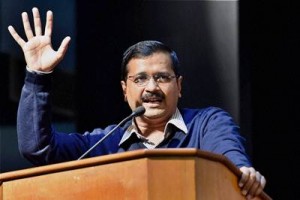
New Delhi, Jan 19: Delhi Chief Minister Arvind Kejriwal on Tuesday described the suicide of the Hyderabad Dalit student as "murder of democracy, social justice and equality".

kejri"It's not suicide. It's murder. It's murder of democracy, social justice and equality. (Prime Minister Narendra) Modi ji should sack ministers and apologise to the nation," Kejriwal said in a tweet.

"(The) Modi government (is) constitutionally duty bound to uplift Dalits. Instead, Modi ji's ministers got five Dalit students ostracised and suspended."

Rohith Vemula, a second-year research scholar of science, technology and society studies department at the University of Hyderabad, was found hanging from the ceiling of a room in the New Research Scholars' Hostel late on Sunday.

He was one of the five Dalit students suspended and expelled from the hostel for staging a protest on the campus for the past 15 days.

Comments

AHMED
 - 
Tuesday, 19 Jan 2016

Dalits need to join hands and fight the injustice done by the so called elite criminals. When will U guys stop living in FEAR of this upper caste.. Everybody is equal in the eyes of GOD and no human is superior in the eyes of GOD and fear only GOD not human who says they are superior. Pejawar will never help in this matter... U guys are being deceived by the so called superior.
I feel proud that Prophet Muhammad pbuh taught us a beautiful teachings which says:
All mankind is from ADAM & EVE, An arab has no superiority over an non Arab NOR a non arab has any superiority over an Arab, Also A white has no superiority over black NOR a black has any superiority over white EXCEPT by PIETY and GOOD ACTION.
What it means is also A DALIT is as equal as any human being. Just like a MUSLIMs or any other people in the EARTH> When we follow God's religion. FEAR NOT. Fight for the oppression done by this Foxes who deceive people and keep the society in FEAR.

Add new comment

  • Coastaldigest.com reserves the right to delete or block any comments.
  • Coastaldigset.com is not responsible for its readers’ comments.
  • Comments that are abusive, incendiary or irrelevant are strictly prohibited.
  • Please use a genuine email ID and provide your name to avoid reject.
Agencies
July 24,2020

New Delhi, Jul 24: Telecom companies lost 82.3 lakh subscribers during the COVID-19 lockdown period of April, data released by the Telecom Regulatory Authority of India (TRAI) on Friday showed.

As per the reports received from 342 operators in April, TRAI said the number of broadband subscribers decreased from 68.7 crore at the end of March to 67.6 crore at the end of April with a monthly decline rate of 1.64 per cent.

Top five service providers constituted 98.98 per cent market share of total broadband subscribers with Reliance Jio Infocomm (38.9 crore), Bharti Airtel (14.4 crore), Vodafone Idea (11.1 crore), BSNL (2.1 crore) and Atria Convergence (16 lakh).

The number of overall telephone subscribers decreased from 117.7 crore at the end of March to 116.9 crore at the end of April, showing a monthly decline rate of 0.72 per cent.

The TRAI said total wireless subscribers (2G, 3G and 4G) decreased from 115.7 crore at the end of March to 115 crore at the end of April, thereby registering a monthly decline rate of 0.71 per cent.

Wireless subscription in urban areas decreased from 63.8 crore to 62.9 crore but increased in rural areas from 51.9 crore to 52 crore. Monthly growth rates of urban and rural wireless subscription were minus 1.42 per cent and 0.16 per cent respectively.

Comments

Add new comment

  • Coastaldigest.com reserves the right to delete or block any comments.
  • Coastaldigset.com is not responsible for its readers’ comments.
  • Comments that are abusive, incendiary or irrelevant are strictly prohibited.
  • Please use a genuine email ID and provide your name to avoid reject.
News Network
July 17,2020

Lukung, Jul 17: Union Defence Minister Rajnath Singh on Friday assured that not an inch of our land can be taken by any power in the world while he interacted with the Indian Army and ITBP personnel at Lukung.

Referring to the India-China border standoff, he said, "Talks are underway to resolve the border dispute but to what extent it can be resolved I cannot guarantee. I can assure you, not one inch of our land can be taken by any power in the world."

Emphasising on finding a diplomatic solution to the standoff, he further said, "If a solution can be found by talks, there is nothing better."
"Recently what happened between troops of India and China at PP14, how some of our personnel sacrificed their lives protecting our border. I am happy to meet you all but also saddened because of their loss. I pay my tributes to them," he added.

Singh interacted with the Army and Paramilitary troops here along with Chief of Defence Staff General Bipin Rawat and Army Chief General MM Naravane.

Earlier today, the Defence Minister witnessed para dropping and scoping weapons here. He also inspected a Pika machine gun.

Indian Army T-90 tanks and BMP infantry combat vehicles carried out the exercise at Stakna, Leh in presence of Singh, Chief of Defence Staff and Army Chief.

Defence Minister is on a two-day visit to Ladakh and Jammu and Kashmir. He will take stock of the situation at both the Line of Actual Control (LAC) and the Line of Control (LOC).

While Pakistan constantly violates ceasefire from across the LoC, China has continued to intrude into Indian territory in Ladakh region in recent past, escalating tensions between India and its eastern neighbour.

On June 15, twenty Indian soldiers laid out their lives during combat with Chinese forces in Galwan valley, leading to tensions between both nations. Chinese soldiers subsequently started moving back following dialogues between two countries through the military level and diplomatic level.

Singh was accompanied by the Chief of Defence Staff General Bipin Rawat and Army Chief General MM Naravane.

Comments

Add new comment

  • Coastaldigest.com reserves the right to delete or block any comments.
  • Coastaldigset.com is not responsible for its readers’ comments.
  • Comments that are abusive, incendiary or irrelevant are strictly prohibited.
  • Please use a genuine email ID and provide your name to avoid reject.
News Network
April 23,2020

Washington, Apr 23: Air pollution over northern India has plummeted to a 20-year-low for this time of the year, according to satellite data published by US space agency National Aeronautics and Space Administration (NASA).
The US space agency's satellite sensors observed aerosol levels at a 20-year low post the countrywide lockdown, implemented to slow the spread of the novel coronavirus.

"We knew we would see changes in atmospheric composition in many places during the lockdown," said Pawan Gupta, a Universities Space Research Association (USRA) scientist at NASA''s Marshall Space Flight Center. "But I have never seen aerosol values so low in the Indo-Gangetic Plain at this time of year," added Mr Gupta.

Acting Assistant Secretary of State for South and Central Asia Alice G Wells tweeted, "These images from NASA were taken each spring starting in 2016 and show a 20-year low in airborne particle levels over India. When India and the world are ready to work and travel again, let's not forget that collaborative action can result in cleaner air."

The data published with maps show aerosol optical depth (AOD) in 2020 compared to the average for 2016-2019. Aerosol optical depth is a measure of how light is absorbed or reflected by airborne particles as it travels through the atmosphere.

If aerosols are concentrated near the surface, an optical depth of 1 or above indicates very hazy conditions. An optical depth, or thickness, of less than 0.1 over the entire atmospheric vertical column is considered "clean." The data were retrieved by the Moderate Resolution Imaging Spectroradiometer (MODIS) on NASA's Terra satellite.

In the first few days of the lockdown, it was difficult to observe a change in the pollution signature. "We saw an aerosol decrease in the first week of the shutdown, but that was due to a combination of rain and the lockdown," said Mr Gupta.

Around March 27, heavy rain poured over vast areas of northern India and helped clear the air of aerosols. Aerosol concentrations usually increase again after such heavy precipitation.

"After the rainfall, I was really impressed that aerosol levels did not go up and return to normal. We saw a gradual decrease and things have been staying at the level we might expect without anthropogenic emissions," Mr Gupta said.

On March 25, the Indian government placed its 1.3 billion citizens under a strict lockdown to reduce the spread of COVID-19. The countrywide mandate decreased activity at factories and severely reduced car, bus, truck and airplane traffic. Every year, aerosols from anthropogenic (human-made) sources contribute to unhealthy levels of air pollution in many Indian cities.

Aerosols are tiny solid and liquid particles suspended in the air that reduce visibility and can damage the human lungs and heart.

In southern India though, the story is a little hazier. Satellite data show aerosol levels have not yet decreased to the same extent. In fact, levels seem to be slightly higher than in the past four years. The reasons are unclear but could be related to recent weather patterns, agricultural fires, winds or other factors.

"This a model scientific experiment," Robert Levy, program leader for NASA's MODIS aerosol products, said about the lockdown and its effects on pollution.

"We have a unique opportunity to learn how the atmosphere reacts to sharp and sudden reductions in emissions from certain sectors. This can help us separate how natural and human sources of aerosols affect the atmosphere," Mr Levy added.


Comments

Add new comment

  • Coastaldigest.com reserves the right to delete or block any comments.
  • Coastaldigset.com is not responsible for its readers’ comments.
  • Comments that are abusive, incendiary or irrelevant are strictly prohibited.
  • Please use a genuine email ID and provide your name to avoid reject.