Dalit student's suicide 'murder of democracy': Kejriwal

January 19, 2016

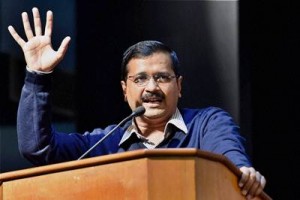
New Delhi, Jan 19: Delhi Chief Minister Arvind Kejriwal on Tuesday described the suicide of the Hyderabad Dalit student as "murder of democracy, social justice and equality".

kejri"It's not suicide. It's murder. It's murder of democracy, social justice and equality. (Prime Minister Narendra) Modi ji should sack ministers and apologise to the nation," Kejriwal said in a tweet.

"(The) Modi government (is) constitutionally duty bound to uplift Dalits. Instead, Modi ji's ministers got five Dalit students ostracised and suspended."

Rohith Vemula, a second-year research scholar of science, technology and society studies department at the University of Hyderabad, was found hanging from the ceiling of a room in the New Research Scholars' Hostel late on Sunday.

He was one of the five Dalit students suspended and expelled from the hostel for staging a protest on the campus for the past 15 days.

Comments

AHMED
 - 
Tuesday, 19 Jan 2016

Dalits need to join hands and fight the injustice done by the so called elite criminals. When will U guys stop living in FEAR of this upper caste.. Everybody is equal in the eyes of GOD and no human is superior in the eyes of GOD and fear only GOD not human who says they are superior. Pejawar will never help in this matter... U guys are being deceived by the so called superior.
I feel proud that Prophet Muhammad pbuh taught us a beautiful teachings which says:
All mankind is from ADAM & EVE, An arab has no superiority over an non Arab NOR a non arab has any superiority over an Arab, Also A white has no superiority over black NOR a black has any superiority over white EXCEPT by PIETY and GOOD ACTION.
What it means is also A DALIT is as equal as any human being. Just like a MUSLIMs or any other people in the EARTH> When we follow God's religion. FEAR NOT. Fight for the oppression done by this Foxes who deceive people and keep the society in FEAR.

Add new comment

  • Coastaldigest.com reserves the right to delete or block any comments.
  • Coastaldigset.com is not responsible for its readers’ comments.
  • Comments that are abusive, incendiary or irrelevant are strictly prohibited.
  • Please use a genuine email ID and provide your name to avoid reject.
News Network
January 17,2020

Jan 17: President Ram Nath Kovind, on Friday, dismissed Nirbhaya convict Mukesh Singh's mercy petition, according to multiple media reports.

Mukesh Singh - one of the four convicts in the Nirbhaya gang rape and murder case had filed a mercy petition on Tuesday after Supreme Court dismissed curative petitions filed by him and Vinay Sharma (another convict).

More to follow


MHA forwards mercy petition of Nirbhaya convict to President; recommends rejection

New Delhi, Jan 17: The Union Home Ministry on Friday forwarded to President Ram Nath Kovind the mercy petition of one of the convicts in the Nirbhaya gangrape case, recommending its rejection, officials said.

Mukesh Singh, one of the four death row convicts in the 2012 Nirbhaya gangrape and murder case, had filed the mercy petition a few days ago.

"The Home Ministry has forwarded the mercy petition of Mukesh Singh to the President. The ministry has reiterated the recommendation of the Lieutenant Governor of Delhi for its rejection," the official said.

The Delhi LG had sent the mercy petition of Mukesh to the Home Ministry on Thursday, a day after the Delhi government recommended its rejection.

The four convicts -- Mukesh Singh (32), Vinay Sharma (26), Akshay Kumar Singh (31) and Pawan Gupta (25) were to be hanged on January 22 at 7 am in Tihar Jail. A Delhi court had issued their death warrants on January 7.

However, the Delhi government had informed the high court during a hearing that execution of the convicts will not take place on January 22 as a mercy plea has been filed by Mukesh.

Comments

Add new comment

  • Coastaldigest.com reserves the right to delete or block any comments.
  • Coastaldigset.com is not responsible for its readers’ comments.
  • Comments that are abusive, incendiary or irrelevant are strictly prohibited.
  • Please use a genuine email ID and provide your name to avoid reject.
News Network
February 2,2020

Feb 2: Prime Minister Narendra Modi’s second budget in seven months disappointed investors who were hoping for big-bang stimulus to revive growth in Asia’s third-largest economy.

The fiscal plan -- delivered by Finance Minister Nirmala Sitharaman on Saturday -- proposed tax cuts for individuals and wider deficit targets but failed to provide specific steps to fix a struggling financial sector, improve infrastructure and create jobs. Stocks slumped as a proposal to scrap the dividend distribution tax for companies failed to impress investors.

"Far from being a game changer, the budget provides little in terms of short-term growth stimulus,” said Priyanka Kishore, head of India and South East Asia economics at Oxford Economics Ltd. in Singapore. “While income tax cuts will provide some relief on the consumption front, the multiplier effect is low and the overall stance of the budget is not expansionary."

India has gone from being the world’s fastest-growing major economy three years ago, expanding at 8%, to posting its weakest performance in more than a decade this fiscal year, estimated at 5%.

While the government has taken a number of steps in recent months to spur growth, they’ve fallen short of spurring demand in the consumption-driven economy. Saturday’s budget just added to the glum sentiment.

Okay Budget

“It’s an okay budget but not firing on all cylinders that the market was hoping for,” said Andrew Holland, chief executive officer at Avendus Capital Alternate Strategies in Mumbai.

The government had limited scope for a large stimulus given a huge shortfall in revenues in the current year. The slippage induced Sitharaman to invoke a never-used provision in fiscal laws, allowing the government to exceed the budget gap by 0.5 percentage points. The result: the deficit for the year ending March was widened to 3.8% of gross domestic product from a planned 3.3%.

On Friday, India’s chief economic adviser Krishnamurthy Subramanian said reviving economic growth was an “urgent priority” and deficit goals could be relaxed to achieve that. The adviser’s Economic Survey estimated growth will rebound to 6%-6.5% in the year starting April.

The fiscal gap will narrow to 3.5% next year, as the government budgeted for gross market borrowing to rise marginally to 7.8 trillion rupees from 7.1 trillion rupees in the current year. A plan to earn 2.1 trillion rupees by selling state-owned assets in the year starting April will also help plug the deficit.

Total spending in the coming fiscal year will increase to 30.4 trillion rupees, representing a 13% increase from the current year’s budget, according to latest data.

Key highlights from the budget:

* Tax on annual income up to 1.25 million rupees pared, with riders

* Dividend distribution tax to be levied on investors, instead of companies

* Farm sector budget raised 28%, transport infrastructure gets 7% more

* Spending on education raised 5%

* Fertilizer subsidy cut 10%

Analysts said the muted spending plan to keep the deficit in check will lead to more downside risks to growth in the coming months.

“It is very doubtful that the increase in expenditure will push demand much,” Chakravarthy Rangarajan, former governor at the Reserve Bank of India told BloombergQuint, adding that achieving next year’s budget deficit goal of 3.5% of GDP was doubtful.

With the government sticking to a conservative fiscal path, the focus will now turn to central bank, which is set to review monetary policy on Feb. 6. Given inflation has surged to a five-year high of 7.35%, the RBI is unlikely to lower interest rates.

What Bloomberg’s Economists Say:

The burden of recovery now falls solely on the Reserve Bank of India. With inflation breaching RBI’s target at present, any rate cuts by the central bank are likely to be delayed and contingent upon inflation falling below the upper end of its 2%-6% target range.

-- Abhishek Gupta, India economist

Governor Shaktikanta Das may instead focus on unconventional policy tools such as the Federal Reserve-style Operation Twist -- buying long-end debt while selling short-tenor bonds -- to keep borrowing costs down.


Comments

Add new comment

  • Coastaldigest.com reserves the right to delete or block any comments.
  • Coastaldigset.com is not responsible for its readers’ comments.
  • Comments that are abusive, incendiary or irrelevant are strictly prohibited.
  • Please use a genuine email ID and provide your name to avoid reject.
Agencies
May 21,2020

Eminent river engineer and former professor of civil engineering at IIT in the Banaras Hindu University (BHU) Prof. U.K. Choudhary has said that the judicious use of river technology can help resolve the Coronavirus crisis as well as the plight of Ganga river.

Choudhary, who is also founder of Ganga Research Centre at IIT (BHU), said: "The Ganga water contains a significantly higher proportion of bacteriophages - a kind of virus that kill bacteria. Our ancient scriptures like Vedas, Puranas and Upanishads say that Ganga jal is medicinal water. Scientists later found that Ganga water has bacteriophages capable of killing pathogens."

Explaining further, he said, "Let us analyze the source of bacteriophages. If we take three rivers of Himalayan origin having sources at different heights -the Ganga (Gomukh), Yamuna (Yamunotri) and the Sone river, we find the colours of waters are different. The whitish colour of Ganga water, greenish colour of Yamuna water and the brownish colour of Sone water is also indicative. As Gomukh is the highest among the three, its water comes from lowest depth of aquifer as compared to Yamunotri and Sone river," he explained.

Thus, the quality of river water is proportional to height of origin point. This defines the genetic character of Ganga water. The balanced flow of this water in entire length of the Ganga defines the medicinal property of Ganga water," he stated.

Prof Chaudhary said that the bacteriophages in the Ganga can curb the spread of coronavirus through soil, water and air.
He suggested that the idea is to preserve the medicinal value of Ganga water and to use it to fight Corona. He said that this can be done by opening the gates of all the dams and barrages in a way that the discharge through each is similar to the water at Gomukh. In this way, the concentration of bacteriophage will be enhanced in Ganga water making it more effective against pathogens.

"With increasing diffusion of bacteriophages in water and soil, the spread of Coronavirus will be impacted and reduced. This methodology and technique can also help maintain the quality of Ganga water later when the problem of Corona ends," he said.

Comments

Add new comment

  • Coastaldigest.com reserves the right to delete or block any comments.
  • Coastaldigset.com is not responsible for its readers’ comments.
  • Comments that are abusive, incendiary or irrelevant are strictly prohibited.
  • Please use a genuine email ID and provide your name to avoid reject.