


Davda in Fortune's list of groundbreaking women in food world

September 4, 2014

New York, Sep 4: Tata Starbucks CEO Avani Davda is the only Indian featured in Fortune and Food & Wine's list of 25 "most groundbreaking" women who are changing the way people eat and think about food.
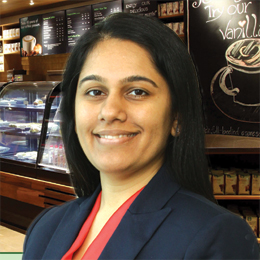
Avani-DavdaDavda, ranked 13 on the 'The Most Innovative Women in Food and Drink' list, leads the joint venture between the American coffee giant and its partner Tata Global Beverages in India, "historically a tea-drinking nation" where coffee is on the rise and a market where Starbucks is looking to profit.

In less than two years, Davda has opened 52 stores across Mumbai, Delhi, Pune, Bangalore, and Chennai.

Fortune said Davda, 34, has balanced Starbucks staples like Frappuccinos with local offerings.

Her team launched an India-sourced and roasted coffee, called India Estates Blend, to mark Starbucks' first anniversary in the country.

Fortune and its Time Inc sister publication Food & Wine spent months searching for the "most groundbreaking women in the food and drink world".

The publication said the women on list may not operate at the same scale as the big industry players such as PepsiCo's India-born CEO Indra Nooyi and Mondelez International CEO Irene Rosenfeld, who are regulars on Fortune's Most Powerful Women in Business ranking.

"But this group is permanently changing the way we eat and how we think about food. Now that's power in its own right."

The list also includes United Nations World Food Programme Executive Director Ertharin Cousin who as the head of the world's largest humanitarian organisation combating hunger, leads a team that must quickly get aid to those faced with conflict and natural disaster.

Congresswoman Chellie Pingree has made food policy reform one of her big issues in Congress, pushing for legislation that supports local, sustainable agriculture.

The list also includes Global Vice President of Quality Standards at American foods supermarket chain Whole Foods Margaret Wittenberg, TV personality and author Rachael Ray, cookware and gourmet food giant Williams-Sonoma CEO Laura Alber and Rural Outreach Africa founder Ruth Oniang'o, who has raised money to help 30,000 small farmers in Kenya, most of whom are women.

Comments

Add new comment

  • Coastaldigest.com reserves the right to delete or block any comments.
  • Coastaldigset.com is not responsible for its readers’ comments.
  • Comments that are abusive, incendiary or irrelevant are strictly prohibited.
  • Please use a genuine email ID and provide your name to avoid reject.
Agencies
May 30,2020

The GST Council is unlikely to make major changes in the indirect tax structure at its next meeting slated mid June.

A top government source said that the Centre is not in favour of increasing tax rates on any goods or service as it could further impact consumption and demand that is already suppressed due the COVID-19 pandemic and lockdown.

It was widely expected that the GST Council could consider raising tax rates and cess on certain non-essential items to boost revenue for states and the Centre. Several states have reportedly taken an over 80-90 per cent hit in GST collections in April, the official data for which has not yet been released by the Centre.

"The need of the hour is to boost consumption and improve demand. By categorising items into essential and non-essential and then raising taxes on non-essential is not what Centre favours. But, the issue on rates and relief will be decided by the GST Council that is meeting next month," the finance ministry official source quoted above said.

The GST Council is chaired by the Union finance minister and thus the views of the Centre play out strongly in the council meetings.

However, the Council will also have to balance the expectations of the states whose revenues have nosedived after the coronavirus outbreak and wide scale disruption to businesses while they have still not been paid GST compensation since the December-January period.

To the question of wider scale job losses in the period of lockdown as businesses get widely impacted, the official said that the Finance Ministry has asked the labour ministry to collect data on job losses during Covid-19 and is constantly engaging with the ministry to oversee job losses and salary cuts.

On restrictions put on Chinese investment in India, the official clarified that no decision had yet been taken to restrict China through the Foreign Portfolio Investment (FPI) route.

Asked about monetising government debt, the official said that the issue would be looked at when we reach a stage. It has not come to that stage yet.

In the government's over Rs 20 lakh crore economic package, the official defended its structure while suggesting that comparisons with the economic packages of other countries should not be drawn as India's needs were different from others.

"We have gone in more reforms that is needed to give strength to the economy. This is required more in our country," the official source said.

Comments

Add new comment

  • Coastaldigest.com reserves the right to delete or block any comments.
  • Coastaldigset.com is not responsible for its readers’ comments.
  • Comments that are abusive, incendiary or irrelevant are strictly prohibited.
  • Please use a genuine email ID and provide your name to avoid reject.
News Network
May 30,2020

May 30: Patients undergoing surgery after contracting the novel coronavirus are at an increased risk of postoperative death, according to a new study published in The Lancet journal which may lead to better treatment guidelines for COVID-19.

In the study, the scientists, including those from the University of Birmingham in the UK, examined data from 1,128 patients from 235 hospitals from a total of 24 countries.

Among COVID-19 patients who underwent surgery, they said the death rates approach those of the sickest patients admitted to intensive care after contracting the virus.

The scientists noted that SARS-CoV-2 infected patients who undergo surgery, experience substantially worse postoperative outcomes than would be expected for similar patients who do not have the infection.

According to the study, the 30-day mortality among these patients was nearly 24 per cent.

The researchers noted that mortality was disproportionately high across all subgroups, including those who underwent elective surgery (18.9 per cent), and emergency surgery (25.6 per cent).

Those who underwent minor surgery, such as appendicectomy or hernia repair (16.3 per cent), and major surgery such as hip surgery or for colon cancer also had higher mortality rates (26.9 per cent), the study said.

According to the study, the mortality rates were higher in men versus women, and in patients aged 70 years or over versus those aged under 70 years.

The scientists said in addition to age and sex, risk factors for postoperative death also included having severe pre-existing medical problems, undergoing cancer surgery, undergoing major procedures, and undergoing emergency surgery.

"We would normally expect mortality for patients having minor or elective surgery to be under 1 per cent, but our study suggests that in SARS-CoV-2 patients these mortality rates are much higher in both minor surgery (16.3%) and elective surgery (18.9%)," said study co-author Aneel Bhangu from the University of Birmingham.

Bhangu said these mortality rates are greater than those reported for even the highest-risk patients before the pandemic.

Citing an example from the 2019 UK National Emergency Laparotomy Audit report, he said the 30-day mortality was 16.9 per cent in the highest-risk patients.

Based on an earlier study across 58 countries, Bhangu said the 30-day mortality was 14.9 per cent in patients undergoing high-risk emergency surgery.

"We recommend that thresholds for surgery during the SARS-CoV-2 pandemic should be raised compared to normal practice," he said.

"For example, men aged 70 years and over undergoing emergency surgery are at particularly high risk of mortality, so these patients may benefit from their procedures being postponed," Bhangu added.

The study also noted that patients undergoing surgery are a vulnerable group at risk of SARS-CoV-2 exposure in hospital.

It noted that the patients may also be particularly susceptible to subsequent pulmonary complications, due to inflammatory and immunosuppressive responses to surgery and mechanical ventilation.

The scientists found that overall in the 30 days following surgery 51 per cent of patients developed a pneumonia, acute respiratory distress syndrome, or required unexpected ventilation.

Nearly 82 per cent of the patients who died had experienced pulmonary complications, the researchers said.

"Worldwide an estimated 28.4 million elective operations were cancelled due to disruption caused by COVID-19," said co-author Dmitri Nepogodiev from the University of Birmingham.

"Our data suggests that it was the right decision to postpone operations at a time when patients were at risk of being infected with SARS-CoV-2 in hospital," Nepogodiev said.

According to the researchers, there's now an urgent need for investment by governments and health providers in to measures which ensure that as surgery restarts patient safety is prioritised.

They said this includes the provision of adequate personal protective equipment (PPE), establishment of pathways for rapid preoperative SARS-CoV-2 testing, and consideration of the role of dedicated 'cold' surgical centres.

Comments

Add new comment

  • Coastaldigest.com reserves the right to delete or block any comments.
  • Coastaldigset.com is not responsible for its readers’ comments.
  • Comments that are abusive, incendiary or irrelevant are strictly prohibited.
  • Please use a genuine email ID and provide your name to avoid reject.
Agencies
May 15,2020

Kolkata, May 15: Veteran Bengali author Debesh Roy, who was conferred the Sahitya Akademi award for his novel 'Teesta Parer Brittanto', died at a private hospital in Kolkata on Thursday, his family members said.

Roy was 84 and he is survived by his son. His wife had died earlier.

He was admitted to the hospital near his residence at Baguihati, in the eastern fringes of the city, on Wednesday after having symptoms like sodium potasium imbalance, sugar problem and breathing problem, his family members said.

He suffered a massive cardiac arrest and died at 10.50 PM.

A regular contributor to a number of Bengali dailies, he was a staunch critic of the attacks on liberals by in the country in recent times and attended protest meetings despite his failing health.

He was born in Pabna in present-day Bangladesh on December 17, 1936. He had five decades of career as a writer.

Besides Teesta Parer Britanta', he will be remembered for books like Borisaler Jogen Mondal , Manush Khun Kore Keno and Samay Asamayer Brittanto . His first book was Jajati.

His last rites will be performed tomorrow.

Comments

Add new comment

  • Coastaldigest.com reserves the right to delete or block any comments.
  • Coastaldigset.com is not responsible for its readers’ comments.
  • Comments that are abusive, incendiary or irrelevant are strictly prohibited.
  • Please use a genuine email ID and provide your name to avoid reject.