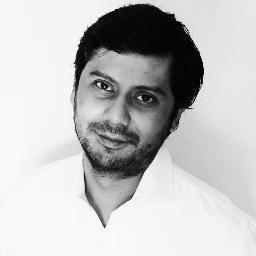
Dawn journalist Cyril Almeida barred from leaving Pakistan

October 11, 2016

Islamabad, Oct 11: A prominent journalist has been barred from leaving Pakistan after he reported on a suspected rift between civilian and military leaderships during a crucial meeting in which the Inter-Services Intelligence (ISI) was told its support for terrorist groups was leaving the country globally isolated.

caCyril Almeida, a columnist and reporter for the Dawn, tweeted that he has been told he has been put on ‘Exit Control List' — a system of border control maintained by Pakistan government under an ordinance which allows it to bar people whose names appear on the list from leaving the country.

“Puzzled, saddened. Had no intention of going anywhere; this is my home. Pakistan,” Mr. Almeida tweeted.

The development came less than a week after he wrote a front-page story in the daily about a rift between Pakistan's civilian and military leaderships over militant groups that operate from Pakistan but engage in war against India and Afghanistan.

On October 6, 2016, Mr. Almeida, citing sources, reported in the widely-read daily that the civilian government has told the military leadership of a growing international isolation of Pakistan due to alleged support for militancy.

Pakistan government has thrice denied the story since.

The Foreign Office vehemently rejected the report and termed it “speculative”. On October 10, 2016, Prime Minister Nawaz Sharif ordered authorities to take “stern action” against those responsible for publishing the “fabricated” story.

“Prime Minister took serious notice of the violation and directed that those responsible should be identified for stern action,” according to an official statement.

Mr. Almeida's scoop came amidst a backdrop of heightened tension between India and Pakistan following the attack on an Indian army base in Uri on September 18 in which 19 soldiers were killed by Pakistan-backed terrorists from the Jaish-e-Mohammed outfit.

On September 29, 2016, India carried out “surgical strikes” on seven terror launch pads across the Line of Control (LoC), and the Army said it had inflicted “significant casualties” on terrorists preparing to infiltrate from Pakistan-occupied Kashmir.

Pakistan has denied the surgical strike by India but has claimed two of its soldiers were killed in alleged ceasefire violations along the LoC by Indian troops.

Comments

Add new comment

  • Coastaldigest.com reserves the right to delete or block any comments.
  • Coastaldigset.com is not responsible for its readers’ comments.
  • Comments that are abusive, incendiary or irrelevant are strictly prohibited.
  • Please use a genuine email ID and provide your name to avoid reject.
News Network
April 15,2020

Wuhan, Apr 15: In the six days after top Chinese officials secretly determined they likely were facing a pandemic from a new coronavirus, the city of Wuhan at the epicenter of the disease hosted a mass banquet for tens of thousands of people; millions began traveling through for Lunar New Year celebrations.

President Xi Jinping warned the public on the seventh day, Janaury 20. But by that time, more than 3,000 people had been infected during almost a week of public silence, according to internal documents obtained by The Associated Press and expert estimates based on retrospective infection data.

That delay from Jan 14 to Jan. 20 was neither the first mistake made by Chinese officials at all levels in confronting the outbreak, nor the longest lag, as governments around the world have dragged their feet for weeks and even months in addressing the virus.

But the delay by the first country to face the new coronavirus came at a critical time — the beginning of the outbreak. China's attempt to walk a line between alerting the public and avoiding panic set the stage for a pandemic that has infected almost 2 million people and taken more than 126,000 lives.

A This is tremendous, a said Zuo-Feng Zhang, an epidemiologist at the University of California, Los Angeles. If they took action six days earlier, there would have been much fewer patients and medical facilities would have been sufficient. We might have avoided the collapse of Wuhan's medical system.

Other experts noted that the Chinese government may have waited on warning the public to stave off hysteria, and that it did act quickly in private during that time.

But the six-day delay by China's leaders in Beijing came on top of almost two weeks during which the national Center for Disease Control did not register any cases from local officials, internal bulletins obtained by the AP confirm. Yet during that time, from Jan 5 to Jan 17, hundreds of patients were appearing in hospitals not just in Wuhan but across the country.

It's uncertain whether it was local officials who failed to report cases or national officials who failed to record them. It's also not clear exactly what officials knew at the time in Wuhan, which only opened back up last week with restrictions after its quarantine.

But what is clear, experts say, is that China's rigid controls on information, bureaucratic hurdles and a reluctance to send bad news up the chain of command muffled early warnings. The punishment of eight doctors for rumor-mongering, broadcast on national television on Jan. 2, sent a chill through the city's hospitals.

Doctors in Wuhan were afraid, said Dali Yang, a professor of Chinese politics at the University of Chicago. It was truly intimidation of an entire profession. Without these internal reports, it took the first case outside China, in Thailand on Jan 13, to galvanize leaders in Beijing into recognising the possible pandemic before them. It was only then that they launched a nationwide plan to find cases distributing CDC-sanctioned test kits, easing the criteria for confirming cases and ordering health officials to screen patients, all without telling the public.

The Chinese government has repeatedly denied suppressing information in the early days, saying it immediately reported the outbreak to the World Health Organization.

Allegations of a cover-up or lack of transparency in China are groundless, said foreign ministry spokesman Zhao Lijian at a Thursday press conference.

The documents show that the head of China's National Health Commission, Ma Xiaowei, laid out a grim assessment of the situation on Jan. 14 in a confidential teleconference with provincial health officials.

A memo states that the teleconference was held to convey instructions on the coronavirus from President Xi Jinping, Premier Li Keqiang and Vice Premier Sun Chunlan, but does not specify what those instructions were.

The epidemic situation is still severe and complex, the most severe challenge since SARS in 2003, and is likely to develop into a major public health event, the memo cites Ma as saying.

The National Health Commission is the top medical agency in the country. In a faxed statement, the Commission said it had organised the teleconference because of the case reported in Thailand and the possibility of the virus spreading during New Year travel. It added that China had published information on the outbreak in an open, transparent, responsible and timely manner," in accordance with important instructions repeatedly issued by President Xi.

The documents come from an anonymous source in the medical field who did not want to be named for fear of retribution. The AP confirmed the contents with two other sources in public health familiar with the teleconference. Some of the memo's contents also appeared in a public notice about the teleconference, stripped of key details and published in February.

Under a section titled sober understanding of the situation, the memo said that clustered cases suggest that human-to-human transmission is possible. It singled out the case in Thailand, saying that the situation had changed significantly because of the possible spread of the virus abroad.

With the coming of the Spring Festival, many people will be traveling, and the risk of transmission and spread is high, the memo continued.

Comments

Add new comment

  • Coastaldigest.com reserves the right to delete or block any comments.
  • Coastaldigset.com is not responsible for its readers’ comments.
  • Comments that are abusive, incendiary or irrelevant are strictly prohibited.
  • Please use a genuine email ID and provide your name to avoid reject.
News Network
June 4,2020

Jun 4: A malaria drug President Donald Trump took to try to prevent COVID-19 proved ineffective for that in the first large, high-quality study to test it in people in close contact with someone with the disease.

Results published Wednesday by the New England Journal of Medicine show that hydroxychloroquine was no better than placebo pills at preventing illness from the coronavirus.

The drug did not seem to cause serious harm, though -- about 40% on it had side effects, mostly mild stomach problems.

 “We were disappointed. We would have liked for this to work,” said the study leader, Dr. David Boulware, an infectious disease specialist at the University of Minnesota.

“But our objective was to answer the question and to conduct a high-quality study,” because the evidence on the drug so far has been inconclusive, he said.

Hydroxychloroquine and a similar drug, chloroquine, have been the subject of much debate since Trump started promoting them in March.

Hydroxychloroquine has long been used for malaria, lupus, and rheumatoid arthritis, but no large studies have shown it or chloroquine to be safe or effective for much sicker patients with coronavirus, and some studies have suggested the drugs may do harm.

Trump took a two-week course of hydroxychloroquine, along with zinc and Vitamin D, after two staffers tested positive for COVID-19, and had no ill effects, according to results of his latest physical released by his doctor Wednesday.

Federal regulators have warned against hydroxychloroquine's use except in hospitals and formal studies because of the risk of side effects, especially heart rhythm problems.

Boulware's study involved 821 people in the United States and Canada living with someone diagnosed with COVID-19 or at high risk of getting it because of their job -- doctors, nurses, ambulance workers who had significant exposure to a sick patient while not wearing full protective gear.

They were randomly assigned to get either the nutrient folate as a placebo or hydroxychloroquine for five days, starting within four days of their exposure. Neither they nor others involved in the research knew who was getting which pills.

After 14 days in the study, 12 per cent on the drug developed COVID-19 symptoms versus 14 per cent in the placebo group, but the difference is so small it could have occurred by chance, Boulware said.

“There's basically no effect. It does not prevent infection,” he said of the drug. Even if it were to give some slim advantage, “we'd want a much larger effect” to justify its use and risk of side effects for preventing illness, he said.

Results were no different among a subgroup of participants who were taking zinc or vitamin C, which some people believe might help make hydroxychloroquine more effective or fight the coronavirus.

There are some big caveats: The study enrolled people through the Internet and social media, relying on them to report their own symptoms rather than having them tracked in a formal way by doctors.

Participants were not all tested for the coronavirus but were diagnosed as COVID-19 cases based on symptoms in many cases. And not all took their medicines as directed.

The results “are more provocative than definitive,” and the drug may yet have prevention benefits if tried sooner or in a different way, Dr. Myron Cohen of the University of North Carolina at Chapel Hill wrote in a commentary in the journal.

Others were glad to see a study that had a comparison group and good scientific methods after so many weaker reports on hydroxychloroquine.

“This fits with everything else we've seen so far which suggests that it's not beneficial," said Dr. Peter Bach, director of a health policy center at Memorial Sloan Kettering Cancer Center in New York.

This study was in younger relatively healthy people, but the results “would make me very discouraged about trying to use this in older people” who are most vulnerable to serious illness from the coronavirus, Bach said.

“If it does work, it doesn't work very well.” Dr. Dan Culver, a lung specialist at the Cleveland Clinic, said there's still a chance that giving the drug sooner than four days after someone's exposure to the virus may help prevent illness.

But the study “takes 'home run' off the table” as far as hopes for the drug, he said.

The study was mostly funded by David Baszucki, founder of Roblox, a California-based game software company, and other private donors and the Minnesota university.

Boulware also is leading a study testing hydroxychloroquine for treating COVID-19. The study is finished and results are being analyzed now.

On Tuesday, the journal Lancet posted an “expression of concern” about a study it published earlier this month of nearly 15,000 COVID-19 patients on the malaria drugs that tied their use to a higher risk of dying in the hospital or developing a heartbeat problem.

Scientists have raised serious questions about the database used for that study, and its authors have launched an independent audit.

That work had a big impact: the World Health Organization suspended use of hydroxychloroquine in a study it is leading, and French officials stopped the drug's use in hospitals. On Wednesday, the WHO said experts who reviewed safety information decided that its study could resume.


Comments

Add new comment

  • Coastaldigest.com reserves the right to delete or block any comments.
  • Coastaldigset.com is not responsible for its readers’ comments.
  • Comments that are abusive, incendiary or irrelevant are strictly prohibited.
  • Please use a genuine email ID and provide your name to avoid reject.
News Network
June 15,2020

Beijing, Jun 15: China is locking now ten more neighbourhoods in Beijing to try and contain the spread of a new coronavirus outbreak linked to a food market, authorities announced Monday.

City official Li Junjie said at a press conference that fresh cases had been found in a second wholesale market in northwestern Haidian district, and as a result, the market and nearby schools would be closed, and people living in ten communities around it placed under lockdown.

Comments

Add new comment

  • Coastaldigest.com reserves the right to delete or block any comments.
  • Coastaldigset.com is not responsible for its readers’ comments.
  • Comments that are abusive, incendiary or irrelevant are strictly prohibited.
  • Please use a genuine email ID and provide your name to avoid reject.