



Deluge, destruction in Jammu and Kashmir

September 14, 2014

Srinagar, Sep 14: These are unprecedented times. Generations of people of Jammu and Kashmir had not seen the kind of devastation that the floods of September second week have wrought on the Himalayan state.
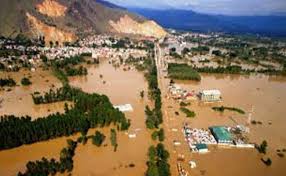
jkThe deluge has left a trail of destruction in almost every district of this already vexed state. The flood havoc has left the Jammu region and the Kashmir Valley equally ruined. A week of thunderous rainfall has breached canals and lakes and flooded the rivers, pushing the state, not known for its administrative efficiency, backward by a couple of decades. There is hardly any family which has not been affected by this completely unpredicted misery.

Days of rainfall and flooding have impacted every walk of life. After the thunder storm that started on September 6, only now Srinagar has started getting electricity supply, that too only in parts of the state capital. There is hardly any telephone connectivity. With mobile networks non-functional and power intermittent, the problem of contacting the near and dear ones is a tall order. There are tales of parents not knowing the whereabouts of the family members, mothers having lost children and brothers unaware what happened to the uncontactable cousins.

Take anything in J&K, they are under water. Shops and establishments, hospitals, banks, government and private offices, telephone exchanges, police stations, schools and colleges, power plants, petrol pumps and newspaper offices are under water and will remain closed for days to come. Of the seven hospitals in the city, only one – Sher-e-Kashmir - is functional. Godowns are under water. Petrol pumps are empty.

The HP and IOC oil storage tanks located in Pulwama district along the closed Srinagar-Jammu highway are submerged. Most of the buildings and houses are under at least 10 ft of water. There is a level-playing field here though. Chief Minister Omar Abdullah’s office, secretariat, Assembly building, areas like the posh Jawahar Nagar - where leading politicians and top bureaucrats live - have been under water. So much so that the chiefminister could not contact his own ministers or officials for days on end.

There are no stocks in ration shops. Left over stocks are looted by thieves who came in boats. There is an acute shortage of food across the affected districts. Medicine is urgently needed as receding flood waters may bring in diseases. The biggest problem is acute shortage of medicine and drinking water. Some temporary hospitals are set up as voluntary doctors are working but are devoid of medical facilities. Without water, there is the danger of people getting dehydrated. In the only paediatric hospital of Srinagar, 14 newborns died. There are reports that some bodies are lying on trees.

Relief camps have been set up but the condition there is sub-human. While seven of the 10 north Kashmir districts were affected, rain has started pounding south Kashmir since Friday. People’s anger is against both the state and the Central governments.

Affected residents say while the state government completely failed to come to the rescue of the flood-hit, the Centre could have done more. Instead of pressing just 100 boats in to service, what was needed was 1000 boats as lakhs were waiting to be rescued over six days without proper food or water. In Sringar alone, of the 6 lakh trapped in waters, only 1 lakh have been rescued.

Said Riaz Ahmed, a businessman: “This is the time when the rest of the country can really show that Kashmir is part of India, that they are ready to embrace us in this hour of tragedy. Help is coming, but it is insufficient, not streamlined.”

Cries of woe

Many have lost their lives and also savings and property. Says Mohd Mazan Bhat, a retired government official: “I constructed a house in Bemina out of my life savings. The house has been washed away in the floods. I lost everything in a matter of a few hours.” Bhat, now in a relief camp, weeps: “I don’t know how to restart my life.”

Four days after he was rescued from his house which is under 15 ft of water in Karan Nagar, advocate Jawed is not able to live down the horror he went through. “I was saved by an army boat after three days and two nights. I am still terrified, I am not able to sleep. I get hallucinations of the violent waves lashing my house engulfing it and the neighbourhood.”

Senior journalist Arshad Hussian of Kashmir Times and his mother are not traceable. He has three small children and all are rescued from his house at Shivpura on the banks of the Jhelum river. His wife, a doctor, was at her hospital when the tragedy struck and is safe. I have been trying to locate them at relief camps but am not successful.

There are hundreds of such stories here. As for my relatives, there is no information about dozens of them. Same with scores of journalist colleagues and friends.

But many have not left their homes despite army boats reaching them. They are scared that the moment they leave, whatever that is left at home would be taken away by the gangs of thieves.

Lack of connectivity is one of the biggest logistical problems. Authorities claim that 50 per cent of mobile connectivity is restored but in reality, it is not even 10 per cent. BSNL and Airtel connections are not working. Aircel network is available but only in some areas.

There is apprehension as to what will happen to the cash deposits in scores of banks across the state as well as the cash in the main state treasury situated on Residency Road in Lal Chowk which are under water. The chiefminister has assured the people that cash in banks as well as treasury is safe.

In south Kashmir, Anant Nag, Pulwama and Pehlgam have been devastated by floods. Almost 90 per cent of people there are affected. In north Kashmir, parts of Badgam, Baramulla and Bandipore districts are badly hit. In north, only Ganderbal, Kupwara and Shopean districts remain largely unaffected. On Friday, 40 bodies were retrieved from Pancheri village in Udhampur district in Jammu division, devastated by landslide. There are reports that several bodies are lying in different police stations in Srinagar. No one knows about the identity of these bodies.

Rehabilitation in J&K will take years. Public infrastructure is badly affected. In hospitals, all equipment, be it CT scan, x-ray, MRI machines etc are badly damaged under muddy water. Even if water recedes, it won’t be of much help.

Comments

Add new comment

  • Coastaldigest.com reserves the right to delete or block any comments.
  • Coastaldigset.com is not responsible for its readers’ comments.
  • Comments that are abusive, incendiary or irrelevant are strictly prohibited.
  • Please use a genuine email ID and provide your name to avoid reject.
News Network
April 22,2020

New Delhi, Apr 22: Philanthropist and Microsoft co-founder Bill Gates has lauded Prime Minister Narendra Modi's leadership in dealing with COVID-19 pandemic by adopting several measures including lockdown and increasing health expenditure to strengthen the health system response.

"We commend your leadership and the proactive measures you and your government have taken to flatten the curve of the COVID-19 infection rate in India, such as adopting a national lockdown, expanding focused testing to identify hot spots for isolation, quarantining, and care, and significantly increasing health expenditures to strengthen the health system response and promote R&D and digital innovation," Gates wrote.

He added: "I'm glad your government is fully utilising its exceptional digital capabilities in its COVID-19 response and has launched the Aarogya Setu digital app for coronavirus tracking, contact tracing, and to connect people to health services."

Prime Minister Modi had on March 24 announced a 21-day nationwide lockdown as a precautionary measure to contain the spread of COVID-19. The lockdown was later extended to May 3.

Gates further stated, "Grateful to see that you are seeking to balance public health imperatives with the need to ensure adequate social protection for all Indians."

With 1,486 new cases and 49 deaths in the last 24 hours, India's total number of coronavirus positive cases have risen to 20,471 while the death toll stands at 652, Union Ministry of Health and Family Welfare said on Wednesday.

Out of the total number of cases, 15,859 are active cases, 3,959 cured or discharged or migrated and 652 deaths.

Bill Gates met Prime Minister Modi in New Delhi on November 18 last year.

During his visit, Gates had addressed a function organised by NITI Aayog for the release of its report on 'Health Systems for a New India: Building Blocks - Potential Pathways to Reforms' wherein he lauded the country for its healthcare system and talked about how digital tools can help improve it further.

At that time, the philanthropist had commended the Central government for stepping up and eradicating polio.

Comments

Add new comment

  • Coastaldigest.com reserves the right to delete or block any comments.
  • Coastaldigset.com is not responsible for its readers’ comments.
  • Comments that are abusive, incendiary or irrelevant are strictly prohibited.
  • Please use a genuine email ID and provide your name to avoid reject.
Agencies
May 22,2020

New Delhi, May 22: The number of COVID-19 cases averted due to the lockdown is in the range of 14-29 lakh, while the number of lives saved is between 37,000 and 78,000, the government said on Friday citing various studies, and asserted that the unprecedented shutdown has paid “rich dividends” in the fight against the pandemic.

The lockdown in India has been a timely, graded, proactive and pre-emptive public health measure to fight the COVID-19 pandemic and has been part and parcel of the government’s overall strategy, Dr V K Paul, Member (Health), NITI Aayog, and Chairman, Empowered Group 1, said at a media briefing on the COVID-19 situation.

The government imposed the nationwide lockdown from March 25 to prevent the spread of the novel coronavirus and it is currently in its fourth phase.

Like the number of cases, the growth rate of number of COVID-19 deaths too has fallen significantly due to the lockdown, marking a notable difference between pre-lockdown and post-lockdown situations, he said.

At the briefing, Pravin Srivastava, Secretary, Ministry of Statistics and Programme Implementation gave model-based estimates on COVID-19 cases and deaths which have been prevented due to the lockdown.

As per Boston Consulting Group's model, the lockdown saved between 1.2 lakh and 2.1 lakh lives, while the number of COVID-19 cases averted is between 36 lakh and 70 lakh, he said.

According to Public Health Foundation of India, nearly 78,000 lives have been saved due to the lockdown, Srivastava said.

Citing a model by two independent economists, he said that around 23 lakh COVID-19 cases and 68,000 deaths have been averted due to the lockdown.

Some independent experts, including retired scientists, have calculated that around 15.9 lakh cases and 51,000 deaths have been averted due to the lockdown, Srivastava said.

A joint study by the Ministry of Statistics and Programme Implementation and the Indian Statistical Institute found that around 20 lakh COVID-19 cases and 54,000 deaths were averted due to lockdown, he said.

The number of COVID-19 cases averted due to the lockdown is in the range of 14-29 lakh, while the number of lives saved is between 37,000 and 78,000, the official said.

“We are fully confident that the lockdown, with full public cooperation, has reaped rich dividends,” Srivastava said.

The strong defence of the lockdown, comes a day after the health ministry said the period of lockdown has been gainfully utilized to ramp up the health infrastructure, with around 3,027 dedicated COVID-19 hospitals and 7,013 care centres being readied across the country to fight the disease.

The announcement on Thursday came after some media reports questioned the country's preparedness to deal with the highly infectious disease.

"There are reports in a section of the media about some decisions of the government regarding the lockdown implementation and response to COVID-19 management. The period of the lockdown has been gainfully utilised to ramp up the health infrastructure in the country," the ministry had said.

Addressing the press briefing on Friday, joint secretary in the health ministry Lav Agarwal said 48,534 COVID-19 patients, which is about 41 per cent of the total cases, have recovered so far. As many as 3,234 patients have recovered in the last 24 hours, he said’

The COVID-19 mortality rate has dropped from 3.13 per cent on May 19 to 3.02 per cent as focus was on containment measures andclinical management of cases, Agarwal said.

An ICMR official said 27,55,714 tests for COVID-19 have been conducted till 1 pm Friday with 1,03,829 tests done in one day. Over 1 lakh tests for COVID-19 have been done each day for the last four days, the official said.

The growth rate of novel coronavirus cases witnessed a steep decline from Apr 4 when lockdown put a brake on the speed of increase of cases, V K Paul said.

The number of COVID-19 cases would have risen exponentially had the lockdown not been implemented, he said, adding that the doubling rate of cases was 3.4 days when the lockdown started and it is 13.3 days at present.

The COVID-19 outbreak in India has remained confined to limited areas with 80 per cent of active cases in just five states, Paul said

He said around 80 pc of COVID-19 deaths have been in Maharashtra, Gujarat, Madhya Pradesh, West Bengal and Delhi. 

Comments

Add new comment

  • Coastaldigest.com reserves the right to delete or block any comments.
  • Coastaldigset.com is not responsible for its readers’ comments.
  • Comments that are abusive, incendiary or irrelevant are strictly prohibited.
  • Please use a genuine email ID and provide your name to avoid reject.
News Network
February 28,2020

Feb 28: For 30-year-old Shabana Parveen, it was nothing sort of a miracle — giving birth to a healthy baby boy after surviving a brutal attack by a mob who kicked and assaulted her and her husband in northeast Delhi's Karawal Nagar.

Their home set afire by the mob, Ms Parveen's family is now pinning their hopes on the newborn who they called a "miracle baby".

Ms Parveen, her husband, two kids and mother-in-law were sleeping inside the house on Monday night when a mob barged into their house.

Narrating their ordeal, Ms Parveen's mother-in-law Nashima told PTI, "They hurled religious slurs, beat up my son. Some of them even kicked my daughter-in-law in the abdomen...as I went to protect her they came charging at me... We thought we would not survive that night. But with God's grace we somehow managed to escape from the clutches of the rioters."

"We rushed Parveen to a nearby hospital but doctors there asked us to go to Al-hind Hospital where she delivered a baby boy on Wednesday," she added.

Despite having lost their home for over two decades and all belongings, her family has overcome the initial shock and are now overjoyed with the birth of the "miracle baby".

Ms Nashima said she had no clue where the family would go after Ms Parveen was discharged from the hospital.

"It's all gone there. Nothing left. Maybe, we will go to some relative's place and see how we can re-build our life," she said.

Ali, 6, who held his one-day-old brother, caressing his forehead, said, "I will take care of him forever and save him from every ill."

The violence over the amended citizenship law in northeast Delhi has claimed 38 lives so far and left over 200 people injured. Frenzied mobs torched houses, shops, vehicles, a petrol pump and pelted stones at locals and police personnel.

Jaffrabad, Maujpur, Babarpur, Yamuna Vihar, Bhajanpura, Chand Bagh and Shiv Vihar are among the areas mainly affected by the clashes.

Comments

Add new comment

  • Coastaldigest.com reserves the right to delete or block any comments.
  • Coastaldigset.com is not responsible for its readers’ comments.
  • Comments that are abusive, incendiary or irrelevant are strictly prohibited.
  • Please use a genuine email ID and provide your name to avoid reject.