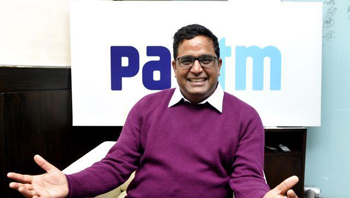
Demonetisation: Paytm wallet will merge with coming payments bank

December 5, 2016

New Delhi, Dec 5: The Alibaba-backed digital payments and commerce platform Paytm is transferring its wallet business into the newly created entity for its planned payments bank. This is a mandatory step being followed by the company to fulfil the rules laid out by the Reserve Bank of India. Paytm , which is run by One 97 Communications, has two key businesses--payments business and commerce marketplace. The Paytm founder Vijay Shekhar Sharma, so far, has got an in-principal approval from the country's central bank for launching a payments bank which is under the name of Sharma. For the commerce business, the company has created another entity--Paytm E-commerce Private Limited.

paytmPaytm spokesperson confirmed the development. "As per the directions of the Reserve Bank of India (RBI), the company would transfer its wallet business to the newly incorporated Paytm Payments Bank Limited (PPBL) after receipt of necessary approvals.The transfer will be complete once payment bank licence is obtained," the spokesperson said in an emailed response. The company said the transfer of its wallet business into the payments bank entity is being done with the consent of all shareholders and the board. "The structure was a part of our payment bank application itself when we applied for it in 2014," the statement said.

As per the RBI guidelines, Sharma will have to hold a majority stake of 51%, in the payments bank entity. He has put Rs 112 crore as of now in the entity. Chinese e-commerce giant Alibaba is the largest shareholder in Paytm's holding company One97 Communications with about 40% stake in the parent company.

To be sure, Paytm's payment bank launch has been getting delayed since middle of this year with the company announcing a beta version of payments bank by Diwali this year. "We are working with Fidelity, Infosys and Oracle to deploy a scale-able platform that will be able to meet with the requirements of the bank when it launches. There are no timelines.," the spokesperson said. Telecom major Airtel has already launched their payments bank in Rajasthan. The Noida-based company is also in middle of fresh fund raise to the tune of $250-300 million out of which $60 million has already come into the company's account from Taiwan's Mediatek.

Comments

Add new comment

  • Coastaldigest.com reserves the right to delete or block any comments.
  • Coastaldigset.com is not responsible for its readers’ comments.
  • Comments that are abusive, incendiary or irrelevant are strictly prohibited.
  • Please use a genuine email ID and provide your name to avoid reject.
News Network
April 17,2020

Paris, Apr 17: Even as virologists zero in on the virus that causes COVID-19, a very basic question remains unanswered: do those who recover from the disease have immunity?

There is no clear answer to this question, experts say, even if many have assumed that contracting the potentially deadly disease confers immunity, at least for a while.

"Being immunised means that you have developed an immune response against a virus such that you can repulse it," explained Eric Vivier, a professor of immunology in the public hospital system in Marseilles.

"Our immune systems remember, which normally prevents you from being infected by the same virus later on."

For some viral diseases such a measles, overcoming the sickness confers immunity for life.

But for RNA-based viruses such as Sars-Cov-2 -- the scientific name for the bug that causes the COVID-19 disease -- it takes about three weeks to build up a sufficient quantity of antibodies, and even then they may provide protection for only a few months, Vivier told AFP.

At least that is the theory. In reality, the new coronavirus has thrown up one surprise after another, to the point where virologists and epidemiologists are sure of very little.

"We do not have the answers to that -- it's an unknown," Michael Ryan, executive director of the World Health Organization's Emergencies Programme said in a press conference this week when asked how long a recovered COVID-19 patient would have immunity.

"We would expect that to be a reasonable period of protection, but it is very difficult to say with a new virus -- we can only extrapolate from other coronaviruses, and even that data is quite limited."

For SARS, which killed about 800 people across the world in 2002 and 2003, recovered patients remained protected "for about three years, on average," Francois Balloux director of the Genetics Institute at University College London, said.

"One can certainly get reinfected, but after how much time? We'll only know retroactively."

A recent study from China that has not gone through peer review reported on rhesus monkeys that recovered from Sars-Cov-2 and did not get reinfected when exposed once again to the virus.

"But that doesn't really reveal anything," said Pasteur Institute researcher Frederic Tangy, noting that the experiment unfolded over only a month.

Indeed,several cases from South Korea -- one of the first countries hit by the new coronavirus -- found that patients who recovered from COVID-19 later tested positive for the virus.

But there are several ways to explain that outcome, scientists cautioned.

While it is not impossible that these individuals became infected a second time, there is little evidence this is what happened.

More likely, said Balloux, is that the virus never completely disappeared in the first place and remains -- dormant and asymptomatic -- as a "chronic infection", like herpes.

As tests for live virus and antibodies have not yet been perfected, it is also possible that these patients at some point tested "false negative" when in fact they had not rid themselves of the pathogen.

"That suggests that people remain infected for a long time -- several weeks," Balloux added. "That is not ideal."

Another pre-publication study that looked at 175 recovered patients in Shanghai showed different concentrations of protective antibodies 10 to 15 days after the onset of symptoms.

"But whether that antibody response actually means immunity is a separate question," commented Maria Van Kerhove, Technical Lead of the WHO Emergencies Programme.

"That's something we really need to better understand -- what does that antibody response look like in terms of immunity."

Indeed, a host of questions remain.

"We are at the stage of asking whether someone who has overcome COVID-19 is really that protected," said Jean-Francois Delfraissy, president of France's official science advisory board.

For Tangy, an even grimmer reality cannot be excluded.

"It is possible that the antibodies that someone develops against the virus could actually increase the risk of the disease becoming worse," he said, noting that the most serious symptoms come later, after the patient had formed antibodies.

For the moment, it is also unclear whose antibodies are more potent in beating back the disease: someone who nearly died, or someone with only light symptoms or even no symptoms at all. And does age make a difference?

Faced with all these uncertainties, some experts have doubts about the wisdom of persuing a "herd immunity" strategy such that the virus -- unable to find new victims -- peters out by itself when a majority of the population is immune.

"The only real solution for now is a vaccine," Archie Clements, a professor at Curtin University in Perth Australia, told AFP.

At the same time, laboratories are developing a slew of antibody tests to see what proportion of the population in different countries and regions have been contaminated.

Such an approach has been favoured in Britain and Finland, while in Germany some experts have floated the idea of an "immunity passport" that would allow people to go back to work.

"It's too premature at this point," said Saad Omer, a professor of infectious diseases at the Yale School of Medicine.

"We should be able to get clearer data very quickly -- in a couple of months -- when there will be reliable antibody tests with sensitivity and specificity."

One concern is "false positives" caused by the tests detecting antibodies unrelated to COVID-19.

The idea of immunity passports or certificates also raises ethical questions, researchers say.

"People who absolutely need to work -- to feed their families, for example -- could try to get infected," Balloux.


Comments

Add new comment

  • Coastaldigest.com reserves the right to delete or block any comments.
  • Coastaldigset.com is not responsible for its readers’ comments.
  • Comments that are abusive, incendiary or irrelevant are strictly prohibited.
  • Please use a genuine email ID and provide your name to avoid reject.
Agencies
July 6,2020

The Covid-19 pandemic has made an unprecedented impact on the Indian businesses, particularly small and medium enterprises (SMEs) and startups. According to a joint survey by FICCI and Indian Angel Network (IAN), the pandemic has hit the businesses of around 70% startups.

With uncertainty in the business environment and an unexpected shift in priorities of the government as well as corporates, many startups are struggling to survive, it says.

In a nationwide survey on the 'Impact of Covid-19 on Indian Startups' involving 250 startups, 70% participants said their businesses had been impacted by Covid-19 and around 12% had shut operations.

The survey shows only 22% startups have cash reserves to meet the fixed cost expenses over the next 3-6 months, and 68% are reducing operational and administrative expenses.

Around 30% of the companies said they would retrench employees if the lockdown was extended too long. The 43% startups have already started 20-40% salary cuts over April-June.

Over 33% startups said investors had put the investment decision on hold and 10% said the deals had been scrapped. Only 8% startups had received funds as per the deals signed before Covid-19 outbreak, the survey revealed.

The reduced funding has forced startups to put a hold on business development and manufacturing activities, which has resulted in loss of projected orders.

The survey highlights the need of an urgent relief package for startups, including possible purchase orders from the government, tax relief and swifter tax refunds, and immediate fiscal support measures, including grants, soft loans and payroll grants.

Besides 250 startups, 61 incubators and investors also participated in the survey.

While 96% of investors accepted that their investments in startups had been impacted by Covid-19, 92% said their investments in startups would continue to be low over the next six months.

Around 59% investors said they would prefer to work with the existing portfolio firms in the coming months. Only 41% said they would consider new deals.

"A comparison of priority investment sectors before and during Covid-19 shows 35% investors are now looking at investments in healthcare startups, followed by EdTech, AI/Deep Tech, FinTech and Agri," said the survey.

Around 44% incubators surveyed said their day-to-day operations had been considerably hit by Covid-19. Most incubators are now supporting their portfolio firms by providing them virtual platforms to interact with mentors, investors and industries.

Dilip Chenoy, FICCI Secretary General, said, "The startup sector is stressed for survival at the moment. The investment sentiment is also subdued and is expected to remain so in the coming months. Lack of working capital and cash flows may lead to major layoffs over the next 3-6 months."

Indian startups needed an enabling ecosystem and flow of funds to continue operations, the survey said.

Padmaja Ruparel, President, Indian Angel Network & Co-Chair of FICCI Startup Committee, said, "In these uncertain times, as investors, we must play an important role to provide the Indian startups funding, mentoring and hand-holding support to stay afloat and come out at the other end of this crisis."

To that end, IAN recently announced a debt fund to help IAN portfolio companies raise working capital and ensure business continuity by partnering with debt providers.

This must be replicated on a wider scale, so a larger number of startups are provided the capital support to make it during these tough times, Ruparel said.

Comments

Add new comment

  • Coastaldigest.com reserves the right to delete or block any comments.
  • Coastaldigset.com is not responsible for its readers’ comments.
  • Comments that are abusive, incendiary or irrelevant are strictly prohibited.
  • Please use a genuine email ID and provide your name to avoid reject.
Agencies
July 4,2020

Twitter has joined efforts to do away with racially loaded terms such as master, slave and blacklist from its coding language in the wake of the death of African-American George Floyd and ensuing Black Lives Matter protests.

The project started even before the current movement for racial justice escalated following the death of 46-year-old George Floyd in police custody in May.

The use of terms such as "master" and "slave" in programming language originated decades ago. While "master" is used to refer to the primary version of a code, "slave" refers to the replicas. Similarly, the term "Blacklist" is used to refer to items which are meant to be automatically denied.

The efforts to change these terms in favour of more inclusive language at Twitter were initiated by Regynald Augustin and Kevin Oliver and the microblogging platform is now backing their efforts.

"Inclusive language plays a critical role in fostering an environment where everyone belongs. At Twitter, the language we have been using in our code does not reflect our values as a company or represent the people we serve. We want to change that. #WordsMatter," Twitter's engineering team said in a post on Thursday.

As per the recommendations from the team, the term "whitelist" could be replaced by "allowlist" and "blacklist" by "denylist".

Similarly, "master/slave" could be replaced by "leader/follower", "primary/replica" or "primary/standby".

Twitter, however, is not the first to start a project to bring inclusivity in programming language.

According to a report in CNET, the team behind the Drupal online publishing software started using "primary/replica" in place of "master/slave" as early as in 2014.

The use of the terms "master/slave" was also dropped by developers of the Python programming language in 2018.

Now similar efforts are underway at Microsoft's Github and LinkedIn divisions as well, said the report.

Comments

Add new comment

  • Coastaldigest.com reserves the right to delete or block any comments.
  • Coastaldigset.com is not responsible for its readers’ comments.
  • Comments that are abusive, incendiary or irrelevant are strictly prohibited.
  • Please use a genuine email ID and provide your name to avoid reject.