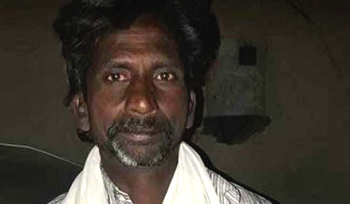
Desperate to return home, Indian expat walked 1,000 km to Dubai court

November 29, 2016

Dubai, Nov 29: An Indian expatriate in Dubai walked a total of over 1,000 km for over two years to attend court proceedings in a bid to return home, a newspaper reported on Tuesday.

DubaiJagannathan Selvaraj, 48, who hails from Tiruchirappalli in Tamil Nadu, told the Khaleej Times that he braved traffic, heat, sandstorm and exhaustion to attend the labour court proceedings.

Mr Selvaraj began his court journeys after his mother died in Tamil Nadu and he was denied permission to go and attend her funeral.

His case went on for almost two years. Mr Selvaraj said he must have walked at least 20 times to Karama district in Dubai from Sonapur and back, every time covering a distance of over 50 km in four hours.

He said he could not afford a bus journey from his Sonapur accommodation on the outskirts of Dubai to the labour court.

Selvaraj told the Khaleej Times that he had been living in a public park for several months and was desperate to return to India.

Comments

Mohammed SS
 - 
Wednesday, 30 Nov 2016

Fake Story.....!!!

suleman
 - 
Wednesday, 30 Nov 2016

Hype in the story. 12 KM/ Hr. He might be jogging.

Add new comment

  • Coastaldigest.com reserves the right to delete or block any comments.
  • Coastaldigset.com is not responsible for its readers’ comments.
  • Comments that are abusive, incendiary or irrelevant are strictly prohibited.
  • Please use a genuine email ID and provide your name to avoid reject.
News Network
July 15,2020

Bengaluru, Jul 15: Toyota Kirloskar Motor (TKM) has announced temporary halt of production at its plant in Bidadi, which is on the outskirts of Bengaluru.

“Halting production will be from July 14 (second shift) to July 22 (first shift) and this is in accordance with the directives issued by the Government of Karnataka as well as to support the Govt. in their constant efforts to flatten the curve of the rising Covid-19 positive cases in Karnataka,” a statement from the company said.

Bengaluru Urban and Rural, and other districts are, are under lockdown from 8 pm on July 14 to 5 am on July 22.

“Since the onset of the pandemic, TKM has adopted a very proactive and multi-faceted approach to safeguard the physical as well as the mental well-being of all its stakeholders including customers, its employees, dealer and supplier partners,” the company said.

“The office staff at TKM’s corporate and regional offices, continue to work from home to help mitigate risks. In addition to the safety protocols that are being followed, TKM has provided safety kits containing essential items like sanitisers, 3 ply masks and handwashes to 5000 employees, their family members and their neighbourhoods.

“TKM understands the urgency of the situation. During these difficult times, TKM is taking obligatory actions to contain further spread and will continue to respond in accordance with guidance issued by the Government and its internal standards,” it added.

Comments

Add new comment

  • Coastaldigest.com reserves the right to delete or block any comments.
  • Coastaldigset.com is not responsible for its readers’ comments.
  • Comments that are abusive, incendiary or irrelevant are strictly prohibited.
  • Please use a genuine email ID and provide your name to avoid reject.
Media Release
February 14,2020

Veteran journalist P. Sainath has said that the nation is in a crisis. And this crisis is not limited to just the rural area. It has become a national crisis at various areas such as agriculture, education, economy, job creation etc.

He was delivering the endowment lecture on the topic ‘Indian democracy at the post-liberalization and post-truth era’ at Media Manthan 2020 organized by the PG department of journalism and mass communication at St Aloysius College (Autonomous). 

Mr Sainath said that the many policies adopted in the 90s led to India becoming unusually unequal. Referring to the speech Ambedkar had made at the Constituent Assembly while handing over the draft of the Constitution, Mr Sainath said, “Ambedkar had warned about the weakness of Indian democracy that liberty without equality allows the supremacy of a few over the multitude. Liberty, equality and fraternity must be kept together as we cannot have one without the other.” 

Mr Sainath stated that the agrarian crisis was no longer about the loss of productivity, employment or about farmer suicide; it was a societal, civilizational crisis. Commenting on the lopsided policies such as cow-slaughter ban, he explained how cow slaughter ban had adversely affected many industries due to their interdependency. While Muslims who slaughtered cows were rendered helpless, the cattle traders who were mostly OBCs lost their earnings as the cattle prices crashed. An important industry like Kolhapur sandals industry in Maharashtra went bankrupt as a result of the cow slaughter ban in Maharashtra. He said the policymakers had no idea how the rural industries were interconnected. Demonetisation too devastated the rural economy as 98 percent of rural transactions happen through cash. 

Mr Sainath also spoke about the crisis of inequality which affects the Dalits and the Adivasis far more than anyone else as 90 percent of the rural households take home less than Rs 10,000/- per month. “Women are yet another group whose labour is never counted in the gross domestic product. Women and girls globally do unpaid work which amounts to about 12.5 billion working hours per year. Monetarily speaking, this is worth 10.8 trillion dollars,” Mr Sainath added. 

Speaking about the crisis of jobs Mr Sainath said that major companies were laying off employees just to create more profits for the investors and the adoption of artificial intelligence in the industry would further destroy millions of jobs.

Rector of St Aloysius College Institutions Fr Dionysius Vaz SJ, Principal Dr (Fr) Praveen Martis SJ, HOD of Journalism and Mass Communication department Dr (Fr) Melwyn Pinto SJ were present.

‘Veerappan and Vijay Mallya’s business models are interesting!’

Addressing the gathering during his endowment lecture on Friday, Mr Sainath made an interesting comment on the so called ‘revenue model’. “Whenever I visit IIMs and IITs for lectures on my PARI project, the students there ask me what my revenue model for my project is. I tell them that I do not have a revenue model. In fact, journalism does not begin with a revenue model. Gandhiji, Ambedkar, Bhagat Singh were all great journalists. But they did not have a revenue model,” Mr Sainath said.

On a lighter note, he said that the best revenue model that he liked was that of forest brigand Veerappan and liquor baron Vijay Mallya. “Veerappan ruled the forest for forty years and from the top ministers to the villagers he could dictate terms and liver royally. Similarly, Mallya’s revenue model was to steal the banks and run away abroad and live like a king,” Mr Sainath added.

Journalism is not and can never be a business. It is a calling, he opined. While newspaper can be a business, television can be a business, journalism per se cannot be reduced to a business. “Unfortunately today, journalists are recruited on a contract basis and they have no bargaining power; and there are no unions to fight for their cause. Hence, they are at the mercy of the corporate media houses for their survival and are made to write stories that cannot be called journalism,” Mr Sainath said.

Answering a question as to the pressures he faced as a journalist, he said that external pressures from the government or others could be very well handled. It is the internal pressures from once own media house that journalists find it difficult to manage.


 

Comments

Add new comment

  • Coastaldigest.com reserves the right to delete or block any comments.
  • Coastaldigset.com is not responsible for its readers’ comments.
  • Comments that are abusive, incendiary or irrelevant are strictly prohibited.
  • Please use a genuine email ID and provide your name to avoid reject.
News Network
February 4,2020

Bengaluru, Feb 4: Taking the state government to task, the Karnataka High Court on Monday opined there was a need to rehabilitate or compensate migrant workers whose homes in Tubarahalli and Kundalahalli were demolished by a BBMP engineer last month.

On January 19, the Bruhat Bengaluru Mahanagara Palike (BBMP) assistant executive engineer at Marathahalli had taken up a demolition drive stating that the migrant workers residing in the area were “illegal Bangladeshis”.

A division bench led by Chief Justice Abhay S Oka was hearing a petition by the People’s Union for Civil Liberties which contended that the evacuation of the workers was illegal. Stressing the need for relief, the court directed the state government to come clean on its stance and adjourned the hearing to February 10.

Advocate General Prabhuling K Navadgi submitted that the Union government had issued a circular last year to ascertain the presence of illegal Bangaladesh migrants. “On the basis of this circular, the BBMP officials had written a letter to Marathahalli police sub-inspector on January 18. Based on this letter, the residents in huts were evicted in a civilised manner,” he stated.

The bench, however, differed with the submission. “Who identified them as Bangladeshis before the eviction? Which is the competent authority to do so? Which police officer took up the inquiry?” the bench questioned.

The court also asked whether the government would take up similar eviction drives against illegal buildings of the rich. It also expressed displeasure over the action taken against the BBMP engineer.

“Instead of sending him home, you say you have transferred him. We can’t be mute spectators,” the bench said.

The court did not mince words as it castigated the authorities for failing to act judiciously. “The police and the BBMP are blaming each other. Your action appears to be dangerous. Going by the state of things, it seems that everything is not in order,” it said.

Comments

Add new comment

  • Coastaldigest.com reserves the right to delete or block any comments.
  • Coastaldigset.com is not responsible for its readers’ comments.
  • Comments that are abusive, incendiary or irrelevant are strictly prohibited.
  • Please use a genuine email ID and provide your name to avoid reject.