



Diet sodas might not raise diabetes risk

November 16, 2016

Nov 16: Drinking colas and other sugary drinks is tied to an increased risk of so-called pre-diabetes, a precursor to full-blown disease, but diet soda is not, a recent study suggests.
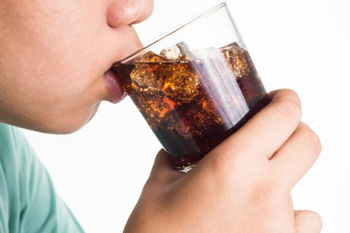
dietPrevious studies on the link between diet sodas and diabetes have been mixed; some research pointing to a potential connection has suggested this relationship may be explained at least in part by soda drinkers being overweight or obese.

In the current study, however, adults who routinely consumed at least one can of soda or other sugar-sweetened beverages a day were 46 percent more likely to develop elevated blood sugar levels than people who rarely or never drink cola.

“Emphasis should be placed on substituting sugar-sweetened beverages with water, unsweetened teas, or coffee,” said senior study author Nicola McKeown, a nutrition researcher at Tufts University in Boston.

“For daily consumers of sugary drinks, kicking the habit may be a difficult challenge, and incorporating an occasional diet soda, while increasing fluids from other sources, may be the best strategy to ultimately remove sugar-sweetened beverages from the diet,” McKeown added by email.

Globally, about one in nine adults have diabetes, and the disease will be the seventh leading cause of death by 2030, according to the World Health Organization. Most of these people have Type 2, or adult-onset, diabetes, which happens when the body can't properly use or make enough of the hormone insulin to convert blood sugar into energy.

People with blood sugar levels that are slightly elevated, but not high enough for a diabetes diagnosis, are sometimes described as having “pre-diabetes” because many will go on to develop diabetes. In the current study, researchers examined data collected on 1,685 middle-aged adults over about 14 years.

At the start of the study, none of the participants had diabetes or pre-diabetes. They were 52 years old on average and typically overweight.

Participants completed questionnaires detailing what they ate and drank during the study period. Sugar-sweetened beverages were defined as colas and other carbonated beverages, as well as drinks such as lemonade and fruit punch. This didn’t include fruit juice.

People who drank the most sodas – typically around six 12-ounce cans a week – had a much greater risk of developing elevated blood sugar levels than other participants after adjusting for factors such as age, gender and weight, researchers report in the Journal of Nutrition.

Higher consumption of soda and other sugar-sweetened beverages was also associated with insulin resistance, a reduced ability to respond to the hormone insulin that is another risk factor for developing diabetes.

Even after accounting for changes in weight and other aspects of diet, the relationships between sugar-sweetened beverages and these metabolic risk factors for diabetes persisted.

Diet soda intake—defined as low-calorie cola or other carbonated low-calorie beverages— was not associated with elevated blood sugar or insulin resistance.

The study doesn’t prove soda or sugary drinks cause diabetes.

Another limitation of the study is that participants may not be representative of a typical U.S. adult, the authors note. People in the study were mostly white, middle aged and more likely to be women. They also tended not to be as overweight or thick around the middle as many U.S. adults, the authors point out.

Because pre-diabetic elevated blood sugar can often be reversed before it advances to full-blown disease, the findings suggest it makes sense for people to avoid regular sodas to minimize their risk of developing diabetes, the researchers conclude.

“Sugar sweetened beverages have been shown to increase weight gain and risk of diabetes – including prediabetes,” Laura Rosella, a public health researcher at the University of Toronto who wasn’t involved in the study, said by email.

The current study findings add to a large body of evidence suggesting that the sugar and calories in soda can contribute to the risk of obesity and diabetes, noted Dr. Robert Cohen, a researcher at the University of Cincinnati College of Medicine who wasn’t involved in the study.

“I wouldn’t necessarily seek out diet drinks but the choice of non-calorie containing diet drinks is not associated with further insulin resistance or pre-diabetes in the way that calorie containing drinks are,” Cohen said by email.

Comments

Add new comment

  • Coastaldigest.com reserves the right to delete or block any comments.
  • Coastaldigset.com is not responsible for its readers’ comments.
  • Comments that are abusive, incendiary or irrelevant are strictly prohibited.
  • Please use a genuine email ID and provide your name to avoid reject.
Agencies
June 4,2020

The World Health Organisation on Wednesday said that anti-malarial drug hydroxychloroquine (HCQ) will return to the solidarity trial for the potential treatment of coronavirus disease.

At a press conference in the WHO headquarters in Geneva, Director General Tedros Adhanom Ghebreyesus said: "On the basis of the available mortality data, the members of the committee recommended that there are no reasons to modify the trial protocol. The Executive Group received this recommendation and endorsed continuation of all arms of the solidarity trial, including hydroxychloroquine."

The world health body had temporarily suspended the usage of HCQ from the solidarity trial for coronavirus treatment on May 25 soon after a study published in one of the most reliable medical journals, which had suggested that the drug could cause more fatalities among COVID-19 patients.

However, the WHO chief said that the decision was taken as a precaution while the safety data was reviewed.

Ghebreyesus also said that the Data Safety and Monitoring Committee will continue to closely monitor the safety of all therapeutics being tested in the solidarity trial.

"So far, more than 3,500 patients have been recruited in 35 countries. WHO is committed to accelerating the development of effective therapeutics, vaccines and diagnostics as part of our commitment to serving the world with science, solutions and solidarity," he said.

Soon after HCQ was suspended from the trial, the Indian government had said that the antimalarial drug has been known for its benefits for a long time and its usage will be continued on the frontline workers, including police and healthcare professionals, as prophylaxis. The government had also said that studies were being conducted and the drug would be included in the clinical trial also for the treatment of coronavirus disease.

US President Donald Trump also had strongly advocated the use of HCQ and called it a "game-changer". He went to the extent of saying that he had taken the medicine.

Launched by WHO and partners, solidarity trial is an international clinical trial to find an effective treatment for COVID-19, including drugs to slow the progression of the disease or improve survival. The trial, which enrols patients from different countries, "will compare four treatment options against standard of care to assess their relative effectiveness against COVID-19", said WHO. 

Comments

Add new comment

  • Coastaldigest.com reserves the right to delete or block any comments.
  • Coastaldigset.com is not responsible for its readers’ comments.
  • Comments that are abusive, incendiary or irrelevant are strictly prohibited.
  • Please use a genuine email ID and provide your name to avoid reject.
Agencies
May 25,2020

Singapore, May 25: COVID-19 patients are no longer infectious after 11 days of getting sick even though some may still test positive, according to a new study by infectious disease experts in Singapore.

A positive test "does not equate to infectiousness or viable virus," a joint research paper by Singapore's National Centre for Infectious Diseases and the Academy of Medicine, Singapore said. The virus "could not be isolated or cultured after day 11 of illness."

The paper was based on a study of 73 patents in the city-state.

The latest findings may have implications on the country's patient discharge policy. The discharge criteria is currently based on negative test results rather than infectiousness.

Singapore's strategy on managing COVID-19 patients is guided by the latest local and international clinical scientific evidence, and the Ministry of Health will evaluate if the latest evidence can be incorporated into its patient clinical management plan, according to a report by the Straits Times.

So far, 13,882, or about 45% of the total 31,068 Covid-19 patients in Singapore have been discharged from hospitals and community facilities. Singapore reported 642 new Covid-19 cases as of noon on Saturday.

The government has been actively screening pre-school staff as it prepares to reopen pre-schools from June 2. On Friday, two pre-school employees tested positive for the novel coronavirus, bringing the total number of confirmed cases among pre-school staff to seven, according to the Ministry of Health.

Comments

Add new comment

  • Coastaldigest.com reserves the right to delete or block any comments.
  • Coastaldigset.com is not responsible for its readers’ comments.
  • Comments that are abusive, incendiary or irrelevant are strictly prohibited.
  • Please use a genuine email ID and provide your name to avoid reject.
Agencies
May 17,2020

Geneva, May 17: Spraying disinfectant on the streets, as practised in some countries, does not eliminate the new coronavirus and even poses a health risk, the World Health Organization (WHO) warned on Saturday.

In a document on cleaning and disinfecting surfaces as part of the response to the virus, the WHO says spraying can be ineffective. "Spraying or fumigation of outdoor spaces, such as streets or marketplaces, is... not recommended to kill the Covid-19 virus or other pathogens because disinfectant is inactivated by dirt and debris," explains the WHO.

"Even in the absence of organic matter, chemical spraying is unlikely to adequately cover all surfaces for the duration of the required contact time needed to inactivate pathogens." The WHO said that streets and pavements are not considered as "reservoirs of infection" of Covid-19, adding that spraying disinfectants, even outside, can be "dangerous for human health".

The document also stresses that spraying individuals with disinfectants is "not recommended under any circumstances".

"This could be physically and psychologically harmful and would not reduce an infected person's ability to spread the virus through droplets or contact," said the document.

Spraying chlorine or other toxic chemicals on people can cause eye and skin irritation, bronchospasm and gastrointestinal effects, it adds.

The organisation is also warning against the systematic spraying and fumigating of disinfectants on to surfaces in indoor spaces, citing a study that has shown it to be ineffective outside direct spraying areas.

"If disinfectants are to be applied, this should be done with a cloth or wipe that has been soaked in disinfectant," it says.

The SARS-CoV-2 virus, the cause of the pandemic that has killed more than 300,000 people worldwide since its appearance in late December in China, can attach itself to surfaces and objects.

However, no precise information is currently available for the period during which the viruses remain infectious on the various surfaces.

Studies have shown that the virus can stay on several types of surfaces for several days. However, these maximum durations are only theoretical because they are recorded under laboratory conditions and should be "interpreted with caution" in the real-world environment.

Comments

Add new comment

  • Coastaldigest.com reserves the right to delete or block any comments.
  • Coastaldigset.com is not responsible for its readers’ comments.
  • Comments that are abusive, incendiary or irrelevant are strictly prohibited.
  • Please use a genuine email ID and provide your name to avoid reject.