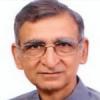
Dr Arathi Krishna interacts with non-resident Kannadigas in Riyadh, assures govt’s support

coastaldigest.com news network
March 6, 2018

Riyadh: Dr Aarti Krishna, Deputy Chairperson, Non Resident Indian Forum, Karnataka govt, during her recent visit to Kingdom of Saudi Arabia, interacted with Kannadiga expatriates in Riyadh. This is the first such event ever held in Riyadh.

Addressing over 700 non-resident Kannadigas on February 23, Dr Arathi Krishna said that most of the demands of the Karnataka NRIs are very genuine and promised to take-up with the Chairman of KNRI Forum, the Chief Minister of Karnataka Siddaramiah.

She stressed that the government of Karnataka would fulfill the aspirations and needs of the people of Karnataka in Riyadh. She announced that roll out of NRK card for Karnataka NRIs is on the anvil and will be executed very soon. She said that the government of Karnataka this year has allocated budget for NRI welfare activities. She informed that Karnataka NRI Forum has already set up NRI Welfare Centers in Commissioner Office at each district in Karnataka. She assured that her government would make necessary arrangements for Karnataka NRIs returning from Saudi Arabia on final exit.

Santhosh Shetty Ardi, President of Karnataka NRI Forum, Riyadh, while delivering welcome speech recalled the vast experience and determination of Dr Arathi Krishna and apprised the audience of her contribution to the Kannadigas staying globally.

He expressed optimism in her efforts to address genuine issues pending for NRIs, Santosh Shetty also assisted Dr. Arthi Krishna in answering some questions raised by audience on her behalf. Shetty also thanked Ahmed Javed, Ambassador of India in Saudi Arabia and Anil Nautial, Community Welfare Councilor Indian Embassy for giving opportunity showcase the theme “ONE STATE MANY WORLDS” - Karnataka’s culture, tradition, people and their progress in Janadriyah Festival. India is the guest of honor country in this magnificent Saudi cultural festival this year.

Dr Anwar Khursheed, Advisor, KNRI Forum Riyadh delivered a short speech outlining his experience in KSA spread over four decades. He stressed the need to be united and exhibit the solidarity of Karnataka NRIs in Riyadh. He conveyed to the visiting dignitary Dr. Arathi that Indians are very well known and respected for being law abiding and hardworking expatriate community in Saudi Arabia.

A memorable memento of appreciation was presented to Dr. Arathi Krishna by the dignitaries present on the dais on behalf of Kannadigas in Riyadh.

Many Karnataka organizations participated and contributed financially to make this event highly successful including, Karnataka NRI Forum, Karavali Welfare Association, JF Riyadh, Karnataka Cultural Forum Riyadh (KCF), PANORAMA, NRI Forum Riyadh, NRI Muslim DK, Khidma Foundation, Mangalore Cricket Association,

Konkan Ghar Riyadh, Hidaya Foundation, Dakshina Kannada Muslim Okkuta Riyadh, Karnataka Welfare Association, Katipalla Muslim Youth Association, Bhatkal Muslim Welfare Association, BISMI,  BARSA ,ISF,and Indian Fraternity Forum.

Well-known entities in Riyadh, such as Friendi Mobiles, Taj Restaurant, Kadesiah Medical Center co-sponsored the event.

Karnataka NRI Forum Riyadh, office bearers Santhosh Shetty Ardi , President, Roshan Shabbir, Treasurer, Usman Kunjathur, Secretary, Nazir Ahmad Joint Secretary, Irfan Sheikh Mani, coordinator, Dr. Syed Anwar Khursheed and Dr. Sayeed Mohiuddin, Advisors graced their presence on the dais along with the Chief Guest, Dr. Arathi Krishna.

Dr. Arathi Krishna had personal interaction with office bearers of the different Organizations individually and heard patiently the issues faced by them. She promised to resolve the problems faced by Karnataka NRIs in Saudi Arabia and to maximize the facilities for returning NRIs for their rehabilitation, children’s education, loan and other legal support.

Vote of thanks was proposed by KNRI Forum, Treasurer, Roshan Shabbir. He extended his thanks and appreciation to Dr. Arthi Krishna in her dedication to visit Saudi Arabia and assured all support required by NRIs in building vibrant Karnataka.

Further, visiting dignitary paid avisit to Janadriyah Cultural Festival as “Representative of the people and Government of Karnataka” and appreciated the efforts and hard work done by Indian Community. She was welcomed at Janadriyah Festival by ShriAnil Nautial, Community Welfare Officer of the Indian Embassy, Riyadh.

Comments

sam
 - 
Wednesday, 7 Mar 2018

Great... good intiative by karnataka govt. But what sort of benefit govt provide for returning NRI'S no one knows. No officials  of commissioner office knows about this. And site is not working to register. Is anyone can answer about the actual  facilities  or its only publicity.

Add new comment

  • Coastaldigest.com reserves the right to delete or block any comments.
  • Coastaldigset.com is not responsible for its readers’ comments.
  • Comments that are abusive, incendiary or irrelevant are strictly prohibited.
  • Please use a genuine email ID and provide your name to avoid reject.
News Network
February 24,2020

Bengaluru, Feb 24: Census authorities in Karnataka have requested deputy commissioners in the state’s districts to hold outreach and awareness campaigns about the National Population Register (NPR), as they fear misgivings about the exercise could hurt the forthcoming enumeration of population.

The house-listing phase of the Census and updating of NPR will be rolled out simultaneously by mid-April in the BJP-ruled state.

About 1,50,000 enumerators will handle the massive exercise.

Officials believe widespread awareness will help address concerns about the NPR data-gathering process and make people cooperate with enumerators when they visit houses for both NPR and census work.

“Sensing the kind of questions that enumerators may face when they do house visits, in all video conferences with deputy commissioners of districts, we have requested to establish contact with local representatives,” SB Vijay Kumar, director of Census Operations in Karnataka told news agency. “We have asked them to organise outreach programmes to ensure that people’s doubts are resolved before the information gathering work begins,” he added.

Census operations are handled by the Union home ministry. Several district officials are said to have raised concerns about the possibility of people refusing to share information when the work on the census and NPR begins in two months. This would affect the quality of the census work, making the exercise incomplete.

news channel earlier reported that people in parts of Karnataka had declined to share personal information with officials visiting households in connection with government programmes, suspecting them of gathering data for the yet-to-be unveiled National Register of Citizens, following enactment of the Citizenship Amendment Act (CAA) recently.

Kumar said district authorities will train and sensitise enumerators to tread carefully while gathering information. Enumerators will be told not to demand information but seek it gently.

“We will tell enumerators to proactively engage with people. For instance, if an old man in a village does not know his exact date or place of birth, the enumerator may engage in a conversation with the person that may elicit some anecdotes and roughly establish the year and the place of birth,” the census director said.

As of now, the NPR questionnaire has 21queries, but officials say it has not yet been finalised.

With most of the census and NPR data gathering and storage happening digitally this time, the challenge before census officials is to convince people that the data would remain safe.

“Individual data is sealed and all that we can see is collective data. The information is consolidated and tailor-made. We are telling district officials to create awareness about data safety as well,” Kumar said.

Comments

Add new comment

  • Coastaldigest.com reserves the right to delete or block any comments.
  • Coastaldigset.com is not responsible for its readers’ comments.
  • Comments that are abusive, incendiary or irrelevant are strictly prohibited.
  • Please use a genuine email ID and provide your name to avoid reject.
Ram Puniyani
June 29,2020

In Minneapolis, US an African American, George Floyd lost his life as the white policeman, Derek Chauvin, caught hold of him and put his knee on his neck. This is a technique developed by Israel police. For nine long minutes the knee of the while policeman was on the neck of George, who kept shouting, I can’t breathe.

Following this gruesome murder America erupted with protests, ‘Black lives matter’. The protestors were not just African Americans but also a large section of whites. Within US one police Chief apologized for the act of this. In a touching gesture of apology the police force came on its knees. This had reverberations in different parts of the World.

The act was the outcome of the remnants of the racial hatred against blacks by the whites. It is the hatred and the perceptions which are the roots of such acts of violence. What was also touching that the state of democracy in US is so deep that even the police apologized, the nation, whites and blacks, stood up as a sensitive collective against this violence.

US is not the only country where the brutal acts of violence torment the marginalized sections of society. In India there is a list of dalits, minorities and adivasis who are regularly subjected to such acts. But the reaction is very different. We have witnessed the case of Tabrez Ansari, who was tied to the pole by the mob and beaten ruthlessly. When he was taken to police station, police took enough time to take him to hospital and Tabrez died.

Mohsin Sheikh, a Pune techie was murdered by Hindu Rashtra Sena mob, the day Modi came to power in 2014. Afrazul was killed by Shambhulal Regar, videotaped the act released on social media. Regar believed that Muslims are indulging in love Jihad, so deserve such a fate. Mohammad Akhlaq is one among many names who were mob lynched on the issue of beef cow. The list can fill pages after pages.

Recently a young dalit boy was shot dead for the crime of entering a temple. In Una four dalits were stripped above waste and beaten mercilessly. Commenting on this act the Union Minister Ramvilas Paswan commented that it is a minor incident. Again the list of atrocities against dalits is long enough. The question is what Paswan is saying is the typical response to such gruesome murders and tortures. In US loss of one black life, created the democratic and humane response. In India there is a general silence in response to these atrocities. Some times after a good lapse of time, the Prime Minister will utter, ‘Mother Bharati has lost a son’. Most of the time victim is blamed. Some social groups raise their voice in some fora but by and large the deafening silence from the country is the norm.

India is regarded as the largest democracy. Democracy is the rule of law, and the ground on which the injustices are opposed. In America though the present President is insensitive person, but its institutions and processes of democratic articulations are strong. The institutions have deepened their roots and though prejudices may be guiding the actions of some of the officers like the killer of George, there are also police officers who can tell their President to shut up if he has nothing meaningful to say on the issue. The prejudices against Blacks may be prevalent and deep in character, still there are large average sections of society, who on the principles of ‘Black lives matter’. There are large sections of vocal population who can protest the violation of basic norms of democracy and humanism.

In India by contrast there are multiple reasons as to why the lives of Tabrez Ansari, Mohammad Akhlaq, Una dalit victims and their likes don’t matter. Though we claim that we are a democracy, insensitivity to injustices is on the rise. The strong propaganda against the people from margins has become so vicious during last few decades that any violence against them has become sort of a new normal. The large populace, though disturbed by such brutalities, is also fed the strong dose of biases against the victims. The communal forces have a great command over effective section of media and large section of social media, which generates Hate against these disadvantaged groups, thereby the response is muted, if at all.

As such also the process of deepening of our democracy has been weak. Democracy is a dynamic process; it’s not a fixed entity. Decades ago workers and dalits could protest for their rights. Now even if peasants make strong protests, dominant media presents it as blocking of traffic! How the roots of democracy are eroded and are visible in the form where the criticism of the ruling dispensation is labelled as anti National..

Our institutions have been eroded over a period of time, and these institutions coming to the rescue of the marginalized sections have been now become unthinkable. The outreach of communal, divisive ideology, the ideology which looks down on minorities, dalits and Adivasis has risen by leaps and bounds.

The democracy in India is gradually being turned in to a hollow shell, the rule of law being converted in to rule of an ideology, which does not have faith in Indian Constitution, which looks down upon pluralism and diversity of this country, which is more concerned for the privileges of the upper caste, rich and affluent. The crux of the matter is the weak nature of democracy, which was on way to become strong, but from decades of 1980s, as emotive issues took over, the strength of democracy started dwindling, and that’s when the murders of the types of George Floyd, become passé. One does complement the deeper roots of American democracy and its ability to protect the democratic institutions, which is not the case in India, where protests of the type, which were witnessed after George Floyd’s murder may be unthinkable, at least in the present times. 

Comments

Add new comment

  • Coastaldigest.com reserves the right to delete or block any comments.
  • Coastaldigset.com is not responsible for its readers’ comments.
  • Comments that are abusive, incendiary or irrelevant are strictly prohibited.
  • Please use a genuine email ID and provide your name to avoid reject.
News Network
August 7,2020

Bengaluru, Aug 7: Amid the rising number of COVID-19 cases in Karnataka, the state's health department issued fresh guidelines for the disposal of bodies of COVID patients.

"Although an increased risk of COVID infection from a dead body to health workers or family members who follow standard precautions while handling the body is unlikely, the lack of scientific data requires the utmost care to avoid the inadvertent spread of COVID-19 during these times," the statement from the health department's press release read, emphasising on the dignity of the dead and the religious and cultural tradition.

The 23-page press release elaborated on guidelines regarding testing, handling of dead bodies and other specificities in relation to the management of COVID-19 bodies.

"Testing should not be insisted in every case of death, but only when they have a recorded history of influenza-like symptoms. The body should be handed over to the family members/ relatives in a dignified manner immediately after swab collection and hospitals should provide handouts with a list of dos and don'ts in English and Kannada laying down relevant information," the statement said.

It added, "At the mortuary, health care workers, mortuary staff and the family of the deceased body shall not come in direct contact with the dead body and must wear full personal protective equipment (PPE). If the family or relative are for any reason unable to cremate or bury the body, the local health authority shall arrange for the dignified last rites as per the religious traditions of the family."

Regarding autopsies (post mortem) on COVID-19 bodies, the state department said that they should be avoided, except in necessary circumstances.

The statement also gave detailed guidelines regarding the appropriate recording of COVID-19 deaths in line with the Indian Council of Medical Research (ICMR) guidelines.

Additionally, the health department made a statement about the admission procedure for COVID positive patients referred by other district administrations saying, "It is now mandatory for all the referrals from the BBMP admission and discharge of COVID positive patients to be done through the online COVID Hospital Bed Management System (CHBMS)."

The state's count of coronavirus cases was 1,51,449 in the past 24 hours.

So far, a total of 2,804 people have died due to COVID-19 in the state, while the average recovery rate in Karnataka is 49.3 per cent.

Comments

Add new comment

  • Coastaldigest.com reserves the right to delete or block any comments.
  • Coastaldigset.com is not responsible for its readers’ comments.
  • Comments that are abusive, incendiary or irrelevant are strictly prohibited.
  • Please use a genuine email ID and provide your name to avoid reject.