'Drunk' Delhi Woman Rams SUV Into Another Car; daughter Goes Blind in an Eye, Mother Killed

Agencies
November 11, 2018

New Delhi, Nov 11: A 38-year-old woman was killed and her daughter was seriously injured after their four-wheeler was hit by a speeding vehicle, which was allegedly being driven by an inebriated woman, in west Delhi's Punjabi Bagh area, police said on Saturday. The deceased was identified as Poonam Sardana and her daughter Chetanya (13).

The accident took place on the intervening night of Friday and Saturday.

On November 9, the police were informed about an accident on the Punjabi Bagh Flyover. Two damaged vehicles were found on the spot.

Sudhir Sardana along with his family, including Poonam and Chetanya, were returning from Chhatarpur Temple and driving towards their house in Adarsh Nagar when a vehicle bearing an Uttar Pradesh registration number lost control, jumped over the road divider and rammed their car, police said.

It was found that the erring vehicle was being driven by one Shivani Malik (22). She was accompanied by three of her friends, who allegedly had alcoholic drinks at Connaught Place, and were driving towards Gurugram, police added.

"It is suspected that Shivani was driving at a high speed. She lost control of the vehicle, and hit the divider before crossing over to the other lane and hitting Sardana's car from the rear-end," police said.

Shivani's vehicle then upturned over another car being driven by one Tarun Bajaj, who escaped with minor injuries, they added.

The injured were rushed to a hospital where Poonam Sardana (38) was declared brought dead while her 13-year-old daughter's eye was severely hurt. Poonam's cornea was used to give vision to her daughter, police said.

The accused, Shivani Malik, is a resident of Ghaziabad, Uttar Pradesh. She was allegedly inebriated and was on her way to Gurugram Club along with friends, deputy commissioner of police (west) Monika Bhardwaj said.

The accused woman works at a salon in Noida. She was arrested and a case was registered against her, officials said.

Comments

kAMAL
 - 
Tuesday, 13 Nov 2018

Indian women are considering as if they are western country women and feel proud to follow their life style.    Indian girls have started drining alcohol, dancing till late night, dressing little clothes, smoking , enjoying open sex, living with partner without marriage etc etc.  this is definately ruin our society.  However, girls of so called high society thinks this is the right way of living.  shame on you.  You are deserting your life and harm others also.   The reckless driver in this case should be penalised heavility and the amount be given to the close family of the deceased. 

Add new comment

  • Coastaldigest.com reserves the right to delete or block any comments.
  • Coastaldigset.com is not responsible for its readers’ comments.
  • Comments that are abusive, incendiary or irrelevant are strictly prohibited.
  • Please use a genuine email ID and provide your name to avoid reject.
Agencies
July 2,2020

Tuticorin, Jul 2: The Crime Branch-Crime Investigation Department (CBCID) of Tamil Nadu police have arrested five policemen working in Sathankulam police station in Tuticorin district for the murder of P. Jeyaraj and his son J. Bennicks, officials said.

The CBCID also altered the first information report (FIR) registered on the death of Jeyaraj and Bennicks as a murder case from the earlier charge of suspicious death.

The five arrested policemen are: Inspector Sridhar, Sub-Inspectors Balakrishnan and Raghu Ganesh, Head Constable Murugan and Constable Muthuraj.

Ganesh was remanded to custody till July 16 on late Wednesday.

According to Inspector General CBCID Shankar, 12 teams have been formed to carry out the probe into the custodial death of father and son Jeyaraj and Bennicks.

Jeyaraj and Bennicks had been booked for not closing their mobile shop in time on June 19 by the Sathankulam police. They were sent to judicial custody and lodged in Kovilpatti jail on June 21.

Jeyaraj died on June 22 night and Bennicks on June 23 morning in judicial custody, allegedly due to the police torture.

The Madras High Court Bench in Madurai which took up the case suo moto had said there was prima facie evidence to register a murder case against the Sathankulam police officials.

The Kovilpatti Judicial Magistrate M.S. Bharathidasan who was asked to inquire into the case of brutal torture of AJeyaraj and his son Bennicks by the Sathankulam police on June 19 and their subsequent deaths had submitted is report to the High Court.

A woman police constable Revathy, at the Sathankulam police station, in her deposition before Bharathidasan had said that Jeyaraj and Bennicks were beaten with batons throughout the June 19 night.

According to Bharathidasan's report, Revathy also said the victims' blood stains were on the batons of the station police officials and on tables.

She said the batons and the tables should be secured so that the evidence is not lost, the report stated.

Expressing fear that she may be targeted later, Revathy was initially reluctant to sign a printout of her statement but later on being assured of her safety she signed the document.

The court also transferred the probe into the deaths of Jeyaraj and Bennicks to the Crime Branch Crime Investigation Department (CBCID) to gather and protect the evidence till the case is handed over to the Central Bureau of Investigation (CBI).

The High Court has initiated criminal contempt cases against three police officials - Additional Superintendent of Police Kumar, Deputy Superintendent of Police Prathapan and constable Maharajan - for their behaviour at the Sathankulam police station in front of Magistrate Bharathidasan.

Comments

Add new comment

  • Coastaldigest.com reserves the right to delete or block any comments.
  • Coastaldigset.com is not responsible for its readers’ comments.
  • Comments that are abusive, incendiary or irrelevant are strictly prohibited.
  • Please use a genuine email ID and provide your name to avoid reject.
News Network
May 28,2020

May 28: Abdul Kareem was forced out of school and into a life of odd jobs like repairing bicycles before he finally managed to pull his family out of abject poverty transporting goods across Delhi in a mini truck.

The job, and the slim financial security that came with it, was the first stepping stone to a better life.

All that is now gone as India reels under the economic impact of its protracted coronavirus lockdown. Mr Kareem's out of a job and stranded in his village in Uttar Pradesh with his wife and two children. Their minuscule savings from his Rs 9,000 a month job have been exhausted, and the money he saved for books and school uniforms is spent.

"I don't know what the job situation will be in Delhi once we go back," Mr Kareem said. "We can't stay hungry so I will do whatever I find."

At least 49 million people across the world are expected to plunge into "extreme poverty" -- those living on less than $1.90 per day -- as a direct result of the pandemic's economic destruction and India leads that projection, with the World Bank estimating some 12 million of its citizens will be pushed to the very margins this year.

Some 122 million Indians were forced out of jobs last month alone, according to estimates from the Center for Monitoring Indian Economy, a private sector think tank. Daily wage workers and those employed by small businesses have taken the worst hit. These include hawkers, roadside vendors, workers employed in the construction industry and many who eke out a living by pushing handcarts and rickshaws.

For Prime Minister Narendra Modi, who came to power in 2014 promising to lift the poorest citizens out of poverty, the fallout from the lockdown brings with it significant political risk. He won an even larger second term majority last year on the strength of his government's popular social programs that directly targeted the poor, such as the provision of cooking gas cylinders, power and public housing. The breadth and depth of this renewed economic pain will only increase the pressure on his government as it works to steer the country's economy back on track.

"Much of the Indian government's efforts to mitigate poverty over the years could be negated in a matter of just a few months," said Ashwajit Singh, managing director of IPE Global, a development sector consultancy that advises several multinational aid agencies. Noting that he did not expect unemployment rates to improve this year, Singh said: "More people could die from hunger than the virus."

Desperate Times

Mr Singh points to a United Nations University study estimating 104 million Indians could fall below the World Bank-determined poverty line of $3.2 a day for lower-middle-income countries. This will take the proportion of people living in poverty from 60% -- or 812 million currently, to 68% or 920 million -- a situation last seen in the country more than a decade ago, he said.

A World Bank report found the country had been making significant progress and was close to losing its status as the country with the most poor citizens. The impact of PM Modi's lockdown risks reversing those gains.

The World Bank and the CMIE estimates were published in late April and early May respectively. Since then the situation has only become grimmer, with harrowing images of people making desperate attempts to reach their villages, on crowded buses, the flatbeds of trucks and even on foot or on bicycles dominating media coverage.

The Rustandy Center for Social Sector Innovation at the University of Chicago Booth School of Business analyzed the unemployment data from the CMIE, collected through surveys covering about 5,800 homes across 27 states in April.

Researchers found rural areas were the hardest hit, and the economic misery was the result of the lockdown, rather than the spread of infections in the hinterland. More than 80% of households had experienced a drop income and many won't survive much longer without aid, they wrote in a report.

The government has promised cheap credit to farmers, direct transfer of money to the poor and eased access to food security programs -- but these help people who have some documentation, which many of the poorest don't. With millions of impoverished people now in transit across the country, the food security situation is dire -- news reports are emerging of people foraging through piles of rotting fruit or eating leaves.

Shattered Economy

The economy was already growing at its slowest pace in over a decade when the virus struck. The lockdown, which came into effect on March 25, has hammered it, stalling business activity and putting a lid on consumption, pushing the economy to what may be its first full-year contraction in more than four decades.

It's dire enough to warrant the country exiting its lockdown, as it has been doing incrementally since May 4, even as its infections are surging. India is now Asia's virus hotspot with infections crossing 151,000 according to data from Johns Hopkins University.

PM Modi, who has come under criticism for the pain inflicted on the poor, has said his government will spend $265 billion or about 10% of its GDP to help Asia's third-largest economy weather the pandemic's fallout. But experts say only a part of it is direct fiscal stimulus, and probably smaller than the total damage done to the economy during the lockdown period.

"What is especially worrying is the government's response," said Reetika Khera, an economics professor at the Indian Institute of Technology in Delhi. "The epidemic will magnify existing -- and already high -- inequalities in India."

Still, the economic measures aren't going to kick in for some time and industry will likely struggle to restart because of the flight of labour from industrial hubs.

And as the harsh summer unfolds more pain lies in store in the villages now dealing with returning migrant workers.

"There are no factories or industries here, there are just hills," said Surendra Hadia Damor, who had walked nearly 100 km from Ahmedabad, Gujarat, before a voluntary organisation drove him to his village in the neighboring state of Rajasthan. "We can survive for a month or two and then try and find a job nearby -- we will see what happens."


Comments

Add new comment

  • Coastaldigest.com reserves the right to delete or block any comments.
  • Coastaldigset.com is not responsible for its readers’ comments.
  • Comments that are abusive, incendiary or irrelevant are strictly prohibited.
  • Please use a genuine email ID and provide your name to avoid reject.
Agencies
July 29,2020

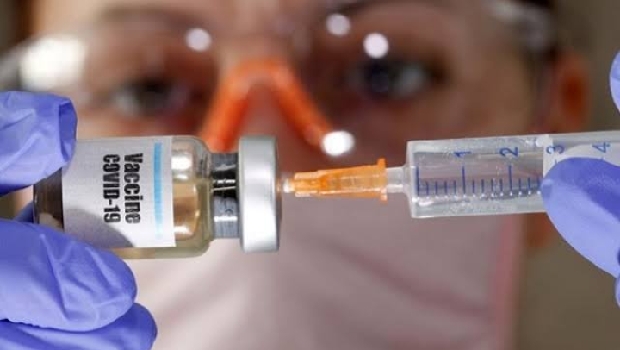
If everything goes as Russia’s expectation, it will be world’s first country to approve a coronavirus vaccine for widespread in the second week of August despite safety and efficacy concerns, according to a report. The adenoviral vector-based vaccine developed by Russian military and government researchers is currently in phase 2 trials.

According to a report from CNN, Russian officials are hoping to get approval for the COVID-19 vaccine developed by the Moscow-based Gamaleya Institute on Agust 10 or even before that. The officials told the outlet that the vaccine will be approved for public use with frontline healthcare workers receiving it first.

“It’s a Sputnik moment,” said Kirill Dmitriev, head of Russia’s sovereign wealth fund, which is financing Russian vaccine research, referring to the successful 1957 launch of the world’s first satellite by the Soviet Union, according to CNN.

“Americans were surprised when they heard Sputnik’s beeping. It’s the same with this vaccine. Russia will have got there first,” he was quoted as saying.

However, Russia is yet to release the scientific data on its coronavirus vaccine trials, hence, questions remain about the safety and efficacy of the vaccine, said the report. The vaccine is in the second phase of testing with developers planning to launch the phase 3 trials sometime after August 3.

Earlier, Interfax reported, citing Health Minister Mikhail Murashko, that the vaccine will be widely used in parallel with phase 3 trials. He said the country plans to vaccinate medics who are at high-risk for COVID-19 next month before clinical trials are completed.

Murashko added that individuals at higher risk of getting infected with the coronavirus such as older people or those with health conditions will also be prioritised for the vaccine, although he did not estimate or reveal when that would happen. The minister added 800 people will be recruited for the phase 3 trials.

Meanwhile, health officials were more cautious considering the fact that human testing of the vaccine is incomplete, and the state registration is expected to begin after August 3, reported The Moscow Times.

On Monday, Moderna and Pfizer announced the commencement of the final phase 3 trials of their candidate vaccines against the SARS-CoV-2 virus, which has so far claimed at least 654,477 lives and infected 16,514,500 people worldwide. 

Researchers will recruit up to 30,000 volunteers in separate trials both backed by the US government. India's first indigenous coronavirus vaccine, COVAXIN, is undergoing phase 1 human clinical trials across the country. More than 150 COVID-19 vaccines are being developed all over the world with at least six candidates already in late-stage clinical trials.

Comments

Add new comment

  • Coastaldigest.com reserves the right to delete or block any comments.
  • Coastaldigset.com is not responsible for its readers’ comments.
  • Comments that are abusive, incendiary or irrelevant are strictly prohibited.
  • Please use a genuine email ID and provide your name to avoid reject.