Eat slowly, maintain a food journal: 9 easy ways to avoid overeating

February 20, 2017

New Delhi, Feb 20: We often tend to overeat without knowing it. Eating more than what our body needs is the root cause of several chronic health problems which can be avoided albeit with a little care.

eatslow

Sonia Narang, nutrition expert of Oriflame India, here shares nine ways that can best help you to avoid overeating.

* Eat slowly

Chew every bite of your food properly. This is to slow us down when we eat. Research led by Mark Gold, MD at the University of Florida at Gainesville, US, has shown it takes 12 or more minutes for food satisfaction signals to reach the brain of a thin person, but 20 or more minutes for an obese person. Eating slowly ensures that these important messages have time to reach the brain.

* Be aware

Remain focused and aware of what you are eating. Usually overeating happens when you are concentrating on the things around you other than on the food, like reading newspaper or watching TV. The brain probably can’t register what is being put in the mouth and the pattern of eating, and then overeating continues.

* Make the first bites count

It is believed that maximum food enjoyment comes in the initial bites. After a few bites, taste buds start to lose their sensitivity to the chemicals in food that make it taste good. Satisfy your taste buds by really savoring those first few bites. This may help you stop eating when you’re physically comfortable.

* Keep up appearances of your food

Use a smaller plate and pay more attention to the presentation of a meal. This can increase your awareness of the food in front of you and help you stop eating when you are comfortable.

* Choose satisfying foods

Steer away from foods that give you a lot of calories for very little volume, such as milk shakes, cheese, and chocolate. The higher the fiber, protein, and/or water content of a food or meal, the more likely it is to be satisfying in your stomach without going overboard on calories.

* Maintain a food journal

This will help you identify your trigger points, your emotional eating and overeating. Writing it with the timings and portions will help you assess and win over those issues.

* Drink 10-12 glasses of water every day

Water keeps your system hydrated. It’s a no calorie liquid and will make you feel full physically. The chances of overeating can reduce significantly if you drink a glass of water every one hour.

* Get good sleep

Sleep deprivation is a stress by itself for the brain. Brain releases Cortisol, a stress hormone, when it does not get proper sleep. This leads to overeating. A sound sleep does a good repair of all the cells and tissues. Gives you better concentration.

* Get some exercise

A workout done for 30 to 45 minutes’ releases feel-good factor. You no longer depend on food only to feel good, hence the chances are that food is considered solely for nourishment and not as reward or solace.

Comments

Add new comment

  • Coastaldigest.com reserves the right to delete or block any comments.
  • Coastaldigset.com is not responsible for its readers’ comments.
  • Comments that are abusive, incendiary or irrelevant are strictly prohibited.
  • Please use a genuine email ID and provide your name to avoid reject.
News Network
January 31,2020

Jan 31: Cervical cancer could be eliminated worldwide as a public health issue within the next 100 years, according to two studies which may lead to better strategies for screening and vaccination against the malignant disease.

According to the studies, published in the journal The Lancet, more than 74 million cervical cancer cases, and 60 million deaths could be averted, and the disease eliminated in the 78 countries which have the highest disease burden.

The researchers, including those from Laval University in Canada, said cervical cancer is the second most frequent cancer among women in low-income and lower-middle-income countries (LMICs) with 2,90,000 (51 per cent) of the 5,70,000 new cases worldwide reported in women living in LMICs.

In the current studies, the scientists used the WHO draft strategy of cervical cancer elimination which defines plans for vaccination against the disease's causative agent, the human papillomavirus (HPV).

These plans, they explained, call for 90 per cent of girls to be vaccinated against HPV by 2030, and for 70 per cent of women to be screened for cervical cancer once or twice in their lifetime.

About 90 per cent of women with precancerous lesions, or cervical cancer are also advised to receive appropriate treatment, according to the WHO draft strategy, the scientists said.

In the second study, the research team analysed the impact of three elements of the WHO strategy on deaths from cervical cancer -- modelling the impact of scaling up cancer treatment, as well as vaccination and screening

"Our findings emphasise the importance of acting immediately to combat cervical cancer on all three fronts," said Karen Canfell from the University of Sydney in Australia, who co-led both the studies.

"In just 10 years, it's possible to reduce deaths from the disease by a third and, over the next century, more than 60 million women's lives could be saved. This would represent an enormous gain in terms of both quality of life, and lives saved," Canfell said.

By adding the two screening tests, and with the treatment of precancerous cervical lesions, cases of the cancer may drop by 97 per cent, and 72 million cervical cancer cases could be averted over the next century, the researchers said.

Scaling-up of appropriate cancer treatment could avert 62 million cervical cancer deaths, the study noted.

"For the first time, we've estimated how many cases of cervical cancer could be averted if WHO's strategy is rolled out and when elimination might occur," said Marc Brisson, study co-author from Laval University.

"Our results suggest that to eliminate cervical cancer it will be necessary to achieve both high vaccination coverage, and a high uptake of screening and treatment, especially in countries with the highest burden of the disease," Brisson added.

Based on the results of the studies, WHO's cervical cancer elimination strategy has been updated which will be presented for adoption at the World Health Assembly in May 2020, the scientists noted.

"If the strategy is adopted and applied by member states, cervical cancer could be eliminated in high income countries by 2040, and across the globe within the next century, which would be a phenomenal victory for women's health," Brisson said.

"However, this can only be achieved with considerable international financial and political commitment, in order to scale-up prevention and treatment," he added.

Comments

Add new comment

  • Coastaldigest.com reserves the right to delete or block any comments.
  • Coastaldigset.com is not responsible for its readers’ comments.
  • Comments that are abusive, incendiary or irrelevant are strictly prohibited.
  • Please use a genuine email ID and provide your name to avoid reject.
Dr G K Sudhakar Reddy
August 4,2020

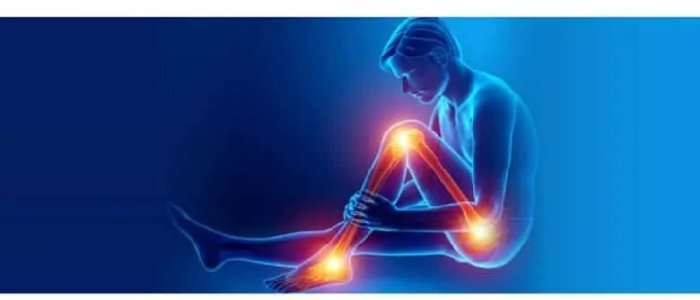
Being overweight or obese is now recognised as a serious cause of ill health and disability. There is a significant positive association between orthopaedic disorders and the level of obesity causing pain, deformity and difficulty in walking.

Excess body weight accumulation increases pressure on joints, particularly the hips, knees and ankles.

Here are a few type of  arthritis:

Osteoarthritis

It is a condition of damage/ wear and tear of the joint lining or cartilage. Obesity triggers this by loading excessive weight on the weight bearing joints like the knee and the hip. 

Knee Osteoarthritis

This is the most common arthritis especially in the Indian subcontinent.

While walking, an individual exerts 3 to 6 times pressure that of the body weight on the weight-bearing knee joint, which means in an obese with excess body weight, larger forces are exerted, which lead to higher risk of deterioration of cartilage.

In addition, there are excessive fat tissues that produce hormones and other factors that affect the joint cartilage metabolism and cause inflammation of the joints giving rise to joint pathology.  Leptin is one of the hormones causing knee osteoarthritis. 

Hip osteoarthritis

The force exerted across the hip is 3 times that of body weight. Hip osteoarthritis is caused by factors such as joint injury, increasing age and being overweight.    

Hand osteoarthritis

The observation that obese individual has a higher risk in having hand osteoarthritis has led to a hypothesis that the metabolic effect produced by fat tissue is the underlying factor. 

Osteoporosis

It is a progressive bone condition of decrease in bone mass and density (Bone Mineral Density or BMD) which can lead to an increased risk of fracture. Recent research suggests that obesity may accelerate bone loss. It is the amount of muscle mass which is seen in an active person, which accounts for bone strengthening effects and not due to the fat seen in a heavy person.

Low back pain

Low back pain from degenerative disc disease of the lumbar spine is one of the most disabling conditions in the community and overweight and obesity have the strongest association with seeking care for low back pain.

Managing Hip and Knee Osteoarthritis

Life style changes

If one is overweight, try to lose weight by doing more physical activity and eating a healthier diet. Regular exercise keeps you active and mobile and builds up muscle, thereby strengthening the joints and can improve symptoms. 

Pain Killers

Painkillers help with pain and stiffness for short term. They don’t affect the arthritis itself and won’t repair the damage to your joint. Creams and gels can be applied directly onto painful joints.

Nutritional Supplements

Glucosamine and chondroitin are nutritional supplements. Animal studies have found that glucosamine can both delay the breakdown of and repair damaged cartilage. However, there is insufficient evidence to support the use of glucosamine in humans and one can expect only a mild-to-moderate reduction in pain

Joint injections

If pain from osteoarthritis is severe joint steroid injections are injected into the joints that can reduces swelling and pain. The injections can start working within a day or so and may improve pain for several weeks or months. 

Hyaluronic acid injections, which help to lubricate your knee joint also give short term relief. In early stages. Stem cell treatment or cartilage regeneration procedures are being tried in young people with small defects, however it is still experimental and lacks long term evidence.

Surgery

May be recommended if you have severe pain or mobility problems.

Arthroscopy

If one has frequent painful locking/stiffening episodes especially in the knee joint, an operation to wash out loose fragments of bone and other tissue as joint can be performed by a minimally invasive key hole procedure called Arthroscopy.

Arthrodesis

If hip or knee replacement is not suitable, especially in young people who do heavy manual work, one can consider an operation known as an arthrodesis, which fuses your joint in a permanent position. This means that your joint will be stronger and much less painful, although you will no longer be able to move it.

Osteotomy

In young, active people in whom a knee joint replacement would fail due to excessive use one can consider an operation called an osteotomy. This involves adding or removing a small section of bone either above or below your knee joint.  This helps realign your knee so your weight is no longer focused on the damaged part of your knee. An osteotomy can relieve your symptoms of osteoarthritis, although you may still need knee replacement surgery eventually as you grow old

Joint replacement surgery

Joint replacement therapy is most commonly carried out to replace hip and knee joints. It involves replacing a damaged, worn or diseased joint with an artificial joint made of special plastics and metal.

For most people, a replacement hip or knee will last for at least 20 years, especially if it is cared for properly and not put under too much strain.

Dr G K Sudhakar Reddy is a Sr Consultant Orthopaedic Surgeon at Citizens Speciality Hospitals, Hyderabad

Comments

Add new comment

  • Coastaldigest.com reserves the right to delete or block any comments.
  • Coastaldigset.com is not responsible for its readers’ comments.
  • Comments that are abusive, incendiary or irrelevant are strictly prohibited.
  • Please use a genuine email ID and provide your name to avoid reject.