



Emirates, Etihad, Air Arabia among world's safest airlines for 2020

Agencies
January 4, 2020

Dubai, Jan 4: Three UAE airlines have made it to lists of the safest carriers in 2020, reinforcing the value these companies provide passengers in the increasingly competitive aviation scene.

Abu Dhabi's Etihad Airways and Dubai's Emirates are in the list of the top 20 safest airlines, while Sharjah-based Air Arabia is in the list of the top 10 low-cost carriers, safety and product rating website AirlineRatings.com reported on Thursday.

It named Qantas as the safest airline for 2020 out of the 405 carriers it monitors.

The top 20, in order, are Qantas, Air New Zealand, EVA Air, Etihad Airways, Singapore Airlines, Emirates, Alaska Airlines, Qatar Airways, Cathay Pacific Airways, Virgin Australia, Hawaiian Airlines, Virgin Atlantic Airlines, TAP Portugal, SAS, Royal Jordanian, Swiss, Finnair, Lufthansa, Aer Lingus and KLM.

"These airlines are clear standouts in the airline industry and are at the forefront of safety," said AirlineRatings.com editor-in-chief Geoffrey Thomas.

"For instance, Australia's Qantas has been recognised by the British Advertising Standards Association in a test case in 2008 as the world's most experienced airline."

"Qantas has been the lead airline in virtually every major operational safety advancement over the past 60 years and has not had a fatality in the pure-jet era," said Thomas.

AirlineRatings.com editors also identified their top 10 safest low-cost airlines; they are, in alphabetical order, Air Arabia, Flybe, Frontier, HK Express, IndiGo, Jetblue, Volaris, Vueling, Westjet and Wizz.

Saj Ahmad, chief analyst at StrategicAero Research in London, says that it isn't a surprise that UAE carriers are on those lists.

"UAE airlines almost always feature in the top rankings for safety because they value the equipment that they fly their passengers on each and every day," he told Khaleej Times on Thursday.

"All airlines do; but for the UAE, where airlines have expanded rapidly in the last couple of decades, it's an amazing feat that they rank so highly while inducting so many new aeroplanes."

There's little benefit to adding luxurious cabins if maintenance, security and safety protocols as well as routine engineering schedules are not adhered to, he stressed.

"And with the UAE itself sporting MRO activities as well as through companies like Strata, which supply components to Airbus and Boeing directly, airlines here have harnessed that tech-change to ensure that their fleets have the highest redundancy and safety checks at every possible chance," Ahmad added. "That translates into passenger confidence - and we can see the brand and loyalty strength across Emirates, flydubai, Air Arabia and Etihad; it's no surprise that each year, they all fly more and more passengers across their network."

In making its selections, AirlineRatings.com editors and its industry advisors take into account numerous critical factors that include: Audits from aviation's governing bodies and lead associations, government audits, airline's crash and serious incident record, fleet age, financial position and pilot training and culture.

"All airlines have incidents every day and many are aircraft or engine manufacture issues instead of airline operational problems. And it is the way the flight crew handles incidents that determines a good airline from an unsafe one. So just lumping all incidents together is very misleading," said Thomas.

Comments

Add new comment

  • Coastaldigest.com reserves the right to delete or block any comments.
  • Coastaldigset.com is not responsible for its readers’ comments.
  • Comments that are abusive, incendiary or irrelevant are strictly prohibited.
  • Please use a genuine email ID and provide your name to avoid reject.
News Network
April 26,2020

Abu Dhabi, Apr 26: Indian Ambassador to the UAE Pavan Kapoor says he is appalled after the bodies of three Indians flown back to India were returned to Abu Dhabi on Friday.

The three deceased Indian nationals had died of non-coronavirus causes and were flown to Delhi on Thursday but were promptly returned by authorities there.

“We are appalled at what has happened,” Kapoor told Gulf News. “We do not know if the bodies were returned because of coronavirus-related restrictions, but we are obviously not sending the remains of people [who have passed away from COVID-19],” he added.

“[As we understand], it happened because of new protocols at the airport and we are trying to sort it out,” he said.

Sent back a few hours later

“The remains were not offloaded from the plane, and were sent back a few hours later,” Kapoor explained.

The deceased were Kamlesh Bhatt, who passed away on April 17, and Sanjeev Kumar and Jagsir Singh who both died on April 13.

According to reports in Indian media, Kamlesh Bhat was 23 years old, and hailed from Tehri Garhwal district. He allegedly died of cardiac arrest. Along with the remains Kumar and Singh, Bhatt’s body was initially repatriated on an Etihad Airways flight, then sent back, even though his relatives had been on their way to collect them.

Kapoor explained the procedure through which remains are normally returned to family members back home, saying that the worker’s employer typically makes arrangements with cargo companies to repatriate bodies on cargo aircraft.

The employer applies for a No Objection Certificate from the Indian Embassy, which is granted once the Embassy ensures that all local formalities have been completed. The cargo company then applies for airport clearance, and the airline obtains approvals from the receiving airport.

“If airport protocols have changed, it means cargo companies have to be more careful about the clearance they’re getting,” Kapoor advised.

Additional costs
The ambassador added there may eventually be additional costs to repatriate the bodies but that it is first necessary to sort out the concerns.

The global coronavirus outbreak has spawned difficulties in repatriating mortal remains as a result of the travel restrictions imposed by countries. Remains of people dying from COVID-19 are not being sent back, but the caution surrounding the handling of bodies often affects the repatriation of those who succumb to other causes.

As Gulf News reported, Kerala chief minister Pinarayi Vijayan reached out to Indian Prime Minister Narendra Modi on Friday for intervention in bringing back the bodies of Keralites who have died in the Gulf from non-COVID-19 causes.

“I would like to draw your attention to the grievances received from Non-resident Keralites Associations (NRKs) in the Gulf Cooperation Council (GCC) countries on the delay caused in bringing home the mortal remains of NRKs who had expired due to reasons other than the COVID-19 infection,” read the letter by the CM.

“It is learnt that a ‘clearance certificate’ from the Indian Embassies is required to process the application of bringing home the mortal remains of the dead. The Embassies are [further] insisting on the production of a no-objection certificate from the Ministry of Home Affairs (MHA), New Delhi. To enable to bring back the bodies of the NRIs whose deaths occurred due to reasons other than COVID-19 infection, without necessary procedural hassles, I request your kind intervention,” Vijayan has requested.

Comments

Add new comment

  • Coastaldigest.com reserves the right to delete or block any comments.
  • Coastaldigset.com is not responsible for its readers’ comments.
  • Comments that are abusive, incendiary or irrelevant are strictly prohibited.
  • Please use a genuine email ID and provide your name to avoid reject.
News Network
March 26,2020

Riyadh, Mar 26: The video summit of the G20 leaders slated for Thursday will unite the global response to the coronavirus pandemic, Saudi Arabia's King Salman said.
"As the world confronts the COVID-19 pandemic and the challenges to healthcare systems and the global economy, we convene this extraordinary G20 summit to unite efforts towards a global response. May God spare humanity from all harm," tweeted King Salman, who will chair the summit.
The summit will be held today via video conference with an aim to advance a coordinated global response to the COVID-19 pandemic and its human and economic implications, the Kingdom had said yesterday in a statement.
India is a member nation of the G20 group. Prime Minister Narendra Modi, who will take part in the summit, said that the Group of 20 (G20) has an important role to play in the fight against coronavirus.
He said: "The G20 has an important global role to play in addressing the #COVID19 pandemic. I look forward to productive discussions tomorrow at the G20 Virtual Summit, being coordinated by the Saudi G20 Presidency."
The other members of the group include Argentina, Australia, Brazil, Canada, China, Germany, France, India, Indonesia, Italy, Japan, Mexico, the Russian Federation, Saudi Arabia, South Africa, South Korea, Turkey, the UK, the US, and the European Union.
Several international organisations -- including the United Nations, World Bank, the World Health Organization and the World Trade Organization will take part.

Leaders from the Food and Agriculture Organization, the Financial Stability Board, the International Labour Organization, International Monetary Fund, the Organization for Economic Cooperation and Development -- will also be the part of the conference.

Regional organisations will be represented by: Vietnam, the Chair of the Association of Southeast Asian Nations (ASEAN); South Africa, the Chair of the African Union (AU); the United Arab Emirates, the Chair of the Gulf Cooperation Council (GCC); and Rwanda, the Chair of the New Partnership for Africa's Development.

Comments

Add new comment

  • Coastaldigest.com reserves the right to delete or block any comments.
  • Coastaldigset.com is not responsible for its readers’ comments.
  • Comments that are abusive, incendiary or irrelevant are strictly prohibited.
  • Please use a genuine email ID and provide your name to avoid reject.
Agencies
July 31,2020

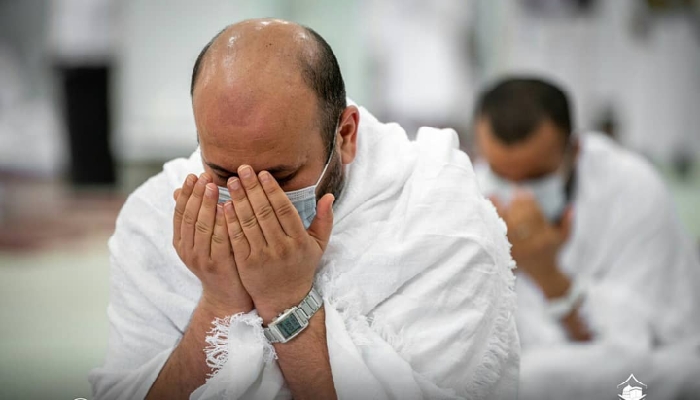
Mount Arafat, July 30: Muslim pilgrims converged Thursday on Saudi Arabia's Mount Arafat for the climax of this year's hajj, the smallest in modern times and a sharp contrast to the massive crowds of previous years.

A tight security cordon has been erected all around the foot of the rocky hill outside Mecca, also known as Jabal al-Rahma or Mount of Mercy.

Pilgrims, donning masks and observing social distancing, were brought in buses from neighbouring Mina, state television showed, as Saudi authorities impose measures to prevent a coronavirus outbreak.

They were subject to temperature checks and attended a sermon -- which state media said was translated into 10 languages -- before they set off on the climb to the summit for hours of Koran recitals and prayers to atone for their sins.

The scene was strikingly different to last year's ritual when a sea of pilgrims ascended Mount Arafat, marshalled by tens of thousands of stewards in a bid to prevent any crushes.

After sunset prayers, pilgrims will make their way down Mount Arafat to Muzdalifah, another holy site where they will sleep under the stars to prepare for the final stage of hajj, the symbolic "stoning of the devil".

It takes place on Friday and also marks the beginning of Eid al-Adha, the festival of sacrifice.

The hajj, one of the five pillars of Islam and a must for able-bodied Muslims at least once in their lifetime, is usually one of the world's largest religious gatherings.

But only up to 10,000 people already residing in the kingdom will participate in this year's ritual, compared with 2019's gathering of some 2.5 million from around the world.

"You are not our guests but those of God, the custodian of the two holy mosques (Saudi Arabia's King Salman) and the nation," Hajj Minister Mohammad Benten said in a video released by the media ministry on Wednesday.

Security cordon

A security cordon has been thrown around the holy sites to prevent any security breaches, an interior ministry spokesman said.

Riyadh faced strong criticism in 2015 when some 2,300 worshippers were killed in the deadliest stampede in the gathering's history.

But this year, those risks are greatly reduced by the much smaller crowd.

The pilgrims have all been tested for the virus, and foreign journalists were barred from this year's hajj, usually a huge global media event.

As part of the rites completed over five days in the holy city of Mecca and its surroundings, the pilgrims converged on Mount Arafat after spending the night in Mina.

A district of Mecca, Mina sits in a narrow valley surrounded by rocky mountains, and is transformed each year into a vast encampment for pilgrims.

They began the hajj on Wednesday with their first "tawaf", the circumambulation of the Kaaba, a large structure in Mecca’s Grand Mosque towards which Muslims around the world pray.

The Kaaba is draped in a black cloth embroidered in gold with Koranic verses and known as the kiswa, which is changed each year during the pilgrimage.

Pilgrims were brought inside the mosque in small batches, walking along paths marked on the floor, in sharp contrast to the normal sea of humanity that swirls around the Kaaba during hajj.

Comments

Add new comment

  • Coastaldigest.com reserves the right to delete or block any comments.
  • Coastaldigset.com is not responsible for its readers’ comments.
  • Comments that are abusive, incendiary or irrelevant are strictly prohibited.
  • Please use a genuine email ID and provide your name to avoid reject.