


Satyamev Jayate: Ugly dowry truths of big fat Indian weddings

May 20, 2012

sathya_copy


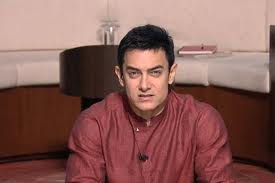
Eighty per cent of the bank loans are taken by people to meet dowry demands. One woman dies every hour in our country in dowry related cases. On Sunday, May 20, Aamir Khan brought home the ugly truths about giving and accepting dowry in our big fat Indian weddings.


Aamir spoke to several victims, community leaders and even a politician to get to the bottom of the issue. The truth was as unpalatable as it was horrific. Balwant Singh Ramoowalia, President of the Lok Bhalai Party in Punjab, who came on as a guest on the show through video conferencing, said close to 30,000 women in his state are languishing at their in-laws, being forced to do backbreaking menial labour because their parents were too poor to meet the dowry demands of their in-laws.


Every parent wished to see their daughter settled comfortably in a happy marriage and Paramjeet's were no exception. She had not met his future husband until after her engagement. After accepting a lot of money, including his education fees for a course he applied for in Australia, Paramjeet's husband kept the pressure on her middle class parents to send more. One day his family insisted that she grant him divorce over the internet having milked them dry.


Equally heartbreaking is the story of Komal who was left to starve in the US and locked out of her home in the November chill by her husband who was dissatisfied by the dowry he received from her parents, who spent Rs 60 lakh on jewellery.

While Komal escaped with her life by dialling the US Women's Shelter, there are several others who gave their lives to the ugly trend.


Kishore Tiwari of the Vidharva Jan Andolan Samiti spoke of the debt burden on farmers who are pressured to take loans to meet the demands of greedy in laws at the time of their daughters' marriage. When the discussion was bordering on the grim, Aamir highlighted the case of Santosh and Ruby, a couple whose strange tale of marriage brought some comic relief.


Santosh was kidnapped by Ruby's family to avoid having to pay dowry and forced to marry her within the confines of their home. He himself dubbed it 'pakadwa vivah' and said though he was outraged at that time, he came to love his simple wife who took great care of his aged mother.


But for Rani Tripathi, it was a brave move to show up a family of dowry takers in front of millions of people. She not only refused to pay dowry for her marriage but went a step further and launched a sting operation against the family that demanded a car and Rs 5 lakh in cash from them.


Rani found a sensible and loving match in Pawan who shook a leg with Aamir to Sona Mahapatra's lilting rendition, 'Mujhe Kya Bechega Rupaiyya' at the end of the show. Durlov Baruah, an Assamese, spoke about Assam's dowry-free status and a local cleric of Burhanpur claimed it had the same status over many years. Marriages in Burhanpur are held without pomp and show and without dowry.


It was Aamir's impassioned appeal to people to spend money on their children's education rather than on their dowry that brought the curtains down on a show that has become the Sunday habit of millions.



Comments

Add new comment

  • Coastaldigest.com reserves the right to delete or block any comments.
  • Coastaldigset.com is not responsible for its readers’ comments.
  • Comments that are abusive, incendiary or irrelevant are strictly prohibited.
  • Please use a genuine email ID and provide your name to avoid reject.
News Network
January 23,2020

Jan 23: Calling himself an optimist who believes in the goodness of people, director Kabir Khan says everything these days is being looked at through the prism of religion but India is about more than that.

The director of blockbusters such as Bajrangi Bhaijaan and Ek Tha Tiger said he is happy he has a platform as a filmmaker to present a counterpoint to the prevailing narrative based on religious fault lines.

"I’m an optimist who believes in the goodness of the people. But yes, there is a certain level of bigotry that has crept in. Everything is being looked at through the prism of religion but India is not about that.

"It sounds like a cliché but when I was growing up, I was not aware of my religion. That was the greatness of this country,” Kabir told news agency.

He said he is a product of a mixed marriage and is pained to see the social fabric being tattered.

“I have celebrated the best that Indian secularism has to offer. But to see the greatness of this country being simplified and broken down into religious fault lines is a painful experience,” he added.

According to Kabir, it is dangerous to see history through the prism of religion, whether in cinema or society. But it is important to revisit history to know what happened and one can always find something that is relevant for the present, he said.

The director, who started as a documentary filmmaker, returns to his roots for a five-episode series on Subhas Chandra Bose's Indian National Army, The Forgotten Army: Azaadi Ke Liye, on Amazon Prime, his most expensive project yet.

Asked whether this is a difficult time for filmmakers, Kabir said he believes art thrives in the time of strife and, as a storyteller, his politics will always reflect in his work.

“Every film has its politics and every filmmaker has to reflect his or her politics. Every film of mine will reflect my politics and it will never change according to the popular mood of the audience. But a film should not be just about that. Politics should be in the layers beneath," he said.

He terms his 2015 Salman Khan-starrer Bajrangi Bhaijaan an "extremely political" film. At face value, it can also be enjoyed as the story of a mute Pakistani girl who drifts into India and is taken back to her homeland by a Hanuman devotee. But there is so much more. The "chicken song", for instance, was a sly reference to the beef ban controversy at the time, he said.

"I won’t say it is a difficult time for me as a filmmaker. It is good that I have a platform where I can talk and present a counterpoint and I refuse to believe that the entire country believes the narrative that is being sent out. There are millions and millions of people, and perhaps the majority, that does not believe. And if I present the counterpoint, they will think about it.”

Discussing his new series, the director said it has always fascinated him that the sacrifice of the men and women who comprised the INA is just a forgotten footnote in history.

“I wanted to make something that stands the test of time. It goes down in posterity,” Khan, who first explored the subject in a Doordarshan documentary 20 years ago, said.

For the documentary, he traveled with former INA officers Captain Lakshmi Sahgal and Captain Gurbaksh Singh Dhillon from Singapore to India via erstwhile Burma, retracing the route that the INA followed.

“The documentary got me a lot of attention and acclaim but the story just never left me. It's actually the first script I ever wrote and I landed up with that script in Bombay from Delhi. I realised very soon that nobody's going to give me a budget of this size to make my first film.

"And then after every film, I would pick up the script and say, ‘Okay, this is the one I want to make’, because this is the story that made me want to become a filmmaker. On the way, I ended up making eight other films but this is really the story that I wanted to make,” he said.

Kabir is happy that the story has come out as a series, not a film, as it would have required to compromise with the budget and other elements.

"Without giving any numbers, this is the most expensive project I have ever worked on… It required that kind of budget."

Kabir believes the INA was responsible for bringing down the morale of the British establishment, which realised it would be impossible to keep the country colonised without the support of the local army.

"There are a lot of debates and discussions about what happened with the INA and the controversies around it. The whole point is that, if you want to judge what the Army did, sure that's your prerogative, but at least get to know what they did. Nobody knows what happened with the Army from 1942 to 1945."

He added that 55,000 men and women of the INA fought for independence and 47,000 of them died.

"Not a single person from that Army was ever taken back into the independent Army, which is such an amazing fact... the fact that the British called them traitors became the narrative and we also started assuming that they were traitors."

"They were the only women's regiment in the whole world 70 years ago. That's what they thought about women's importance in society. I don't know whether they will be happy with what the current situation is," he said.

Comments

Add new comment

  • Coastaldigest.com reserves the right to delete or block any comments.
  • Coastaldigset.com is not responsible for its readers’ comments.
  • Comments that are abusive, incendiary or irrelevant are strictly prohibited.
  • Please use a genuine email ID and provide your name to avoid reject.
News Network
May 11,2020

Los Angeles, May 11: Iconic soul and R&B singer Betty Wright has died after a battle with cancer. She was 66. According to Entertainment Weekly, the Grammy winner passed away on Sunday in her hometown Miami, Florida, Wright's niece confirmed.

The news comes a week after singer-songwriter Chaka Khan tweeted praying for her "beloved sister", without mentioning the cause of ailment.

"Calling all my #PrayWarriors | My beloved sister, Betty Wright, is now in need of all your prays. 'Que Sera, Sera | Whatever Will Be, Will Be' In Jesus Name We Pray for Sister Betty All My Love Chaka," she wrote.

Wright, whose real name was Bessie Regina Norris, was born in 1953.

She started singing as part of her siblings' musical group called the 'Echoes of Joy', but she rose to fame in the 1970s.

The singer was a member of the gospel ensemble until they parted ways when she was 11, leading her to embrace R&B music.

Wright signed with the label Deep City Records in 1966, a year later becoming a local hit with songs "Thank You Baby" and "Paralyzed".

Her first album My First Time Around wasn't released until two years later featuring the hit "Girls Can't Do What the Guys Do."

The biggest hit of her career Clean Up Woman came a year later, which was certified gold barely days after her 18th birthday.

At the age of 23, she went on to win her first Grammy Award for Best Song, Where is the Love?

Wright continued writing and producing music for two decades, her final hit  No Pain, (No Gain) was released in 1988.

Wright also collaborated with talent in the industry including fellow Miami superstar Gloria Estefan, for whom she arranged the harmonies on the 1991 track Coming Out of the Dark, as well as Jennifer Lopez, Kelly Clarkson, and Joss Stone.

She served as the vocal coach of the girl group Danity Kane on "Making of the Band" (2006).

With her collaboration with The Roots titled Betty Wright: The Movie, Wright again came under spotlight in 2011. This was her first album in a decade.

She scored a Grammy nod for the song Surrender from the album. Her work has been sampled throughout the years by Beyonce, Mary J Blige, Afrika Bambaataa, and Chance the Rapper. Several names from the music industry such as Snoop Dogg, John Legend, and DJ Khaled condoled Wright's demise on social media.

Snoop shared a video of Wright singing "Tonight is the Night" and thanked his mentor for inviting him to "thankful Thursday's" at her Florida house years ago.

"I know god is pleased with your work. Tonight is the night you get to heavens gates. Long live. Betty Wright," he wrote on Instagram.

Legend said Wright will be missed.

"She was always so loving and giving to younger artists. Always engaged, always relevant," he tweeted.

Khaled shared a clip of his performance with Wright on the song "Holy Key" at the 2016 BET Hip Hop Awards.

"Betty Wright, you are an angel. You one of my realest friends I have! You are like a mom to me! You had my back from the very beginning! We made beautiful music together! Betty Wright is an icon! And the Mother of Miami," he wrote.

Wright was married three times - her final marriage was to reggae legend Noel 'King Sporty' Williams from 1985 until his death in 2015.

She had five children: Aisha McCray, Patrice Parker, Patrick Parker, Patrice Parker, and Chaka Azuri. Her son Patrick was shot to death on Christmas Day 2005 at the age of 21.

Comments

Add new comment

  • Coastaldigest.com reserves the right to delete or block any comments.
  • Coastaldigset.com is not responsible for its readers’ comments.
  • Comments that are abusive, incendiary or irrelevant are strictly prohibited.
  • Please use a genuine email ID and provide your name to avoid reject.
News Network
January 22,2020

Patna, Jan 22: Actor Kangana Ranaut has expressedher desire to make a movie on Chandragupta, the shepherd-turned-emperor who founded the Maurya dynasty, noting that the film industry has “not done enough justice to our history”.

The national award winner was here to take part in a programme organised by the publishers of a leading Hindi daily where she performed a jig to the tunes of Bhojpuri songs along with actor-turned-politician Ravi Kishan before the duo participated in a question and answer session.  Replying to the questions posed by Kishan, who is also the BJP MP from Gorakhpur, Ranaut on Tuesday said it was her second trip to Bihar.

“The last time, I was here as a child though I have not yet got a chance to explore the state with which I feel a connect as my Yoga teacher has his roots here,” she said.

Ranaut, who won acclaim for portraying Rani Laxmibai, the valiant queen of Jhansi who took on the British during the revolt of 1857 -- in ‘Manikarnika’, when asked if she would like to be associated with a film on any historical figure from Bihar, said, “It would be Chandragupta Maurya. The film industry has not done much justice to our history”.

A self-confessed admirer of Prime Minister Narendra Modi, the 32-year-old, who has won three National Awards in the Best Actress and Best Supporting Actress categories, replied in the affirmative when asked about reports that she has turned producer and her first venture is based on the theme of Ram temple in Ayodhya.

The Himachal Pradesh-born actress, who has courted controversy for taking on well-entrenched Bollywood “insiders” like Karan Johar and Hrithik Roshan, said she has had a rebellious streak since childhood and shared an anecdote about her breaking her teacher’s stick upon being hit for chatting with a classmate in school.

When Kishan asked why she has gained so much weight, Ranaut replied it was in preparation for her upcoming biopic “Thalaivi”, based on late Tamil Nadu Chief Minister J Jayalalithaa.

The actress said her forthcoming release “Panga” is a family drama.

Ranaut said after landing in Patna, she gorged on ‘Litti Chokha’, a local delicacy.

She also regaled the audience by greeting them in Bhojpuri and repeating several commonly used phrases of the dialect after Kishan.

Comments

Add new comment

  • Coastaldigest.com reserves the right to delete or block any comments.
  • Coastaldigset.com is not responsible for its readers’ comments.
  • Comments that are abusive, incendiary or irrelevant are strictly prohibited.
  • Please use a genuine email ID and provide your name to avoid reject.