


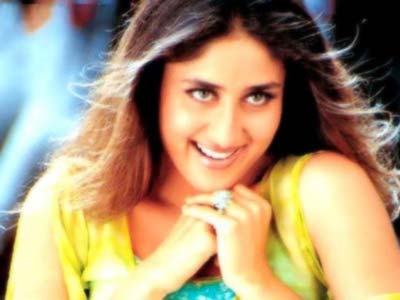
Bollywood influence on fashion trends waning

November 23, 2012

kareena-kapoor


New Delhi, November 23: Be it Madhubala's Anarkali look in "Mughal-e-Azam" or Kareena Kapoor's T-shirt-salwar combo in "Jab We Met", Bollywood has inspired trends down the ages. But that influence seems to be waning due to a variety of reasons, including greater exposure to the West and the move towards more realistic cinema, say designers.

There is also the constant fear of criticism, which has restricted filmmakers from attempting to set fashion trends.

According to veteran designer Ritu Kumar, people were earlier not so exposed to fashion. So every new and unique garment seen on the big screen set a trend. This is no longer the case.


"Initially, costumes, which were off everyday wear for the normal population, did cause a stir and led to fashion influences as the market was starved of such designer wear. But this has largely changed," Kumar, who is yet to design for a Bollywood film, told IANS.

Kumar, who has designed the costumes for Deepa Mehta's "Midnight's Children", hopes the scenario improves.

"The industry still seems to design for individuals. When more holistic designing for a complete film is taken up, the fashion scene in India will mature further."

In the past, Bollywood has given memorable styles to masses. Remember the 1960 period drama "Mughal-e-Azam" when Madhubala as Anarkali sported long flowing kurtas and churidars. Almost five decades later, the eponymous Anarkali kameez is the current rage with everybody, from homemakers to hip Bollywood actresses, wearing it.

In 1994, Madhuri Dixit left a mark with her green embroidered choli paired with a white lehnga and a purple embroidered sari in "Hum Aapke Hain Koun...!". Women lapped up the styles at family weddings. There are so many similar instances. There were Rani Mukerji's "Bunty Aur Babli" suits and then the sari, of course, redefined over and over again with movies like "Chandni", "Main Hoon Naa" and "Dostana".

But new trends are now few and far between.

"The main reason for this is that a lot of stylists of celebrities or films are playing safe with ongoing trends in fashion. They are primarily using outfits which are in fashion, avoiding the risk of fashion faux pas. Thus they are unable to create a new trend," designer Pria Kataaria Puri told IANS.

"Earlier, film costumes were not designed according to what everyone was wearing or according to international trends but were rather filmy or outlandish, rule breaking; and if they worked well, it became a new trend. To create a style, one has to create costumes that are unusual," she added.

Costume designer Payal Saluja, who has worked on Vishal Bhardwaj's "Maqbool", "Ishqiya", "Saat Khoon Maaf" and now "Matru Ki Bijlee Ka Mandola", says the move towards realistic filmmaking in Bollywood has changed the scene.

"Stories are becoming real and connectable for the audience these days. So, the clothes also need to be in tandem. Clothes should never be stronger than the character because then the viewer will only remember the clothes. So it is first important to think of blending costumes into the narrative rather than create fashion trends," Saluja told IANS.

According to designer duo Meera and Muzaffar Ali, one of the leading names in the world of fashion, "costumes (today) are left to stars' whims and their sycophant designers and colours that suit a cameraman".

"Anything and everything in Bollywood can set a trend amidst mindless people who know no better. What concerns me is the style of the film," said Muzaffar Ali, director of the classic "Umrao Jaan".

His wife Meera added: "There were some yesteryear stars who had a body language which made what they wore extremely attractive. They somehow caught the fancy of the audience by getting the colour and mood right, particularly in romantic outdoors... Shammi Kapoor, Dharmendra and at times Dilip Kumar and Dev Anand, but the rest of the film had no look whatsoever. Similarly, women had a story on their face and they knew how to tell it more effectively through their performance."



Comments

Add new comment

  • Coastaldigest.com reserves the right to delete or block any comments.
  • Coastaldigset.com is not responsible for its readers’ comments.
  • Comments that are abusive, incendiary or irrelevant are strictly prohibited.
  • Please use a genuine email ID and provide your name to avoid reject.
News Network
January 24,2020

Paris, Jan 24: Rahul Mishra and Imane Ayissi made history on Thursday by becoming the first Indian and black African designers to show their clothes on the elite Paris haute couture catwalk.

Only a little more than a dozen of the world's most prestigious luxury labels -- including Dior, Chanel and Givenchy -- have a right to call their clothes haute couture.

All the clothes must be handmade -- and go on to sell for tens of thousands of euros (dollars) to some of the richest and most famous women in the world.

Mishra, an advocate of ethical "slow fashion" who blames mechanisation for much of the world's ills, said "it felt amazing and very surreal to be the first Indian to be chosen." "They see a great future for us -- which will make us push ourselves even harder," the 40-year-old told AFP after his debut show was cheered by fashionistas.

Both Mishra and Cameroon-born Ayissi, 51, are champions of traditional fabrics and techniques from their homelands and are famous for their classy lines.

Ayissi said his selection was "immense" both for Africa and himself.

"I am so proud that I can show my work and showcase real African fabrics and African heritage," he told AFP backstage as celebrities, including the chic head of Unesco, Audrey Azoulay, congratulated him.

Mishra broke through on the Paris ready-to-wear scene after winning the International Woolmark Prize in 2014, the top award that also launched the careers of such greats as Karl Lagerfeld and Yves Saint Laurent.

The purity of his often white creations with their detailed but understated embroidery has won him many fans, including Vogue's legendary critic Suzy Menkes.

The doyenne of fashion's front row called him an Indian "national treasure".

But this time, Mishra turned up the colour palette somewhat with dresses that subtly evoked the jungle paradises and pristine underwater world off the Maldives he worries that one day we might lose.

Appalled by the smoke and pollution that meant he had to keep his four-year-old daughter indoors in Delhi for nearly 20 days in November, Mishra said he imagined a "pure virginal and untamed planet... with ecosystems crafted out of embroidered flora and fauna".

"I am very emotional about it. Sometimes it makes me cry. All our children should be growing up in a better world," he added.

"When I take Aarna (his daughter) to the foothills of the Himalayas and the sky turns blue, she is so happy.

"Once, when she saw the River Ganges, she said: 'Can you please clean it for us so can go for a swim?'"

Mishra said he was reducing the quantity of clothes he was producing while at the same time increasing their quality, with humming birds, koalas and other animals hidden in the hundreds of hand worked embroidered leaves and flowers of his "jungle dresses".

The designer has won ethical and sustainability awards for his work supporting local crafts people in rural India.

"My objective is to create jobs which help people in their own villages," Mishra said.

"If villages are stronger, you will have a stronger country, a stronger nation, and a stronger world," he added.

Ayissi takes a similar stand, refusing to use wax prints popular in West Africa which he dismisses as "colonial".

Dutch mills flooded Africa with cotton printed with colourful patterns borrowed from Indonesian batik in the 19th century, and still dominate the market.

"When we talk about African fashion, it's always wax, which is a real pity," he told AFP, "because it's killing our own African heritage."

Ayissi, a former dancer who worked with singers such as Sting and Seal, told AFP he wanted to open up "a new path for Africa" and find an "alternative way of doing luxury fashion".

He has gone back to using prestigious local materials, like the strip fabric kente woven by the Akan people of Ghana and the Ivory Coast, which was originally worn only by nobles.

The son of an undefeated African boxing champ and a former Miss Cameroon, he also uses appliqued techniques from Benin and Ghana.

Haute couture shows only take place in Paris and the criteria to enter and remain in fashion's elite club are strictly enforced by French law.

Comments

Add new comment

  • Coastaldigest.com reserves the right to delete or block any comments.
  • Coastaldigset.com is not responsible for its readers’ comments.
  • Comments that are abusive, incendiary or irrelevant are strictly prohibited.
  • Please use a genuine email ID and provide your name to avoid reject.
News Network
June 4,2020

Mumbai, Jun 4: Casting director Krish Kapur, who had worked on films like Mahesh Bhatt's Jalebi and Kriti Kharbanda-starrer Veere Ki Wedding, passed away at the age of 28 due to brain hemorrhage, his family said.

There was speculation that Kapur died in a road accident but his maternal uncle, Sunil Bhalla, dismissed the reports, saying that the casting director fainted at his home in suburban Mira Road here and suffered brain hemorrhage.

According to Bhalla, Kapur breathed his last on May 31.

"He had no medical history. He was healthy and doing absolutely fine. On May 31, he just collapsed and started to bleed. He died of brain hemorrhage," Bhalla said on Wednesday.

Kapur is survived by his mother, wife and seven-year-old child.

Comments

Add new comment

  • Coastaldigest.com reserves the right to delete or block any comments.
  • Coastaldigset.com is not responsible for its readers’ comments.
  • Comments that are abusive, incendiary or irrelevant are strictly prohibited.
  • Please use a genuine email ID and provide your name to avoid reject.
Agencies
July 29,2020

Patna, Jul 29: BJP MLA Neeraj Kumar Singh Bablu, cousin of Sushant Singh Rajput, on Tuesday said that a huge amount of money has been transferred into the account of actress Rhea Chakraborty from the actor's account.

"An FIR has been filed against actress Rhea Chakraborty by the father of Sushant Singh as a huge amount of money has been transferred into her account and they both have joint accounts for some companies through which cheating has been done from her side," Bablu said.

"This is the issue of probe and police will go there and investigate the matter after that everything will be revealed," he added.

He also said that Karan Johar should also be called in for questioning by the Mumbai Police in connection with Sushant Singh Rajput's death case.

The statement was given in the backdrop of several top film personalities being questioned in connection with the case.

On July 28, an FIR has been registered against actor Rhea Chakraborty under various sections including abetment of suicide on the complaint of Sushant Singh Rajput's father Krishna Kishor Singh, the police said on Tuesday.

It said that a four-member team has been sent to Mumbai following registration of FIR.
"A four-member team has been sent to Mumbai. The team will collect case diary and other important documents from Mumbai Police," Sanjay Singh, Inspector General, Patna Central Zone said.

In the complaint made to Rajeev Nagar police station in-charge, KK Singh alleged that Rhea Chakraborty and her relatives "committed fraud" and "pressurised the actor for financial gains".

Sushant's father alleged that Chakraborty "got in touch with the actor with a motive to establish herself in the film industry using his contacts and she and her relatives started interfering in his affairs".

Comments

Add new comment

  • Coastaldigest.com reserves the right to delete or block any comments.
  • Coastaldigset.com is not responsible for its readers’ comments.
  • Comments that are abusive, incendiary or irrelevant are strictly prohibited.
  • Please use a genuine email ID and provide your name to avoid reject.