



Epic nuclear case: Island nation takes on India, Pak, Britain

October 5, 2016

Majuro/Marshall Islands, Oct 5: As the Marshall Islands awaits an international court ruling on Wednesday on whether its lawsuit against three nuclear powers can proceed, many in the western Pacific nation question the merit of the David-versus-Goliath legal battle.
hydrogenThe country of 55,000 people is taking on India, Pakistan and Britain in the International Court of Justice (ICJ), arguing they have failed to comply with the 1968 nuclear Non-Proliferation Treaty.

Initially the lawsuit was even more ambitious — also including China, France, Israel, North Korea, Russia and the United States — none of which recognised the ICJ's jurisdiction on the matter.

The Marshalls has a long, bitter history with nuclear weapons, making it one of the few nations that can argue with credibility before the ICJ about their impact.

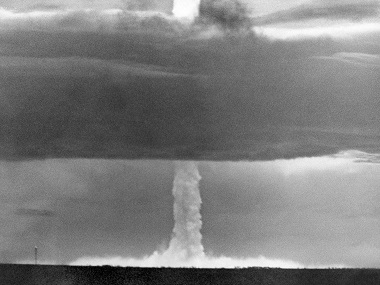
The island nation was ground zero for 67 American nuclear weapons tests from 1946-58 at Bikini and Enewetak atolls, when it was under US administration.

The tests included the 1954 "Bravo" hydrogen bomb, the most powerful ever detonated by the United States, about 1,000 times bigger than the atomic bomb dropped on Hiroshima.

They fed into an apocalyptic zeitgeist in Cold War popular culture, giving a name to the bikini swimsuit and leading to the development of Japan's Godzilla movie monster.

In "Godzilla", the creature is awakened by a hydrogen bomb test, rising from a roiling sea to destroy Tokyo, in a walking, radiation-breathing analogy for nuclear disaster.

'Sky turned blood red'

On the Marshall Islands, the impacts of the nuclear tests were all too real.

Numerous islanders were forcibly evacuated from ancestral lands and resettled, while thousands more were exposed to radioactive fallout.

"Several islands in my country were vaporised and others are estimated to remain uninhabitable for thousands of years," Tony deBrum, a former Marshall Islands foreign minister, told an ICJ hearing earlier this year.

He recalled witnessing the Bravo test as a nine-year-old while fishing with his grandfather in an atoll, some 200 kilometres (125 miles) from the blast's epicentre.

"The entire sky turned blood red," he said. "Many died, or suffered birth defects never before seen and cancers as a result of contamination."

DeBrum launched the Marshall's ICJ action in 2014 with cooperation from the California-based Nuclear Age Peace Foundation.

His actions prompted the International Peace Bureau to nominate him in January for the 2016 Nobel Peace Prize, which is yet to be awarded.

Yet critics argue the ICJ action is a distraction and the islanders' real fight is with Washington, which carried out the tests in their backyard.

They contend the case has no relationship to victims' claims for increased compensation, better health care and clean-ups to make sites habitable again.

Official criticism has been muted recently to avoid undermining deBrum's Nobel nomination.

But his successor as foreign minister, John Silk, made his views clear before an election last November when voters ousted 40 percent of the parliament, including deBrum.

Labelling the action "unauthorised" and "a publicity stunt", he said the focus should remain on petitioning the US Congress for increased compensation.

"What do these lawsuits have to do with resolving the legacy of the US nuclear testing programme?" he asked.

The Nuclear Age Peace Foundation argues that the Marshalls is taking a broader perspective in trying to re-start nuclear disarmament talks that have stalled over the past 20 years.

"The Republic of the Marshall Islands acts for the seven billion of us who live on this planet to end the nuclear weapons threat hanging over all humanity," its website says.

"Everyone has a stake in this."

The ICJ, the UN's top court, will decide on Wednesday whether it believes the case should go to a full hearing.

Comments

Ashwin
 - 
Wednesday, 5 Oct 2016

Haha. CD u are very slow. The UN Court has already rejected nuclear case against India. But you are very quick to post something about BJP

Add new comment

  • Coastaldigest.com reserves the right to delete or block any comments.
  • Coastaldigset.com is not responsible for its readers’ comments.
  • Comments that are abusive, incendiary or irrelevant are strictly prohibited.
  • Please use a genuine email ID and provide your name to avoid reject.
News Network
January 28,2020

Jan 28: China said on Tuesday that 106 people had died from a new coronavirus that is spreading across the country, up from the previous toll of 81.

The number of total confirmed cases in China rose to 4,515 as of Jan. 27, the National Health Commission said in a statement, up from 2,835 reported a day earlier.

The United States warned against travel to China on Monday and Canada issued a more narrow travel warning as the death toll from the spreading coronavirus passed 100, with tens of millions stranded during the biggest holiday of the year and global markets rattled.

Global stocks fell, oil prices hit three-month lows, and China's yuan dipped to its weakest level in 2020 as investors fretted about damage to the world's second-biggest economy from travel bans and the Lunar New Year holiday, which China extended in a bid to keep people at home.

The health commission of China's Hubei province said on Tuesday that 100 people had died from the virus as of Jan. 27, according to an online statement, up from the previous toll of 76, with the number of confirmed cases in the province rose to 2,714.

Other fatalities have been reported elsewhere in China, including the first in Beijing, bringing the deal toll to 106 so far, according to the People's Daily. The state newspaper put the total number of confirmed cases in China at 4,193, though some experts suspect a much higher number.

On Monday, US President Donald Trump offered China whatever help it needed, while the State Department said Americans should "reconsider" visiting all of China due to the virus.

Canada, which has two confirmed cases of the virus and is investigating 19 more potential cases, warned its citizens to avoid travel to China's Hubei province, at the heart of the outbreak.

Authorities in Hubei province are taking increasing flak from the public over their initial response to the virus. Chinese Premier Li Keqiang visited the city of Wuhan, epicentre of the outbreak, to encourage medical workers and promise reinforcements.

Visiting Wuhan in blue protective suit and mask, Li praised medics, said 2,500 more workers would join them in the next two days, and visited the site of a new hospital to be built in days.

The most senior leader to visit Wuhan since the outbreak, Li was shown on state TV leading medical workers in chants of "Wuhan jiayou!" - an exhortation to keep their strength up.

China's ambassador to the United Nations, following a meeting with UN Secretary-General António Guterres on Monday, said "the Chinese government attaches paramount importance to prevention and control of the epidemic, and President Xi Jinping has given important instructions. ...

"China has been working with the international community in the spirit of openness, transparency and scientific coordination," he said.

Guterres said in a statement, "The UN appreciates China's effort, has full confidence in China's ability of controlling the outbreak, and stands ready to provide any support and assistance."

MOUNTING ANGER

On China's heavily censored social media, officials have faced mounting anger over the virus, which is thought to have originated from a market where wildlife was sold illegally.

Some criticised the governor of Hubei province, of which Wuhan is the capital, after he corrected himself twice during a news conference over the number of face masks being produced.

"If he can mess up the data multiple times, no wonder the disease has spread so severely," said one user of the Weibo social media platform.

In rare public self-criticism, Wuhan Mayor Zhou Xianwang said the city's management of the crisis was "not good enough" and indicated he was willing to resign.

The central Chinese city of 11 million people is in virtual lockdown and much of Hubei, home to nearly 60 million people, is under travel curbs.

Elsewhere in China, people from the region faced questioning about their movements. "Hubei people are getting discriminated against," a Wuhan resident complained on Weibo.

Cases linked to people who travelled from Wuhan have been confirmed in a dozen countries, from Japan to the United States, where authorities said they had 110 people under investigation in 26 states. Sri Lanka was the latest to confirm a case.

INVESTORS WORRIED

Investors are worried about the impact. The consensus is that in the short term, economic output will be hit as authorities limit travel and extend the week-long New Year holiday — when millions traditionally travel by rail, road and plane - by three days to limit spread of the virus.

Asian and European shares tumbled, with Japan's Nikkei average sliding 2%, its biggest one-day fall in five months. Demand spiked for safe-haven assets such as the Japanese yen and Treasury notes. European stocks fell more than 2%.

The US S&P 500 closed down nearly 1.6%.

"China is the biggest driver of global growth so this couldn't have started in a worse place," said Alec Young, FTSE Russell's managing director of global markets research.

During the 2002-2003 outbreak of Severe Acute Respiratory Syndrome (SARS), which originated in China and killed nearly 800 people globally, air passenger demand in Asia plunged 45%. The travel industry is more reliant on Chinese travellers now.

Chinese-ruled Hong Kong, which has had eight cases, banned entry to people who had visited Hubei recently.

Some European tour operators cancelled trips to China, while governments around the world worked on repatriating nationals.

Officially known as 2019-nCoV, the newly identified coronavirus can cause pneumonia, but it is still too early to know just how dangerous it is and how easily it spreads.

"What we know about this virus it that transmission occurs through human contact but we are speaking of close contact, i.e. less than a meter," said Jerome Salomon, a senior official with France's health ministry.

"Crossing someone (infected) in the street poses no threat," he said. "The risk is low when you spend a little time near that person and becomes higher when you spend a lot of time near that person."

Comments

Add new comment

  • Coastaldigest.com reserves the right to delete or block any comments.
  • Coastaldigset.com is not responsible for its readers’ comments.
  • Comments that are abusive, incendiary or irrelevant are strictly prohibited.
  • Please use a genuine email ID and provide your name to avoid reject.
News Network
March 6,2020

Mar 6: UK stocks fell again on Friday as growing economic risks from the coronavirus outbreak shattered investor confidence, with Britain recording its first death from the pathogen.

A 1.5% fall for the FTSE 100 erased the blue-chip index's gains from earlier this week. Export-heavy companies have now lost over $230 billion in value since the epidemic sparked a worldwide rout last week.

The domestically focussed mid-cap index was down 1.9%.

Cruise operator Carnival dropped 4.2% to its lowest level since 2012, a day after its Grand Princess ocean liner was barred from returning to its home port of San Francisco on virus fears.

Britain said an older person with underlying health problems had succumbed to the flu-like virus on Thursday, while the number of infections jumped to 115.

In company news, drug maker AstraZeneca fell 1% after it said its treatment for a form of bladder cancer failed to meet the main goal of improving overall survival in patients in a late-stage study.

Comments

Add new comment

  • Coastaldigest.com reserves the right to delete or block any comments.
  • Coastaldigset.com is not responsible for its readers’ comments.
  • Comments that are abusive, incendiary or irrelevant are strictly prohibited.
  • Please use a genuine email ID and provide your name to avoid reject.
News Network
June 18,2020

Washington, Jun 18: US Defence officials are concerned over China's use of COVID-19 situation to gain stakes in strategically important companies of United States as the impact of novel coronavirus has left several companies in dire need of capital.

Amid the pandemic, it getting hard for the defence department to keep an eye on national security and help protect smaller companies down the chain, CNN reported.

"We are paying close attention to any indicators that China is leveraging Covid-19 to take advantage of a situation where defence companies need capital more than ever," a defence official told CNN.

In April, Ellen Lord, undersecretary of defence for acquisition and sustainment said it is paying close attention to 'adversaries' against the 'economic warfare' with the United States.

"We have to be very, very careful about the focused efforts some of our adversaries have to really undergo sort of economic warfare with us, which has been going on for some time," Ellen Lord, undersecretary of defence for acquisition and sustainment was quoted as saying by CNN.

US Committee on Foreign Investment protects its interest against hostile countries gaining ownership in strategically important companies. But the pandemic is changing the definition of national security concerns to include drugs, protective gear and medical supplies.

"These are now national security needs and we probably should have been thinking about it a long time ago in terms of biowarfare that we should have a trusted industrial base or a set of trusted allies -- the UK, or NATO allies or Japan or Korea -- who are trusted in that regard," Bill Greenwalt, a former Pentagon official.

Give the threat posed by foreign acquisition, Pentagon has been offering tools to help small US businesses defend themselves against adversarial investment and conducting background checks with other government agencies to ensure transparency.

US President Donald Trump's trade adviser Peter Navarro recently told CNN if Trump wins reelection, Washington DC will likely take offshore supply chains as national security priorities.

"If we fail to do that in the face of this crisis, we will have failed this country and all future generations of Americans," Navarro said.

The US State Department has also warned US allies to "avoid economic overreliance on China" and "guard their critical infrastructure" from China's influence.

Chad P Bown, a senior fellow at the Peterson Institute for International Economics, pointed to recent China's economic coercion of Australia on the political matter saying, "this is how China operates and everybody knows it."

Comments

Add new comment

  • Coastaldigest.com reserves the right to delete or block any comments.
  • Coastaldigset.com is not responsible for its readers’ comments.
  • Comments that are abusive, incendiary or irrelevant are strictly prohibited.
  • Please use a genuine email ID and provide your name to avoid reject.