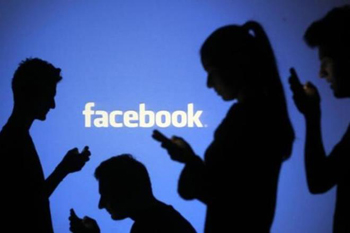
Facebook Gets Over 6,000 Data Requests From India In H1 2016

December 24, 2016

New Delhi, Dec 24: Social networking giant Facebook received 6,324 requests from Indian government agencies for 8,290 users/accounts in the first half of 2016.

fbThis is the second highest after the US, which made 23,854 requests for 38,951 users/accounts during January-June 2016, according to Facebook's Government Requests Report.

Requests from India have increased, a trend seen globally as well from the previous period. Indian agencies had made 5,561 requests for 7,018 users/accounts in July-December 2015 period.

Facebook said it was able to produce "some data" in 53.59 per cent of the cases in the first half of 2016, compared to just over 50 per cent in the July-December 2015 period.

Government requests for account data increased by 27 per cent globally compared to the last half of 2015, increasing from 46,710 to 59,229 requests, Facebook Deputy General Counsel Chris Sonderby said.

"As we have previously emphasized, we apply a rigorous approach to every government request we receive to protect the information of the people who use our services. We scrutinise each request for legal sufficiency, no matter which country is making the request, and challenge those that are deficient or overly broad," he added.

Sonderby emphasised that Facebook does not provide governments with "back doors" or direct access to people's information.

"We'll also keep working with partners in industry and civil society to push governments around the world to reform surveillance in a way that protects their citizens' safety and security while respecting their rights and freedoms," he said.

Comments

Add new comment

  • Coastaldigest.com reserves the right to delete or block any comments.
  • Coastaldigset.com is not responsible for its readers’ comments.
  • Comments that are abusive, incendiary or irrelevant are strictly prohibited.
  • Please use a genuine email ID and provide your name to avoid reject.
Agencies
May 22,2020

Kochi, May 22: During the nationwide COVID-19 lockdown, Kerala recorded the highest number of cyber attacks followed by Punjab and Tamil Nadu, a study by anti-virus software firm K7 Computing said on Thursday.

In a statement issued in Chennai, the company said its K7 Computing's Cyber Threat Report, a comprehensive analysis of cyber attacks during the lockdown has found that Kerala recorded the highest number of cyber attacks during this period. The report analyses various cyber attacks within India during the pandemic and reveals that threat actors targeted the state with COVID-themed attacks aimed at exploiting user trust.

In Kerala, regions like Kottayam, Kannur, Kollam, and Kochi saw the highest hits with 462, 374, 236, and 147 attacks respectively, while the state as a whole saw around 2,000 attacks during the period - the highest thus far in the country.

This was followed by Punjab with 207 attacks and Tamil Nadu with 184 attacks, the company said.

The sudden surge in the frequency of attacks witnessed from February 2020 to mid-April 2020 indicates that scamsters across the world were exploiting the widespread panic around coronavirus at both the individual and corporate level.

These attacks aimed to compromise computers and mobile devices to gain access to users' confidential data, banking details, and cryptocurrency accounts.

The key threats seen during this period ranged from phishing attacks to rogue apps disguised as COVID-19 information apps that targeted users' sensitive data. Phishing attacks were noticed more in Tier-II and Tier-III cities while the metros fared better. Smaller cities saw over 250 attacks being blocked per 10,000 users.

Users from Ghaziabad and Lucknow seem to have faced almost 6 and 4 times the number of attacks as Bengaluru users.

According to the statement, a majority of the recorded attacks were phishing attacks with sophisticated campaigns that could easily snare even the most educated users. These attacks were aimed at heightening users' fears and creating a sense of urgency to take action.

K7 Labs noticed phishing attacks where scamsters posed as representatives of the United States Department of Treasury, the World Health Organization (WHO), and the Centres for Disease Control and Prevention (CDC), the company said.

Users were encouraged to visit links that would automatically download malware on the host computer such as the Agent Tesla keylogger or Lokibot information-stealing malware, infamous banking Trojans such as Trickbot or Zeus Sphinx, and even disastrous ransomware.

Other attacks included infected COVID-19 Android apps like CoronaSafetyMask that scam users with promises of masks for an upfront payment; the spyware app Project Spy; and seemingly genuine apps that are infected with dangerous malware like banking Trojans such as Ginp, Anubis and Cerberus.

"Covid-19 has created an ideal situation for various threat actors to target individuals and enterprises alike. The panic caused by the stringent lockdown measures and rapid spread of this virus has left many people looking for more information on the situation," J. Kesavardhanan, Founder and CEO of K7 Computing was quoted as saying in the statement.

"Threat actors exploit this fear to their advantage and scam users into downloading malicious software and divulging sensitive information like banking codes. The need to be cyber cautious has never been greater. This is more so in the case of corporates who have adopted a work from home policy hurriedly without adequate cyber hygiene. We have seen an increase in attacks on enterprises and SME employees as well," he added.

Such attacks are expected to continue till normalcy returns. Social engineering attacks targeted at winning users' trust will gain momentum.

Healthcare institutions, well-known government offices, and international organisations will continue to be a prime target throughout the pandemic, the statement said.


Comments

Add new comment

  • Coastaldigest.com reserves the right to delete or block any comments.
  • Coastaldigset.com is not responsible for its readers’ comments.
  • Comments that are abusive, incendiary or irrelevant are strictly prohibited.
  • Please use a genuine email ID and provide your name to avoid reject.
Agencies
February 6,2020

Washington D.C., Feb 6: An international team of astronomers has found an unusual monster galaxy that existed about 12 billion years ago when the universe was only 1.8 billion years old.

The team of astronomers was led by scientists at the University of California, Riverside.

Dubbed XMM-2599, the galaxy formed stars at a high rate and then died. Why it suddenly stopped forming stars is unclear.

"Even before the universe was 2 billion years old, XMM-2599 had already formed a mass of more than 300 billion suns, making it an ultra massive galaxy," said Benjamin Forrest, a postdoctoral researcher in the UC Riverside Department of Physics and Astronomy and the study's lead author.

"More remarkably, we show that XMM-2599 formed most of its stars in a huge frenzy when the universe was less than 1 billion years old and then became inactive by the time the universe was only 1.8 billion years old," Forrest added.

The team used spectroscopic observations from the W. M. Keck Observatory's powerful Multi-Object Spectrograph for Infrared Exploration or MOSFIRE, to make detailed measurements of XMM-2599 and precisely quantify its distance.

The study results appear in the Astrophysical Journal.

"In this epoch, very few galaxies have stopped forming stars, and none are as massive as XMM-2599," said Gillian Wilson, a professor of physics and astronomy at UCR in whose lab Forrest works.

"The mere existence of ultramassive galaxies like XMM-2599 proves quite a challenge to numerical models. Even though such massive galaxies are incredibly rare at this epoch, the models do predict them."

"The predicted galaxies, however, are expected to be actively forming stars. What makes XMM-2599 so interesting, unusual, and surprising is that it is no longer forming stars, perhaps because it stopped getting fuel or its black hole began to turn on. Our results call for changes in how models turn off star formation in early galaxies," the professor stated.

The research team found XMM-2599 formed more than 1,000 solar masses a year in stars at its peak of activity -- an extremely high rate of star formation. In contrast, the Milky Way forms about one new star a year.

"XMM-2599 may be a descendant of a population of highly star-forming dusty galaxies in the very early universe that new infrared telescopes have recently discovered," said Danilo Marchesini, an associate professor of astronomy at Tufts University and a co-author on the study.

"We have caught XMM-2599 in its inactive phase," Wilson said, who led the W. M. Keck Observatory data acquisition
Co-author Michael Cooper, a professor of astronomy at UC Irvine, said this outcome is a strong possibility.

"Perhaps during the following 11.7 billion years of cosmic history, XMM-2599 will become the central member of one of the brightest and most massive clusters of galaxies in the local universe," he said.

"Alternatively, it could continue to exist in isolation. Or we could have a scenario that lies between these two outcomes," he stated.

The study was supported by grants from the National Science Foundation and NASA.

Comments

Add new comment

  • Coastaldigest.com reserves the right to delete or block any comments.
  • Coastaldigset.com is not responsible for its readers’ comments.
  • Comments that are abusive, incendiary or irrelevant are strictly prohibited.
  • Please use a genuine email ID and provide your name to avoid reject.
Agencies
January 22,2020

New Delhi, Jan 22: "Don't get into a trap. Your security is in your hands," the Border Security Force (BSF) has said issuing its social media rules for its officers and men. It has directed them not to use 42 mobile applications and show caution while using Facebook, Twitter and WhatsApp.

"Be cautious while using social media," said the BSF in a circular issued recently.

"Before using WhatsApp, Facebook, Twitter and other social media platforms, one needs to keep in mind that you are border guarding force and Central Civil Services (Conduct) Rules rule duly are applicable," it said.

It further pointed out that by commenting/writing about or forwarding unverified reports and rumours one violates laws of land.

"Several times unverified reports would be presented in way that they are absolutely true and start believing it. Seeing such post always use your commonsense and never get into the trap (sic.)," it state adding that the anti-national elements uses social media to propagate their agenda to cause unrest in India.

A picture clicked by Border Security Force personnel and posted on a social media platform remains there for always. Therefore, one should use officially approved pictures about any incident or untoward incidents related to Border Security Force, stated the circular. It pointed that unauthorised persons should not engage into taking pictures of the incidents.

It also highlighted how through social media, a few BSF personnel have fallen into trap of espionage racket carried out by enemy countries.

"Our security and respect is in our hands. Always think twice whether you are doing correct by accepting friendship requests from unknown persons, especially women and girls," it cautioned the troopers and officers.

It also highlighted that while going on leave and joining back the force, always follow the rules and regulations laid out for safety and security. "This is for your own safety," it stressed in the end.

The BSF has also issued a list of 42 mobile applications that needs to be completely avoided by serving BSF officers and jawans.

They are MI store, Weibo, Wechat, Shareit, Truecaller, UC News, UC Browser, Beautyplus, NewsDog, Viva Video - QU video Inc, Parallel Space, Apus Browser, Perfect Corp, Virus Cleaner - HI Security Lab, CM browser, MI Community, DU recorder, Vault Hide - No mobile Security, Youcam Makeup, Cachecleaner DU Apps Studio, DU battery saver, DU privacy, 360 security, DU Browser,Clean master - Cheeta Mobile, Baidu Translate, Wonder Camera - Bindu Inc, ES Ifle Explorer, Photo Wonder, QQ international , QQ music, QQ Mail, AA player, QQ News Feed, Wesync, QQ security Center, Selfie City, Mail Master, Mi Video Call -Xaomi and QQ launcher.

Comments

Add new comment

  • Coastaldigest.com reserves the right to delete or block any comments.
  • Coastaldigset.com is not responsible for its readers’ comments.
  • Comments that are abusive, incendiary or irrelevant are strictly prohibited.
  • Please use a genuine email ID and provide your name to avoid reject.