



Fakeih: 80% drop in MERS infections

June 6, 2014

Riyadh, Jun 6: There has been an 80 percent decrease in the number of MERS coronavirus cases during the past six weeks due to the preventive measures, Acting Health Minister Adel Fakeih has told the Shoura Council.
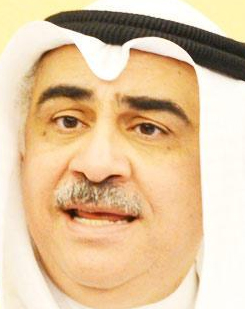
MERS infectionsFakeih enumerated the measures taken by the Ministry of Health in coordination with all local and global agencies and the ministry of agriculture. He said that the same efforts would be further intensified during the Umrah and Haj season to have the disease under control in the Kingdom.

“The ministry will be able to ensure proactive and swift action against future public health challenges, such as MERS-CoV through continuous coordination and monitoring. Topnotch clinicians, scientists, researchers and health care and emergency planning experts will work for a new health Command and Control Center (CCC).

The CCC will ensure that health challenges are managed with a systematic, holistic and comprehensive approach.

The center currently has 11 platforms, each of which is tasked with a specific topic, all under the coordination of the control tower platform.

“We have now documented every single MERS case that occurred in the Kingdom since September 2012,” the minister said, pointing out that so far 689 cases have been reported including 283 deaths. A total of 53 patients are under treatment and 353 have recovered from the illness.

He said the summer season would not aggravate the spread of the disease in the Kingdom. However, he added that concerted efforts must be made by people to observe personal hygiene to cover their noses while sneezing and coughing. He said the ministry is in the process of gearing up its 500 hospitals to meet the health challenges in the country.

Meanwhile, researchers have found the first direct evidence that the virus jumps directly from camels to humans.

The latest findings in the New England Journal of Medicine are based on a 44-year-old Saudi man who kept a herd of nine camels and who died of MERS in November 2013.

His friends said they witnessed him applying a topical medicine to the nose of one of his ill camels — four of them were reportedly sick with nasal discharge — seven days before he himself became stricken with MERS.

Researchers sequenced the virus found in one of the sick camels and the virus that killed the man, and found that their genomes were identical.

“These data suggest that this fatal case of human MERS-CoV infection was transmitted through close contact with an infected camel,” said the study led by Tariq Madani at the department of medicine, King Abdulaziz University in Jeddah.

Previous research has suggested that the virus has been quite common in camels for at least the past 20 years, and was likely making the jump into humans.

Comments

Add new comment

  • Coastaldigest.com reserves the right to delete or block any comments.
  • Coastaldigset.com is not responsible for its readers’ comments.
  • Comments that are abusive, incendiary or irrelevant are strictly prohibited.
  • Please use a genuine email ID and provide your name to avoid reject.
Agencies
May 18,2020

Jeddah, May 18: Saudi Arabia’s Grand Mufti and head of the Council of Senior Scholars and the Department of Scientific Research and Ifta Sheikh Abdul Aziz Al Asheikh ruled that it is permissible to perform Eid Al-Fitr prayer at home under exceptional circumstances similar to the current pandemic situation. The prayer consists of two rakats with reciting more numbers of takbeer and without a sermon.

Speaking to Okaz/Saudi Gazette, he said that Zakat Al-Fitr could be distributed through charitable societies if they are reliable ones, with the condition that it should be distributed before the day of Eid. The Grand Mufti urged parents to bring joy and happiness to their children and their families by spending more on them.

Meanwhile, Sheikh Abdul Salam Abdullah Al-Sulaiman, member of the Council of Senior Scholars and the Standing Committee of Fatwa, said that Eid prayer could be performed individually or in congregation.

Speaking to Okaz/Saudi Gazette, he said that the worshiper will recite takbeer to start salat and then follow it with six more takbeer in the first rakat before reciting Fatiha loudly and then it is ideal to recite Surah Al-Qaf.

In the second rakat, there will be five takbeer after the takbeer at the start of the rakat before starting to recite Surah Fatiha and then Surah Al-Qamar, following the example of the Prophet (peace be upon him). It is also ideal to recite Surah Al-A’la and Al-Ghashiya instead of Al-Qaf and Al-Qamar in each rakat respectively.

Sheikh Al-Sulaiman also cited the example of Anas Bin Malik, a prominent companion of the Prophet (pbuh). When Anas (May Allah be pleased with him), was at his home in Zawiya, a place near Basra, he did not find any Eid congregation prayer and therefore he performed prayer along with his family members and his aide Abdullah Bin Abi Otba.

The scholar said that the time for Eid prayer begins after sunrise and the best time is after the sun rises by the height of one or two spears as agreed by most scholars. This means 15 or 30 minutes after sunrise and its time continues until the end of the time of the Duha prayer; that is before the Zuhr prayer begins.

The prayer is forbidden at the moment when the sun rises, and the majority of jurists, including the schools of thought of Shafi, Maliki, and Hanbali opposed prayer at sunrise and favored to perform the prayer only after the sun rises by the height of one or two spears in the sky.

Regarding the recitation of takbeer on the occasion of Eid Al-Fitr, Sheikh Al-Suleiman said that it should begin during the night of the Eid and continue until the beginning of the Eid prayer.

Comments

Add new comment

  • Coastaldigest.com reserves the right to delete or block any comments.
  • Coastaldigset.com is not responsible for its readers’ comments.
  • Comments that are abusive, incendiary or irrelevant are strictly prohibited.
  • Please use a genuine email ID and provide your name to avoid reject.
News Network
January 6,2020

Riyadh, Jan 6: Saudi Arabia was not consulted by its ally Washington over a US drone strike that killed a top Iranian general, an official said Sunday, as the kingdom sought to defuse soaring regional tensions.

Saudi Arabia is vulnerable to possible Iranian reprisals after Tehran vowed "revenge" following the strike on Friday that killed powerful commander Qasem Soleimani in Baghdad.

"The kingdom of Saudi Arabia was not consulted regarding the US strike," a Saudi official told AFP, requesting anonymity.

"In light of the rapid developments, the kingdom stresses the importance of exercising restraint to guard against all acts that may lead to escalation, with severe consequences," the official added.

Saudi Arabia's foreign ministry made a similar call for restraint at the weekend and King Salman emphasised the need for measures to defuse tensions in a phone call on Saturday with Iraqi President Barham Saleh.

In a separate phone call with Iraq's Prime Minister Adel Abdel Mahdi, Saudi Crown Prince Mohammed bin Salman stressed "the need to make efforts to calm the situation and de-escalate tensions", the official Saudi Press Agency reported.

The crown prince has instructed Prince Khalid bin Salman, his younger brother and deputy defence minister, to travel to Washington and London in the next few days to urge restraint, the pan-Arab Asharq al-Awsat newspaper reported.

Prince Khalid will meet White House and US defence officials, the paper said, citing unnamed sources.

The killing of Soleimani, seen as the second most powerful man in Iran, is the most dramatic escalation yet in spiralling tensions between Washington and Tehran and has prompted fears of a major conflagration in the Middle East.

US President Donald Trump, who ordered the drone strike, has warned that Washington will hit Iran "very fast and very hard" if the Islamic republic attacks American personnel or assets.

The American embassy in Riyadh on Sunday warned its citizens living close to military bases and oil and gas installations in the kingdom of a "heightened risk of missile and drone attacks".

A string of attacks blamed on Iran has caused anxiety in recent months, as Riyadh and Washington deliberated over how to react.

In particular, devastating strikes against Saudi oil installations last September led Riyadh and Abu Dhabi to adopt a more conciliatory approach aimed at avoiding confrontation with Tehran.

Analysts warn that pro-Iran groups have the capacity to carry out attacks on US bases in Gulf states as well as against shipping in the Strait of Hormuz -- the strategic waterway that Tehran could close at will.

"Expect Iranian reprisals (directly or through partner groups in Iraq, Lebanon or elsewhere) to target US partners in the region including Saudi Arabia," said Thomas Juneau, an assistant professor at the University of Ottawa.

"Given the climate in the US, where support for Saudi in the media and Congress is at an all time low, it will be difficult for Trump to commit significant resources to come to its aid."

Yemen's pro-Iran Huthi rebels, locked in a five-year conflict with a Saudi-led military coalition, have also called for swift reprisals for Soleimani's killing.

"The aggression... will not go without a response," said Huthi political council member Mohammed Al-Bukhaiti.

"How the response is going to be, when and where will be determined by Iraq and Iran, and we will stand with them as a hub for the resistance."

It was unclear if the Huthi warning was directed in part at Saudi Arabia, which has stepped up efforts to end Yemen's conflict amid a lull in Huthi attacks on the kingdom.

Saudi Arabian military commanders recently met with counterparts from "friendly countries" to formulate a new strategy to tackle the Yemeni rebels, particularly those "opposing" a political solution, according to Asharq al-Awsat.

Riyadh has said it will host a separate meeting of foreign ministers of Arab and African coastal states on Monday.

Comments

Add new comment

  • Coastaldigest.com reserves the right to delete or block any comments.
  • Coastaldigset.com is not responsible for its readers’ comments.
  • Comments that are abusive, incendiary or irrelevant are strictly prohibited.
  • Please use a genuine email ID and provide your name to avoid reject.
coastaldigest.com web desk
July 6,2020

Dubai, July 6: In an attempt to make a comeback in the tourism sector amidst managing covid-19 crisis, Dubai is all set to welcome holiday-makers from foreign countries from July 7.

It said those entering would have to present certificates to show they had recently tested negative for the coronavirus or would undergo tests on arrival at Dubai airports.

Reassuring tourists of several comprehensive measures to prevent the transmission of the pandemic, Dubai Tourism urged global travellers to make the city that boasts world class health and safety standards "a must-visit destination."

Dubai Tourism hosted a virtual forum for stakeholders and partners to share its industry outlook ahead of the city's reopening to international tourists.

The forum, which was attended by nearly 2,000 key executives from the aviation, travel and hospitality sectors and across tourism touch-points, provided a first-hand insight into current and post-pandemic strategies that will help accelerate tourism momentum and position Dubai as a safe global destination.

Helal Saeed Almarri, director general, Dubai Tourism, said that the city has put in place a robust strategy to manage the pandemic with the key priority being to safeguard the health and well-being of citizens, residents and guests.

Dubai, which saw a 5.1 per cent in tourist traffic to 16.73 million in 2019, remains top of mind for travellers and ranks high in global Internet search rankings for tourist destinations.

Dubai Tourism has launched marketing activities designed to convey positive messages about travel in today's environment, Dubai's preparedness, high standards of quality and safety, unique experiences that await visitors and also address traveller concerns across every touch-point in their journey.

The forum highlighted the preventive measures taken so far against Covid-19 that have further elevated the UAE's standing as one of the world's safest countries. The UAE is globally ranked No.3 in testing per million of population. It was also ranked No.3 in an international survey that assessed satisfaction with governments' response to the pandemic.

Over 350 influencers were also deployed to take the Dubai story in 14 different languages to a global audience spanning 18 markets, which yielded over 21 million engagements across multiple social media platforms.

Comments

Add new comment

  • Coastaldigest.com reserves the right to delete or block any comments.
  • Coastaldigset.com is not responsible for its readers’ comments.
  • Comments that are abusive, incendiary or irrelevant are strictly prohibited.
  • Please use a genuine email ID and provide your name to avoid reject.