



Fast-food chains starved for customers during Ramadan

[email protected] (Arab News)
June 4, 2017

Jeddah, Jun 4: Let's face it. Saudis love their fast food. McDonald's, Hardee's and KFC are all wildly successful in the Middle East market, but are American fast food chains compatible with the very Middle Eastern rituals of Ramadan?ff
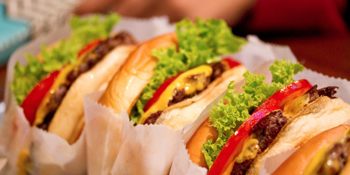
Not so much. For reasons only Arabs can explain, American fast food is not a good fit when it comes to traditional Middle Eastern food during Ramadan and other cultural and religious rituals.

Fast-food chains entice observers of the fast during the holy month of Ramadan with lower prices and all-you-can-eat offers. But is that enough to replace home-cooked meals with fried chicken and pizza?

Fast-food chains provide instant gratification for families on the go, and especially commuters on the way home from work as they try to get their takeaway before the restaurants close for prayer. But during Ramadan it is a far different story. Families breaking fast at sunset prefer home-cooked meals at home and reserve eating out for special occasions.

Ramadan is celebrated annually by Muslims who fast for about 30 days as the fourth pillar of Islam. Muslims refrain from eating, drinking beverages and smoking from sunrise — at Fajr prayer — until sunset when they break the fast for iftar.

Naif Al-Jabally, a supervisor for one of the McDonald's restaurants in Jeddah, told Arab News that fast-food chains take a huge hit in food sales during Ramadan. Nearly every restaurant in the Kingdom is closed until after Asr prayer around 4 p.m.

Most fast food chains attempt to attract customers during Ramadan by offering special meals that include dates and with affordable prices as they remain closed during the day and open only in the evening.

McDonald's, which has a delivery service year-round, offers deliveries during Ramadan from 9 p.m. to dawn. Yet marketing fast food during the holy month does not always work.

“There are way more customers during normal days (the rest of the year) than during Ramadan,” Al-Jabally said. “During Ramadan, we open at 5:30 p.m.”

And when customers do order a Ramadan meal, it is usually from the regular menu.

“There is no noticeable demand for the Ramadan meal,” Al-Jabally said.

Maha Nasir, 45, told Arab News that she likes to enjoy iftar outside the home, but at a restaurant that serves quality food. “We love to have iftar outside with the family once a week,” she said. “We like to go to the open buffet of any restaurant.”

Al-Baik, a Saudi favorite with a reputation for attracting crowds of patrons, also struggles during Ramadan.

“Customers are usually much more in number during the year than in Ramadan,” said a cashier at a Jeddah Al-Baik branch, who noted that the number of customers drop by nearly half during Ramadan.

In fact, Al-Baik makes no attempt to market Ramadan meals to its customers, preferring to stand by its main menu of roasted chicken and deep-fried shrimp.

Al-Tazaj jumps on the Ramadan bandwagon with a SR6 meal that includes dates, Laban, sambosa, soup, water, green salad and Arabic coffee.

Pizza Hut has a special Ramadan Box offer for SR89 that throws in sambosa with its regular pizza selections.

Restaurant operators, however, generally recognize that a fast-food meal defeats the purpose of iftar, which should be a light meal with perhaps something heavier later in the evening.

Maha Nasir makes it a point to avoid all fast-food establishments.

“My kids and I avoid fast-food during Ramadan as the meal because it will be full of fat and that is not good for our stomach. Iftar should be healthy. It can be grilled and contains salad or soup.”

For most families, Ramadan means home, family, fresh and home-cooked food.

Nora Al-Sabea, 29, and the mother of five, told Arab News that it is all about being at home.

“I don't prefer iftar outside unless there is a family gathering,” she said.

But then, like every parent who is outnumbered by the children, they sometimes cave in to pressure.

“I prefer the food I cook myself. No way will there be fast-food unless the kids are insisting.”

Comments

Add new comment

  • Coastaldigest.com reserves the right to delete or block any comments.
  • Coastaldigset.com is not responsible for its readers’ comments.
  • Comments that are abusive, incendiary or irrelevant are strictly prohibited.
  • Please use a genuine email ID and provide your name to avoid reject.
Agencies
June 5,2020

Expatriate workers who fail to abide by the coronavirus protocols in Kingdom of Saudi Arabia may face deportation, according to media reports.

“Individuals who fail to abide by preventive measures, including wearing medical or cloth face masks, failing to observe social distancing and refusing to have their temperatures taken, will be fined SR1,000. The fine will be doubled if the violation is repeated. Residents will be deported after paying the fines,” Okaz newspaper said.

Authorities called on people to report offenders by dialling the toll free number 999, except for the holy city of Makka, where the toll free number is 911.

As per the newly-revised Saudi protocols, social gatherings such as mourning or celebration events that take place inside homes, rest houses or farms, are allowed, but attendants should not exceed 50 persons.

The private sector is also required to adhere to precautionary measures: providing their staff with disinfectants and sanitisers, taking the temperatures of both staff and customers at the entrances of shopping malls.

Other measures include sterilising shopping trolleys and baskets after each use, sanitising facilities and surfaces, closing children’s play areas and fitting rooms in shopping malls and ready-wear outlets.

Authorities highlighted the need for all individuals and entities to abide by health safety rules, social-distancing protocol and the new guidelines set for social gatherings.

Comments

Add new comment

  • Coastaldigest.com reserves the right to delete or block any comments.
  • Coastaldigset.com is not responsible for its readers’ comments.
  • Comments that are abusive, incendiary or irrelevant are strictly prohibited.
  • Please use a genuine email ID and provide your name to avoid reject.
Agencies
March 1,2020

Paris, Mar 1: Most of the riders and teams taking part in the abandoned UAE Tour, and who had been quarantined in their Abu Dhabi hotels since Thursday after a coronavirus scare, were cleared to leave the country, sources said.

"The pleasure of going home after several days spent at the hotel," tweeted 2018 world champion Alejandro Valverde, one of the top stars of the race along with Chris Froome, the four-time winner of the Tour de France.

"We are doing well and soon we will fly to Spain."

However, there was confusion over how many competitors and officials will be allowed to leave.

All 133 cyclists who were still in contention as well as team members were tested after it was announced by organisers Thursday that two Italian staff members on the race had tested positive for the COVID-19 virus.

Earlier Saturday, the UAE Tour, quoting health officials, said that 167 people had been tested and all were negative.

The Department of Health-Abu Dhabi were "still monitoring the condition of the remaining cases of contacts, whose lab testing findings will be available in the next few hours."

The UAE Tour cancelled its last two stages on Thursday after the coronavirus cases were confirmed.

Danish cyclist Michael Morkov of the Deceuninck-Quick-Step team, who took part in the first four stages, was placed in isolation in his hotel room after arriving in Berlin to take part in the world track championships.

However, on Saturday, he too was cleared to take part.

"The rider present in Berlin is currently in excellent health, with no suspicious clinical signs, and we are also guaranteed that he has not contacted the two members of the management of a team participating in the UAE Tour, originally suspected of coronavirus," governing body UCI said in a statement.

Comments

Add new comment

  • Coastaldigest.com reserves the right to delete or block any comments.
  • Coastaldigset.com is not responsible for its readers’ comments.
  • Comments that are abusive, incendiary or irrelevant are strictly prohibited.
  • Please use a genuine email ID and provide your name to avoid reject.
News Network
June 12,2020

Beirut, Jun 12: Angry Lebanese protesters blocked roads across the country with burning tyres, debris and their vehicles, incensed over the local currency's depreciation by more than 25 percent in just two days.

The demonstrations from northern Akkar and Tripoli to central Zouk, the eastern Bekaa Valley, Beirut and southern Tyre and Nabatieh on Thursday were some of the most widespread in months of upheaval over a calamitous economic and financial crisis.

Protesters set ablaze a branch of the Central Bank, vandalised several private banks and clashed with security forces in several areas. At least 41 people were injured in Tripoli alone, according to the Lebanese Red Cross.

"I'm really pissed off, that's all. If politicians think they can burn our hearts like this the fire is going to reach them too," unemployed computer engineer Ali Qassem, 26, told Al Jazeera after pouring fuel onto smouldering tyres on a main Beirut thoroughfare.

Tens of thousands of Lebanese have lost jobs in the past six months and hundreds of businesses have shuttered as a dollar shortage led the Lebanese pound to slide from 1,500 to $1 last summer - where it was pegged for 23 years - to roughly 4,000 for each US dollar last month.

But the slide turned into a freefall between Wednesday and Thursday when the pound plummeted to roughly 5,000 to $1 on black markets, which have become a main source of hard currency. There was widespread speculation the rate hit 6,000 or even 7,000 pounds to the dollar, though most markets stopped trading.

Protesters began amassing on streets across the country before sunset and increased into the thousands across the country as the night fell.

Prime Minister Hassan Diab cancelled all meetings scheduled for Friday to hold an emergency cabinet session at 9:30am and another at 3pm at the presidential palace to be headed by President Michel Aoun.

The pound's collapse is the perhaps the biggest challenge yet for Diab's young cabinet, which gained confidence in February after former prime minister Saad Hariri's government was toppled by an unprecedented October uprising that had the country's economic crisis at its core.

Economy Minister Raoul Nehme told Al Jazeera that there was "disinformation" being circulated about the exchange rate on social media and said he was investigating possible currency manipulation.

"I don't understand how the exchange rate increased by so much in two days," he said.

Many protesters have pitted blame on Central Bank governor Riad Salameh, nominally in charge of  keeping the currency stable. But they have also called on the government to resign.

"If people want reform between dawn and dusk, that's not going to work, and if someone thinks they can do a better job then please come forward," Nehme said.

"But what we can't have is a power vacuum - then the exchange rate won't be 5000, it'll be a catastrophe."

'Everyone paying the price'

When protesters set a large fire in Beirut's Riad al-Solh Square, which lies at the foot of a grand Ottoman-era building that serves as the seat of government, firefighters did not intervene to extinguish it.

It later became clear why: Civil Defence told local news channel LBCI they had run out of diesel to fuel their firetrucks.

Basic imports such as fuel have been hit hard by the currency crisis, making already-weak state services increasingly feeble.

A half-dozen or so police officers with Lebanon's Internal Security Forces observed the scene unfolding in front of them in the square.

"Why do you destroy shops and things and attack us security forces - do you think we're happy? Go and f****** break that wall or go to the politicians' houses," one police officer told Al Jazeera, referring to a large concrete barrier separating protesters from the seat of government.

"In the end we are with you and we want the country to change. Don't you dare think we're happy. My salary is now worth $130," the officer said.

The currency's spectacular fall seems to have pushed many Lebanese to put common interests above their differences.

Large convoys of men on motorbikes from Shia-majority areas of southern Beirut joined the demonstrations on Thursday, though they have clashed with protesters many times before - including at a protest on Saturday.

Some chanted sectarian insults, leading to brief clashes in areas that were formerly front lines during the country's devastating 15-year civil war.

Instead, the motorbike-riding demonstrators on Thursday chanted: "Shia, Sunni, F*ck sectarianism."

"We are Shia, and Sunnis and Christian are our brothers," Hisham Houri, 39, told Al Jazeera, perched on a moped with his fiancee behind him just a few metres from a pile of burning tyres.

The blaze sent thick black smoke into the sky towards an iconic blue-domed mosque and church in downtown Beirut.

"Politicians play on these sectarian issues and sometimes succeed, but in the end, they'll fail because all the people have been hurt," he said. "The dollar isn't just worth 6,000 for Shias or for Sunnis, everyone is paying that price."

Comments

Add new comment

  • Coastaldigest.com reserves the right to delete or block any comments.
  • Coastaldigset.com is not responsible for its readers’ comments.
  • Comments that are abusive, incendiary or irrelevant are strictly prohibited.
  • Please use a genuine email ID and provide your name to avoid reject.