


Five Indian-Americans in Forbes list of US' richest

September 30, 2014

New York, Sep 30: Five Indian-Americans have been named among the 400 richest people in the US by Forbes, a list topped by Microsoft co-founder Bill Gates for the 21st year in a row with a net worth of USD 81 billion.
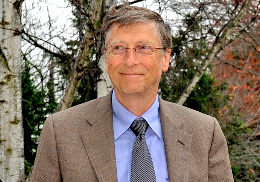
Forbes listFounder of outsourcing firm Syntel Bharat Desai, entrepreneur John Kapoor, Symphony Technology founder Romesh Wadhwani, Silicon Valley angel investor Kavitark Ram Shriram and venture capitalist Vinod Khosla are among 'The Richest People In America 2014' list by Forbes.

Forbes said 2014 was another record year for American wealth, when the aggregate net worth of the richest 400 Americans was USD 2.29 trillion, up USD 270 billion from a year ago.

"Thanks to a buoyant stock market, the richest people in the US just keep getting richer," Forbes said.

Gates is the richest American for the 21st year in a row, with a net worth of US 81 billion. The Microsoft chairman's stake in the software company he cofounded accounts for just under 20 per cent of his total net worth. His friend Warren Buffett, chief executive of Berkshire Hathaway, occupies the number two spot on the 400, a rank he has held since 2001 with a net worth of USD 67 billion.

Larry Ellison, who just announced that he was giving up the CEO role at Oracle, the software firm he founded, comes in at number three, with a net worth of 50 billion dollars.

Desai and his family rank 255 on the list, followed by Kapoor who is ranked 261, Wadhwani (264), Shriram (350) and Khosla (381).

Facebook co-founder and CEO Mark Zuckerberg is now the 11th richest person in the US, and the biggest dollar gainer on the list. His fortune soared to USD 34 billion, up USD 15 billion since last year, due to a sharp rise in the price of the social network's shares.

Desai, 61, and wife Neerja Sethi founded outsourcing firm Syntel in 1980 while studying at University of Michigan. The Indian Institute of Technology alumnus has a networth of USD 2.5 billion.

Kapoor, 71, debuts on The Forbes 400 as a serial entrepreneur who has founded two pharmaceutical companies that he has guided to exceptional success.

The bulk of his wealth is concentrated in shares of Akorn Pharmaceuticals, an Illinois-based generics manufacturer that Kapoor has been involved with since the early 1990s, and INSYS Therapeutics, a cancer-treatment maker that went public in May 2013.

Kapoor, whose net worth is USD 2.5 billion, also has a small chain of fast-casual Indian restaurants in Arizona called Bombay Spice, as well as Roka Akor Japanese eateries in Chicago, Scottsdale and San Francisco.

Wadhwani, 67, an Indian Institute of Technology Bombay alumnus has a net worth of USD 2.5 billion. Forbes said over the last decade, his galaxy of companies has expanded to 20 and is generating three billion dollars in revenues with 18,000 employees worldwide.

He is the recipient of the 2013 Forbes India 'Non-Resident Philanthropist Award' and sits on the boards of the Kennedy Center and the Center for Strategic and International Studies. Wadhwani signed Bill Gates' and Warren Buffett's Giving Pledge last year.

Shriram, 57, has a net worth of USD 1.87 billion. He was an early Google backer and has been a Silicon Valley angel investor since 2000. Through his Sherpalo Ventures, he has backed early-stage tech firms such as Zazzle and Paperless Post, as well as the frozen yogurt retailer Pinkberry.

Shriram made most of his fortune through Google and has been on its board since the company was founded in 1998. In June 2014, Shriram and his wife donated $61 million to engineering initiatives at Stanford University, which both of his daughters attended and where he is a board trustee.

Khosla, 59, has a net worth of USD 1.67 Billion and has run his own venture capital firm, Khosla Ventures, since 2004, following nearly two decades at VC firm Kleiner Perkins. His highest-profile investments have lately been in clean tech: wood-based biofuel, new types of batteries and water purification.

All together, the 400 wealthiest Americans are worth a staggering USD 2.29 trillion, up USD 270 billion from a year ago.

The average net worth of list members is USD 5.7 billion, USD 700 million more than last year and a record high. An impressive 303 of the 400 saw the value of their fortunes rise compared to a year ago. Only 36 people from last year's list had lower net worths this year.

The list has 27 newcomers including Elizabeth Holmes the youngest woman on the list, and the youngest self-made female billionaire in the world. Just 30 years old, the Stanford University dropout has built blood testing company Theranos into a firm that venture capitalists have valued at USD 9 billion.

Comments

Add new comment

  • Coastaldigest.com reserves the right to delete or block any comments.
  • Coastaldigset.com is not responsible for its readers’ comments.
  • Comments that are abusive, incendiary or irrelevant are strictly prohibited.
  • Please use a genuine email ID and provide your name to avoid reject.
News Network
June 1,2020

Jun 1: The new coronavirus is losing its potency and has become much less lethal, a senior Italian doctor said on Sunday.

"In reality, the virus clinically no longer exists in Italy," said Alberto Zangrillo, the head of the San Raffaele Hospital in Milan in the northern region of Lombardy, which has borne the brunt of Italy's coronavirus contagion.

"The swabs that were performed over the last 10 days showed a viral load in quantitative terms that was absolutely infinitesimal compared to the ones carried out a month or two months ago," he told RAI television.

Italy has the third-highest death toll in the world from COVID-19, with 33,415 people dying since the outbreak came to light on Feb. 21. It has the sixth-highest global tally of cases at 233,019.

However new infections and fatalities have fallen steadily in May and the country is unwinding some of the most rigid lockdown restrictions introduced anywhere on the continent.

Zangrillo said some experts were too alarmist about the prospect of a second wave of infections and politicians needed to take into account the new reality.

"We've got to get back to being a normal country," he said. "Someone has to take responsibility for terrorizing the country."

The government urged caution, saying it was far too soon to claim victory.

"Pending scientific evidence to support the thesis that the virus has disappeared ... I would invite those who say they are sure of it not to confuse Italians," Sandra Zampa, an undersecretary at the health ministry, said in a statement.

"We should instead invite Italians to maintain the maximum caution, maintain physical distancing, avoid large groups, to frequently wash their hands and to wear masks."

A second doctor from northern Italy told the national ANSA news agency that he was also seeing the coronavirus weaken. "The strength the virus had two months ago is not the same strength it has today," said Matteo Bassetti, head of the infectious diseases clinic at the San Martino hospital in the city of Genoa.

"It is clear that today the COVID-19 disease is different."

Comments

Add new comment

  • Coastaldigest.com reserves the right to delete or block any comments.
  • Coastaldigset.com is not responsible for its readers’ comments.
  • Comments that are abusive, incendiary or irrelevant are strictly prohibited.
  • Please use a genuine email ID and provide your name to avoid reject.
News Network
February 19,2020

Washington, Feb 19: US President Donald Trump has said he is "saving the big deal" with India for later and he "does not know" if it will be done before the presidential election in November, clearly indicating that a major bilateral trade deal during his visit to Delhi next week might not be on the cards.

"We can have a trade deal with India. But I'm really saving the big deal for later," he told reporters at Joint Base Andrews Tuesday afternoon (local time).

The US and India could sign a "trade package" during the visit, according to media reports.

Asked whether he expects a trade deal with India before the visit, Trump said, "We're doing a very big trade deal with India. We'll have it. I don't know if it'll be done before the election, but we'll have a very big deal with India."

US Trade Representative Robert Lighthizer, the point-person for trade negotiations with India, is likely to not accompany Trump to India, sources said. However, officials have not ruled it out altogether.

In an apparent dissatisfaction over US-India trade ties, Trump said, "We're not treated very well by India." But he praised Prime Minister Narendra Modi and said he is looking forward to his visit to India.

"I happen to like Prime Minister Modi a lot," Trump said.

"He told me we'll have seven million people between the airport and the event. And the stadium, I understand, is sort of semi under construction, but it's going to be the largest stadium in the world. So it's going to be very exciting... I hope you all enjoy it," he told reporters.

Meanwhile, the US-India Strategic and Partnership Forum (USISPF) in a report said the latest quarterly data depict continuation of overall positive bilateral trade trends. The third quarter data reflects some downslide in growth rates.

"It may be due to several reasons, including the unexpected economic slowdown in India's economic growth, impact of US-China trade war, GSP withdrawal from the US side and retaliatory tariffs on specific US goods from the Indian side," USISPF said.

According to the report, the data available for the first three quarters of 2019 (January-September) pulled the overall growth rate in cumulative bilateral trade down to 4.5 percent from 8.4 percent registered for the first two quarters.

Goods and services trade performance in third quarter was dismal at -2.3 percent, in contrast with the impressive 9.6 percent growth witnessed for the first two quarters of the year; while trade in services was up two percent goods trade dropped five percent, the report said.

The cumulative US-India trade in goods and services (USD 110.9 billion) for the first three quarters of 2019 increased 4.5 percent with US exports and imports growing at four percent and five percent respectively.

The US exported USD 45.3 billion worth of goods and services to India in the first three quarters 2019, up 4 percent from the corresponding period in the previous year; and the US imported USD 65.6 billion worth of goods and services from India, up five percent from the previous year's USD 62.5 billion level for the same period, it said.

The USISPF has projected that the total bilateral trade can touch USD 238 billion by 2025 if the current 7.5 percent average annual rate of growth sustains; however, higher growth rates can result in bilateral trade in the range of USD 283 billion and USD 327 billion.

The US remains the top trading partner for India in terms of trade in goods and services, followed by China. While the bilateral trade between US and India is approximately 62 percent in goods and 38 percent in services, the bilateral trade between India and China is dominated by goods.

China had a huge trade surplus of USD 58 billion with India, indicating Beijing's strength in the Indian market, especially in sectors, such as electronics, machinery, organic chemicals, plastics and medical devices.

The US goods exports to India, in comparison, were mainly concentrated in mineral fuels, precious stones, and aircraft. The US faces tough competition with China in the Indian market in areas such as electronics, machinery, organic chemicals and medical devices.

Comments

Add new comment

  • Coastaldigest.com reserves the right to delete or block any comments.
  • Coastaldigset.com is not responsible for its readers’ comments.
  • Comments that are abusive, incendiary or irrelevant are strictly prohibited.
  • Please use a genuine email ID and provide your name to avoid reject.
News Network
July 25,2020

Madrid, Jul 25: Spain is witnessing a new surge in virus" coronavirus infections with nearly a thousand cases daily, a month after lifting the pandemic lockdown.

The country is reinstating both voluntary guidelines and mandatory restrictions that it had lifted on June 21, The Washington Post reported.

Spain on Wednesday reported over 224 outbreaks and 2,622 virus" coronavirus cases. According to a report in Washington Post, the new surge is attributed primarily to seasonal farmworkers, people attending family get-togethers and nightclub partyers.

On Thursday, the health ministry reported an additional 971 cases.

"The majority are related to fruit collection and also to the spaces where measures to avoid contact are relaxed," Spain Health Minister Salvador Illa told parliament. "We have to call on citizens to not lose respect for the virus not to be afraid of it, but not to lose respect for it either."

The government of Spain lifted all restrictions put in place to combat virus" coronavirus on June 21 and declared 'a new normal'. 

The virus" coronavirus pandemic till then had killed 24,000 people and infected more than 2,70,166.

Countries around the world are witnessing the second surge of virus" coronavirus. The resurgence could threaten the economic bounce Spain was hoping to get from vacationers eager for summer fun.

The surge in cases has been greatest in the northeastern region of Catalonia with more than 7,953 new confirmed cases since July 10.

Spain's National Epidemiological Survey has predicted that the rate of increase more than doubled in the past three weeks.

Meanwhile, the Catalan government reverted to pre-June 21 confinement rules in Barcelona and a dozen other municipalities in the metropolitan area, as well as in Figueras, Vilafant, La Noguera and Lleida.

Authorities have ordered bars and restaurants to limit indoor occupancy to 50 per cent, reduced sports to fewer than 10 people, closed night clubs and gyms and blocked some cultural activities.

The epidemiologist in charge of the region's biggest hospital warned in an interview last week with the Spanish daily El Pais that the situation in the agricultural hub of Lleida, located about 100 miles west of Barcelona, "had clearly gotten out of hand."

"Nobody foresaw that there would be a number of people coming from abroad to pick fruit in unfavourable conditions and that they might be infected," said epidemiologist Magda Campins of Vall d'Hebron in Barcelona. "And when the infections began to be detected, it was hard to keep tabs on the cases and their contacts because some of them, although they should have been in isolation, got away because they needed to earn money."

Catalonia's Department of Labour, Social Affairs and Family is using a hotel in Lleida to quarantine fruit workers who test positive for COVID-19 but are unable to isolate at home.

In the capital of Madrid, which was the epicentre during the pandemic's first wave in the spring, authorities reported 710 new cases in the past week. The use of face masks is widespread, but the region has shied away from making them mandatory in public.

Madrid's regional health secretary, Enrique Ruiz Escudero, defended that position while citing an uptick in infections in the under-40 age group. He told young people not to let down their guard.

"We can't take even one step backwards. Young people have to be aware of the responsibility they have," Ruiz Escudero said in a news conference Thursday. "I ask them to use the face mask and to maintain a safe distance."

Comments

Add new comment

  • Coastaldigest.com reserves the right to delete or block any comments.
  • Coastaldigset.com is not responsible for its readers’ comments.
  • Comments that are abusive, incendiary or irrelevant are strictly prohibited.
  • Please use a genuine email ID and provide your name to avoid reject.