


Five Indian-Americans in Forbes list of US' richest

September 30, 2014

New York, Sep 30: Five Indian-Americans have been named among the 400 richest people in the US by Forbes, a list topped by Microsoft co-founder Bill Gates for the 21st year in a row with a net worth of USD 81 billion.
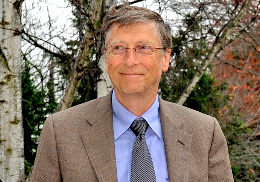
Forbes listFounder of outsourcing firm Syntel Bharat Desai, entrepreneur John Kapoor, Symphony Technology founder Romesh Wadhwani, Silicon Valley angel investor Kavitark Ram Shriram and venture capitalist Vinod Khosla are among 'The Richest People In America 2014' list by Forbes.

Forbes said 2014 was another record year for American wealth, when the aggregate net worth of the richest 400 Americans was USD 2.29 trillion, up USD 270 billion from a year ago.

"Thanks to a buoyant stock market, the richest people in the US just keep getting richer," Forbes said.

Gates is the richest American for the 21st year in a row, with a net worth of US 81 billion. The Microsoft chairman's stake in the software company he cofounded accounts for just under 20 per cent of his total net worth. His friend Warren Buffett, chief executive of Berkshire Hathaway, occupies the number two spot on the 400, a rank he has held since 2001 with a net worth of USD 67 billion.

Larry Ellison, who just announced that he was giving up the CEO role at Oracle, the software firm he founded, comes in at number three, with a net worth of 50 billion dollars.

Desai and his family rank 255 on the list, followed by Kapoor who is ranked 261, Wadhwani (264), Shriram (350) and Khosla (381).

Facebook co-founder and CEO Mark Zuckerberg is now the 11th richest person in the US, and the biggest dollar gainer on the list. His fortune soared to USD 34 billion, up USD 15 billion since last year, due to a sharp rise in the price of the social network's shares.

Desai, 61, and wife Neerja Sethi founded outsourcing firm Syntel in 1980 while studying at University of Michigan. The Indian Institute of Technology alumnus has a networth of USD 2.5 billion.

Kapoor, 71, debuts on The Forbes 400 as a serial entrepreneur who has founded two pharmaceutical companies that he has guided to exceptional success.

The bulk of his wealth is concentrated in shares of Akorn Pharmaceuticals, an Illinois-based generics manufacturer that Kapoor has been involved with since the early 1990s, and INSYS Therapeutics, a cancer-treatment maker that went public in May 2013.

Kapoor, whose net worth is USD 2.5 billion, also has a small chain of fast-casual Indian restaurants in Arizona called Bombay Spice, as well as Roka Akor Japanese eateries in Chicago, Scottsdale and San Francisco.

Wadhwani, 67, an Indian Institute of Technology Bombay alumnus has a net worth of USD 2.5 billion. Forbes said over the last decade, his galaxy of companies has expanded to 20 and is generating three billion dollars in revenues with 18,000 employees worldwide.

He is the recipient of the 2013 Forbes India 'Non-Resident Philanthropist Award' and sits on the boards of the Kennedy Center and the Center for Strategic and International Studies. Wadhwani signed Bill Gates' and Warren Buffett's Giving Pledge last year.

Shriram, 57, has a net worth of USD 1.87 billion. He was an early Google backer and has been a Silicon Valley angel investor since 2000. Through his Sherpalo Ventures, he has backed early-stage tech firms such as Zazzle and Paperless Post, as well as the frozen yogurt retailer Pinkberry.

Shriram made most of his fortune through Google and has been on its board since the company was founded in 1998. In June 2014, Shriram and his wife donated $61 million to engineering initiatives at Stanford University, which both of his daughters attended and where he is a board trustee.

Khosla, 59, has a net worth of USD 1.67 Billion and has run his own venture capital firm, Khosla Ventures, since 2004, following nearly two decades at VC firm Kleiner Perkins. His highest-profile investments have lately been in clean tech: wood-based biofuel, new types of batteries and water purification.

All together, the 400 wealthiest Americans are worth a staggering USD 2.29 trillion, up USD 270 billion from a year ago.

The average net worth of list members is USD 5.7 billion, USD 700 million more than last year and a record high. An impressive 303 of the 400 saw the value of their fortunes rise compared to a year ago. Only 36 people from last year's list had lower net worths this year.

The list has 27 newcomers including Elizabeth Holmes the youngest woman on the list, and the youngest self-made female billionaire in the world. Just 30 years old, the Stanford University dropout has built blood testing company Theranos into a firm that venture capitalists have valued at USD 9 billion.

Comments

Add new comment

  • Coastaldigest.com reserves the right to delete or block any comments.
  • Coastaldigset.com is not responsible for its readers’ comments.
  • Comments that are abusive, incendiary or irrelevant are strictly prohibited.
  • Please use a genuine email ID and provide your name to avoid reject.
News Network
April 12,2020

Apr 12: India and other South Asian countries are likely to record their worst growth performance in four decades this year due to the coronavirus outbreak, the World Bank said on Sunday.

The South Asian region, comprising eight countries, is likely to show economic growth of 1.8 per cent to 2.8 per cent this year, the World Bank said in its South Asia Economic Focus report, well down from the 6.3 per cent it projected six months ago.

India's economy, the region's biggest, is expected to grow 1.5 per cent to 2.8 per cent in the fiscal year that started on April 1. The World Bank has estimated it will grow 4.8 per cent to 5 per cent in the fiscal year that ended on March 31.

"The green shoots of a rebound that were observable at the end of 2019 have been overtaken by the negative impacts of the global crisis," the World Bank report said.

Other than India, the World Bank forecast that Sri Lanka, Nepal, Bhutan and Bangladesh will also see sharp falls in economic growth.

Three other countries - Pakistan, Afghanistan and the Maldives - are expected to fall into recession, the World Bank said in the report, which was based on country-level data available as of April 7.

Measures taken to counter the coronavirus have disrupted supply chains across South Asia, which has recorded more than 13,000 cases so far - still lower than many parts of the world.

India's lockdown of 1.3 billion people has also left millions out of work, disrupted big and small businesses and forced an exodus of migrant workers from the cities to their homes in villages.

In the event of prolonged and broad national lockdowns, the report warned of a worst-case scenario in which the entire region would experience an economic contraction this year.

To minimize short-term economic pain, the Bank called for countries in the region to announce more fiscal and monetary steps to support unemployed migrant workers, as well as debt relief for businesses and individuals.

India has so far unveiled a $23 billion economic plan to offer direct cash transfers to millions of poor people hit by its lockdown. In neighbouring Pakistan, the government has announced a $6 billion plan to support the economy.

"The priority for all South Asian governments is to contain the virus spread and protect their people, especially the poorest who face considerable worse health and economic outcomes," said senior World Bank official Hartwig Schafer.

Comments

Add new comment

  • Coastaldigest.com reserves the right to delete or block any comments.
  • Coastaldigset.com is not responsible for its readers’ comments.
  • Comments that are abusive, incendiary or irrelevant are strictly prohibited.
  • Please use a genuine email ID and provide your name to avoid reject.
News Network
May 7,2020

United Nations, May 7: An average of 80,000 COVID-19 cases were reported each day in April to the World Health Organization, the top UN health agency has said, noting that South Asian nations like India and Bangladesh are seeing a spike in the infections while the numbers are declining in regions such as Western Europe.

WHO Director-General Tedros Adhanom Ghebreyesus said on Wednesday that countries must also be able to manage any risk of the disease being imported into their territories, and communities should be fully educated to adjust to what will be a "new norm".

He said as the countries press forward in the common fight against COVID-19, they should also lay the groundwork for resilient health systems globally.

"More than 3.5 million cases of COVID-19 and almost 250,000 deaths have now been reported to the WHO. Since the beginning of April, an average of around 80,000 new cases have been reported to the WHO every day," Ghebreyesus said in Geneva yesterday.

Asserting that the virus cases were not just numbers, he said: "every single case is a mother, a father, a son, a daughter, a brother, sister or friend".

He said while the numbers are declining in Western Europe, more cases are being reported every day from Eastern Europe, Africa, South-East Asia, the Eastern Mediterranean and the Americas. Even within regions and within countries, there are divergent trends, the agency added.

While some countries are reporting an increase in COVID-19 cases over time, many have seen caseloads rise because they have ramped up testing, the WHO official said.

"We've also seen in Europe and Western Europe a fundamental decrease in the number of cases, but we have seen an associated increase in the number of cases reported in places like the Russian Federation. Southeast, the Western Pacific areas are relatively on the downward trend like Korea and others, but then we do see in South Asia, in places like Bangladesh, in India, some trends towards increase.

"So it's very difficult to say that any particular region is improving or (not improving). There are individual countries within each region that are having difficulties getting on top of this disease and I am particularly concerned about those countries that have (an) ongoing humanitarian crisis," WHO's Executive Director Michael Ryan said.

The death toll due to COVID-19 in India rose to 1,783 while the number of cases climbed to 52,952 on Thursday, registering an increase of 89 deaths and 3,561 cases in the last 24 hours, the Union Health Ministry said.

The number of active COVID-19 cases stood at 35,902 while 15,266 people have recovered, it said.

Noting that while seeing an increase in the number of cases is not good in terms of transmission, WHO's Emerging Diseases and Zoonoses Unit head Maria Van Kerkhove said: "but I don't want to equate that with something (being) wrong".

"I want to equate that with countries are working very hard to increase their ability to find the virus, to find people with the virus, to have testing in place to identify who has COVID-19, and putting into place what they need to do to care for those patients," Kerkhove said.

With more countries considering easing restrictions implemented to curb the spread of the coronavirus, the WHO has again reminded the authorities of the need to maintain vigilance.

"The risk of returning to lockdown remains very real if countries do not manage the transition extremely carefully, and in a phased approach," Ghebreyesus said.

He urged countries to consider the UN agency's six criteria for lifting stay-at-home measures.

That advice includes ensuring surveillance is strong, cases are declining and transmission is controlled. Health systems also must be able to detect, isolate, test and treat cases, and to trace all contacts.

Additionally, the risk of outbreak in settings such as health facilities and nursing homes needs to be minimised, while schools, workplaces and other public locations should have preventive measures in place.

"The COVID-19 pandemic will eventually recede, but there can be no going back to business as usual. We cannot continue to rush to fund panic but let preparedness go by the wayside," he said.

He said the crisis has highlighted the importance of strong national health systems as the foundation of global health security: not only against pandemics but also against the multitude of health threats that people across the world face every day.

"If we learn anything from COVID-19, it must be that investing in health now will save lives later," Ghebreyesus said.

While the world currently spends around USD 7.5 trillion on health annually, the WHO believes the best investments are in promoting health and preventing disease.

"Prevention is not only better than cure, it's cheaper, and the smartest thing to do," he said.

The deadly coronavirus, which originated from the Chinese city of Wuhan in December last year, has infected over 3.7 million people and killed 263,831 people globally, according to a tally by Johns Hopkins University.

Comments

Add new comment

  • Coastaldigest.com reserves the right to delete or block any comments.
  • Coastaldigset.com is not responsible for its readers’ comments.
  • Comments that are abusive, incendiary or irrelevant are strictly prohibited.
  • Please use a genuine email ID and provide your name to avoid reject.
News Network
January 31,2020

Wuhan, Jan 31: The World Health Organization declared a global emergency over the new coronavirus, as China reported Friday the death toll had climbed to 213 with nearly 10,000 infections.

The UN health agency based in Geneva had initially downplayed the threat posed by the disease, but revised its risk assessment after crisis talks.

suspended or reduced service to China include British Airways, German flag carrier Lufthansa, American Airlines, KLM and United.

Chinese efforts to halt the virus have included the suspension of classes nationwide and an extension of the Lunar New Year holiday.

All football matches across the country also will be postponed, the Chinese Football Association said on Thursday, including games in the top-tier Chinese Super League.

World stock markets tumbled again Thursday on fears that trouble in the "world's factory" would upset global supply chains and dent profits.

Toyota, IKEA, Starbucks, Tesla, McDonald's and tech giant Foxconn were among the corporate giants temporarily freezing production or closing large numbers of outlets in China.

Volkswagen announced Thursday its China joint-venture plants would not start production again before February 9.

US Federal Reserve Chairman Jerome Powell said the coronavirus posed a fresh risk to the world economy.

Throughout China, signs of paranoia multiplied, with residents of some Beijing residential compounds erecting makeshift barriers to their premises.

In one of many similar photos posted online, a man wearing a surgical mask and brandishing a traditional martial arts weapon squatted on a barricade outside a Chinese village, near a sign saying: "Outsiders forbidden from entering".

The crisis has caused food prices to spike, and the central government on Thursday blamed this partly on overzealous preventive measures, issuing a directive banning any roadblocks or other hindrances to food shipments.

Comments

Add new comment

  • Coastaldigest.com reserves the right to delete or block any comments.
  • Coastaldigset.com is not responsible for its readers’ comments.
  • Comments that are abusive, incendiary or irrelevant are strictly prohibited.
  • Please use a genuine email ID and provide your name to avoid reject.