Food-borne bacteria up miscarriage risk early in pregnancy

February 22, 2017

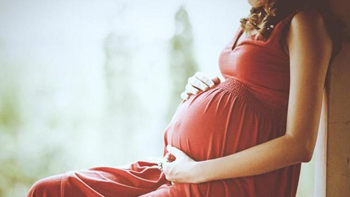
Feb 22: Listeria, a common food-borne bacterium, may pose a greater risk of miscarriage in the early stages of pregnancy than previously thought, says a study.

pregnancy“For many years, listeria has been associated with adverse outcomes in pregnancy, but particularly at the end of pregnancy,” said one of the researchers Ted Golos, Professor at University of Wisconsin-Madison in the US.

“What wasn’t known with much clarity before this study is that it appears it’s a severe risk factor in early pregnancy,” Golos said.

Pregnant women are warned to avoid many of the foods -- among them unpasteurised milk and soft cheese, raw sprouts, melon and deli meats not carefully handled -- that can harbour listeria, because the bacterium is known to cause miscarriage and still-birth, and spur premature labour.

But when it occurs, listeria infection in pregnancy may go unnoticed.

For the study, four pregnant rhesus macaques at the Wisconsin National Primate Research Centre were fed doses of the listeria comparable to what one might encounter in contaminated food.

None of the monkeys showed obvious signs of infection before their pregnancies came to abrupt ends, according to the results published in the journal mBio.

But in tissue samples taken after each monkey experienced intrauterine fetal death, the researchers found that listeria had invaded the placenta -- the connection between the mother-to-be and the foetus, which usually prevents transmission of bacteria -- as well as the endometrium, the lining of the uterus.

The researchers believe the inflammation caused by the maternal immune response to the fast-moving listeria also affects the placenta, keeping it from protecting the foetus.

The results suggest listeria (and perhaps other pathogens) may be the culprit in some miscarriages that usually go without diagnosed cause.

“There are effective antibiotics available. It is treatable,” said lead author of the study Bryce Wolfe, a graduate student at University of Wisconsin-Madison.

“The issue is that because it’s asymptomatic, the foetus may be infected by the time anyone realises the mother was infected,” Wolfe explained.

Comments

Wellspringivfs…
 - 
Thursday, 8 Feb 2018

Great post. Pregnant women are warned to avoid some foods such as unpasteurized milk, raw meat, and sprouts etc. because that may harbor listeria which may cause pregnancy complications such as miscarriage and stillbirth. http://www.wellspringivfsurrogacy.com/

Leesa
 - 
Thursday, 4 Jan 2018

Nice article. Listeria, a common food-borne bacterium increases the risk of miscarriage in early stages of pregnancy. It is important to follow the food safety measures. Listeria infection in pregnancy often goes unnoticed because of lack of awareness.  Expecting mothers should strictly avoid the food intake which contains listeria, as it may lead to miscarriage. To know more about pregnancy visit http://www.progenesisivf.com/

Add new comment

  • Coastaldigest.com reserves the right to delete or block any comments.
  • Coastaldigset.com is not responsible for its readers’ comments.
  • Comments that are abusive, incendiary or irrelevant are strictly prohibited.
  • Please use a genuine email ID and provide your name to avoid reject.
News Network
March 5,2020

Bergen, Mar 5: Divorce of parents may impact the academics of children negatively, suggests a new study.

According to the study, parental divorce is associated with a lower grade point average (GPA) among adolescents, with a stronger association seen in teens with more educated mothers.

The study was published in the journal PLOS ONE.

Children and adolescents with divorced or separated parents are known to do less well in school than adolescents with nondivorced parents and to be less well-adjusted, on average, across a spectrum of physical and mental health outcomes.

In the new study, researchers used data from the youth@hordaland study, a population-based survey of adolescents aged 16-19 conducted in the spring of 2012 in Hordaland County, Norway.

19,439 adolescents were invited to participate and 10,257 agreed; of those, 9,166 are included in the current study.

Overall, adolescents with divorced parents had a 0.3 point lower GPA (standard error 0.022, p<0.01) than their peers.

Controlling for parental education reduced the effect by 0.06 points to 0.240 (SE 0.021, p<0.01). This heterogeneity was predominantly driven by maternal education levels, the researchers found.

After controlling for paternal education and income measures, divorce was associated with a 0.120 point decrease in GPA among adolescents whose mothers had a secondary school education level; a 0.175 point decrease when mothers had a Bachelor's level education; and a 0.209 point decrease when mothers had a Master's or PhD level education (all estimates relative to adolescents with a mother who had a basic level of education, such as ISCED 0-2).

Due to the cross-sectional structure of the study, researchers could not investigate specific changes between pre- and post-divorce family life, and future studies are needed to investigate potential mechanisms (such as reduced parental monitoring or school-involvement) which might drive this finding.

Nonetheless, this study provides new evidence that the negative association between divorce and teens' GPA is especially strong in families with more educated mothers.

"Among Norwegian adolescents, parental divorce was hardly associated with GPA among youth whose parents have low educational qualifications. In contrast, among adolescents with educated or highly educated mothers, divorce was significantly associated with lower GPA," said the authors.

Comments

Add new comment

  • Coastaldigest.com reserves the right to delete or block any comments.
  • Coastaldigset.com is not responsible for its readers’ comments.
  • Comments that are abusive, incendiary or irrelevant are strictly prohibited.
  • Please use a genuine email ID and provide your name to avoid reject.
Dr G K Sudhakar Reddy
August 4,2020

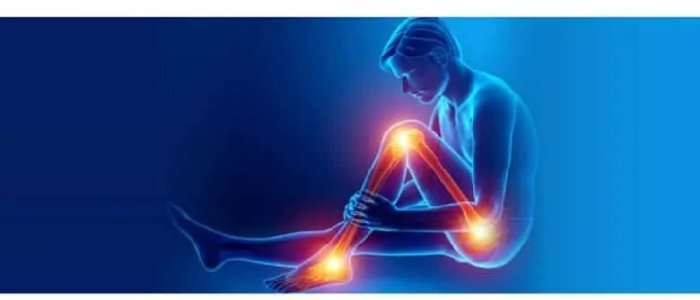
Being overweight or obese is now recognised as a serious cause of ill health and disability. There is a significant positive association between orthopaedic disorders and the level of obesity causing pain, deformity and difficulty in walking.

Excess body weight accumulation increases pressure on joints, particularly the hips, knees and ankles.

Here are a few type of  arthritis:

Osteoarthritis

It is a condition of damage/ wear and tear of the joint lining or cartilage. Obesity triggers this by loading excessive weight on the weight bearing joints like the knee and the hip. 

Knee Osteoarthritis

This is the most common arthritis especially in the Indian subcontinent.

While walking, an individual exerts 3 to 6 times pressure that of the body weight on the weight-bearing knee joint, which means in an obese with excess body weight, larger forces are exerted, which lead to higher risk of deterioration of cartilage.

In addition, there are excessive fat tissues that produce hormones and other factors that affect the joint cartilage metabolism and cause inflammation of the joints giving rise to joint pathology.  Leptin is one of the hormones causing knee osteoarthritis. 

Hip osteoarthritis

The force exerted across the hip is 3 times that of body weight. Hip osteoarthritis is caused by factors such as joint injury, increasing age and being overweight.    

Hand osteoarthritis

The observation that obese individual has a higher risk in having hand osteoarthritis has led to a hypothesis that the metabolic effect produced by fat tissue is the underlying factor. 

Osteoporosis

It is a progressive bone condition of decrease in bone mass and density (Bone Mineral Density or BMD) which can lead to an increased risk of fracture. Recent research suggests that obesity may accelerate bone loss. It is the amount of muscle mass which is seen in an active person, which accounts for bone strengthening effects and not due to the fat seen in a heavy person.

Low back pain

Low back pain from degenerative disc disease of the lumbar spine is one of the most disabling conditions in the community and overweight and obesity have the strongest association with seeking care for low back pain.

Managing Hip and Knee Osteoarthritis

Life style changes

If one is overweight, try to lose weight by doing more physical activity and eating a healthier diet. Regular exercise keeps you active and mobile and builds up muscle, thereby strengthening the joints and can improve symptoms. 

Pain Killers

Painkillers help with pain and stiffness for short term. They don’t affect the arthritis itself and won’t repair the damage to your joint. Creams and gels can be applied directly onto painful joints.

Nutritional Supplements

Glucosamine and chondroitin are nutritional supplements. Animal studies have found that glucosamine can both delay the breakdown of and repair damaged cartilage. However, there is insufficient evidence to support the use of glucosamine in humans and one can expect only a mild-to-moderate reduction in pain

Joint injections

If pain from osteoarthritis is severe joint steroid injections are injected into the joints that can reduces swelling and pain. The injections can start working within a day or so and may improve pain for several weeks or months. 

Hyaluronic acid injections, which help to lubricate your knee joint also give short term relief. In early stages. Stem cell treatment or cartilage regeneration procedures are being tried in young people with small defects, however it is still experimental and lacks long term evidence.

Surgery

May be recommended if you have severe pain or mobility problems.

Arthroscopy

If one has frequent painful locking/stiffening episodes especially in the knee joint, an operation to wash out loose fragments of bone and other tissue as joint can be performed by a minimally invasive key hole procedure called Arthroscopy.

Arthrodesis

If hip or knee replacement is not suitable, especially in young people who do heavy manual work, one can consider an operation known as an arthrodesis, which fuses your joint in a permanent position. This means that your joint will be stronger and much less painful, although you will no longer be able to move it.

Osteotomy

In young, active people in whom a knee joint replacement would fail due to excessive use one can consider an operation called an osteotomy. This involves adding or removing a small section of bone either above or below your knee joint.  This helps realign your knee so your weight is no longer focused on the damaged part of your knee. An osteotomy can relieve your symptoms of osteoarthritis, although you may still need knee replacement surgery eventually as you grow old

Joint replacement surgery

Joint replacement therapy is most commonly carried out to replace hip and knee joints. It involves replacing a damaged, worn or diseased joint with an artificial joint made of special plastics and metal.

For most people, a replacement hip or knee will last for at least 20 years, especially if it is cared for properly and not put under too much strain.

Dr G K Sudhakar Reddy is a Sr Consultant Orthopaedic Surgeon at Citizens Speciality Hospitals, Hyderabad


Comments

Add new comment

  • Coastaldigest.com reserves the right to delete or block any comments.
  • Coastaldigset.com is not responsible for its readers’ comments.
  • Comments that are abusive, incendiary or irrelevant are strictly prohibited.
  • Please use a genuine email ID and provide your name to avoid reject.
Agencies
July 21,2020

New Delhi, Jul 21: The Centre has written to all states and union territories warning against the use of N-95 masks with valved respirators by people, saying these do not prevent the virus from spreading out and are "detrimental" to the measures adopted for its containment.

The Director General of Health Services (DGHS) in the Ministry of Health, in a letter to the Principal Secretaries of health and medical education of states, said it has been observed that there is "inappropriate use" of N-95 masks, particularly those with valved respirators, by the public other than designated health workers.

The DGHS referred to the advisory on the use of homemade protective cover for face and mouth available on the website of the Ministry of Health.

"It is to bring to your knowledge that the use of valved respirator N-95 masks is detrimental to the measures adopted for preventing the spread of coronavirus as it does not prevent the virus from escaping out of the mask. In view of the above, I request you to instruct all concerned to follow the use of face/mouth cover and prevent inappropriate use of N-95 masks," DGHS Rajiv Garg said in the letter.

The government had in April issued an advisory on the use of homemade protective cover for face and mouth, asking people to wear it, particularly when they step out of their residences.

The advisory stressed such face covers must be washed and cleaned each day, as instructed, and stated that any used cotton cloth can be used to make this face cover.

The colour of the fabric does not matter but one must ensure that the fabric is washed well in boiling water for five minutes and dried well before making the face cover. Adding salt to this water is recommended, it said.

It also listed the procedures of making such homemade masks, asking to ensure it fits the face well and there are no gaps on the sides.

It urges people to wash hands thoroughly before wearing the face cover, switching to another fresh one as the face cover becomes damp or humid, and never reusing it after single use without cleaning it.

"Never share the face cover with anyone. Every member in a family should have separate face cover," the advisory stated.

India's COVID-19 case tally crossed the 11-lakh mark on Monday, while the total number of recovered patients increased to over seven lakh, according to Union health ministry data.

The death toll due to the disease rose to 27,497 with 681 fatalities reported in one day.

The ministry data updated at 8 am on Monday showed that a record single-day jump of 40,425 COVID-19 cases had taken the total number of cases to 11,18,043.

Comments

Add new comment

  • Coastaldigest.com reserves the right to delete or block any comments.
  • Coastaldigset.com is not responsible for its readers’ comments.
  • Comments that are abusive, incendiary or irrelevant are strictly prohibited.
  • Please use a genuine email ID and provide your name to avoid reject.