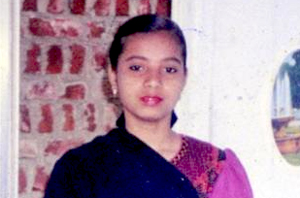
Former IB officer challenges charge sheet in Ishrat case

February 12, 2014

Former_IB_officerAhmedabad, Feb 12: The former IB Special Director, Rajinder Kumar, who has been charge-sheeted, along with three serving IB officers, by the Central Bureau of Investigation in the 2004 Ishrat Jahan ‘fake encounter’ case, has challenged the move, arguing that the investigating agency did not have the mandatory sanction to prosecute the four.

The CBI’s supplementary charge sheet filed on February 6, months after charging seven Gujarat policemen in the case, says the IB officials have been accused on the basis of call details.

Mr. Kumar’s plea before a CBI magisterial court glosses over anything about the investigation but maintains that under Section 197 of the Criminal Procedure Code, government sanction is a must, and this has not been taken. That is why the charge sheet is illegal, Mr. Kumar’s advocate S.V. Raju told the court.

But magistrate H.S. Khutwad refused to accept the application until his office thoroughly verified the charge sheet.

He said the court would consider counsel’s arguments while examining the charge sheet papers.

Besides Mr. Kumar, the CBI has accused IB officials T. Mittal, M.K. Sinha and Rajiv Wankhede.

The CBI has also submitted the phone numbers from which calls were made to the IB office and others.

Comments

Add new comment

  • Coastaldigest.com reserves the right to delete or block any comments.
  • Coastaldigset.com is not responsible for its readers’ comments.
  • Comments that are abusive, incendiary or irrelevant are strictly prohibited.
  • Please use a genuine email ID and provide your name to avoid reject.
Agencies
January 9,2020

The World Bank says that a lack of credit and drop in private consumption have led to a gloomy growth outlook for India with a steep cut in growth rate for the current fiscal year and only a modest gain projected for the next year.

India's growth rate is forecast to be only 5 per cent for the current fiscal year, weighed down by a growth of only 4.5 per cent in the July-September quarter, according to the 2020 Global Economic Prospects report released on Wednesday.

"In India, [economic] activity was constrained by insufficient credit availability, as well as by subdued private consumption," the Bank said.

The growth rate is forecast by the Bank to pick up to 5.8 per cent in the next fiscal year and to 6.1 per cent in 2021-22.

India's growth rate was 6.8 per cent in 2018-19.

The 5 per cent growth rate projection for the current financial year is a sharp cut of 2.5 per cent from the 7.5 per cent forecast made by the Bank in January last year, toppling it from the rank of the world's fastest growing economy.

India's performance follows a global trend of lowered growth weighed down by developed economies.

The report estimated world economic growth rate to be only 2.4 per cent last year and forecast it to edge up 0.1 per cent to 2.5 per cent in the current year.

Even with the lower growth rate of 5 per cent in the current fiscal year and 5.8 per cent forecast for the next, India holds the second rank among large economies, behind only China with an estimated growth rate of 6.1 per cent for 2019 and 5.9 per cent this year.

The report blamed "weak confidence, liquidity issues in the financial sector" and "weakness in credit from non-bank financial companies" for India's slowdown.

The Bank predicated India's recovery to 5.8 per cent in the coming financial year for India but "on the monetary policy stance remaining accommodative" and the assumption that "the stimulative fiscal and structural measures already taken will begin to pay off."

It also warned that sharper-than-expected slowdown in major external markets such as United States and Europe, would affect South Asia through trade, financial, and confidence channels, especially for countries with strong trade links to these economies."

The Bank said that the growth of advanced economies was 1.6 per cent last year and "is anticipated to slip to 1.4 per cent in 2020 in part due to continued softness in manufacturing."

In contrast the growth of emerging market and developing countries is expected to accelerate from 3.5 per cent last year to 4.1 per cent this year, the report said.

In South Asia, Bangladesh is estimated to have the highest growth rate of 7.2 per cent in the current fiscal year, although down from 8.1 per cent last fiscal year.

But its higher regional growth rates are coming off a lower base with a per capital gross domestic product of $1,698 compared to $2,010 for India.

Bangladesh is expected to grow by 7.3 per cent in the next financial year.

Pakistan's growth rate is estimated at only 2.4 per cent in the current fiscal year and is projected to rise to 3 per cent in the next, according to the Bank.

The Bank blamed monetary tightening in Pakistan for a sharp deceleration in fixed investment and a considerable softening in private consumption for the fall in growth rate from 3.3 per cent in the 2018-19 fiscal year.

Sri Lanka's growth rate was estimated to be 2.7 per cent last year and forecast to grow to 3.3 per cent this year.

Nepal grew by an estimated 6.4 per cent in the current fiscal year and will rise to 6.5 per cent in the next.


Comments

Add new comment

  • Coastaldigest.com reserves the right to delete or block any comments.
  • Coastaldigset.com is not responsible for its readers’ comments.
  • Comments that are abusive, incendiary or irrelevant are strictly prohibited.
  • Please use a genuine email ID and provide your name to avoid reject.
Agencies
May 5,2020

Jammu and Kashmir, May 5: Awarding the prestigious Pulitzer Prize to three Indian photographers, the Pulitzer Board at Columbia University claimed that it was for their work in Kashmir as "India revoked its independence".

The award to Channi Anand, Mukhtar Khan and Dar Yasin in the feature photography category for their pictures for the Associated Press was announced on Monday.

The prizes, considered the most prestigious for US journalism, are associated with the university's Graduate School of Journalism where the judging is done and is announced, although this year it was done remotely.

Besides a certificate, the prizes carry a cash award of $15,000, except the public service category for which a gold medal is awarded.

The public service prize went to The Anchorage Daily News for a series that dealt with policing in Alaska state.

In making the award to the three, the Board said on its website that it was "for striking images of life in the contested territory of Kashmir as India revoked its independence, executed through a communications blackout".

Besides making the false claim about "independence" of Kashmir being "revoked", the board that includes several leading journalists did not explain how their photographs could have reached the AP within hours of the incidents recorded "through a communication blackout".

India's Central government only revoked Article 370 of the Constitution that gave Jammu and Kashmir a special status and it was not independent.

Indian journalists were allowed to operate in Kashmir, while only non-Indian journalists were barred.

The wording of the award announcement calls into question the credibility of the Pulitzer Board that gives out what are considered prestigious journalism awards.

The portfolio of pictures by the three on the Pulitzer web site included one of a masked person attacking a police vehicle and another of masked people with variants of the Kashmir flag, besides photos of mourners and protesters.

One of the finalists for the Pulitzer Prize for explanatory journalism was a reporter of Indian descent at The Los Angeles Times, Swetha Kannan, who was nominated for her work with two colleagues on the seas rising due to climate change.

Comments

Add new comment

  • Coastaldigest.com reserves the right to delete or block any comments.
  • Coastaldigset.com is not responsible for its readers’ comments.
  • Comments that are abusive, incendiary or irrelevant are strictly prohibited.
  • Please use a genuine email ID and provide your name to avoid reject.
Agencies
August 4,2020

New Delhi, Aug 4: Over 50 per cent of COVID-19 deaths in India have taken place among people aged 60 years and above and 37 per cent deaths have been reported among patients in the age group of 45 to 60 years, Health Ministry said on Tuesday.

Addressing a press conference, Rajesh Bhushan, Secretary, Health Ministry said that 11 per cent COVID-19 deaths took place in the age group of 26 to 44.

The 18 to 25 age group and those below 18 years reported one per cent deaths each.
"Currently, 5,86,298 active COVID-19 cases are in India and over 12 lakh people have recovered.

50 per cent deaths due to COVID19 have taken place among the age group of 60 years or above and 37 per cent deaths took place in the age group between 45 to 60 years," Bhushan said.

"A total of 11 per cent COVID-19 deaths took place in the age group of 26 to 44. Only 1 per cent in 18 to 25 age group and 1 per cent in below the age of 18 years," he added.

Bhushan said that 68 per cent of COVID-19 deaths have been reported among male patients and 32 per cent among female patients which is broadly in line with the global scenario.

The number of recovered COVID-19 patients in India is increasing daily and is now over double the number of active cases.

Bhushan said that the case fatality rate (CFR) is lowest since the first lockdown.

"More than 2 crore COVID-19 tests have been conducted, including more than 6.6 lakh tests in the last 24 hours. Recovered cases are now double of the active cases. 

The case fatality rate (CFR) is lowest since the first lockdown," he said
"This is the first time after the first lockdown that the fatality rate is at the lowest, at 2.10 per cent. The fatality rate has seen a progressive decline and it is continuing, which is a good sign," he added.

According to the World Health Organisation, CFR is a measure of the severity of a disease and is defined as the proportion of reported cases of a specified disease or condition which are fatal within a specified time.

Comments

Add new comment

  • Coastaldigest.com reserves the right to delete or block any comments.
  • Coastaldigset.com is not responsible for its readers’ comments.
  • Comments that are abusive, incendiary or irrelevant are strictly prohibited.
  • Please use a genuine email ID and provide your name to avoid reject.