



Four-year bar on expats unacceptable, says JCCI

August 14, 2014

Jeddah, Aug 14: The Ministry of Labor has said it will not make any exceptions to its decision not to allow private firms falling in the yellow level of the Nitaqat Saudization program to keep their foreign manpower for more than four years even as top industry officials questioned the viability of the decision, which they said will be difficult to implement.ministry of labour
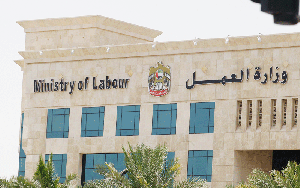
"Not even the manpower with accumulated experience or those born in Saudi Arabia will be exempted from the decision," business daily Al-Eqtisadiah reported on Wednesday quoting an official source in the ministry.

The decision will come into effect on Oct. 25 and six months later, the period of stay will be reduced to two years only.

"The decision will strictly apply to all expatriates working for any of the firms in the yellow Nitaqat category whose stay in the Kingdom has exceeded four years," he said.

The source, however, said expatriate workers of these companies will be allowed to transfer their residence permits to firms in the platinum and green Nitaqat levels.

He said the ministry took the decision to force companies in the yellow Nitaqat level to expedite the Saudization process. "The ministry is determined to employ more Saudis in the private sector," he added.

Meanwhile, members of the board of directors of the Jeddah Chamber of Commerce and Industry are unanimous in their opinion that it will be extremely difficult for the ministry to enforce its decision, especially in the industrial and contracting sectors.

They warned that the decision will create a manpower deficiency and will adversely affect the Saudization process.

The members also warned against the security, social and economic implications the decision would have on the labor market. They said the Kingdom would become a source of technical and vocational manpower for other countries if the decision was imposed.

Board member Ahmed Al-Marbaie said the decision could not be implemented on the industrial and contracting companies because they depend mainly on expatriate manpower. "These companies are always looking for expatriate manpower with sufficient experience, which they cannot find among Saudis," he said.

Al-Marbaie said if the ministry was adamant on its decision, the Kingdom would lose its trained and qualified foreign manpower. "In this case, we will be sending the qualified foreign manpower to other countries on a gold platter," he said.

"It is not acceptable to lose our trained foreign manpower and the workers who were born in the Kingdom as a result of this decision," he added.

Ibrahim Batterji, deputy chairman of the chamber's industrial committee, said it is not simply possible for the private companies to train the foreign manpower only to lose them in four years.

He warned that as a result of the decision, people might leave the industrial and contracting sectors and would invest in the commercial sector or the stock market instead.

"Saudization needs more time until the national carders are ready to accept all sorts of jobs. We will not be able to solve the problem of unemployment among Saudis by such decisions," he said.

Comments

Add new comment

  • Coastaldigest.com reserves the right to delete or block any comments.
  • Coastaldigset.com is not responsible for its readers’ comments.
  • Comments that are abusive, incendiary or irrelevant are strictly prohibited.
  • Please use a genuine email ID and provide your name to avoid reject.
Agencies
July 22,2020

Riyadh, Jul 22: Saudi King Salman held a cabinet meeting via video call from hospital in the capital Riyadh on Tuesday, a day after the 84-year-old monarch was admitted with inflammation of the gall bladder.

Three Saudi sources said the king was in stable condition.

A video of the king chairing the meeting was broadcast on Saudi state TV on Tuesday evening. In the video, which has no sound, King Salman can be seen behind a desk, wordlessly reading and leafing through documents.

The king, who has ruled the world’s largest oil exporter and close US ally since 2015, was undergoing medical checks, state media on Monday cited a Royal Court statement as saying.

Three well-connnected Saudi sources who declined to be identified, two of whom were speaking late on Monday and one on Tuesday, said the king was “fine”.

An official in the region, who requested anonymity, said he spoke to one of King Salman’s sons on Monday who seemed “calm” and that there was no sense of panic about the monarch’s health.

Comments

Add new comment

  • Coastaldigest.com reserves the right to delete or block any comments.
  • Coastaldigset.com is not responsible for its readers’ comments.
  • Comments that are abusive, incendiary or irrelevant are strictly prohibited.
  • Please use a genuine email ID and provide your name to avoid reject.
News Network
January 16,2020

Abu Dhabi, Jan 16: The number of people being killed by terrorism activities worldwide has decreased significantly over the recent years, according to the latest Global Terrorism Index.

The 2019 Global Terrorism Index, which was presented at a forum in Abu Dhabi on Wednesday also showed that the UAE improved its ranking in the index by coming down to 130th rank among the 163 countries. The terrorism impact in the UAE is categorised as 'very low'. In the UAE, only two terrorism incidents were reported over the past decade - one in 2010 and another in 2014 - and there were no casualties.

Commenting on the report, Mansour Al Mansouri, director of the UAE National Media Council (NMC) said: "These findings rightly show the UAE as one of the safest countries in the world in terms of terror threat."

The index showed that the total number of deaths from terrorism declined for the fourth consecutive year in 2018, falling by 15.2 per cent to 15,952 deaths. This represents a 53 per cent reduction since its peak in 2014 when 33,555 people were killed in terrorist attacks.

The index published for the seventh year in a row, ranks 163 countries across the globe according to the relative impact of terrorism. This takes into account the number of terrorist incidents, deaths caused by terror and total value of property damage.

The latest results saw three Middle East countries - Iraq, Syria and Yemen - continue in the top 10 positions of the index.

The findings also showed Taleban overtaking Daesh as the deadliest terrorist group in the world, accounting for 38 per cent of all terrorist deaths. This is an increase of 71 per cent. Afghanistan is the country most affected by terrorism in 2018 followed by Iraq, Nigeria, Syria and Pakistan, according to the report. The least impacted nations were Belarus, Guinea-Bissau, Oman, The Gambia and North Korea.

During his presentation of the key findings of the index at the Foreign Correspondent's Club of the UAE (FCC), Serge Stroobants, director of Europe and Mena at the Institute of Economics and Peace, said lesser people were now being killed in terrorism activities.

"There have been long-term trends in global terrorism, with deaths caused by terror down by 52 per cent compared to high point of 2014, which saw Daesh and Boko Haram at their peak," said Stroobants attributing the decrease in the deaths to the increase in security measures and cooperation among nations in the fight against terrorism.

In contrast to this, there has been a 320 per cent increase in far-right terrorist incidents in the West, with political ideology being the driving force behind an increased proportion of terror motivation.

"There has been an increase in far-right terrorism in Western Europe, North America and Oceania for the third consecutive year," said Stroobants.

Terrorism still remains a global security threat, according the index, with 71 countries recording more than one death - the second highest number of countries since 2002.

Stroobants said conflicts remain the main cause of terrorism with 90 per cent of terrorist incidents occurring in places where there are conflicts or insurgencies.

The report said the global economic impact of terrorism was $33 billion in 2018, a substantial decrease of 38 per cent from the previous year.

Boko Haram was responsible for 80 per cent of all female suicide attacks, said the terrorism index.

Global Terrorism Index: Most affected countries

>Afghanistan (7379 deaths)

>Iraq (1,054 deaths)

>Nigeria (2,040 deaths)

>Syria (662 deaths)

>Pakistan (537 deaths)

>Somalia (646 deaths)

>India (350 deaths)

>Yemen (301 deaths)

>The Philippines (297 deaths)

>Democratic Republic of the Congo (410 deaths)

Comments

Add new comment

  • Coastaldigest.com reserves the right to delete or block any comments.
  • Coastaldigset.com is not responsible for its readers’ comments.
  • Comments that are abusive, incendiary or irrelevant are strictly prohibited.
  • Please use a genuine email ID and provide your name to avoid reject.
News Network
March 11,2020

Mar 11: Energy giant Saudi Aramco on Wednesday said it plans to raise its crude production capacity by one million barrels per day to 13 million bpd as a price war with Russia intensifies.

"Saudi Aramco announces that it received a directive from the ministry of energy to increase its maximum sustainable capacity from 12 million bpd to 13 million bpd," the company said in a statement to the Saudi Stock Exchange.

The decision comes a day after the world's top exporter, Saudi Arabia, decided to hike production by at least 2.5 million bpd to a record 12.3 million from April.

The Saudi moves come after the collapse of an oil production reduction agreement between OPEC and non-OPEC producers, including Russia.

The deal proposed by Saudi Arabia called for additional output cuts of 1.5 million bpd to cope with the severe economic impact of the coronavirus which has sharply reduced world demand for crude.

Boosting production capacity normally takes a long time and requires billions of dollars of investment.

Several years ago, the kingdom had shelved plans to boost its crude production capacity beyond 12 million bpd after demand for OPEC oil declined in the face of stiff competition from North American shale oil and other sources.

Russia on Tuesday said it was open to renewing cooperation with the OPEC cartel even as its kingpin Saudi Arabia escalated a price war with Moscow by announcing it would flood markets with new supplies.

The oil price war broke out after OPEC and a group of non-member countries dominated by Russia -- the world's second largest producer -- on Friday failed to agree on production cuts.

Saudi Arabia responded by announcing unilateral price cuts. This prompted the oil price to plummet and fuelled huge falls on stock markets around the world on Monday.

Comments

Add new comment

  • Coastaldigest.com reserves the right to delete or block any comments.
  • Coastaldigset.com is not responsible for its readers’ comments.
  • Comments that are abusive, incendiary or irrelevant are strictly prohibited.
  • Please use a genuine email ID and provide your name to avoid reject.